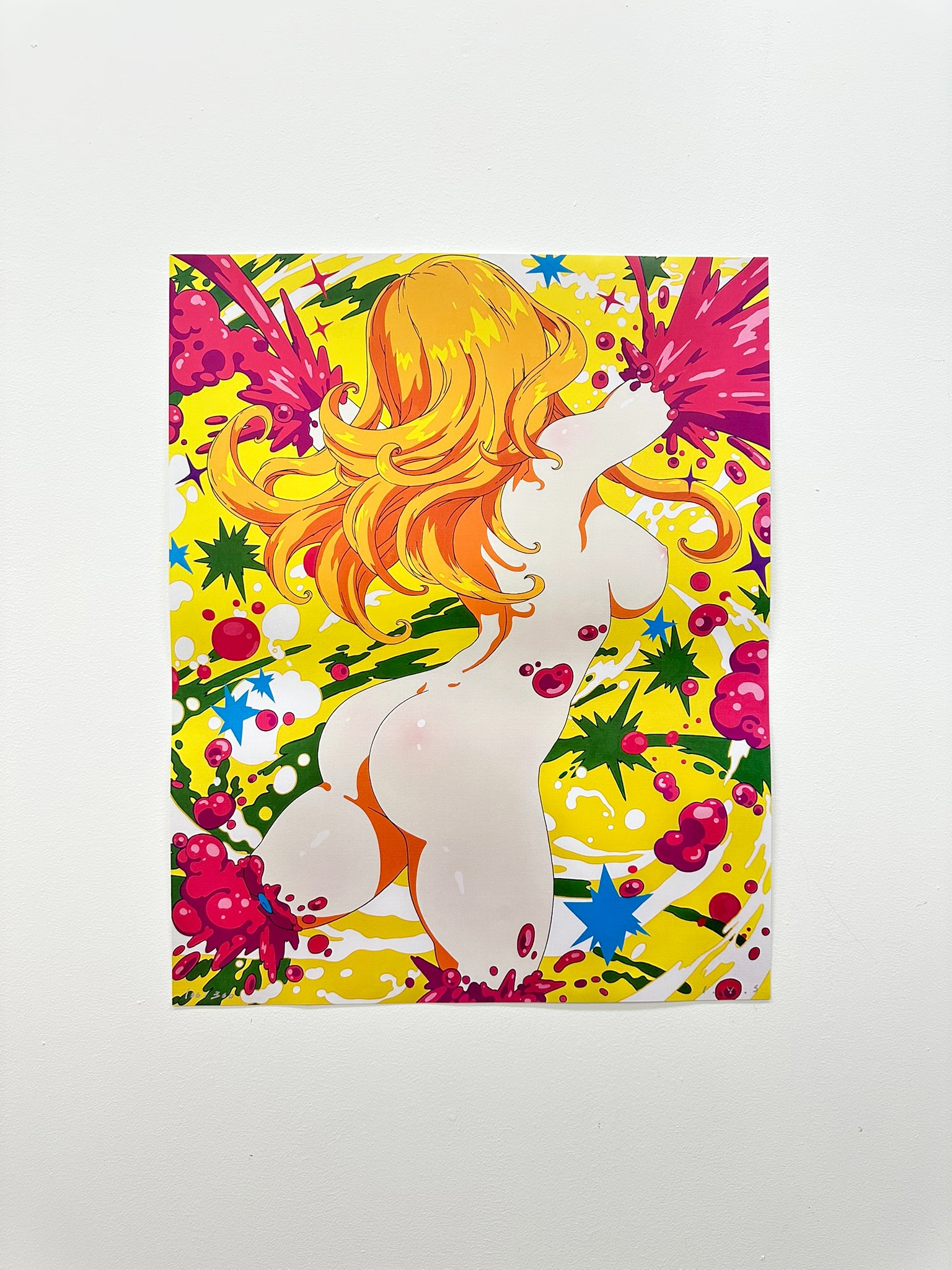
Danae Pink – Art Poster (2026)
67 × 50 cm
Digital Print on Paper
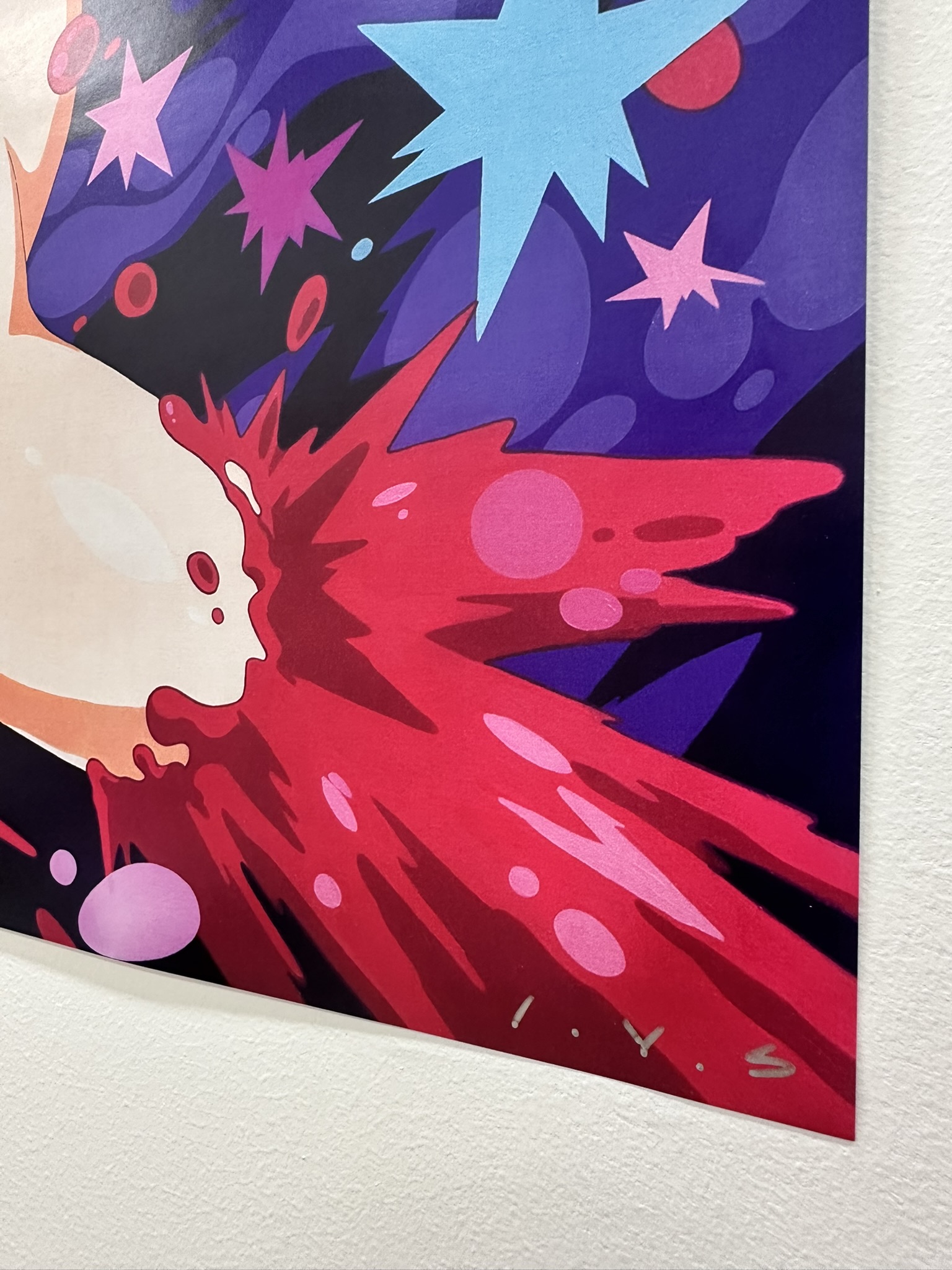
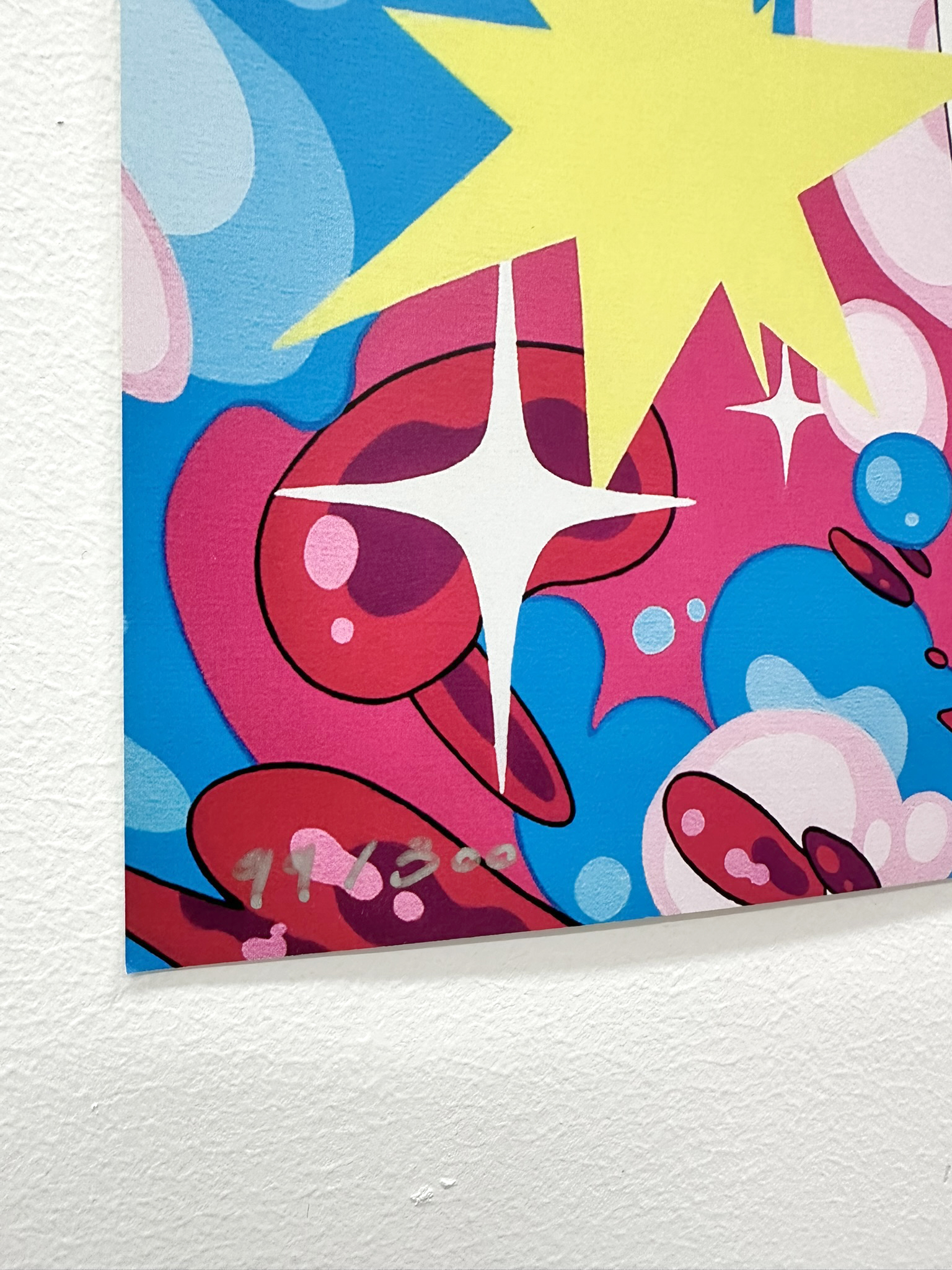
Signed and numbered, edition of 300
₩35,000$30
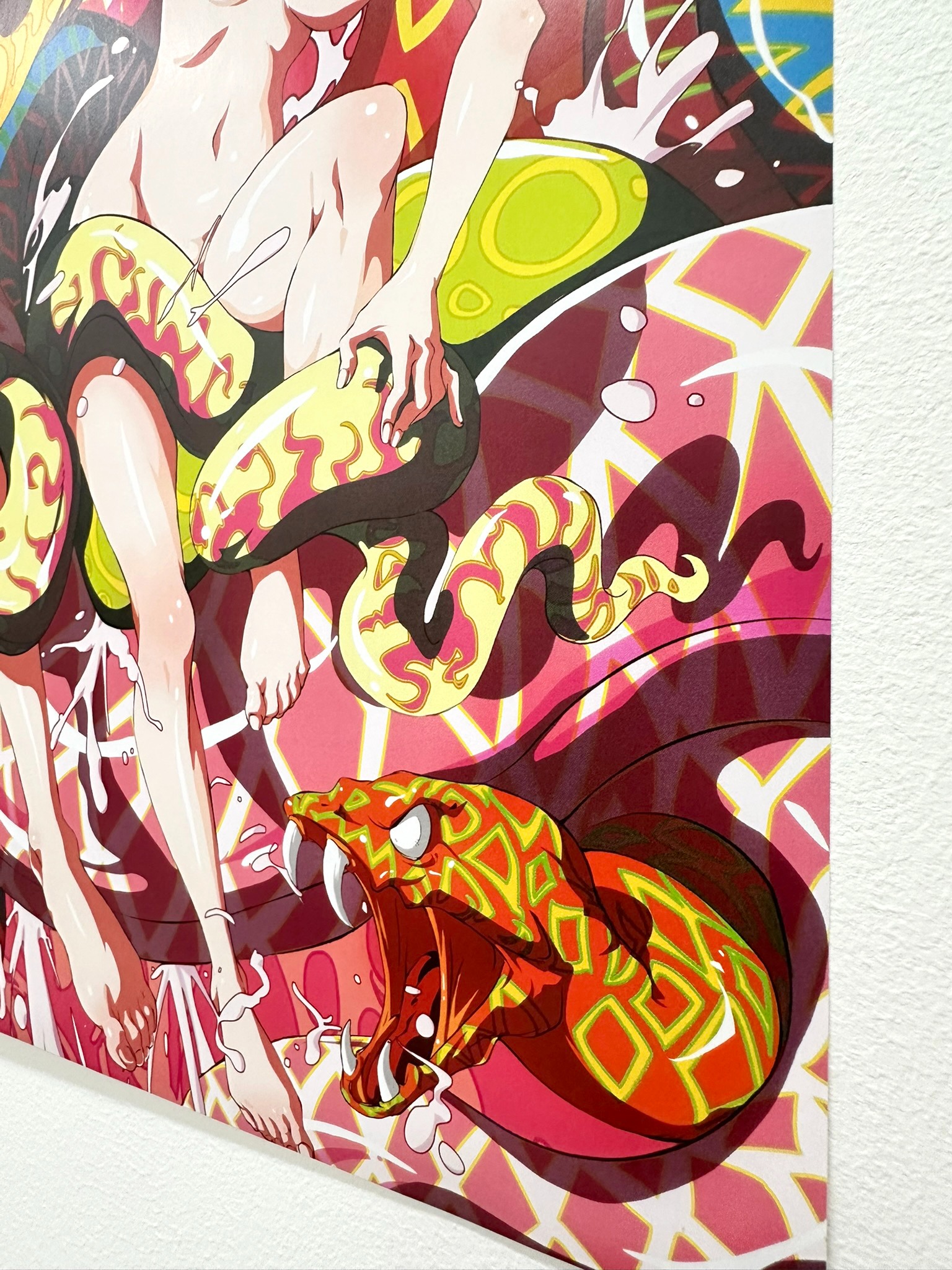
2015년작 〈Danae Pink〉의 포스터 에디션입니다.
A poster edition of Danae Pink (2015).

67 cm
50 cm
67 × 50 cm
Digital Print on Paper
Signed and numbered, edition of 300
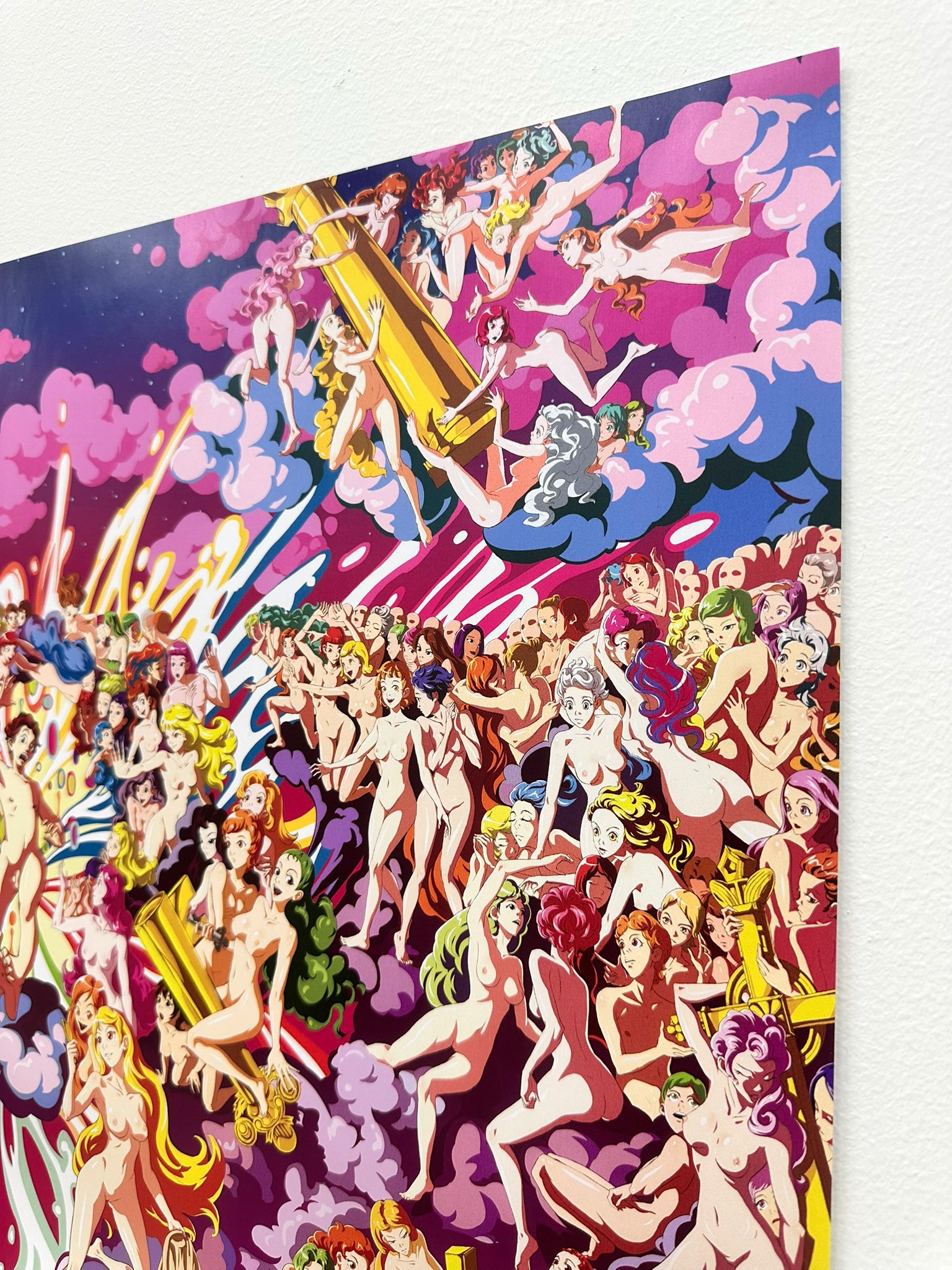
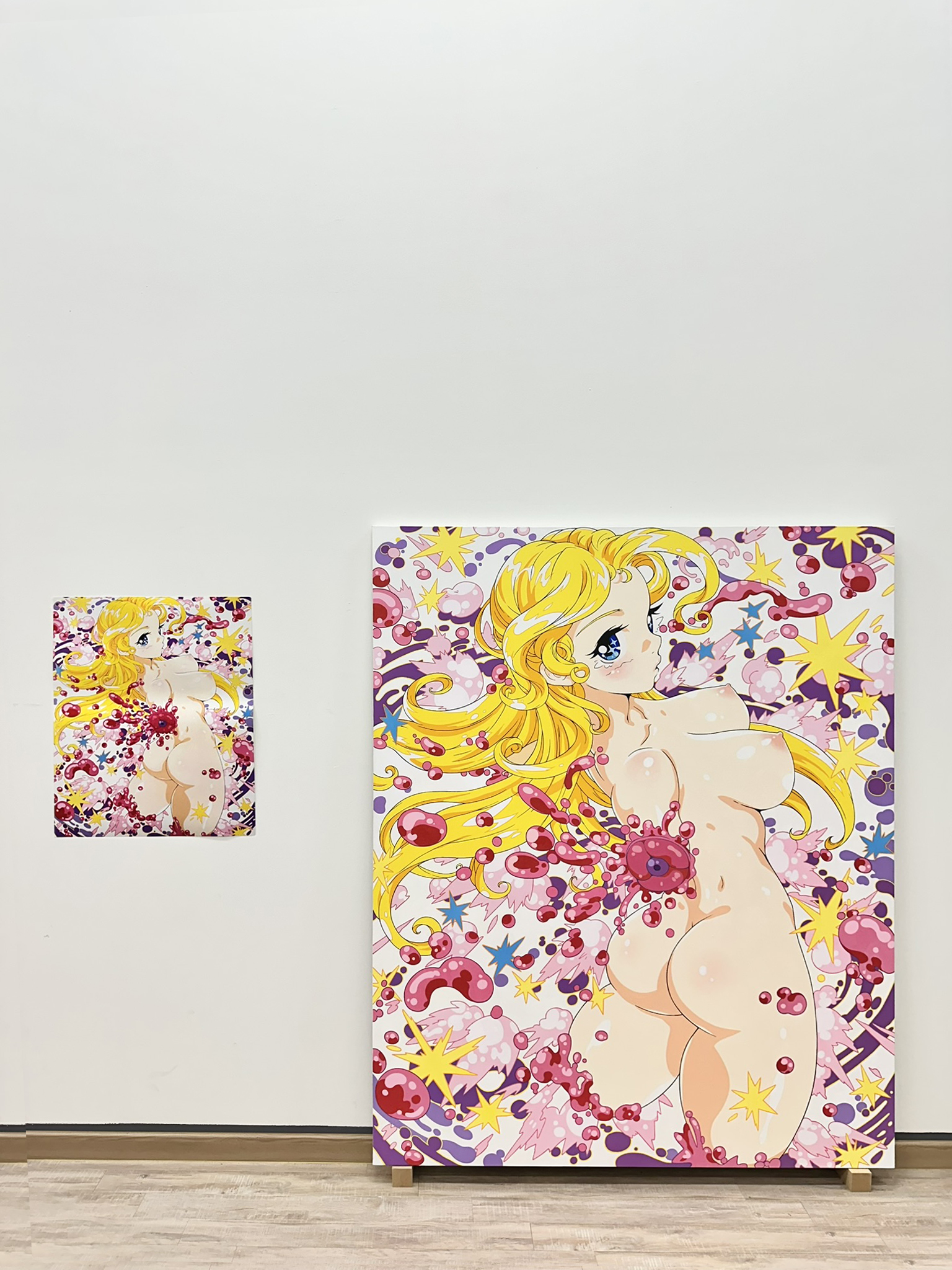
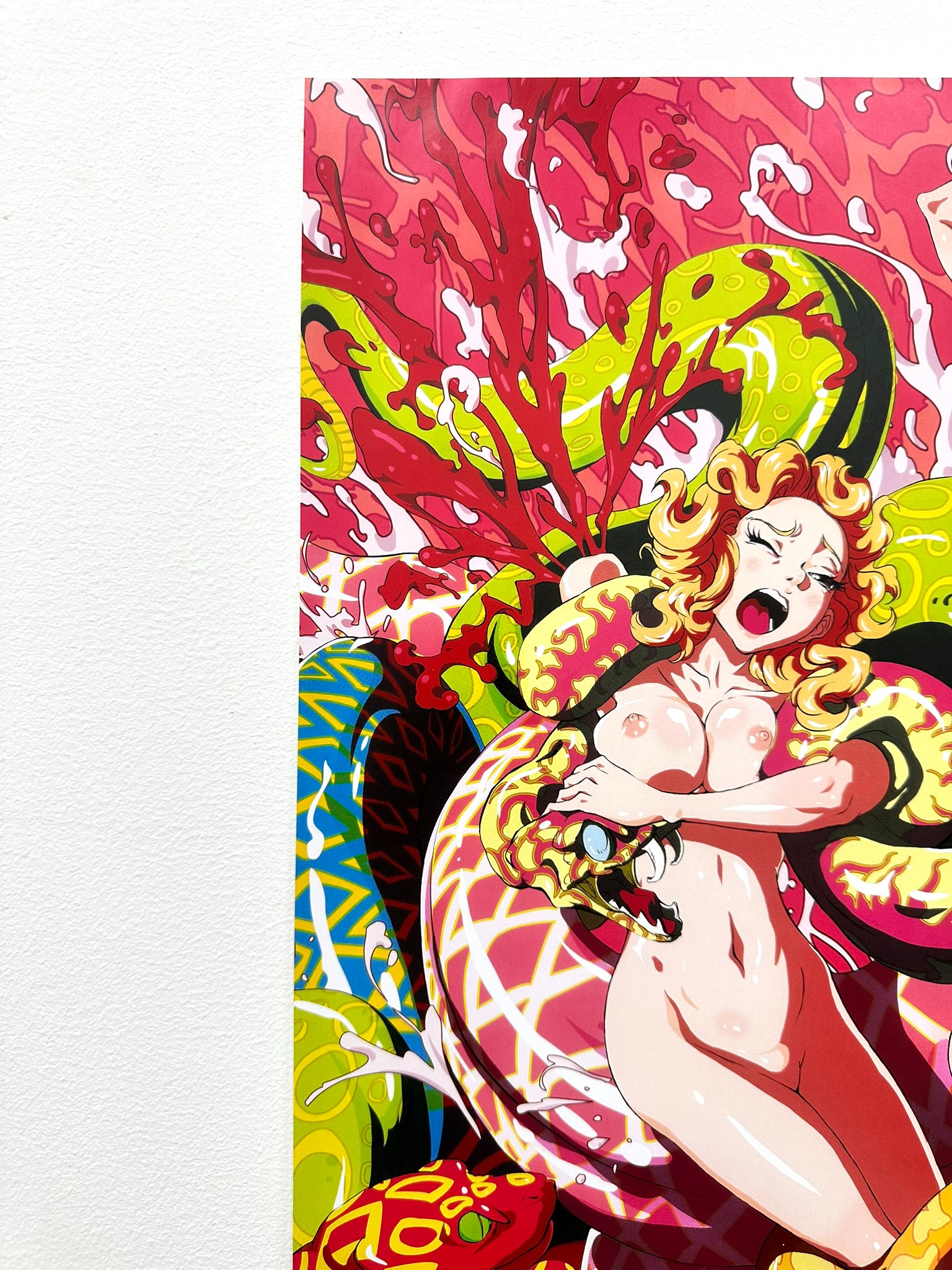
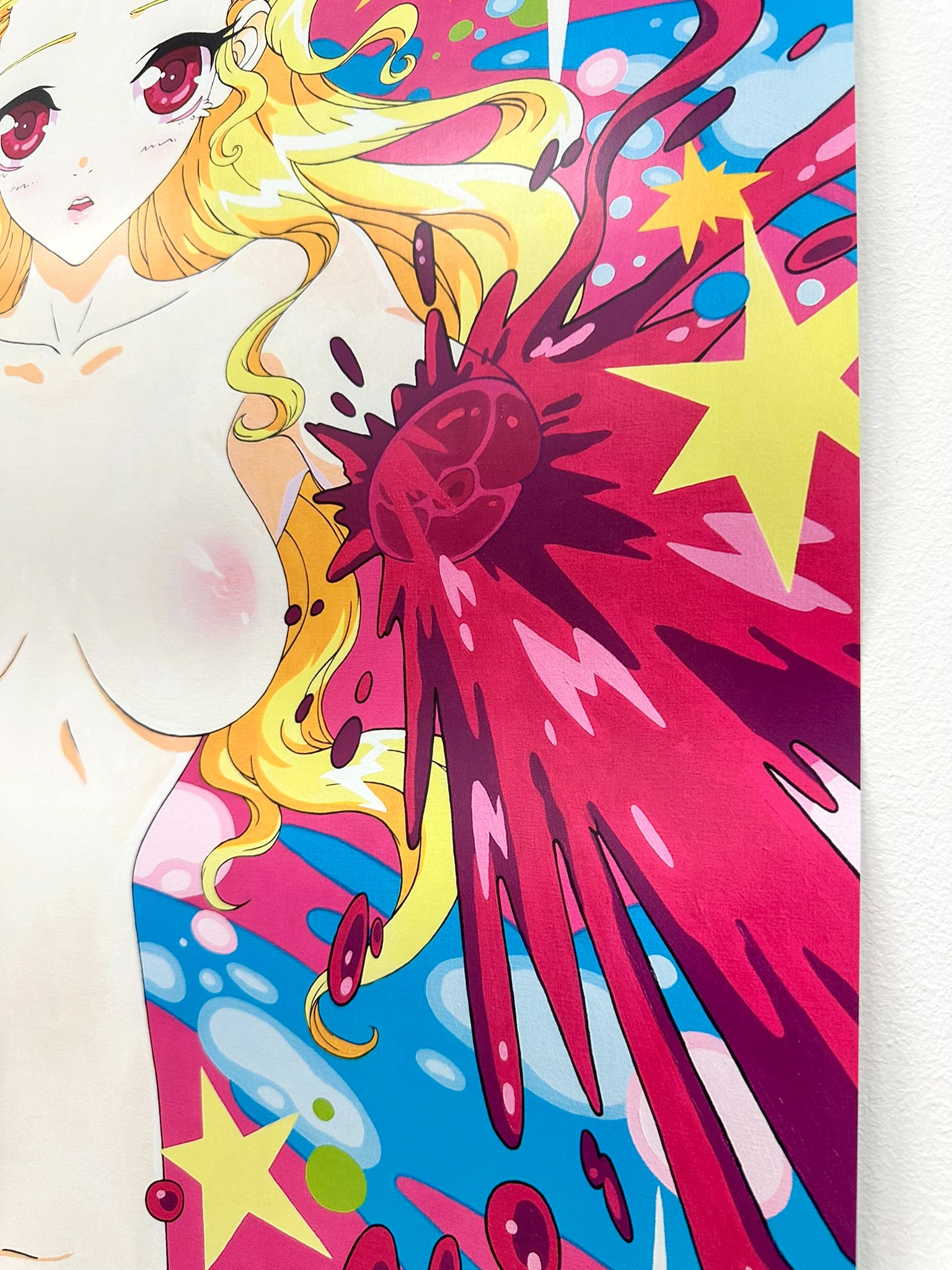
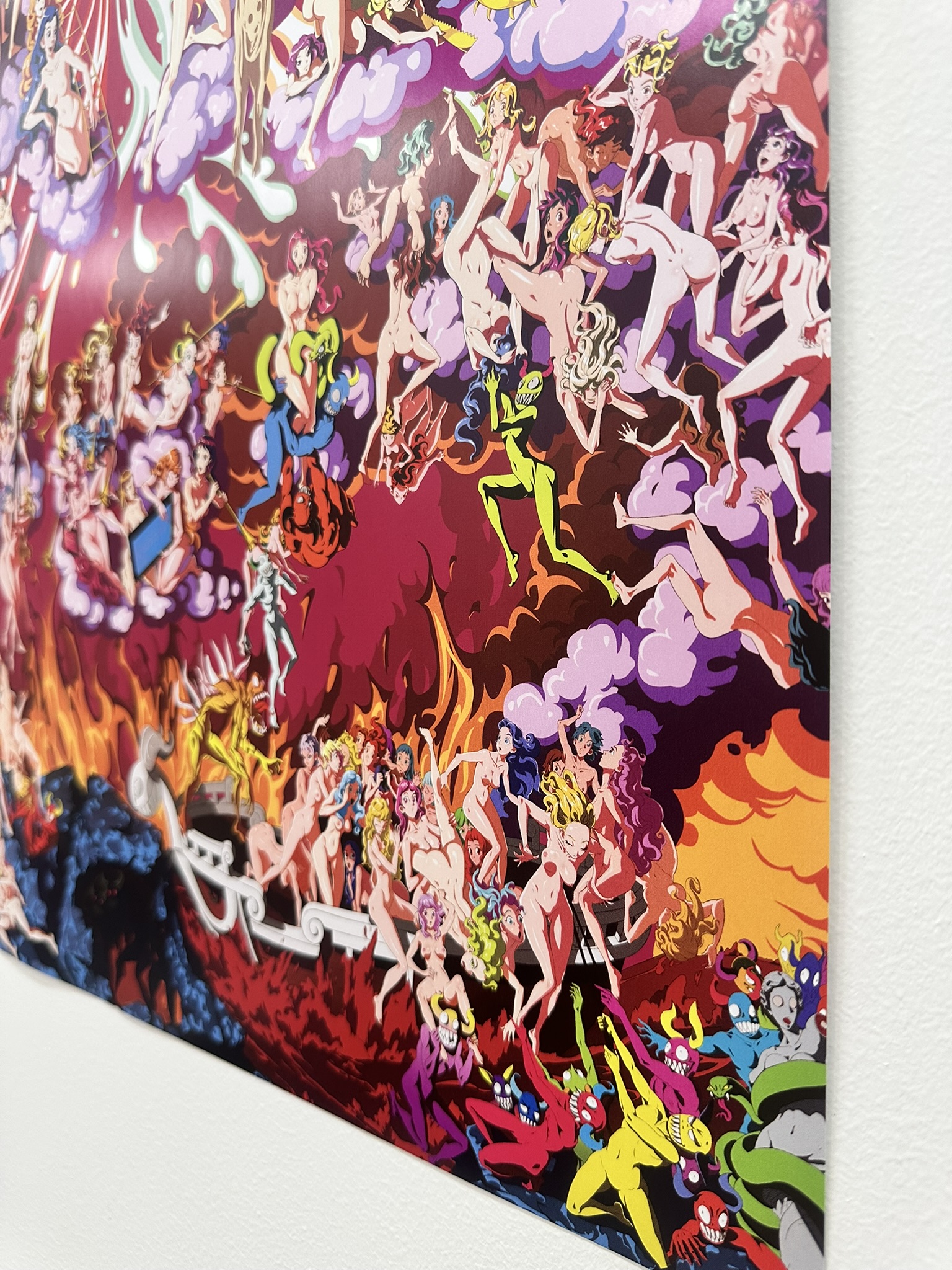
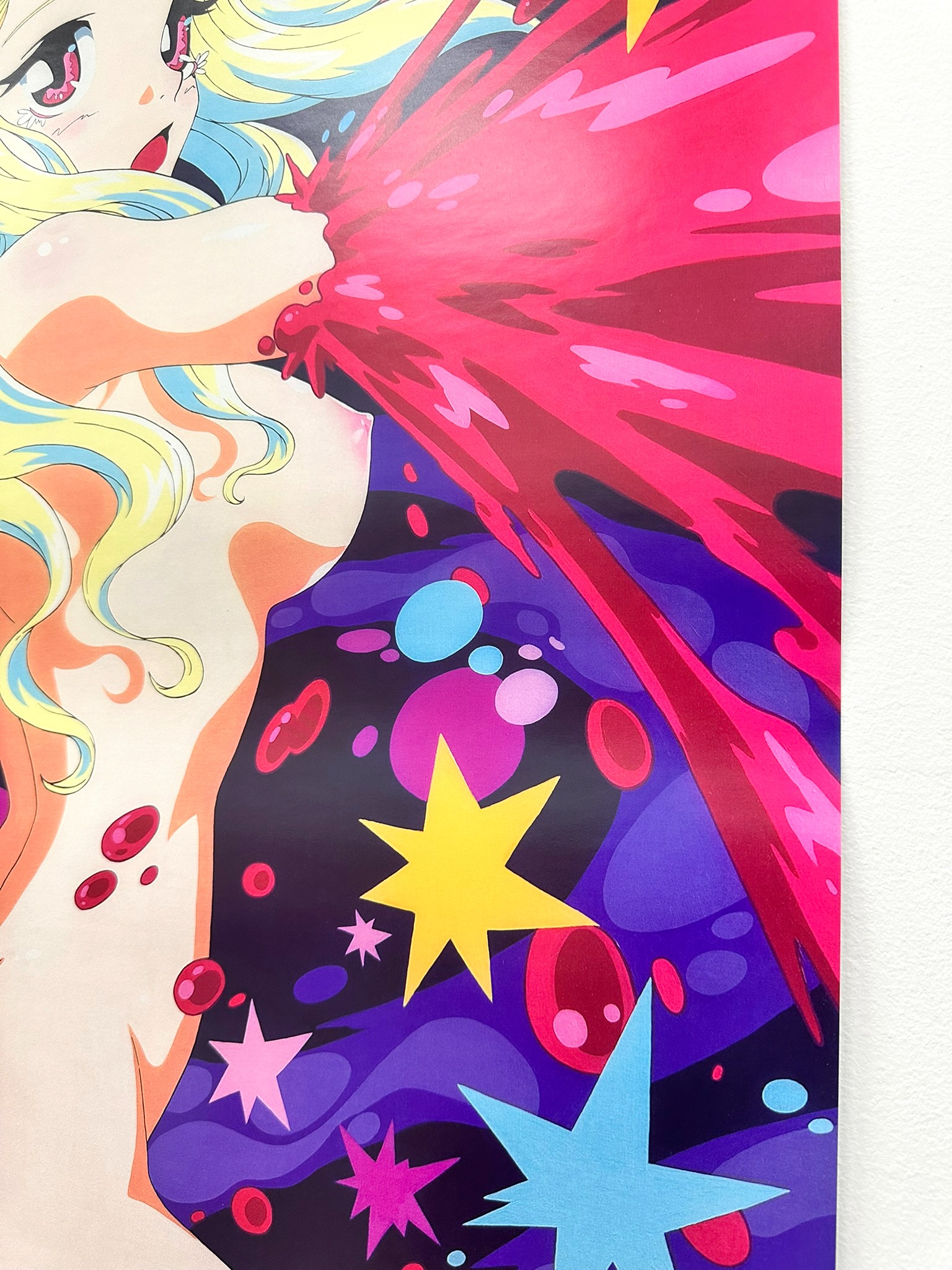
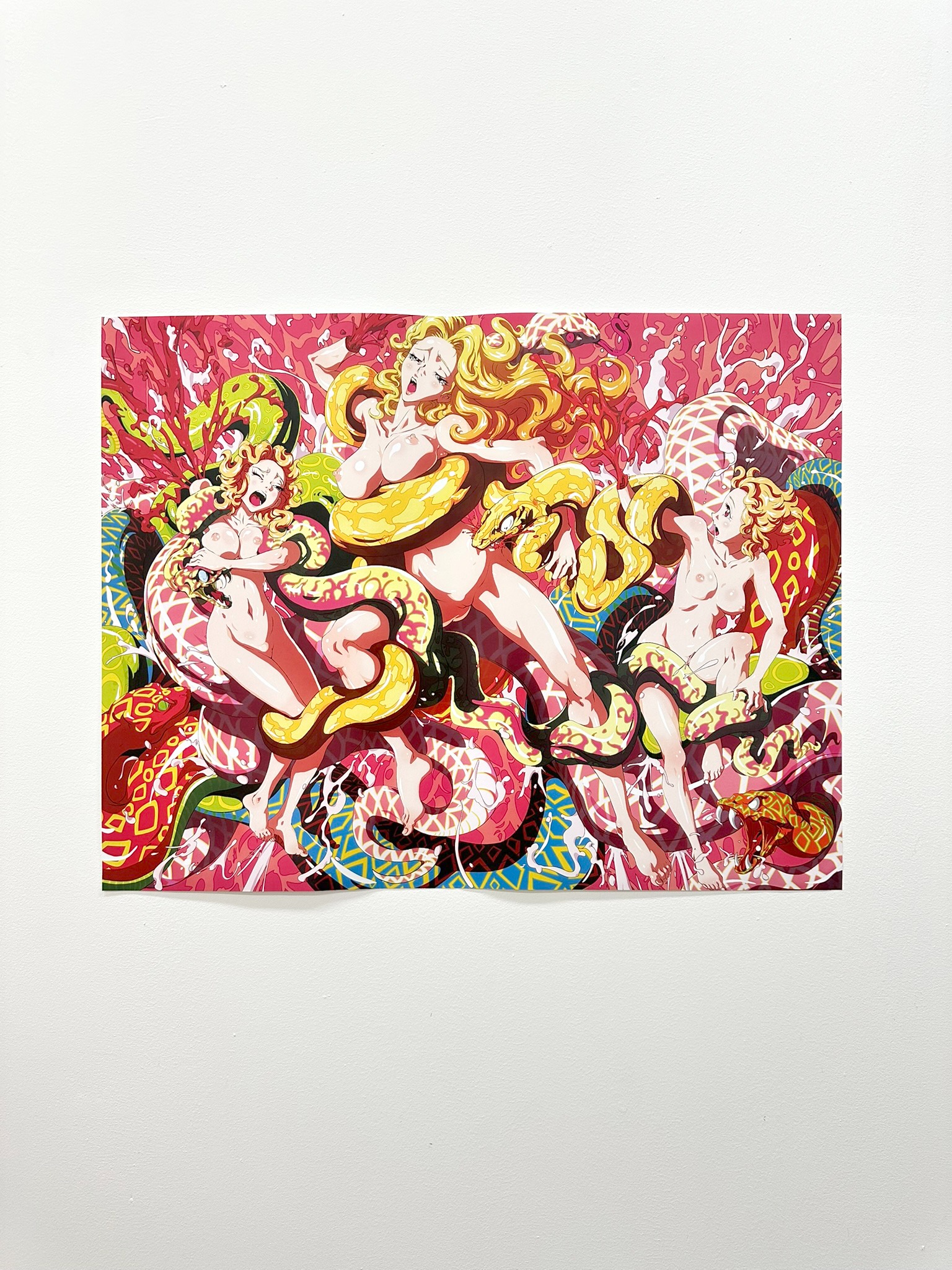
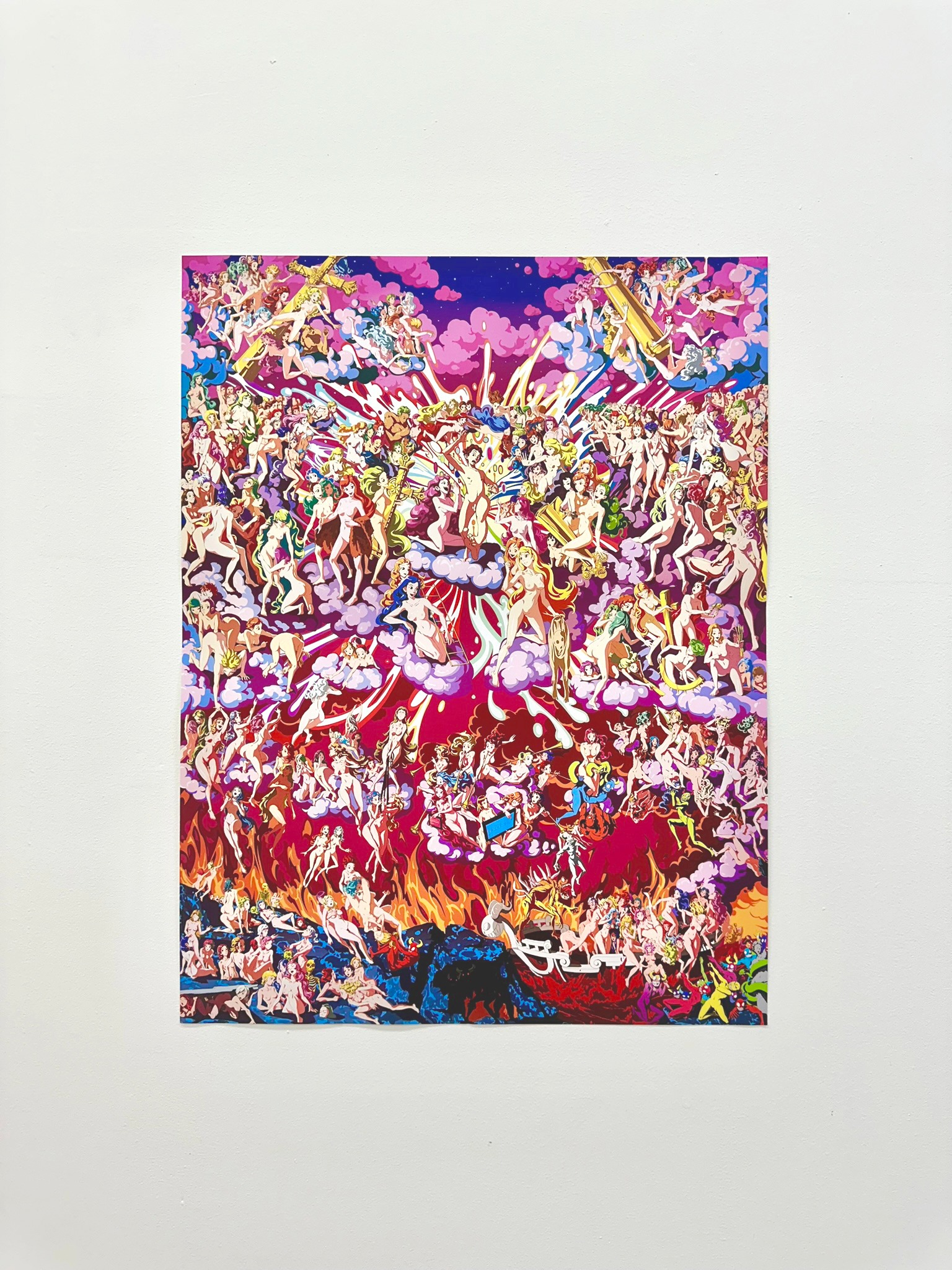
원작Original Work
Danae
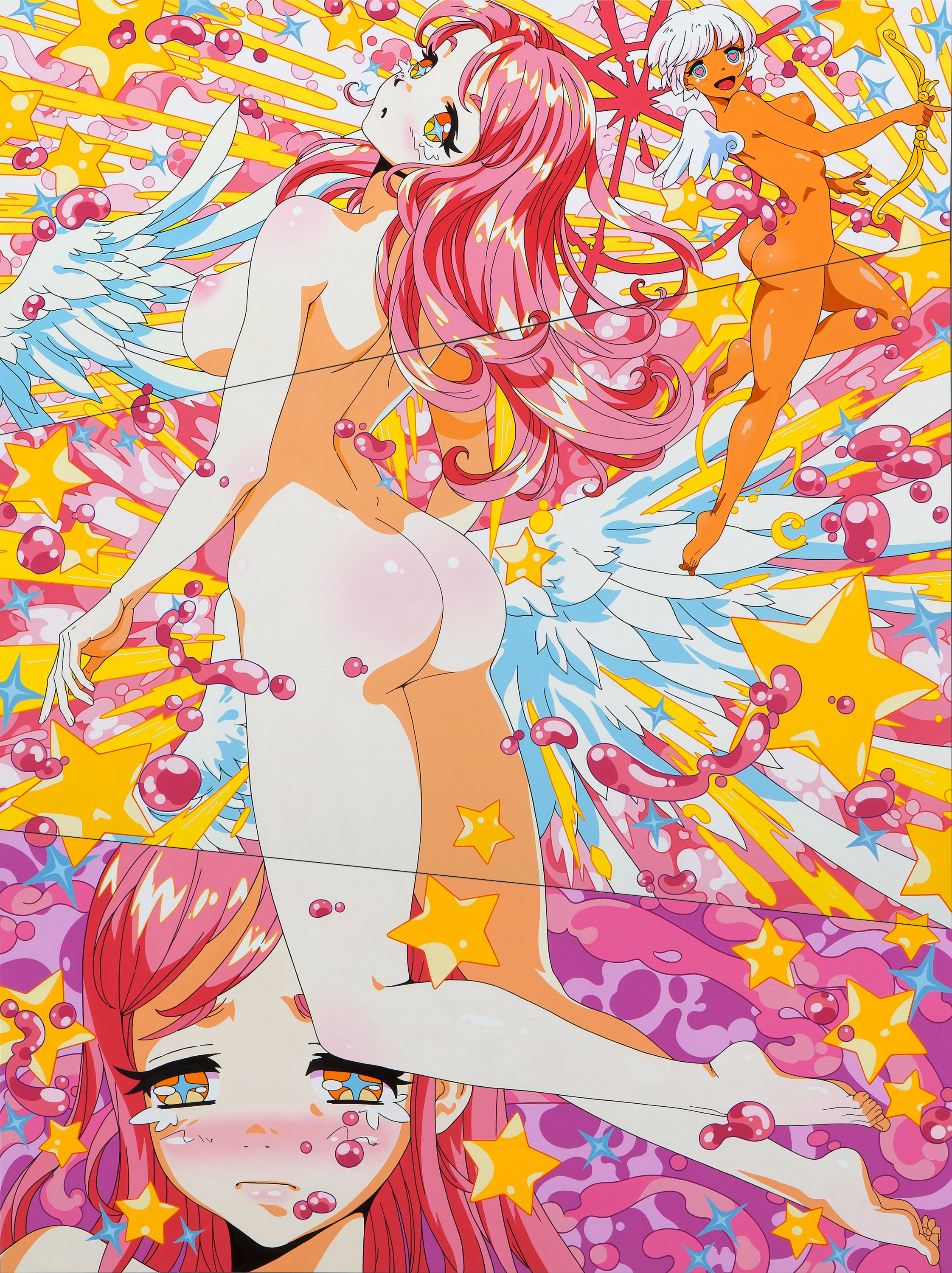
Danae Pink, 2015, Oil on canvas, 261 × 194 cm
〈다나에〉는 탑에 갇힌 신화 속 여인을 분홍, 파랑, 노랑 머리의 세 캐릭터로 나누어 그린 연작이다. 각 그림은 다시 만화의 칸처럼 생긴 세 개의 캔버스로 나뉜다.
다나에는 아버지에 의해 청동탑에 갇혔다가, 황금비가 되어 찾아온 제우스와의 사이에서 페르세우스를 낳는다. 서양 회화는 오랫동안 그녀를 침대에 기대 누워 황금비를 받아들이는 한 가지 모습으로 그려 왔다. 인간의 감정을 가장 기본적인 것만 남기면 분노, 혐오, 두려움, 행복, 슬픔, 놀람의 여섯 가지가 된다는 이야기를 들은 적이 있는데, 다나에를 그 여섯 가지 감정으로 표현해 보고 싶었다.
머리카락 색으로 캐릭터를 알아보는 일본 만화의 관습을 따라, 하나의 인격을 여러 방향에서 들여다보듯 인물을 세 가지 색으로 나누어 보았다.
두 번째 개인전 《NU-FRAME》(두산갤러리 서울, 서울, 2015)에서는 그림을 담는 틀부터 새로 짜 보고 싶었다. 만화에 자주 나오는 사선과 직선의 칸을 참조해, 캔버스의 틀 자체를 만화의 칸으로 만들었다. 비정형의 평면을 나무 프레임으로 옮기는 일은 생각보다 쉽지 않았다. 그렇게 짠 캔버스들이 맞닿는 자리에는 그림자가 생기는데, 그 그림자가 칸을 가르는 선처럼 보이기를 바랐다.
〈Danae Blue〉 〈Danae Pink〉 〈Danae Yellow〉(2015, 캔버스에 유채, 각 261×194cm)는 각각 세 개의 변형 캔버스를 하나로 합친 작품으로, 세 다나에는 그 안에서 저마다 다른 감정을 드러낸다. 한 화면에 전신의 인물과 클로즈업한 얼굴이 함께 놓인 것은, 만화에서 인물의 속마음을 보여 줄 때 뒤에 얼굴을 크게 겹쳐 넣는 표현을 가져온 것이다. 칸을 넘어 이미지가 이어지기도 하고 끊어지기도 하면서, 각기 다른 칸들이 모여 하나의 화면을 이룬다.
황금비는 비처럼 내리지 않고, 만화의 이펙트처럼 인물 뒤에서 터져 나온다. 배경의 흰 날개는 제우스를, 화면 한쪽의 작은 날개 달린 아이는 고전 회화 속 다나에 곁에 흔히 함께하던 에로스를 가리킨다.
전시장도 다나에의 방처럼 꾸몄다. 전시장 입구의 윈도 갤러리에는 〈Danae Cut-In〉과 같은 모양, 같은 크기의 색면 회화 여섯 점을 두었고, 안으로 들어서면 드로잉과 배경의 이펙트만 그린 회화가 이어졌다. 전시장을 가르는 큰 벽 너머로는 여섯 개의 표정이 반쯤 가려진 채 보였고, 그 벽을 돌아 가장 안쪽에 이르러서야 세 점의 다나에를 만날 수 있었다. 갇혀 있는 인물을 보러 들어가는 동선이기를 바랐다.
주제와 형식 가운데 무엇이 먼저였는지는 말하기 어렵다. 프레임을 만들기 위해 이 주제를 고른 면도 있고, 다나에를 위해 형식을 찾은 면도 있다. 둘은 동시에 떠올라 하나의 아이디어가 된다.
연작은 여러 형식으로 이어졌다. 여섯 가지 포즈와 표정을 그린 〈Danae Drawing〉(2015, 나무 패널에 배접한 종이에 펜, 각 22×16cm), 배경의 이펙트만 떼어 낸 〈Danae Composition〉(2015, 캔버스에 유채, 각 73×117cm), 얼굴을 클로즈업한 변형 캔버스 〈Danae Cut-In〉(2015, 캔버스에 아크릴, 6점, 각 높이 146cm), 그리고 같은 모양의 캔버스를 색면으로 단순화한 〈Danae Cut-In Color〉(2015)가 그것이다. 이듬해 《NU》(두산갤러리 뉴욕, 2016)에서는 큰 그림의 일부를 정사각형 틀로 조각처럼 따 낸 작품 여섯 점을 더했다. 모두 한 인물을 서로 다른 거리와 형식에서 거듭 바라보려는 과정에 가깝다.
Danae is a series in which the mythical woman shut away in a tower is split into three characters with pink, blue, and yellow hair. Each painting is in turn divided into three canvases shaped like the panels of a comic book.
Locked in a bronze tower by her father, Danae is visited by Zeus in the form of a shower of gold and bears him a son, Perseus. Western painting has long shown her in a single pose: reclining on a bed, receiving the golden rain. I once heard that human emotion, pared down to its basics, comes to six—anger, disgust, fear, happiness, sadness, and surprise—and I wanted to try portraying Danae through those six emotions.
Following the manga convention of telling characters apart by the color of their hair, I divided the figure into three colors, as if looking into a single self from several directions.
For my second solo exhibition, NU-FRAME (DOOSAN Gallery Seoul, Seoul, 2015), I wanted to try rebuilding the very frame that holds a painting. Drawing on the diagonal and straight panels common in manga, I made the canvas stretchers themselves into comic panels. Translating these irregular flat shapes into wooden frames was harder than I had expected. Where the canvases meet, a shadow forms, and I hoped it would read as the line that divides one panel from the next.
Danae Blue, Danae Pink, and Danae Yellow (2015, oil on canvas, 261 × 194 cm each) each join three shaped canvases into a single work, and within them the three Danaes reveal different emotions. A full-length figure and a close-up face share one picture, a device borrowed from manga, in which a large face is layered behind a character to show what they feel inside. The image runs on across some gaps and breaks off at others, as separate panels come together into a single picture.
The golden rain does not fall like rain; it bursts out behind the figure like a manga effect. The white wings in the background stand for Zeus, and the small winged child to one side is Eros, who so often attends Danae in classical painting.
The gallery, too, was arranged like Danae's chamber. The window gallery at the entrance held six color-field paintings matching Danae Cut-In in shape and size, and further in were the drawings and the paintings of the background effects alone. Beyond a large wall dividing the space, the six faces were half hidden from view, and only after rounding that wall, in the innermost room, could visitors meet the three Danaes. I wanted the route to feel like going in to see a figure kept shut away.
It is hard to say whether the subject or the form came first. In part I chose this subject in order to build the frames; in part I sought out a form for Danae. The two arrive at the same time and become a single idea.
The series took other forms as well: Danae Drawing (2015, pen on paper mounted on panel, 22 × 16 cm each), six poses and expressions; Danae Composition (2015, oil on canvas, 73 × 117 cm each), the background effects on their own; Danae Cut-In (2015, acrylic on canvas, six works, each 146 cm high), shaped canvases of close-up faces; and Danae Cut-In Color (2015), the same shapes reduced to fields of color. The following year, for NU (DOOSAN Gallery New York, 2016), I added six square works, each taking a detail of the large paintings, like fragments. All of them come close to a process of looking at one figure again and again, from different distances and in different forms.