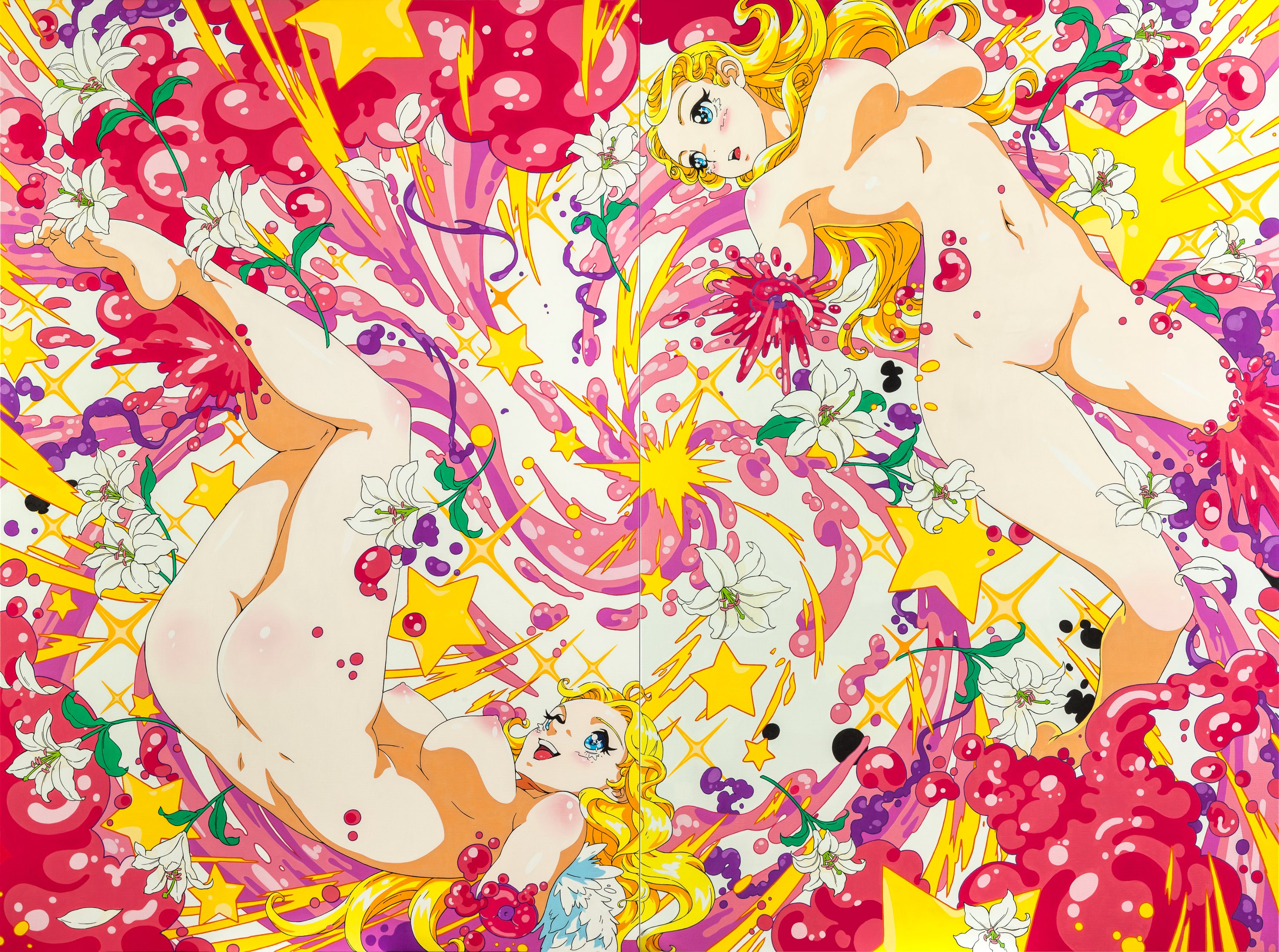
The Annunciation (central panels) – Art Poster (2026)
50 × 67 cm
Digital Print on Paper
Signed and numbered, edition of 300
₩35,000$30
2014년작 〈The Annunciation〉의 가운데 두 폭을 담은 포스터 에디션입니다.
원작은 캔버스 네 개로 이루어진 작품입니다.
A poster edition of the two central panels of The Annunciation (2014), a four-panel work.

50 cm
67 cm
50 × 67 cm
Digital Print on Paper
Signed and numbered, edition of 300
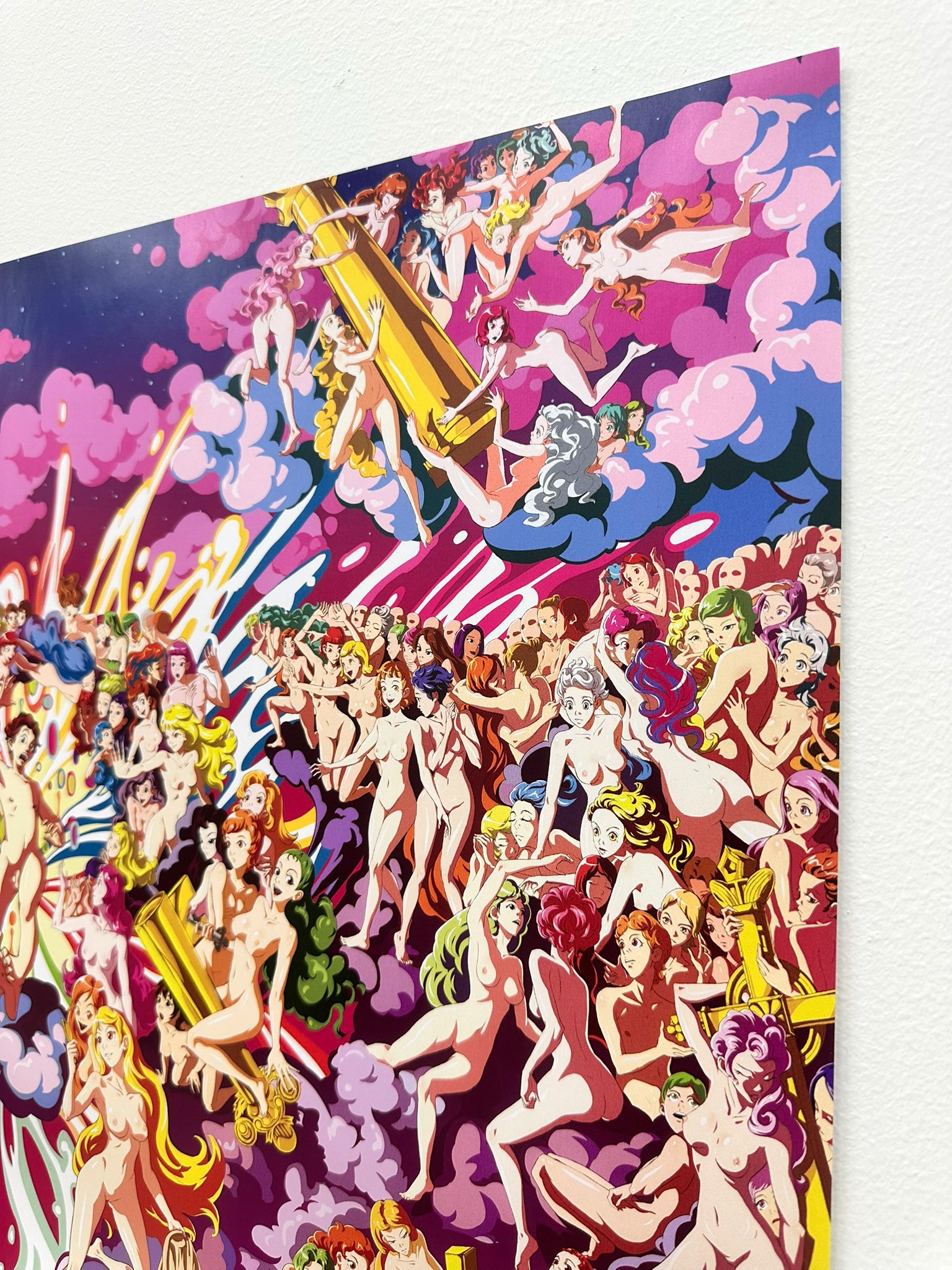
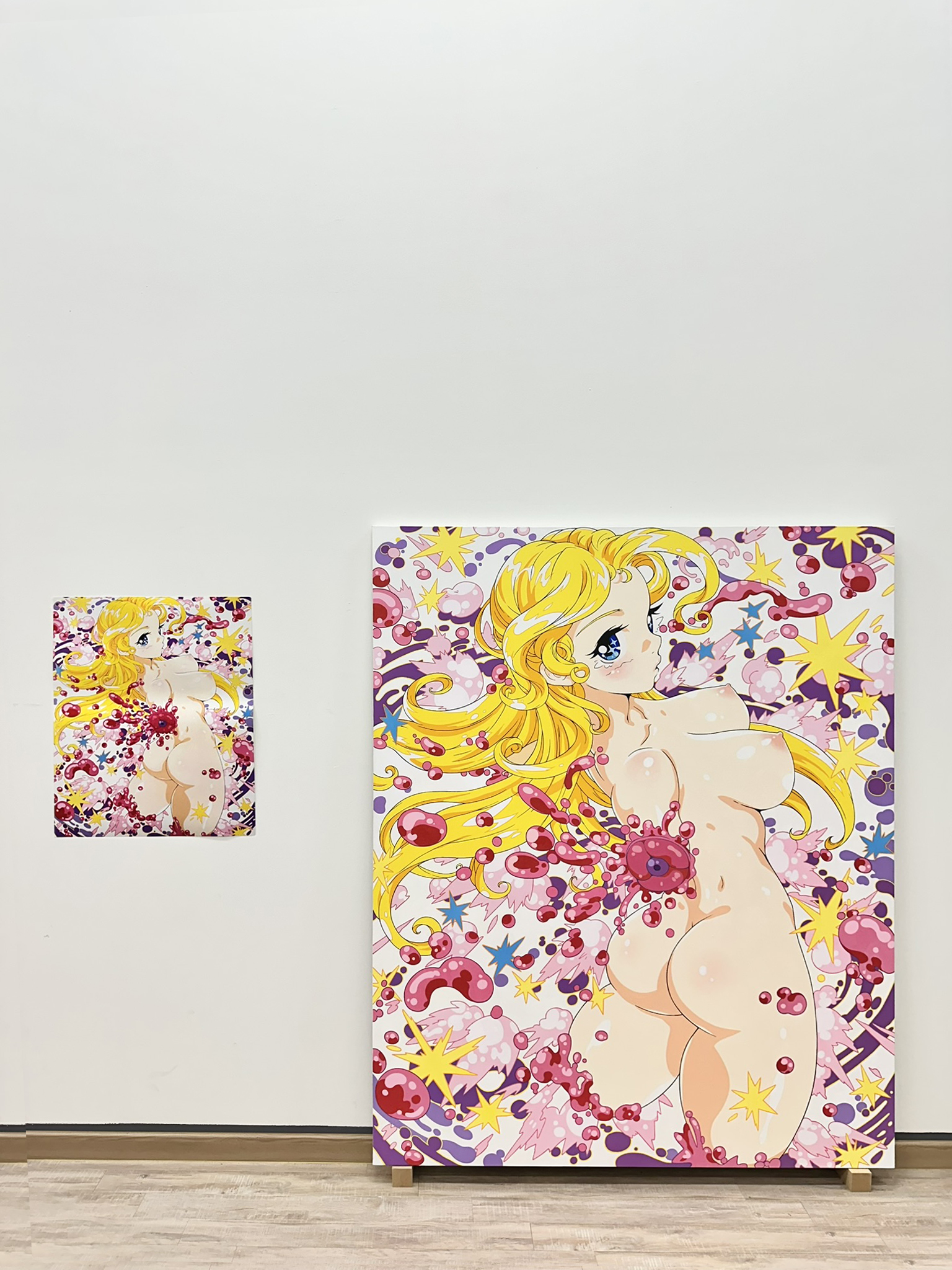
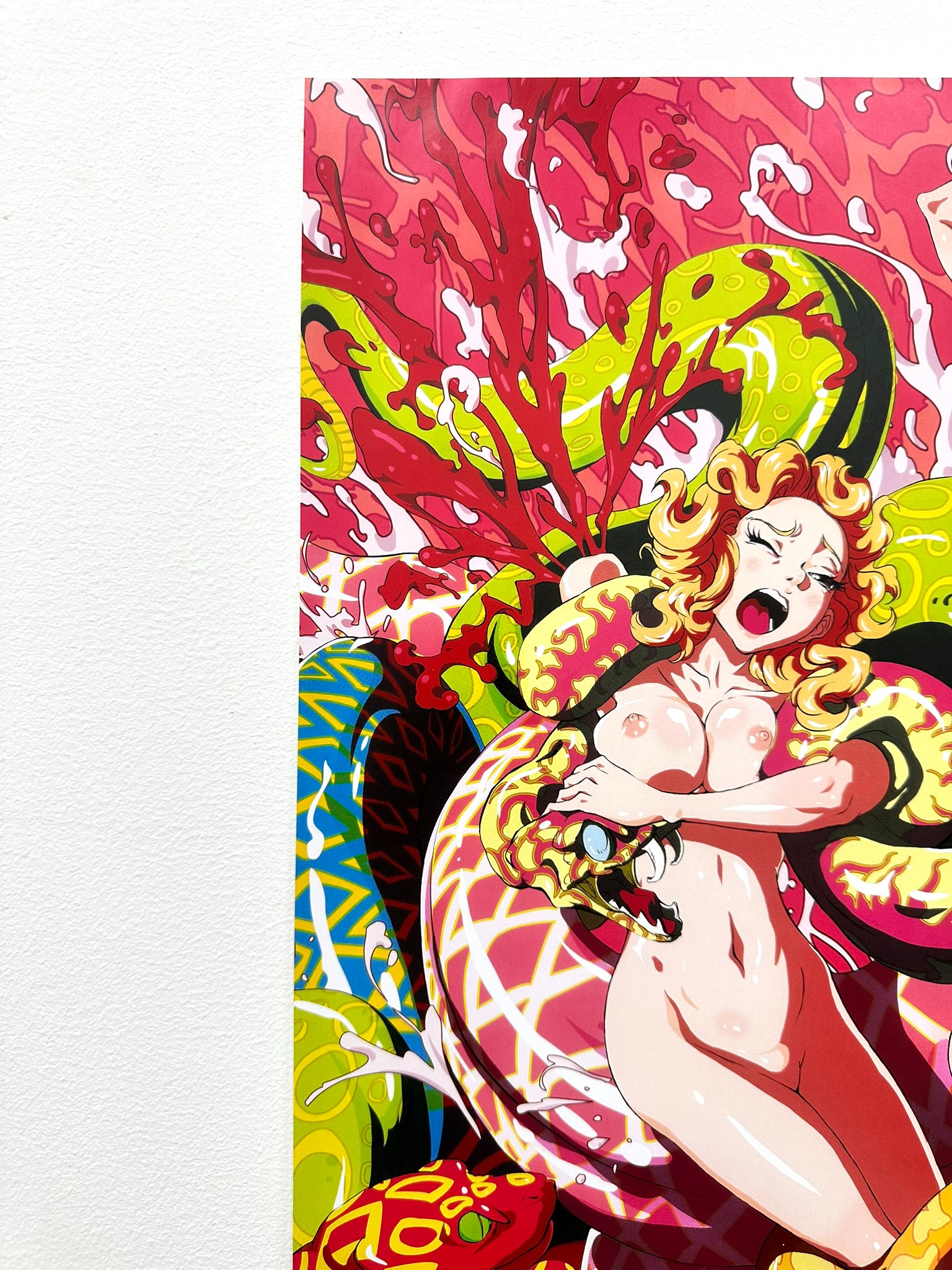
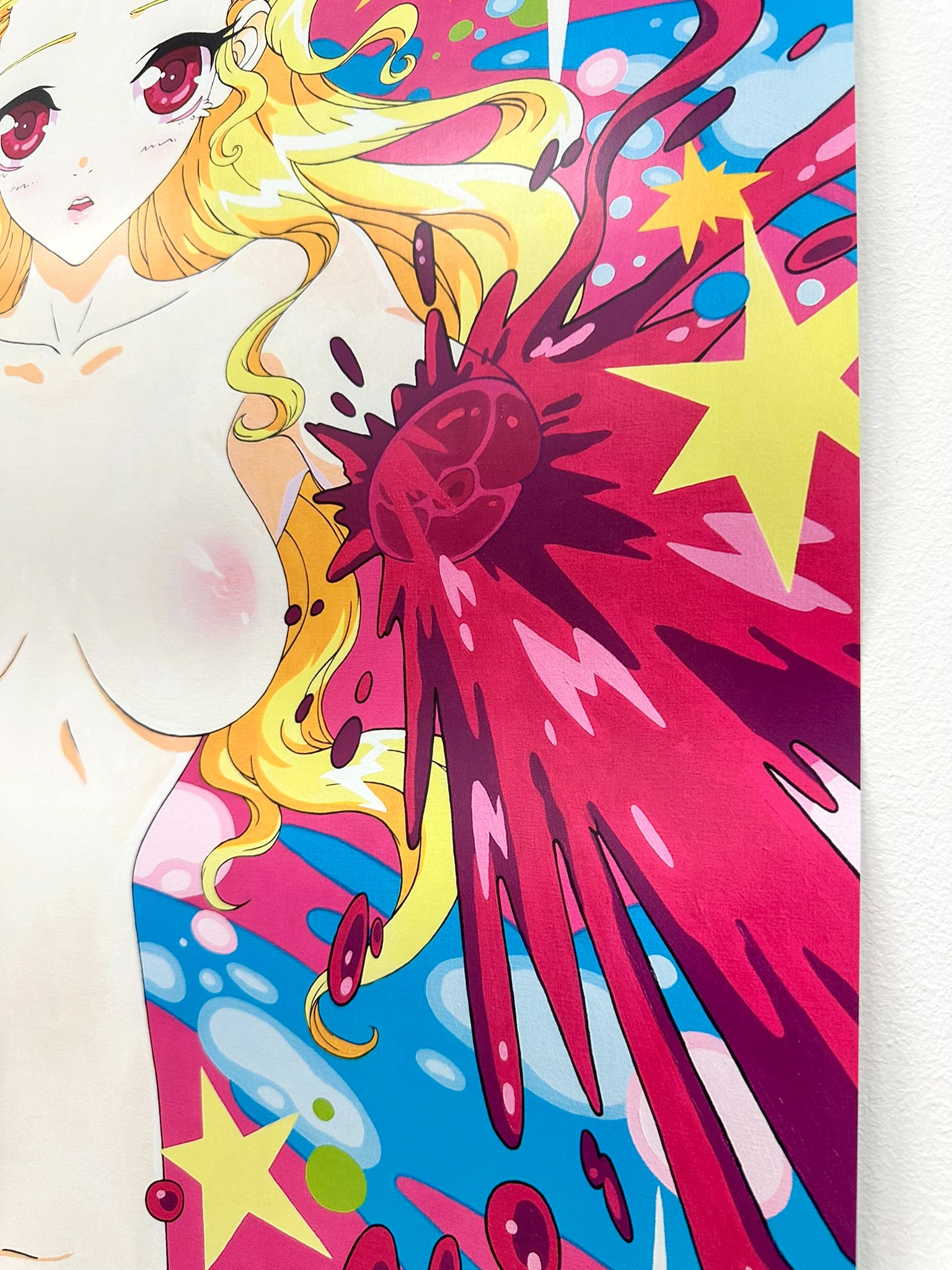
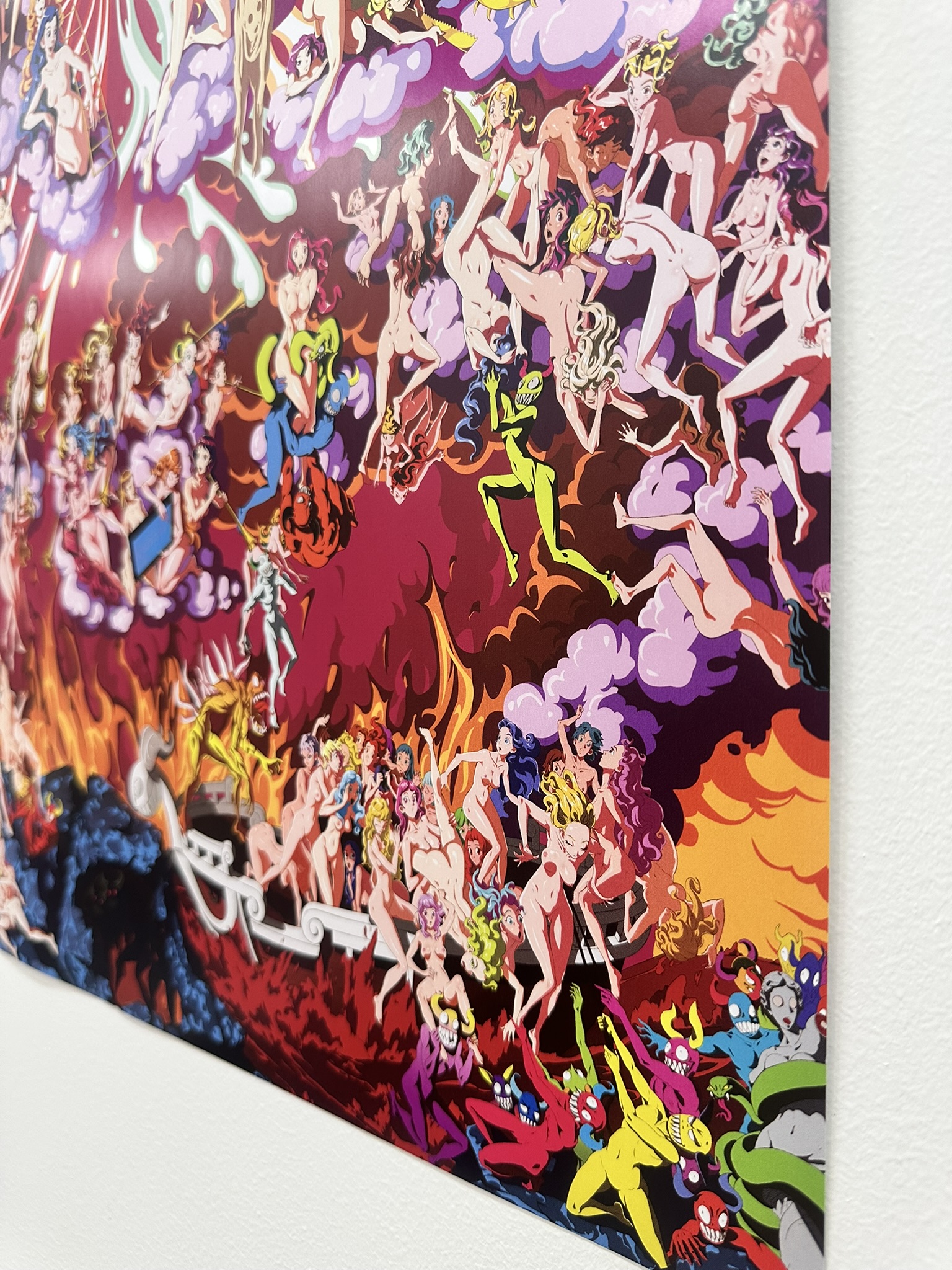
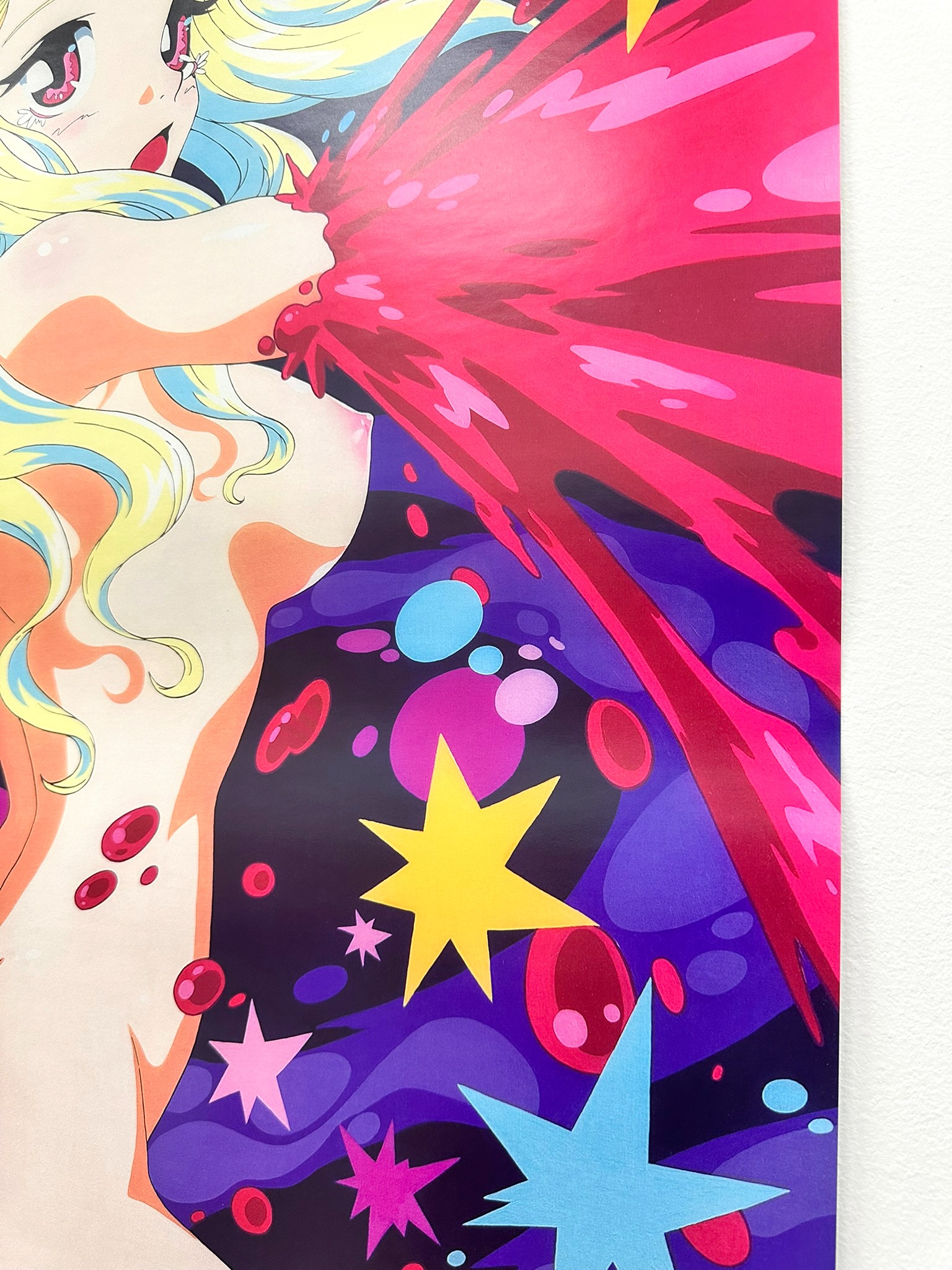
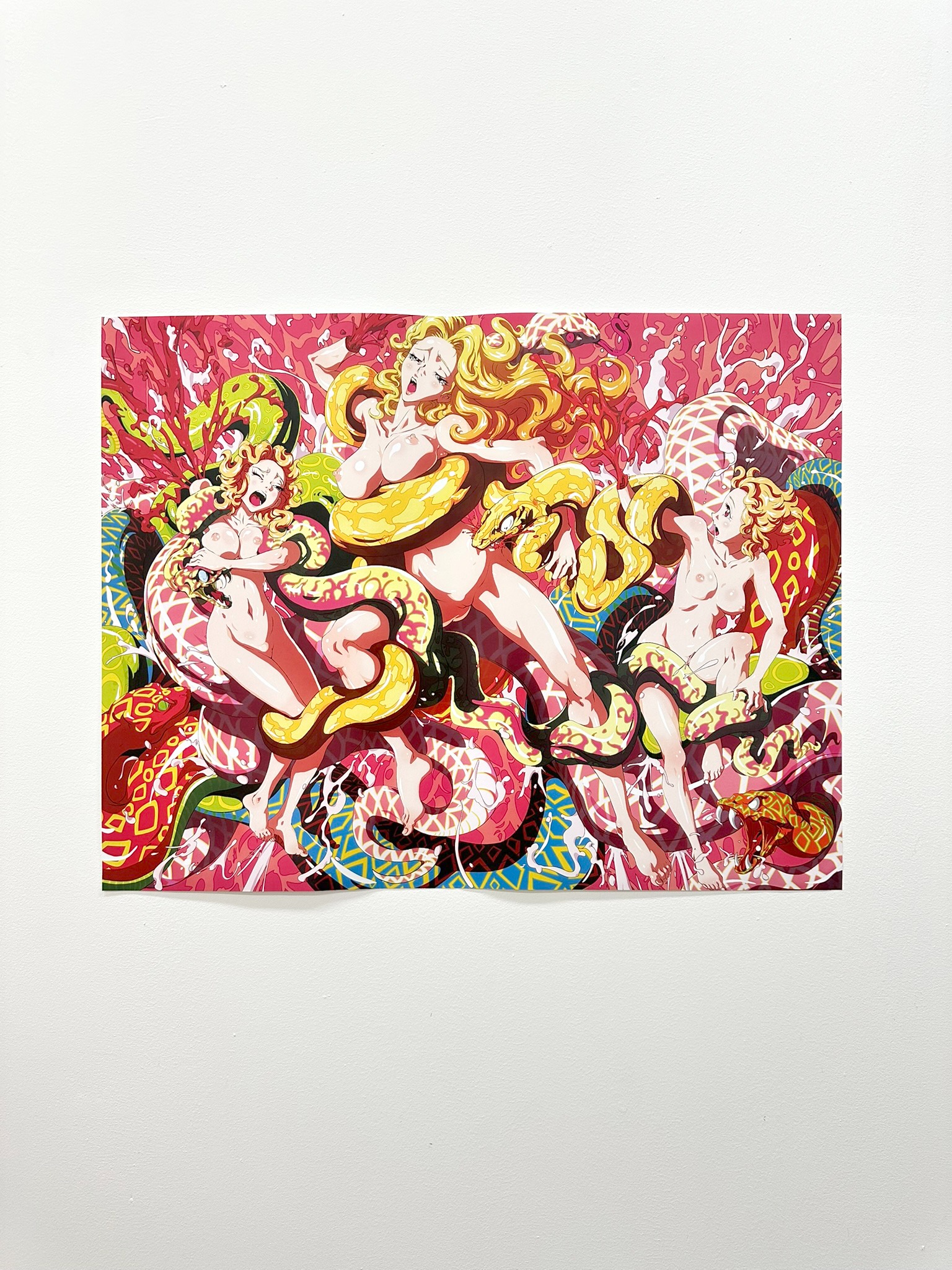
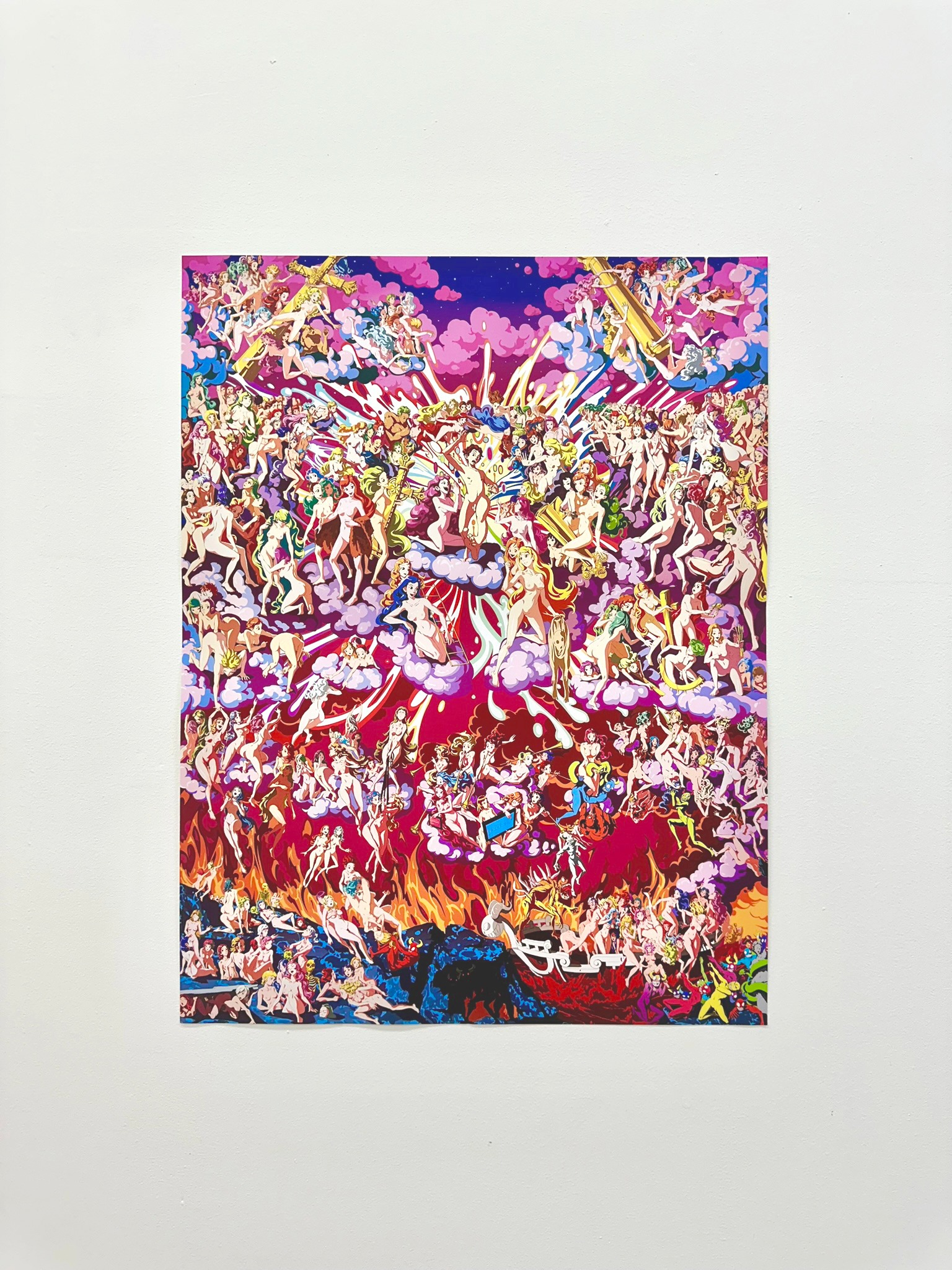
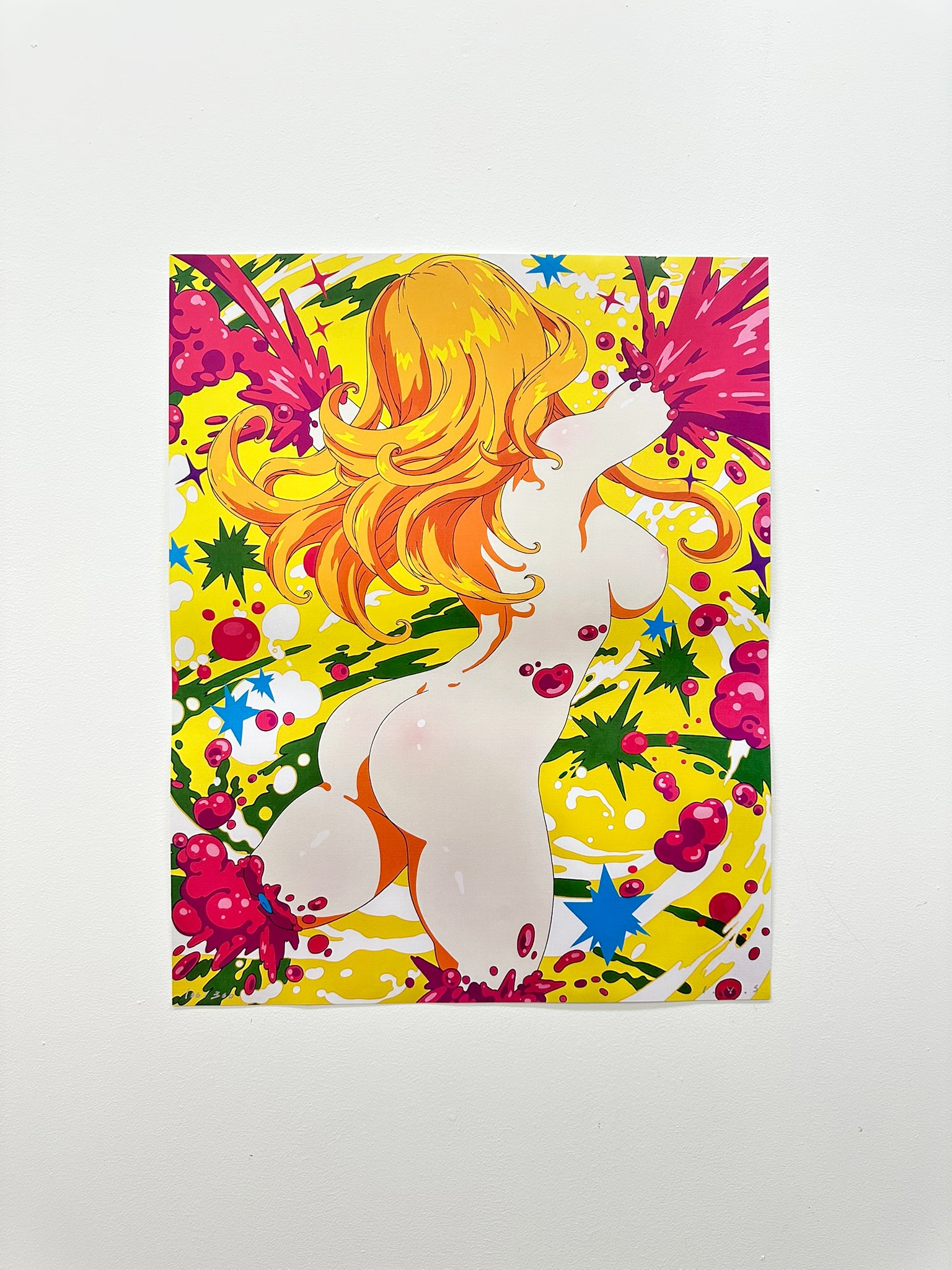
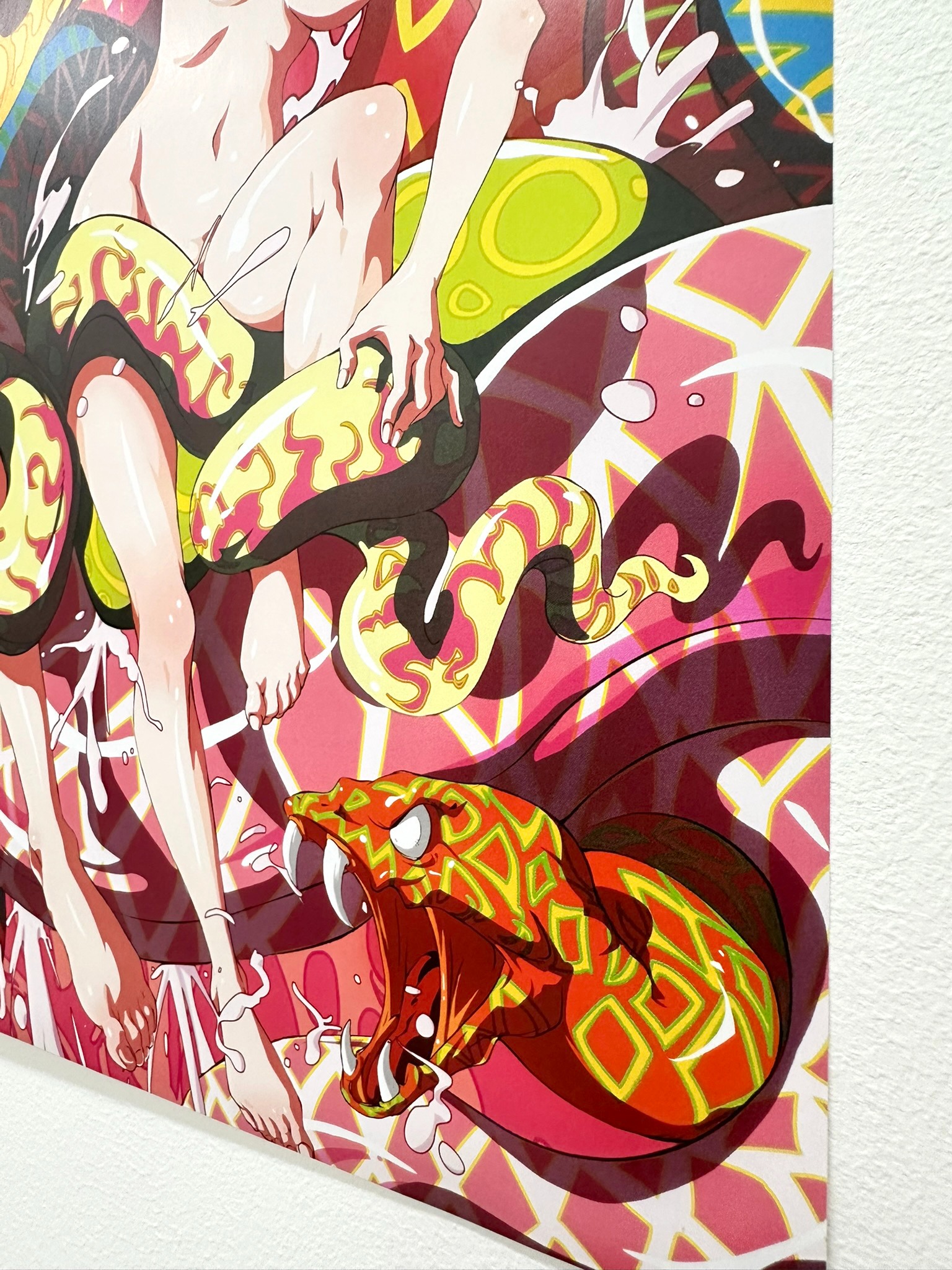
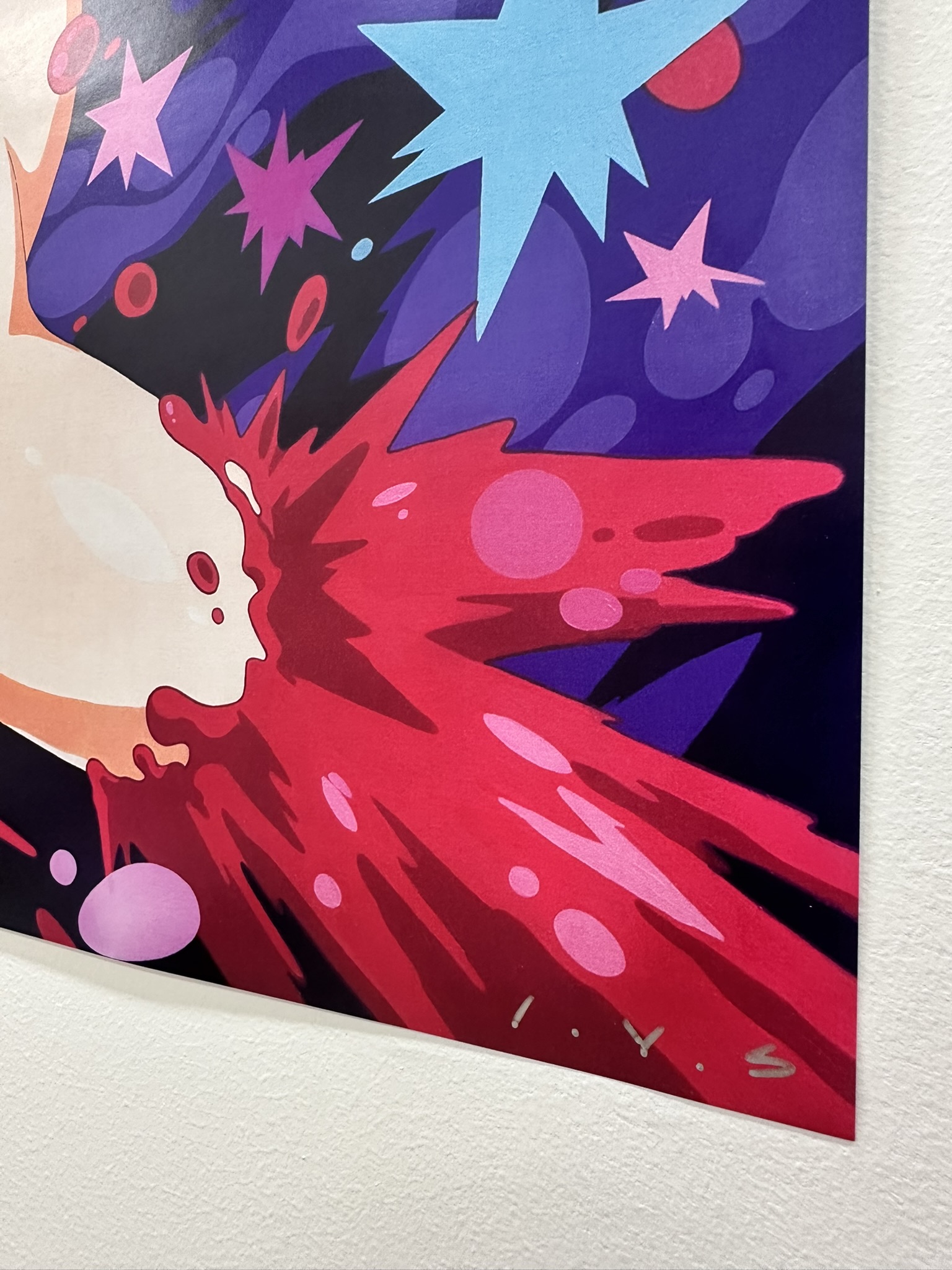
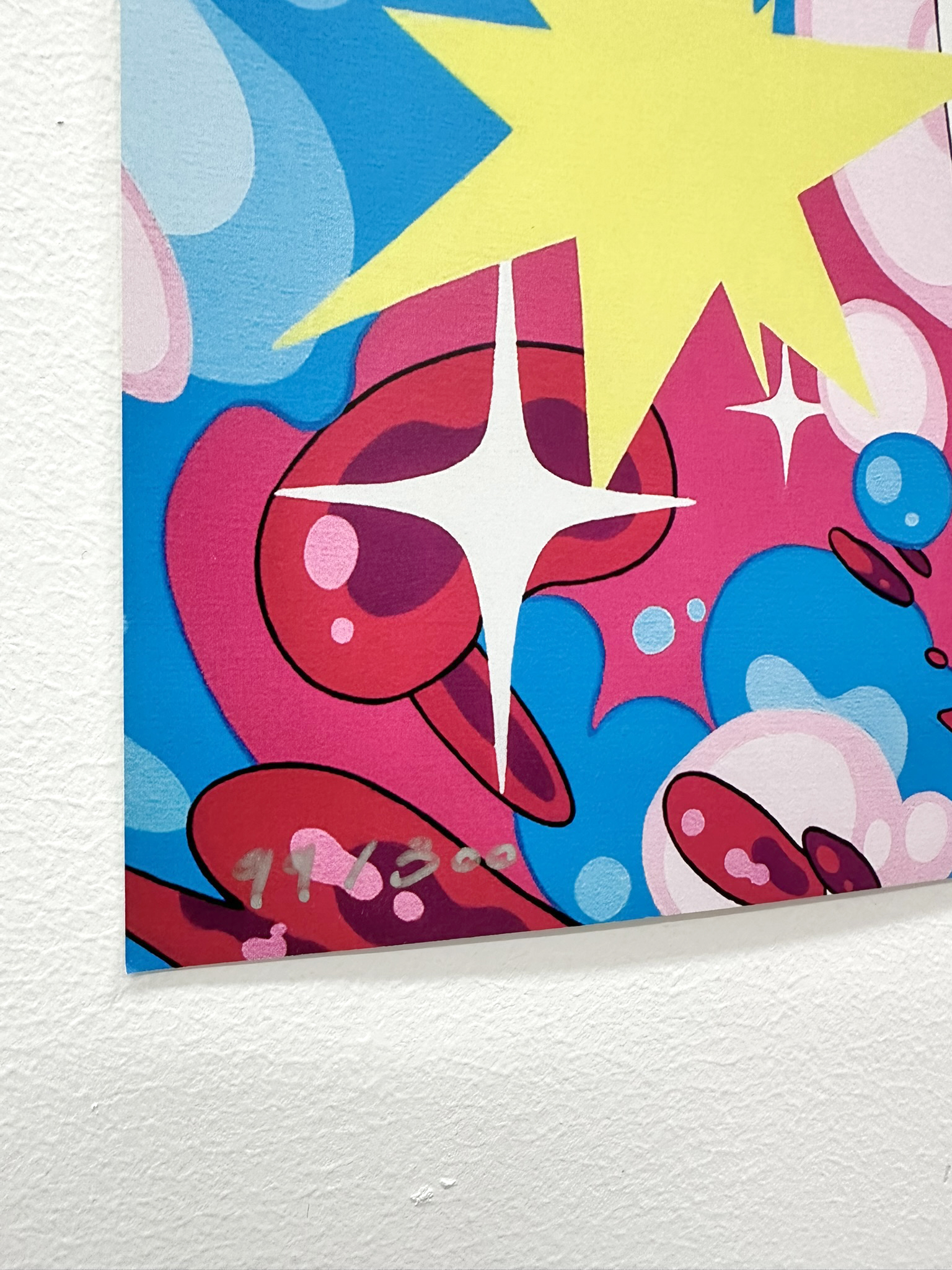
원작Original Work
The Annunciation
The Annunciation (central panels), 2014, Oil on canvas, 2 panels, 194 × 261 cm overall
〈수태고지〉는 서양 회화가 오랫동안 다루어 온 주제를 토르소 연작의 연장선에서 그린 작업이다. 가브리엘과 마리아 두 인물을 그리고, 그 주위를 백합과 별, 분홍색 피가 터져 나오는 소용돌이로 채웠다. 2014년의 첫 작품 이후, 2026년부터 다시 연작으로 이어 가고 있다.
오시이 마모루의 극장판 애니메이션 〈공각기동대〉(1995)의 마지막에는 천사의 환영이 내려오고, 주인공과 인형사가 하나의 새로운 존재가 되는 장면이 나온다. 내게는 그 장면이 수태고지처럼 보였다. 그때 수태고지가 예수의 잉태를 알리는 장면만이 아니라, 무언가가 태어나는 순간 자체를 그린 것일 수도 있다고 생각했다.
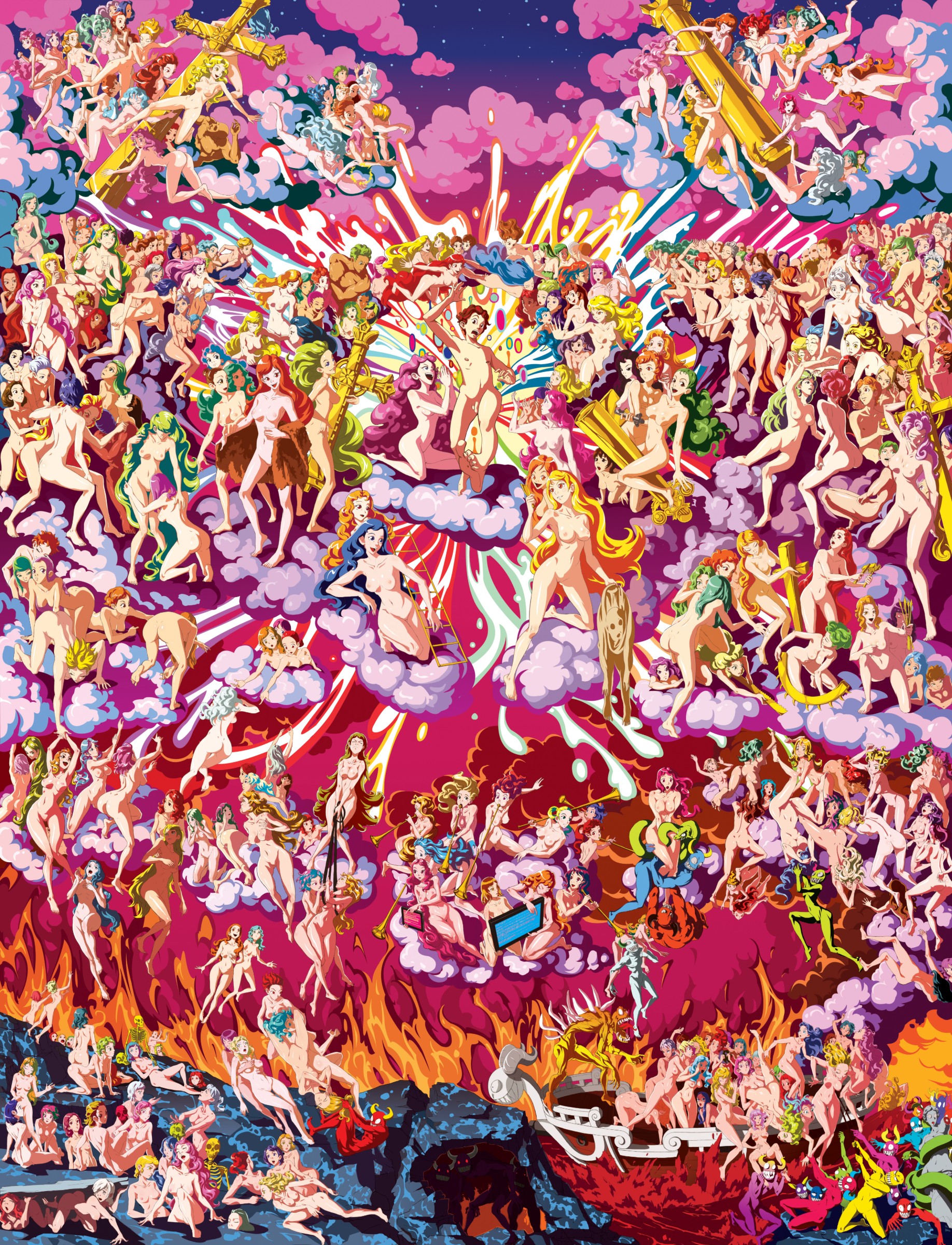
토르소 연작을 이어 가면서, 토르소보다 큰 화면으로 그 시작을 알리는 기념비적인 작품이 필요하다고 생각했다. 수태고지는 첫 개인전 《NU-TYPE》(메이크샵 아트스페이스, 파주, 2014)의 중심에 놓기에 어울리는 주제였다. 네 개의 캔버스를 썼지만, 가운데 두 폭이 하나의 이미지로 이어져 세 개의 화면으로 보인다. 종교화의 삼면화 구조를 따르면서, 펼쳐진 만화책의 양면처럼 보이기를 바랐다. 캔버스에 유채로, 중앙 두 폭은 합쳐서 194×261cm, 좌우 패널은 각각 117×91cm다.
중앙 화면의 왼쪽, 날개가 있는 인물이 가브리엘이고 오른쪽이 마리아다. 둘은 서로 닮아서, 날개 하나로만 누가 누구인지 알 수 있다. 속성 하나로 인물을 식별하는 것은 종교화의 도상학이 오래 써 온 방식이고, 애니메이션이 머리색이나 소품으로 캐릭터를 구분하는 방식이기도 하다. 두 인물은 팔과 다리가 하나씩 없고, 화면 가운데의 폭발을 사이에 두고 마주 보며 빙글 돌고 있다.
전통적인 수태고지에서 빛은 하늘에서 내려오지만, 이 그림에서는 가운데에서 터져 나온다. 화면 전체가 하나의 큰 폭발이기도 하고, 둘 사이의 관계에서 생긴 것일 수도, 내적인 폭발일 수도 있다. 위에서 내려오지 않고 중심에서 나온다는 것이 내게는 중요했다.
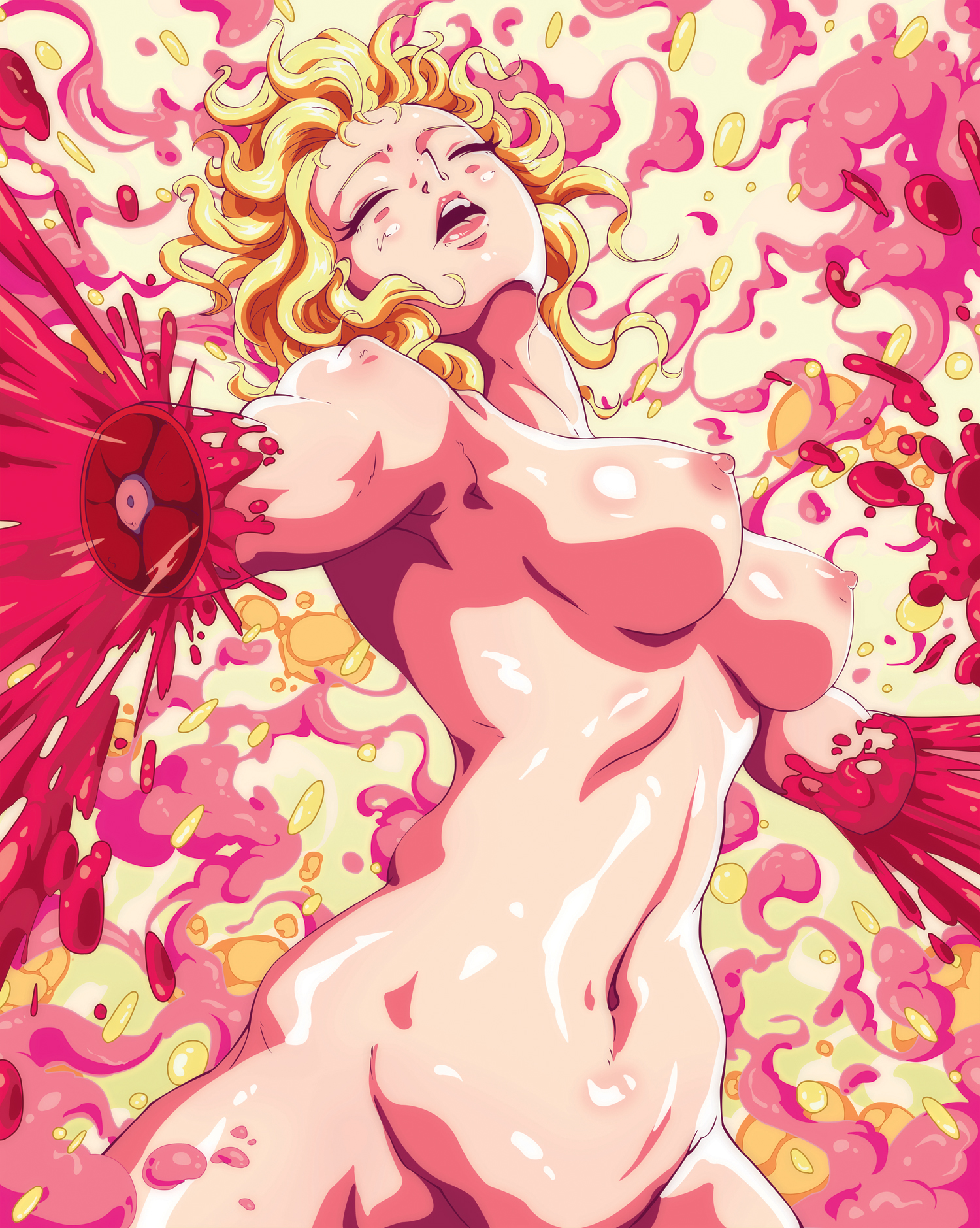
인물에서 분홍색 피가 퍼져 나가고, 그 주위로 백합이 만개하며 별이 반짝이고 액체가 터진다. 핏방울과 꽃과 별이 한데 뒤섞이는 그 속에서, 무언가가 폭발하면서 동시에 만들어지는 순간을 그려 보려 했다.
작품의 인물들은 누드로 등장한다. 애니메이션의 클라이맥스에서 주인공이 맨몸으로 빛나며 각성하듯, 변신 장면에서 빛에 싸여 옷이 사라지듯, 수태고지 역시 결정적인 사건이면서도 세속에 속하지 않은 순간으로 보여 주고 싶었다.
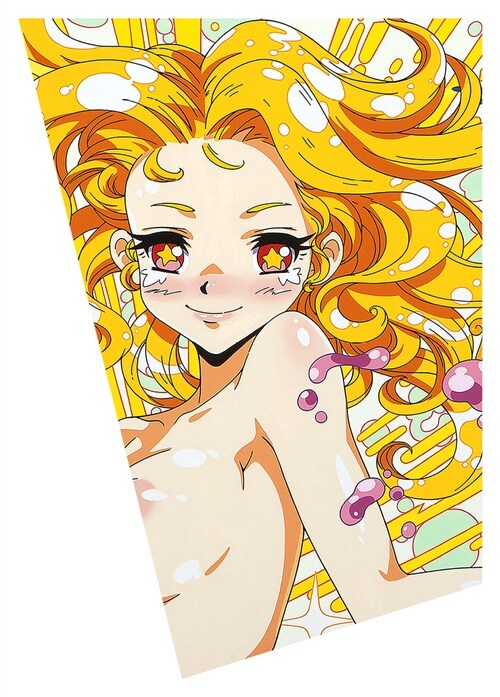
금발의 여성 캐릭터는 일본 만화에 자주 등장하는 미형의 이미지다. 서양인도 동양인도 아닌 무국적의 얼굴이고, 이상화된 미의 전형이라는 점에서 고전 조각과 같다. 좌우의 천사들은 머리색과 피부색을 달리해, 전형적인 미소녀 캐릭터 말고도 가능한 한 다양한 유형을 그려 보고 싶었다. 배경은 미색이 약간 섞인 흰색으로, 그림 전체가 순수하고 밝게 보이기를 바랐다.
백합은 서양 회화에서 순결의 상징이지만, 만화의 맥락에서는 다른 뜻으로도 읽힌다. 같은 도상이 시대와 문화에 따라 다르게 읽히는 만큼, 그 해석들을 한 화면 안에 함께 놓아 서로 부딪히게 만드는 일이 내게는 흥미롭다.
그동안은 다양한 유형의 작품을 만들어 내는 데 집중했다면, 이제는 그 유형들을 하나씩 이어 가며 더 깊이 다루어 보려 한다. 2026년부터는 수태고지를 다시 꺼내 더 다양한 구성으로 연작을 그리고 있다. 처음 그림의 양옆 패널에 있던 천사들은 만화 캐릭터 같은 작고 동그란 모습이 되어 화면 곳곳에 흩어졌고, 가운데에서 터지던 폭발은 백합과 그 천사들이 화면 가득 피어나 퍼져 나가는 모습으로 바뀌었다.
〈The Annunciation II〉는 뒤집어도 그림이 되는, 위아래가 없는 화면이다. 그 안에서 마리아와 가브리엘은 추락하듯 상승하며 서로 부딪힌다. 〈The Annunciation III〉의 두 인물은 서로 엇갈리며 반대 방향을 향하지만, 서로를 바라본다. 수태고지는 언제나 순환하는 구성과 조형을 생각하며 그렸다. 두 작품(2026, 캔버스에 유채, 각 227×182cm)은 《일상의 이미지, 어떻게 말을 거는가》(서울대학교미술관, 서울, 2026)에서 처음 선보였고, 지금도 새로운 연작을 이어 가는 중이다.
이 그림들이 어떤 탄생을 그린 것인지는 정하지 않았다. 화면의 한가운데서 두 사람은 천천히 돌고, 그 회전 속에서 무언가가 지금 막 태어나고 있다. 캔버스에는 그 순간만이 남는다.
The Annunciation carries the Torso series into a subject Western painting has returned to for centuries. It depicts the two figures of Gabriel and Mary, surrounded by lilies, stars, and a vortex of bursting pink blood. First painted in 2014, it has continued as a series since 2026.
At the end of Mamoru Oshii's animated feature Ghost in the Shell (1995), there is a scene in which a vision of an angel descends and the protagonist and the Puppet Master merge into a single new being. To me the scene looked like an Annunciation. It made me think that the Annunciation might be not only the announcement of Christ's conception but a picture of the very moment something comes into being.
As I continued the Torso series, I felt it needed a monumental work, on a larger scale than the torsos, to announce its beginning. The Annunciation was a fitting subject to place at the center of my first solo exhibition, NU-TYPE (Makeshop Art Space, Paju, 2014). Four canvases are used, but the two central panels join into a single image, so the work reads as three. It follows the triptych structure of religious painting while, I hoped, also looking like the open spread of a comic book. Oil on canvas; the two central panels measure 194 × 261 cm together, the side panels 117 × 91 cm each.
On the left of the central image, the winged figure is Gabriel; on the right is Mary. The two resemble each other so closely that only the wing tells which is which. Identifying a figure by a single attribute is a method the iconography of religious painting has used for centuries, and it is also how animation tells its characters apart, by hair color or a prop. Each figure is missing one arm and one leg, and the two face each other, turning, with the explosion at the center of the picture between them.
In a traditional Annunciation the light comes down from heaven; in this painting it bursts out from the center. The whole picture may be one great explosion; it may be something born of the relationship between the two figures; it may be an explosion from within. What mattered to me was that it comes from the center, not from above.
Pink blood spreads out from the figures, and around it lilies bloom, stars glitter, and liquid bursts. Amid all these drops of blood, flowers, and stars, I wanted to paint a moment in which something explodes and is made at the same time.
The figures in the work are nude. Just as the protagonist of an anime glows naked as she awakens at the climax, and just as a transformation sequence wraps the body in light as the clothes vanish, I wanted to show the Annunciation as a decisive event, yet a moment that does not belong to this world.
The blond female character is an image of beauty that recurs in Japanese manga. Hers is a face of no nation, neither Western nor Asian (what is called mukokuseki), and as an idealized type of beauty she is like classical sculpture. I gave the angels on the side panels different hair and skin colors, wanting to paint as many types as I could beyond the standard bishōjo character. The ground is white with a hint of cream, so that the whole painting would read as pure and bright.
In Western painting the lily is a symbol of purity; in the context of manga, it can be read to mean something else as well. Because the same iconographic motif is read differently across periods and cultures, I find it fascinating to set those readings side by side in a single picture and let them collide.
Until now I have concentrated on creating many different types of work; now I want to take those types up one by one and explore them in greater depth. Since 2026 I have returned to the Annunciation, painting it as a series in a wider variety of compositions. The angels from the side panels of the first painting have become small, round, cartoon-like figures scattered across the picture, and the explosion that once burst from the center has turned into lilies and those angels blossoming and spreading over the whole surface.
The Annunciation II is a picture with no top or bottom; it holds together even turned upside down. Within it, Mary and Gabriel collide, rising as if they were falling. In The Annunciation III the two figures cross past each other, facing in opposite directions, yet they look at one another. I have always painted the Annunciation with a cyclical composition and form in mind. Both works (2026, oil on canvas, 227 × 182 cm each) were first shown in Everyday Images: How They Address Us (Seoul National University Museum of Art, Seoul, 2026), and new works in the series are now under way.
I have not decided what kind of birth these paintings depict. At the center of the picture the two figures turn slowly, and within that turning something is being born at this very moment. Only that moment remains on the canvas.