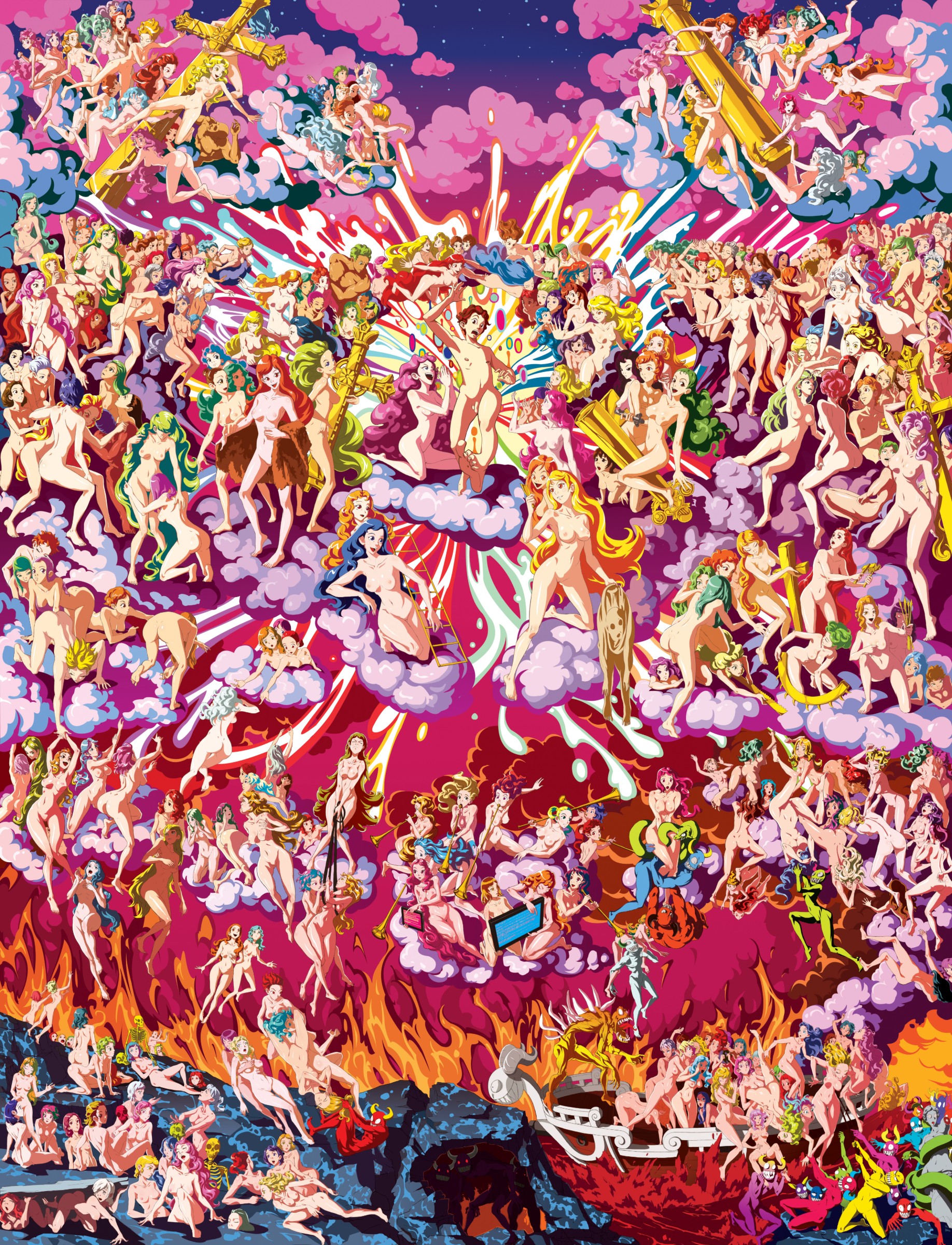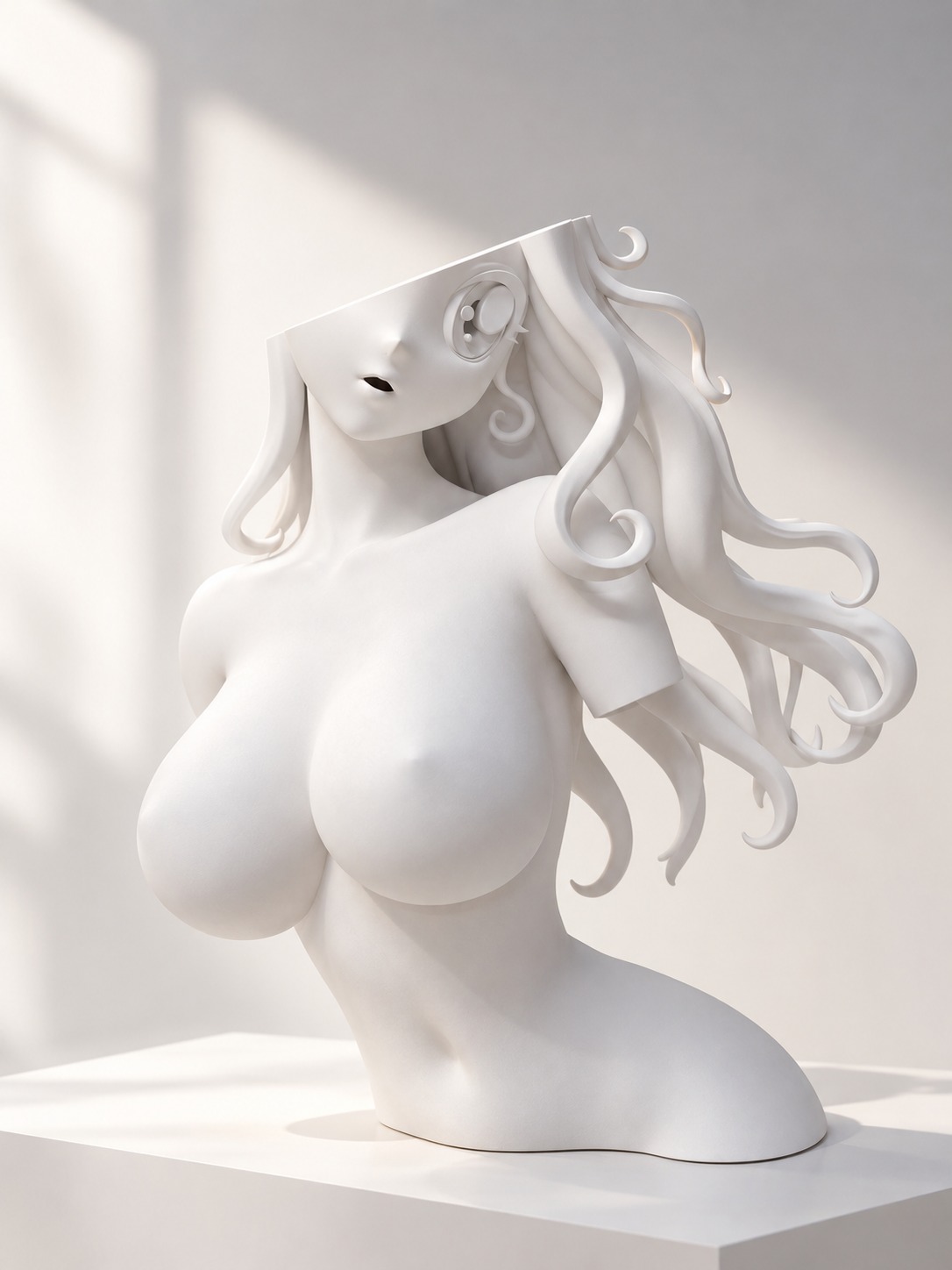
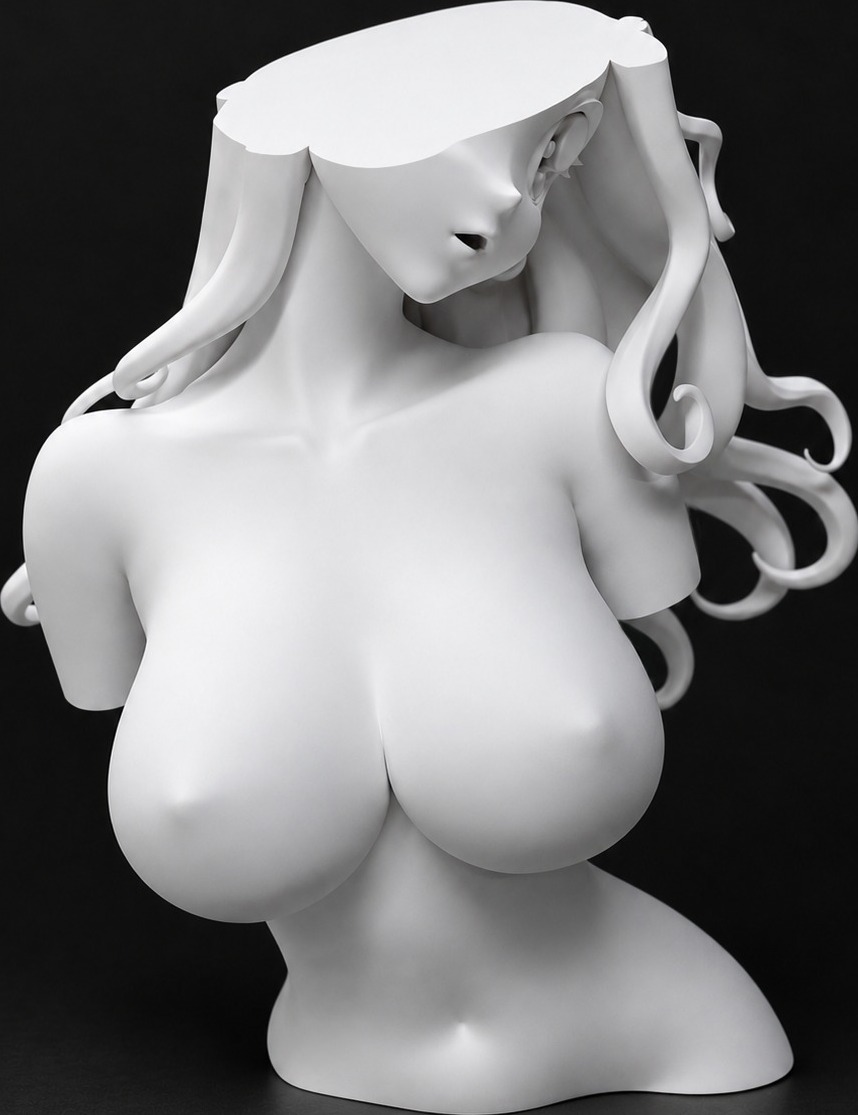
Torso Sculpture 01
50 × 43 × 38 cm
Painted 3D-printed resin
Signed and numbered, edition of 10 + 2 AP
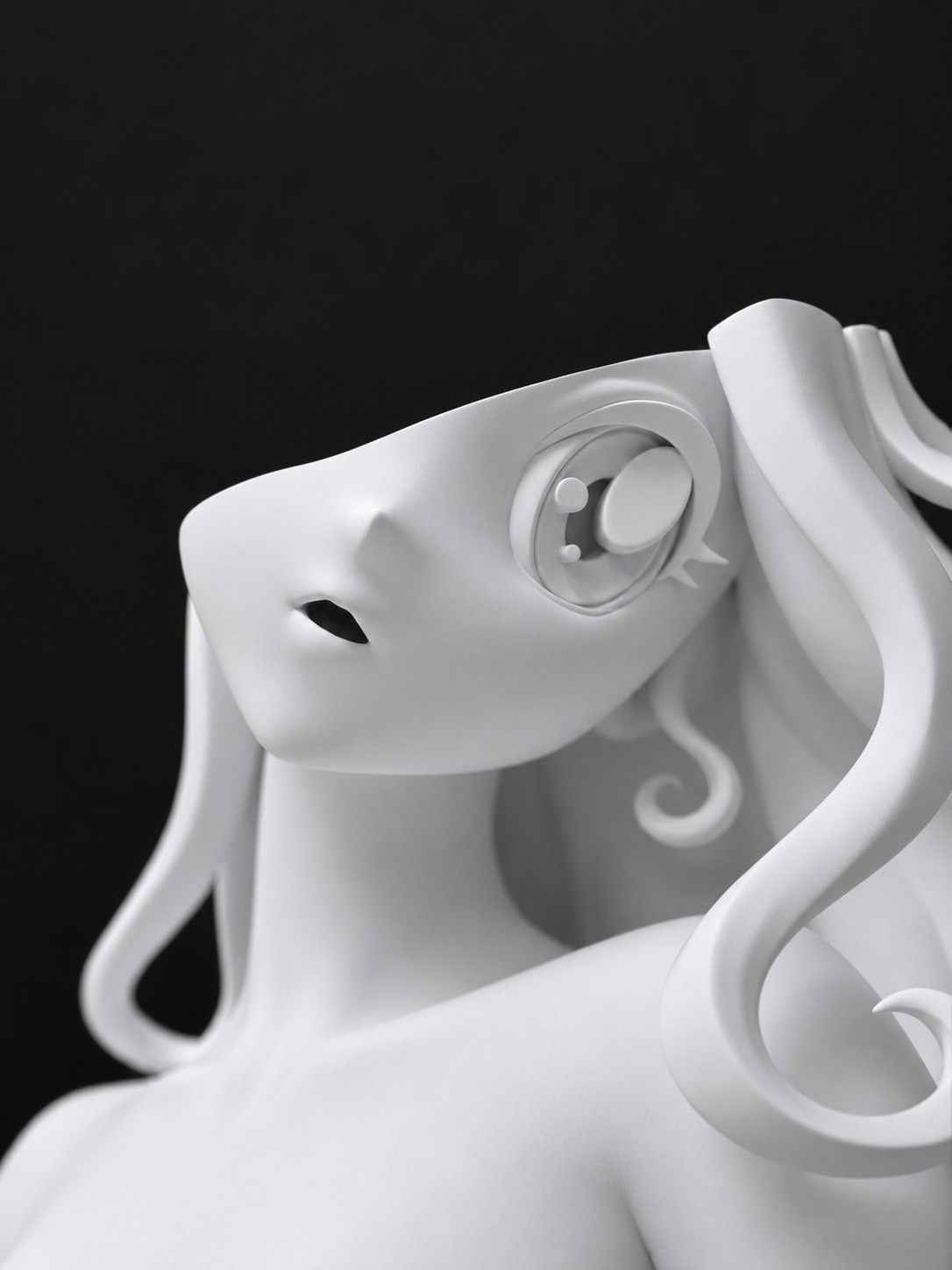
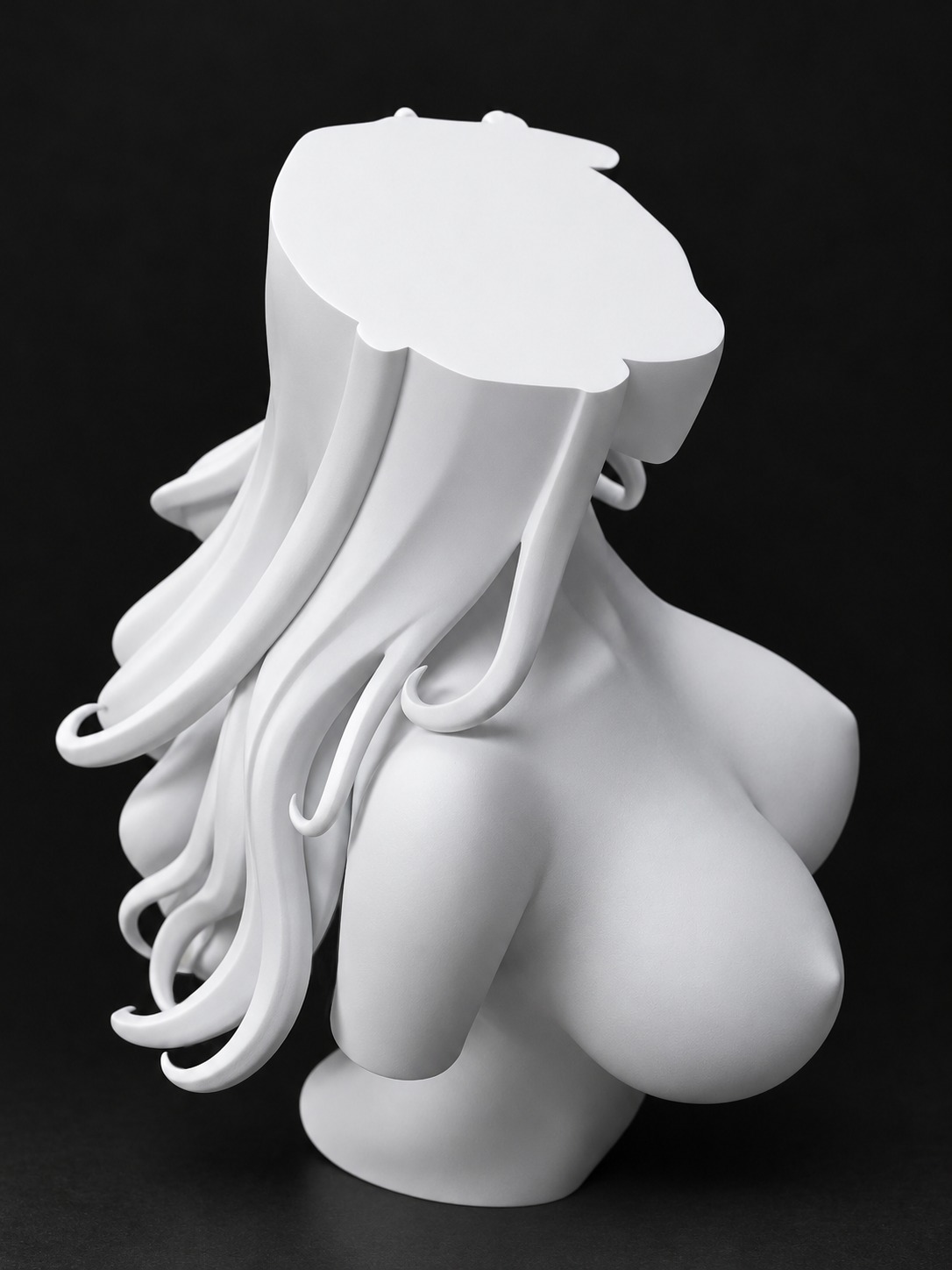
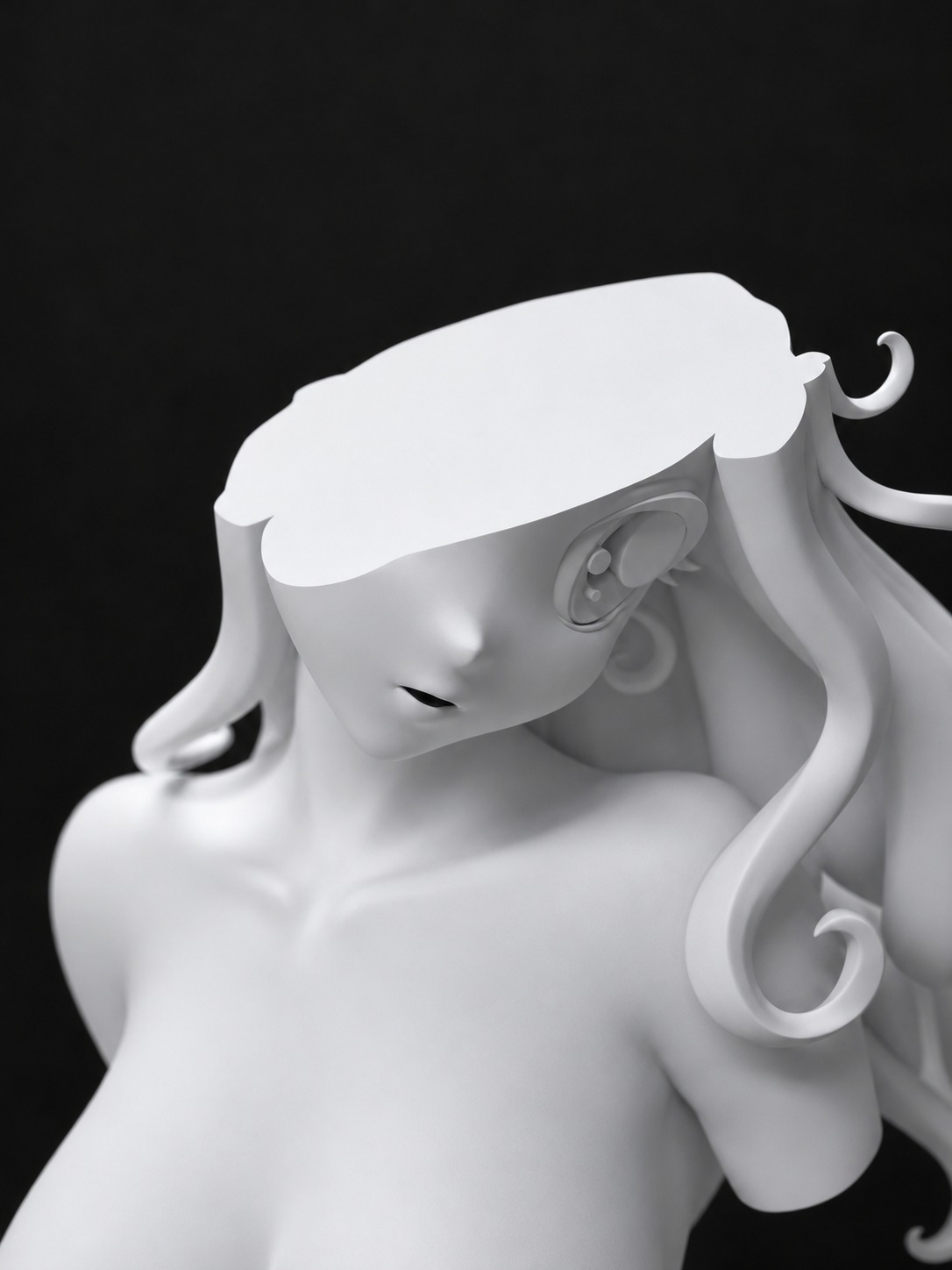
Torso Sculpture is the first work to bring the Torso series, which I have been painting since 2012, into three-dimensional form. In 2016, at the Metropolitan Museum of Art in New York, I saw a Hellenistic marble head missing the upper part of its face. To me, it looked as if a single comic-book panel had appeared in the real world. This sculpture began with that impression, and it takes the form that emerges when a torso is placed inside an invisible panel.
3D rendering
50 cm
43 × 38 cm
50 × 43 × 38 cm
Painted 3D-printed resin
Signed and numbered, edition of 10 + 2 AP
Original Work

Torso Sculpture
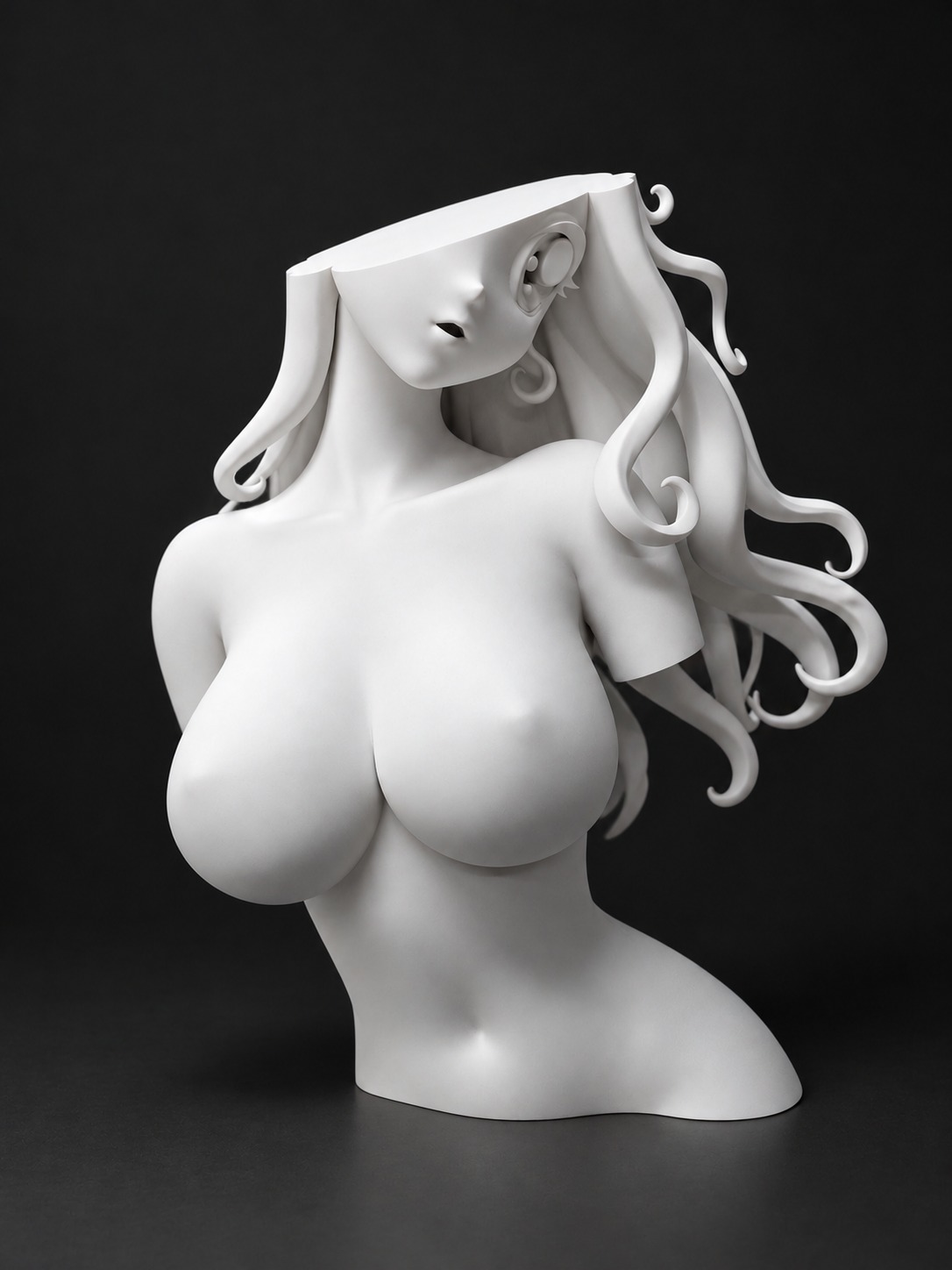
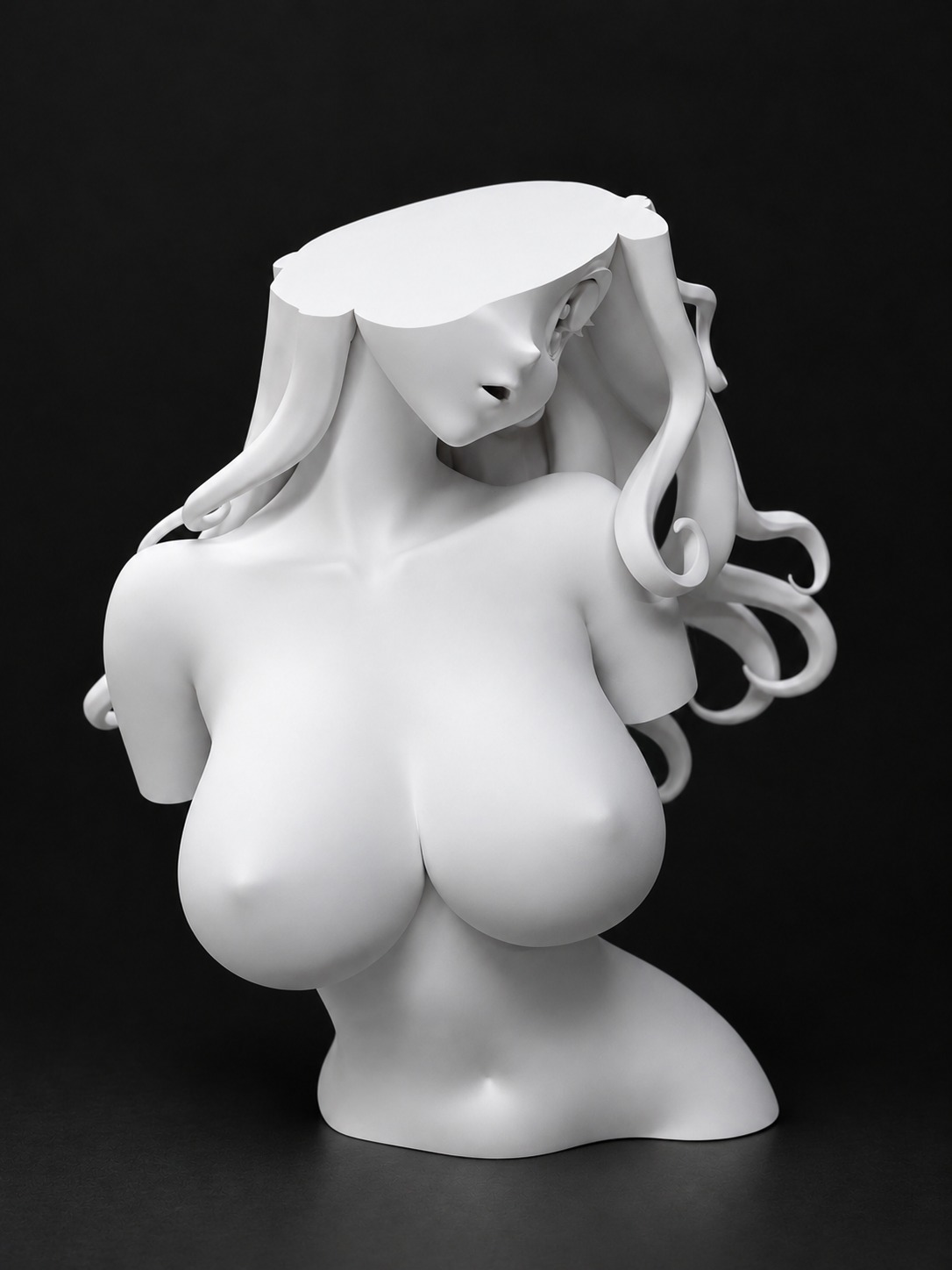
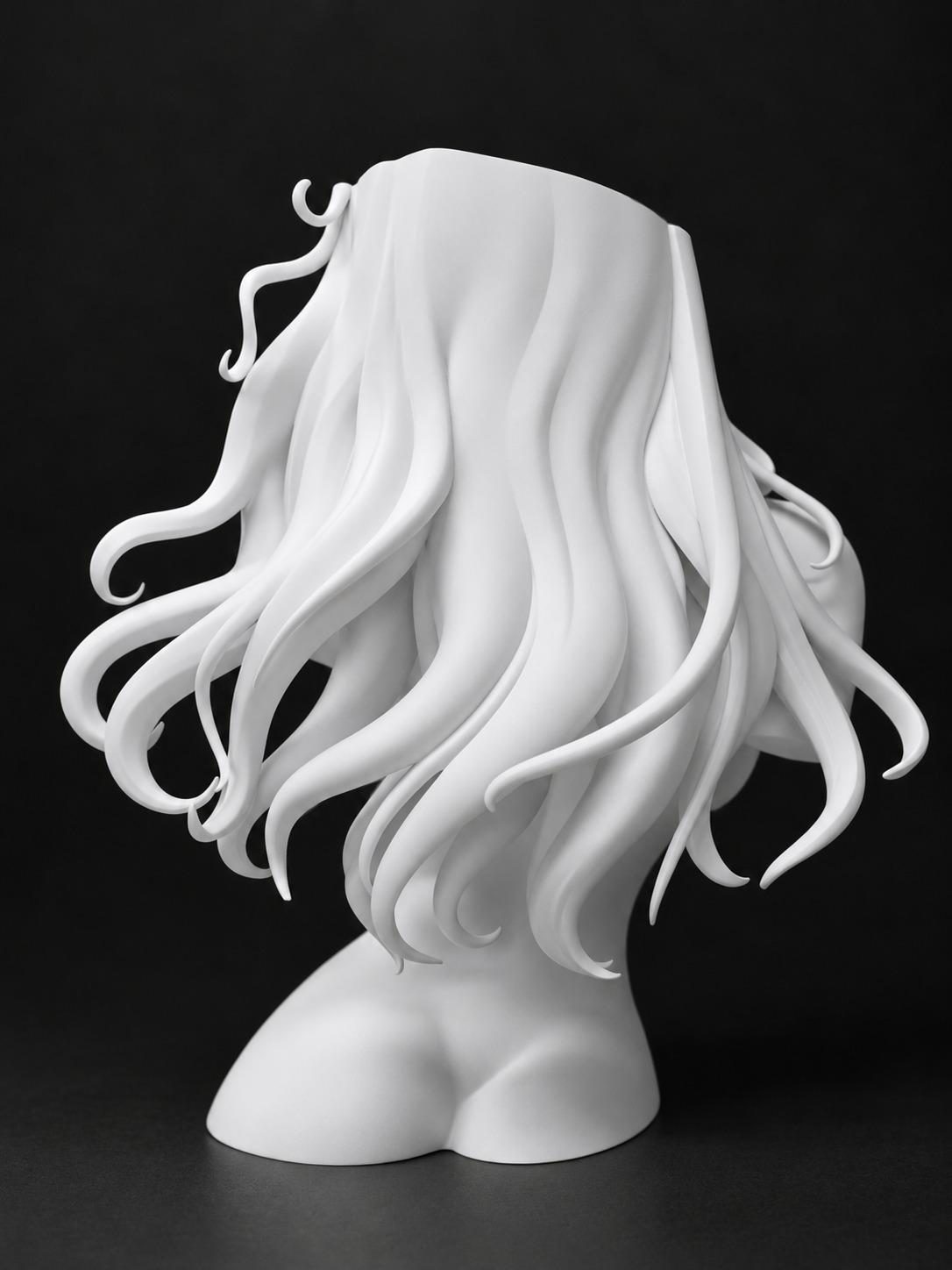
Torso Sculpture, 2026, Painted 3D-printed resin, 50 × 43 × 38 cm, edition of 10 + 2 AP. Digitally composited photograph
In 2016, at the Metropolitan Museum of Art in New York, I saw a Hellenistic marble head missing the upper part of its face. To me, it looked as if a single comic-book panel had appeared in the real world. Torso Sculpture began with that impression, and it takes the form that emerges when a torso is placed inside an invisible panel.
The head is Fragmentary Colossal Head of a Youth (2nd century BC, marble, Antikensammlung, Staatliche Museen zu Berlin). It was found in the gymnasium at Pergamon and breaks off at an angle just below the eyes.
The broken sculptures in the museum also looked like parts of a 3D model. A complete figure would be impressive, but I found these separated pieces quite beautiful as well. Above all, I was drawn to the shapes of their broken surfaces.
Fragments of ancient sculpture are what remains of once-whole figures after time has broken and worn them away. A comic panel, however, is determined by the artist's choice. To work out a form, one sketches past the panel's edge, yet only what lies within it survives in the finished drawing. The space outside is not lost; it is where the imagination extends.
I first made a drawing as the basis for Torso Sculpture, then modeled it in 3D myself while looking at it. As in drawing comics, I extended the form some way beyond the panel and kept only what lay inside. I tilted the panel's diagonal to roughly follow the angle at which the original is broken. Finally, I printed it on a 3D printer and painted it white.
White is the most basic state, in which only form remains, and a color that recalls marble. Many ancient Greek and Roman sculptures were originally painted; the white we know is what was left after the pigment wore away. I took that state not as an end but as a starting point, leaving color open as a possibility for later.
The form is an armless torso. It is the first sculpture to come out of my Torso series, which I had until now pursued in painting and print. A tilted panel cuts diagonally across the face, and the top of the head, left outside the frame, cannot be seen.
On a flat page, a panel's border is a line. In three dimensions, that line became a surface. Where the original's break, made by time, is irregular, the surface made by the panel is smooth. The original lost both eyes; I kept one of them inside the panel.
View work →