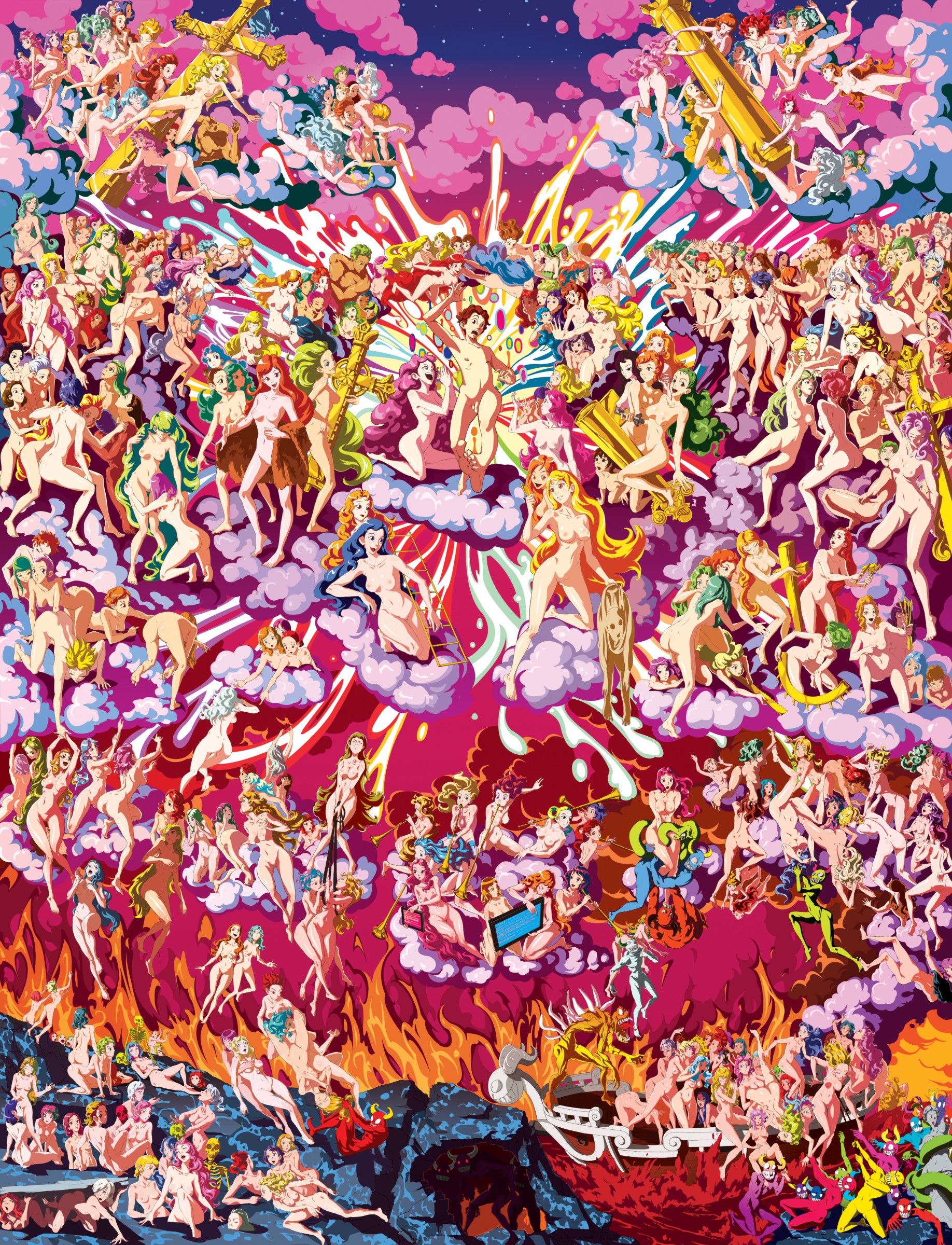
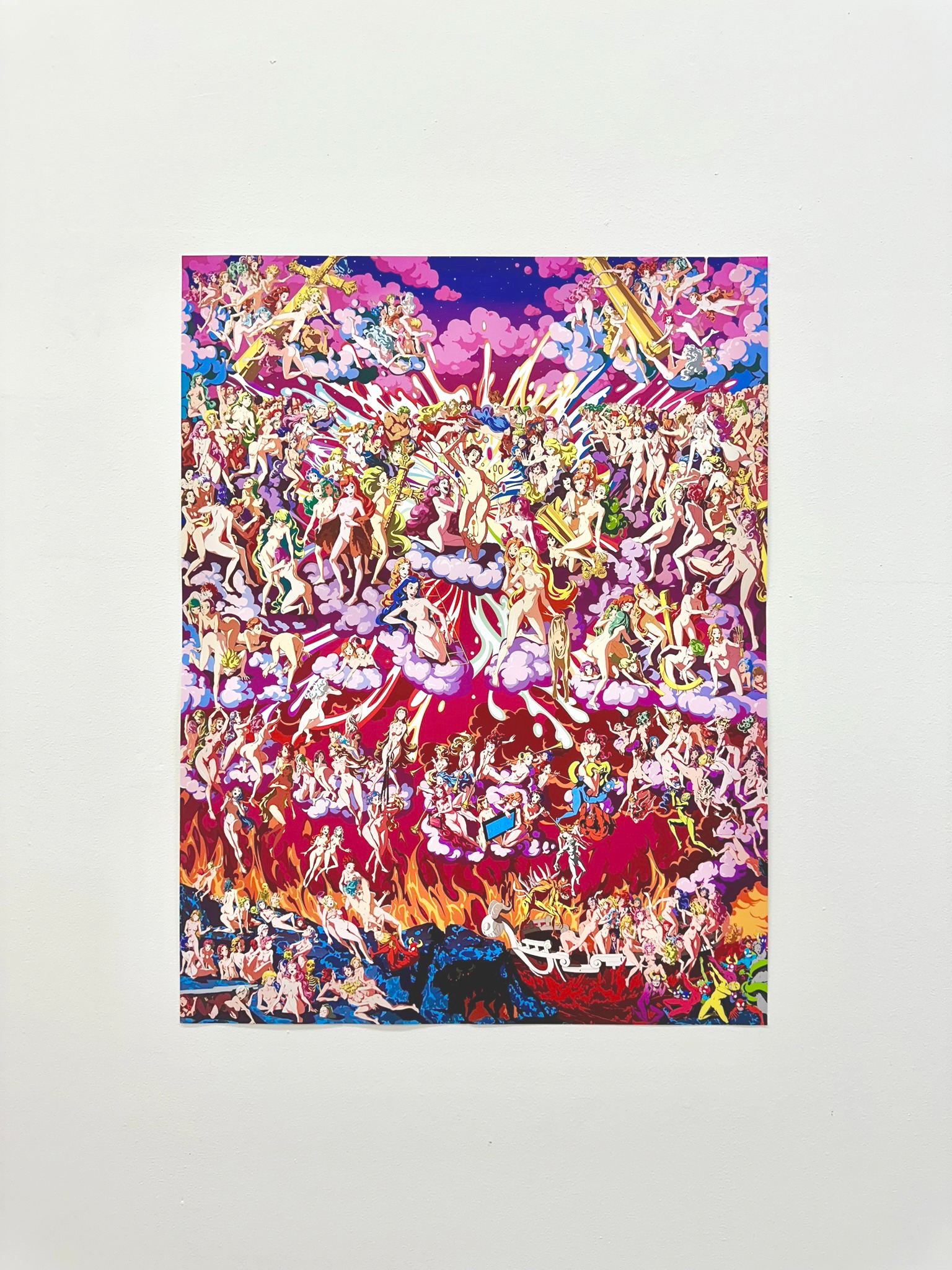
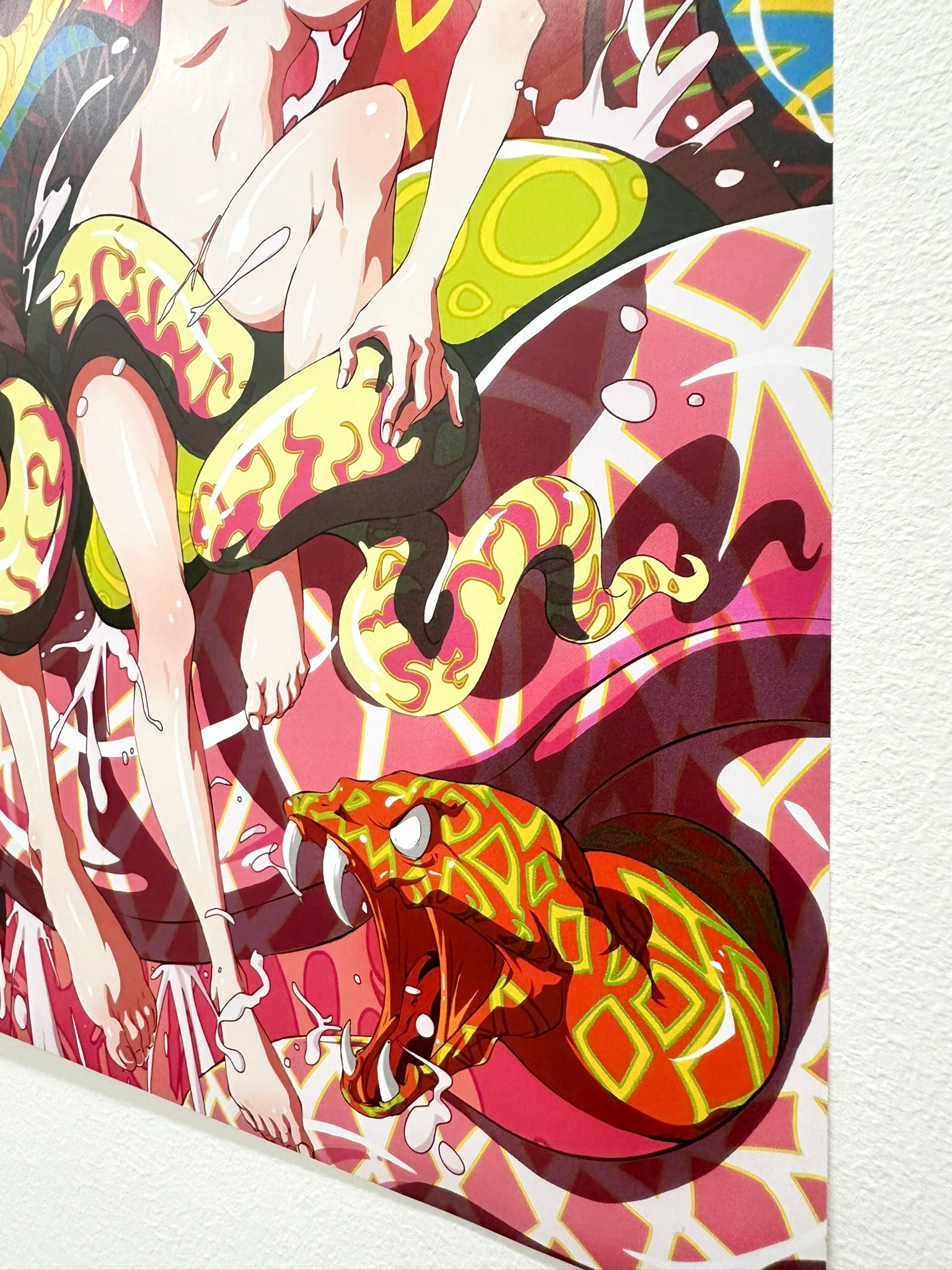
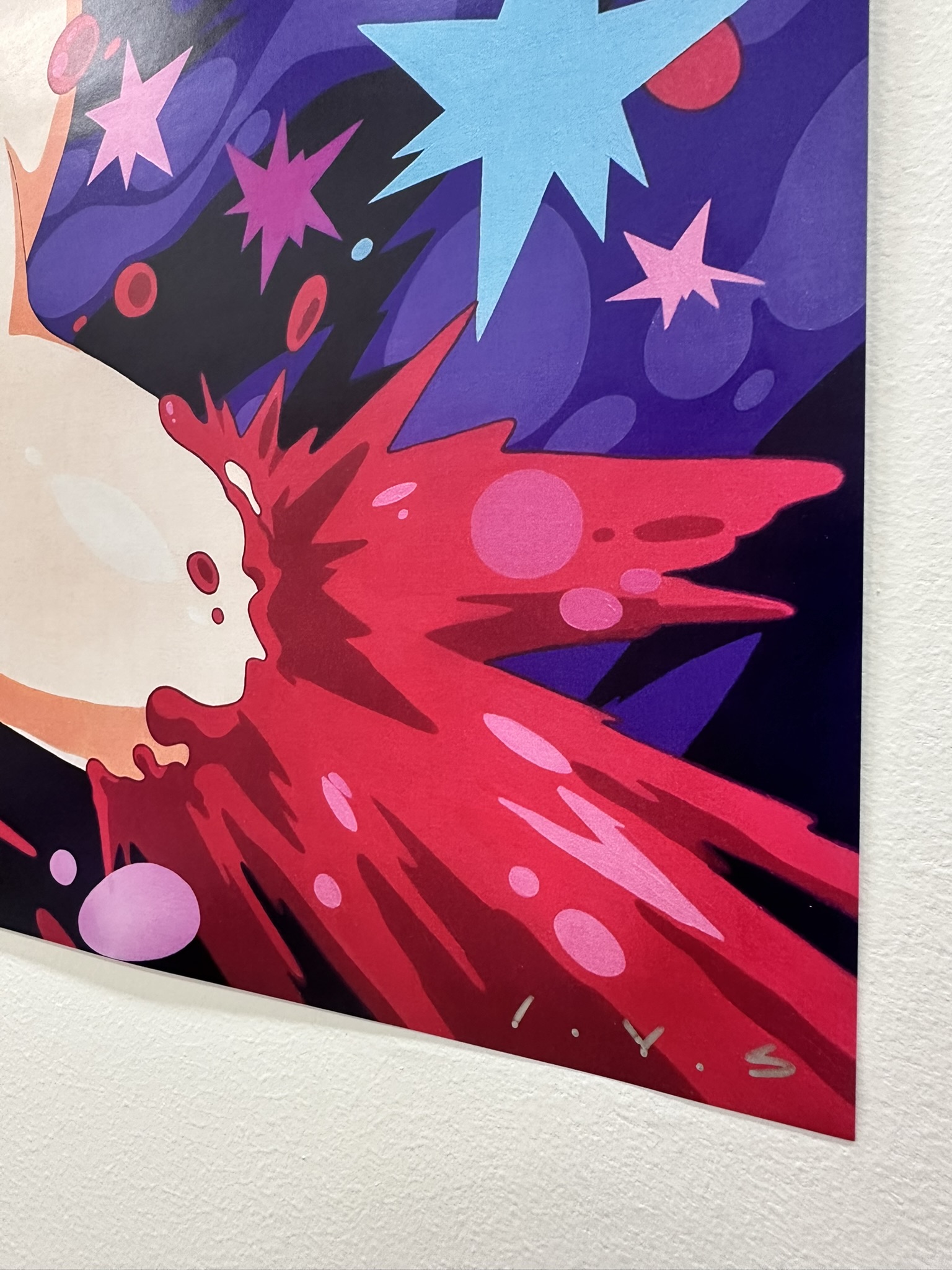
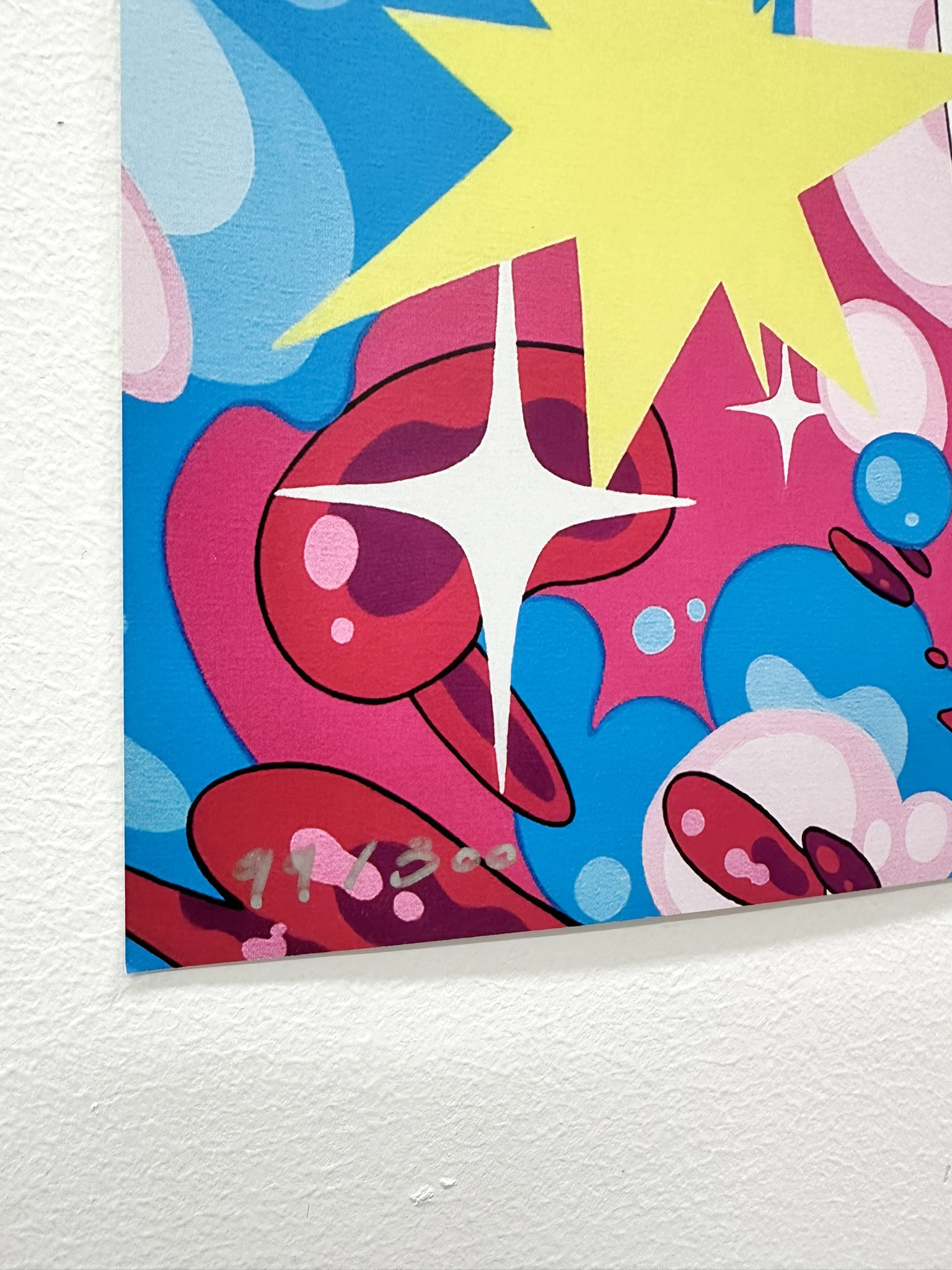
At the Last Judgment - Art Poster (2021)
65 × 50 cm
Digital Print on Paper
Signed and numbered, edition of 300
$30
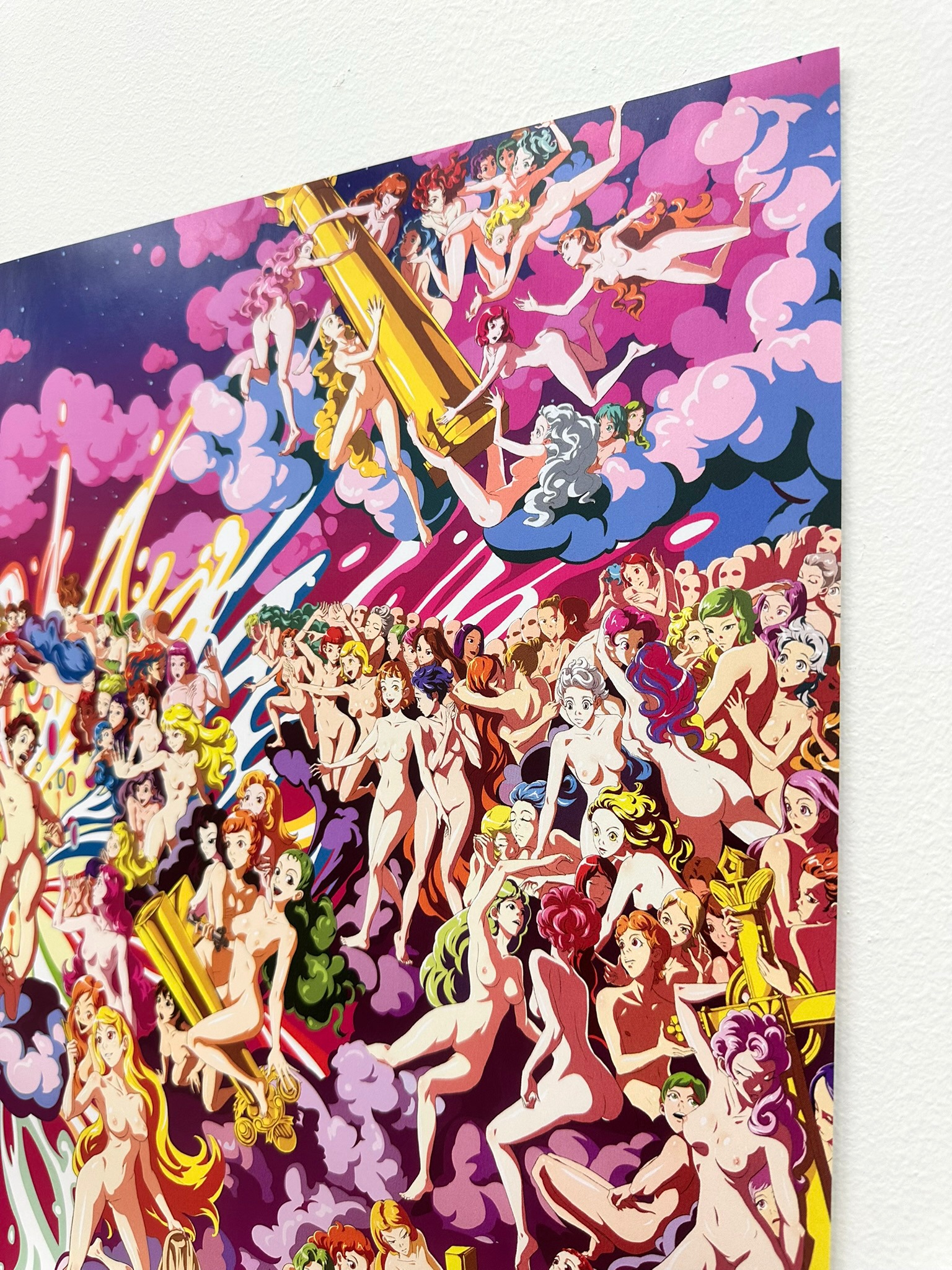
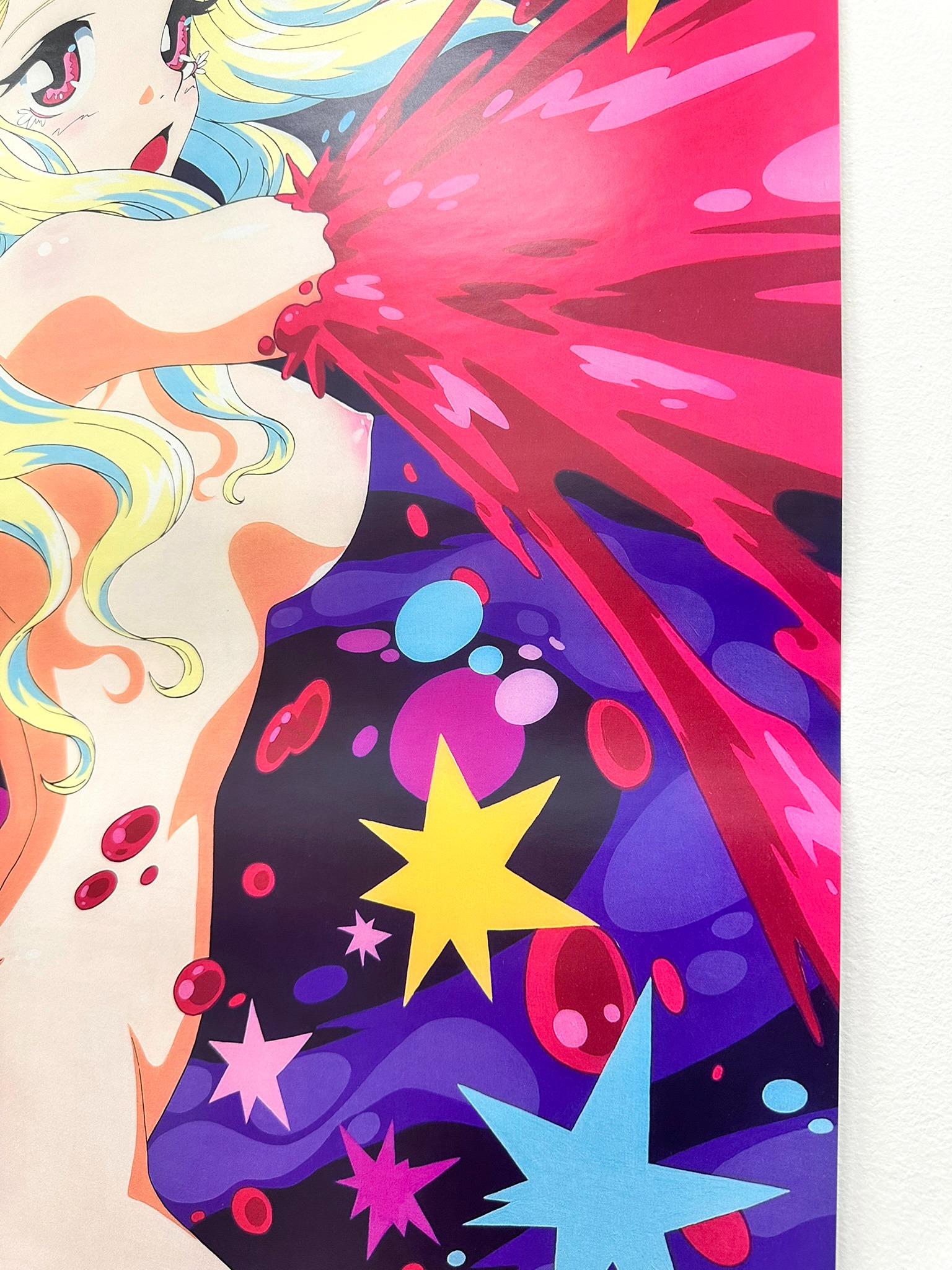
A poster edition of At the Last Judgment (2010), originally produced and released as a limited edition in 2021. To mark the relaunch of the website, the remaining prints are now available once again.

65 cm
50 cm
65 × 50 cm
Digital Print on Paper
Signed and numbered, edition of 300
Original Work
Digital
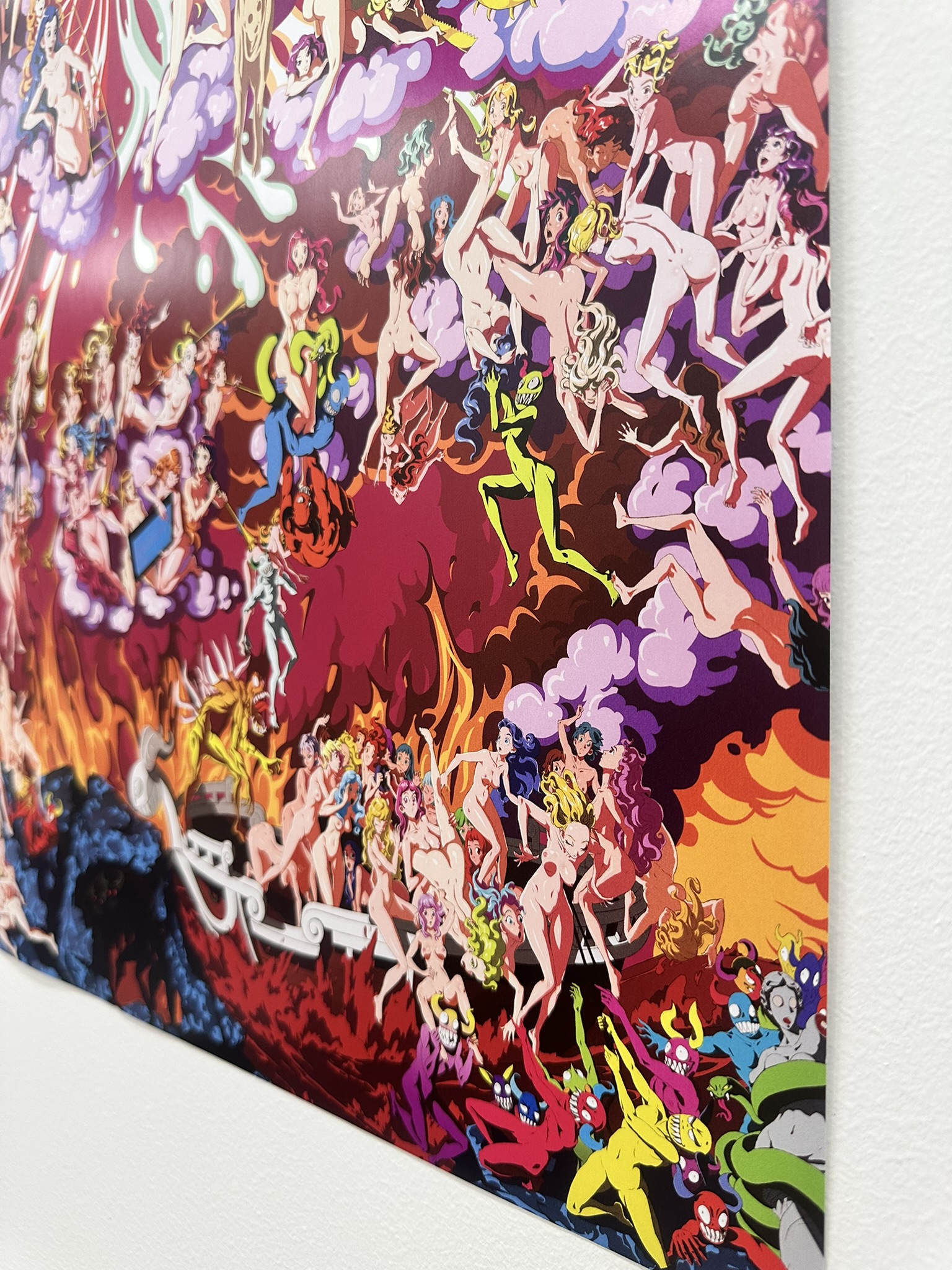
At the Last Judgment, 2010, Digital print, 380 × 290 cm
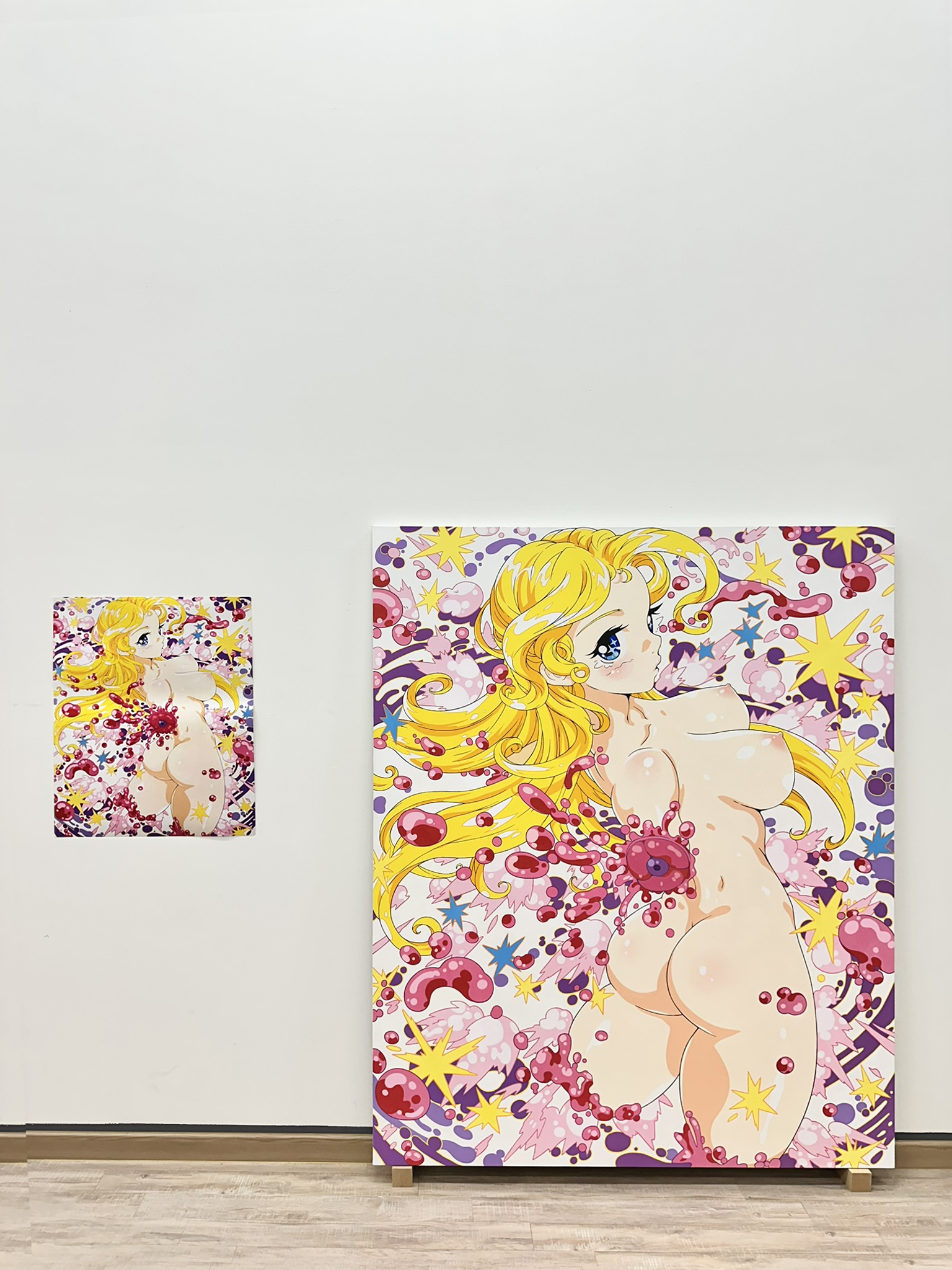
The digital works are large-format prints of digital drawings, from the 2010 graduation piece At the Last Judgment through 2011. They were my first attempt to carry the subjects of classical painting and sculpture into the style of animation.
At the Last Judgment (2010, digital print, 380 × 290 cm) is the first work I drew in the style of comics. Until then I had made painterly figurative work and a range of studies, but when I actually set out to make a work from comic imagery, it proved difficult. Learning the form of comics well enough to bring it into my work looked as though it would take a long time, and while wondering what could serve as both a work and drawing practice, I settled on painting a crowd. Michelangelo's The Last Judgment (1536–1541, fresco, Sistine Chapel) was exactly the right subject. Redrawing it in an animation style would serve as drawing practice and, at the same time, make a strong enough impression for a first work.
The composition follows the original. Christ in judgment is at the center, figures rise on the left and fall on the right, and below is the boat bound for hell. The attributes of the saints were kept as they were. But the angel holding the Book of Life holds a laptop and a tablet, pink clouds rise above the fires of hell, and most of the figures are drawn as women.
The Christ of the original stands in a solemn pose that divides heaven from earth, but the protagonist of this picture, like a boy in a shōnen manga, is caught at the instant of missing a step, about to fall flat at any moment. It made me think about who judges what, and who is judged.
A picture nearly four meters tall, it was drawn digitally and printed. I had always painted in oils at art school, but I also thought that starting something new called for moving to a new medium to refresh my thinking, and at the time digital felt futuristic and new. It was drawn in Photoshop, but most of it was vectorized with the pen tool so that the lines would not break up when printed large. The work was first shown in my university graduation exhibition (Gongpyeong Gallery, Seoul Art Center, Seoul, 2010).
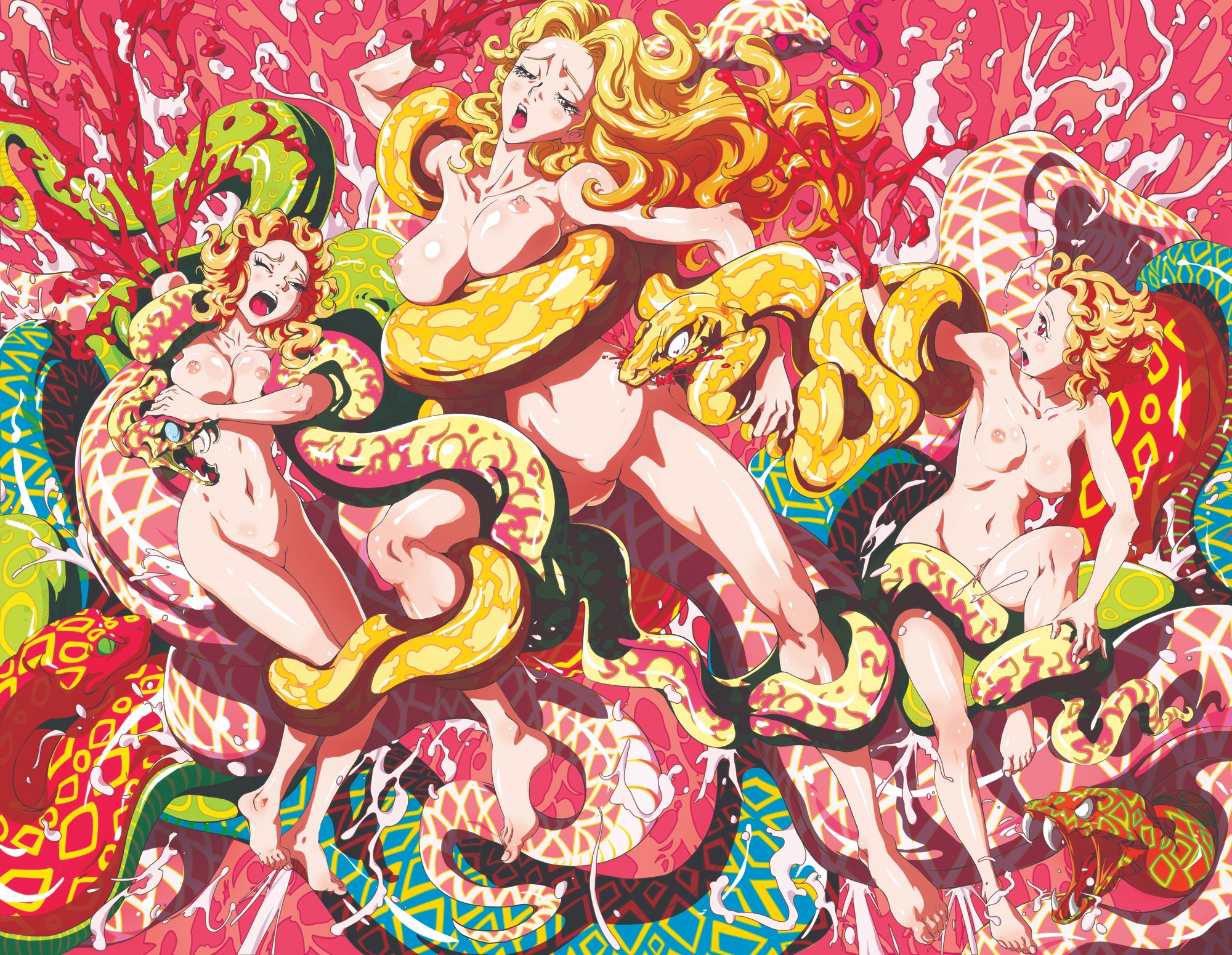
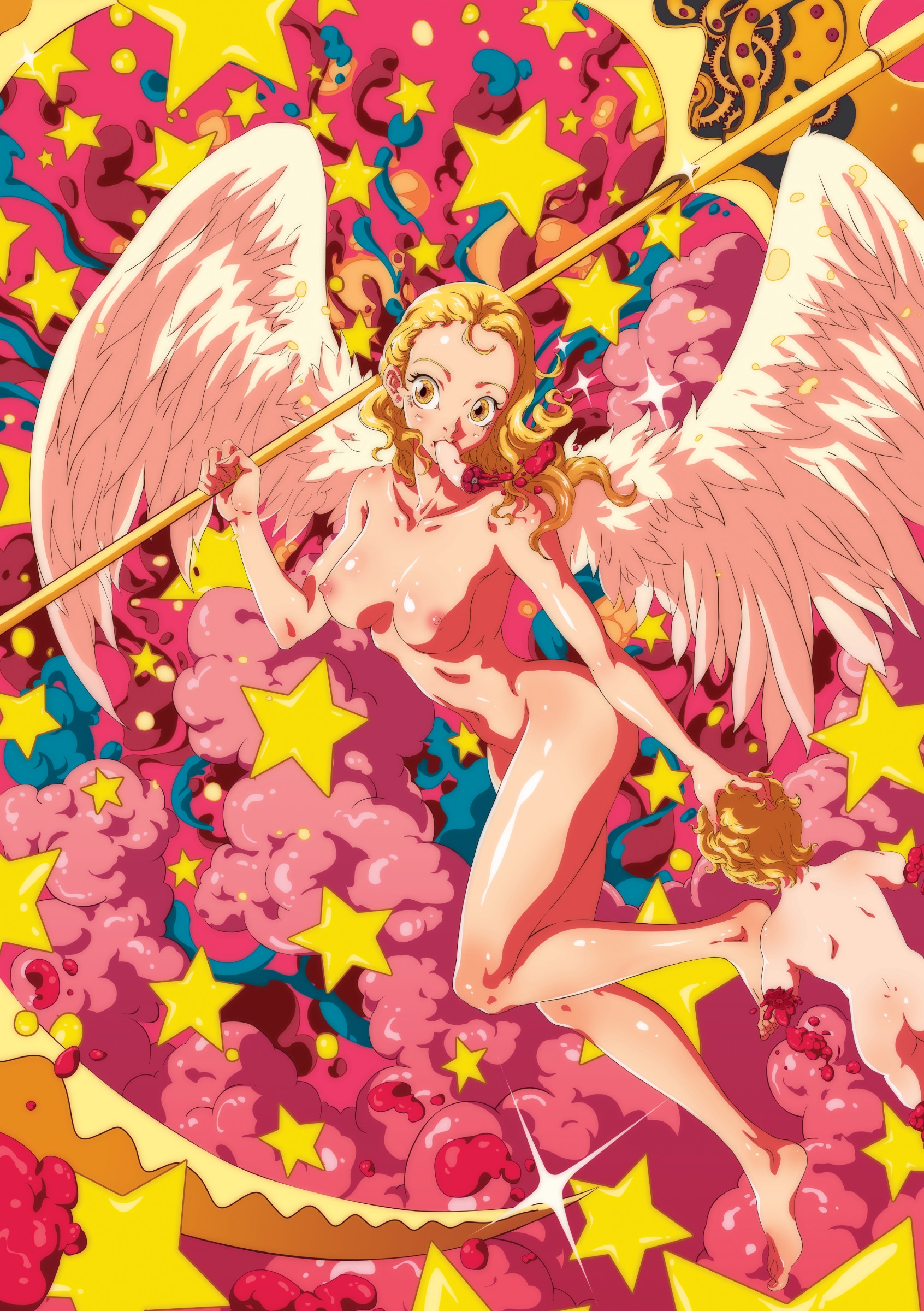
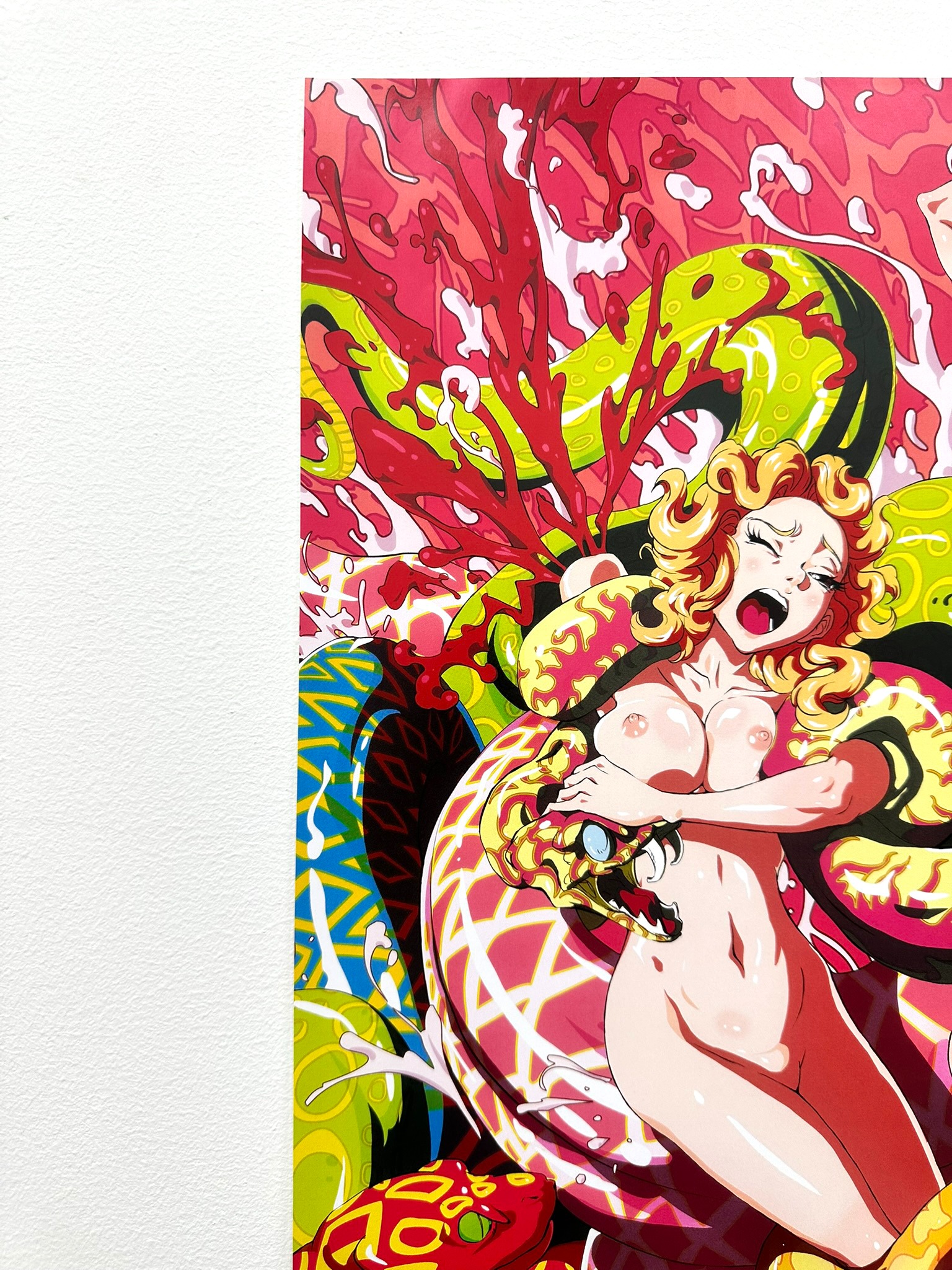
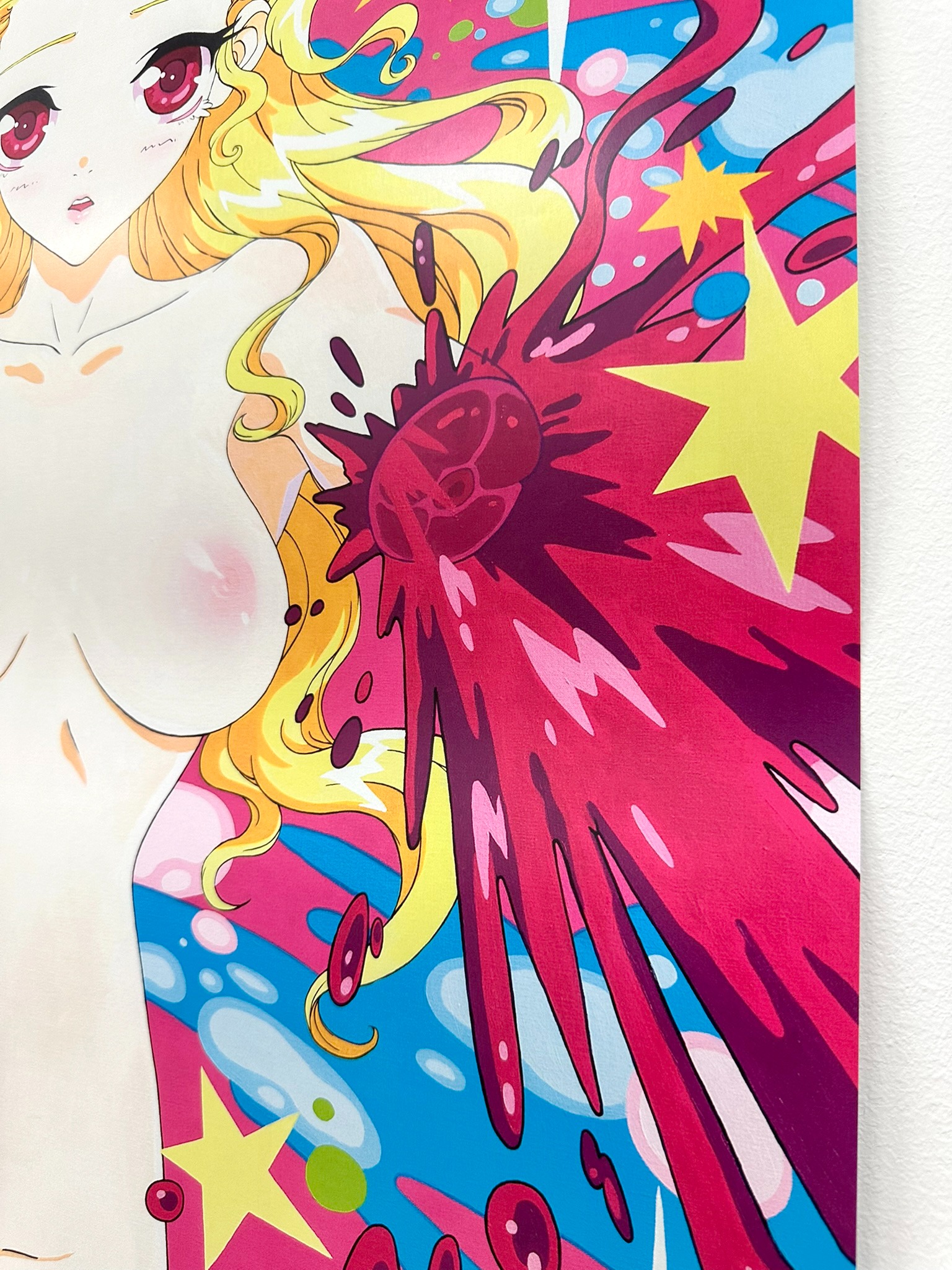
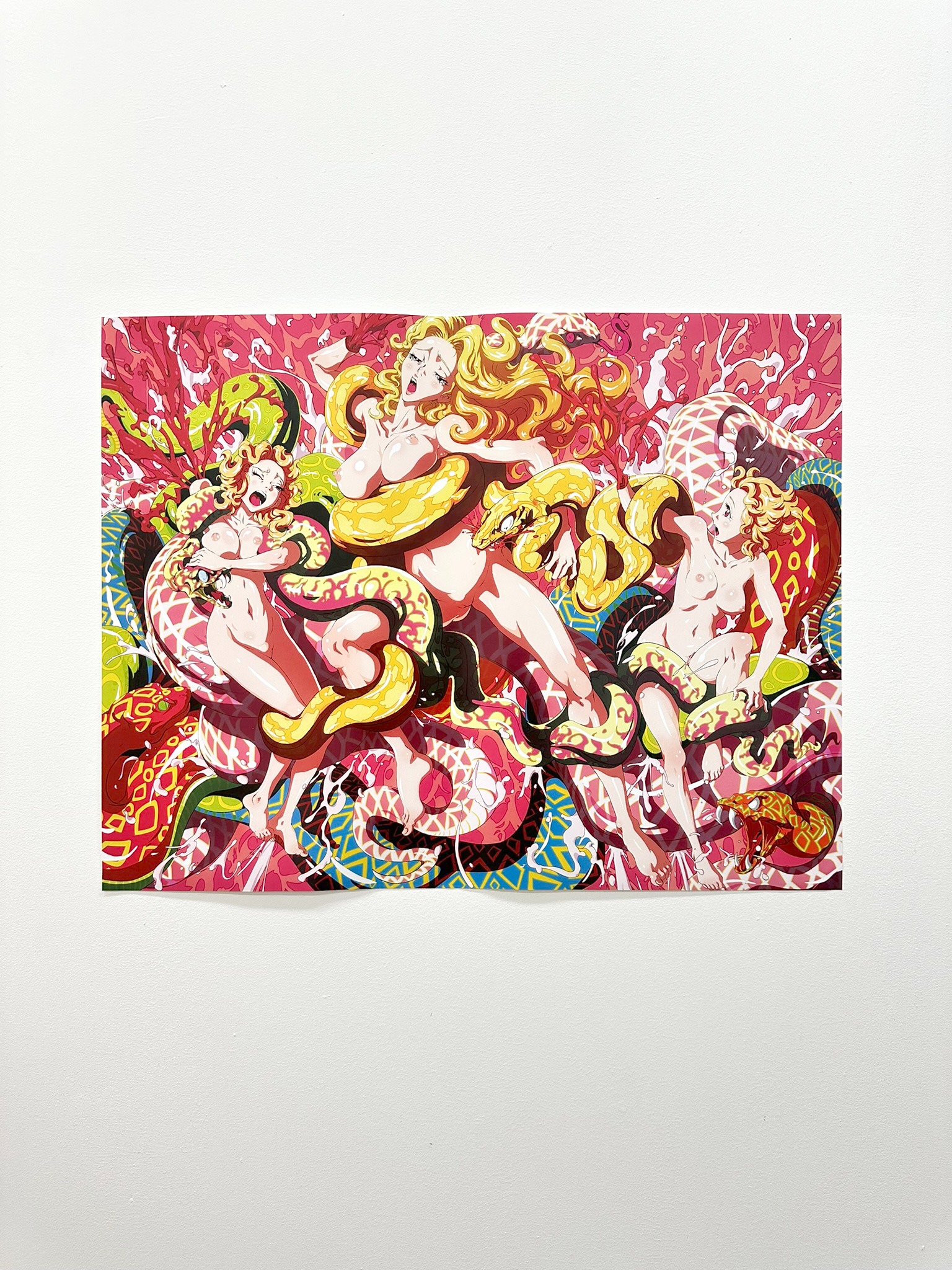
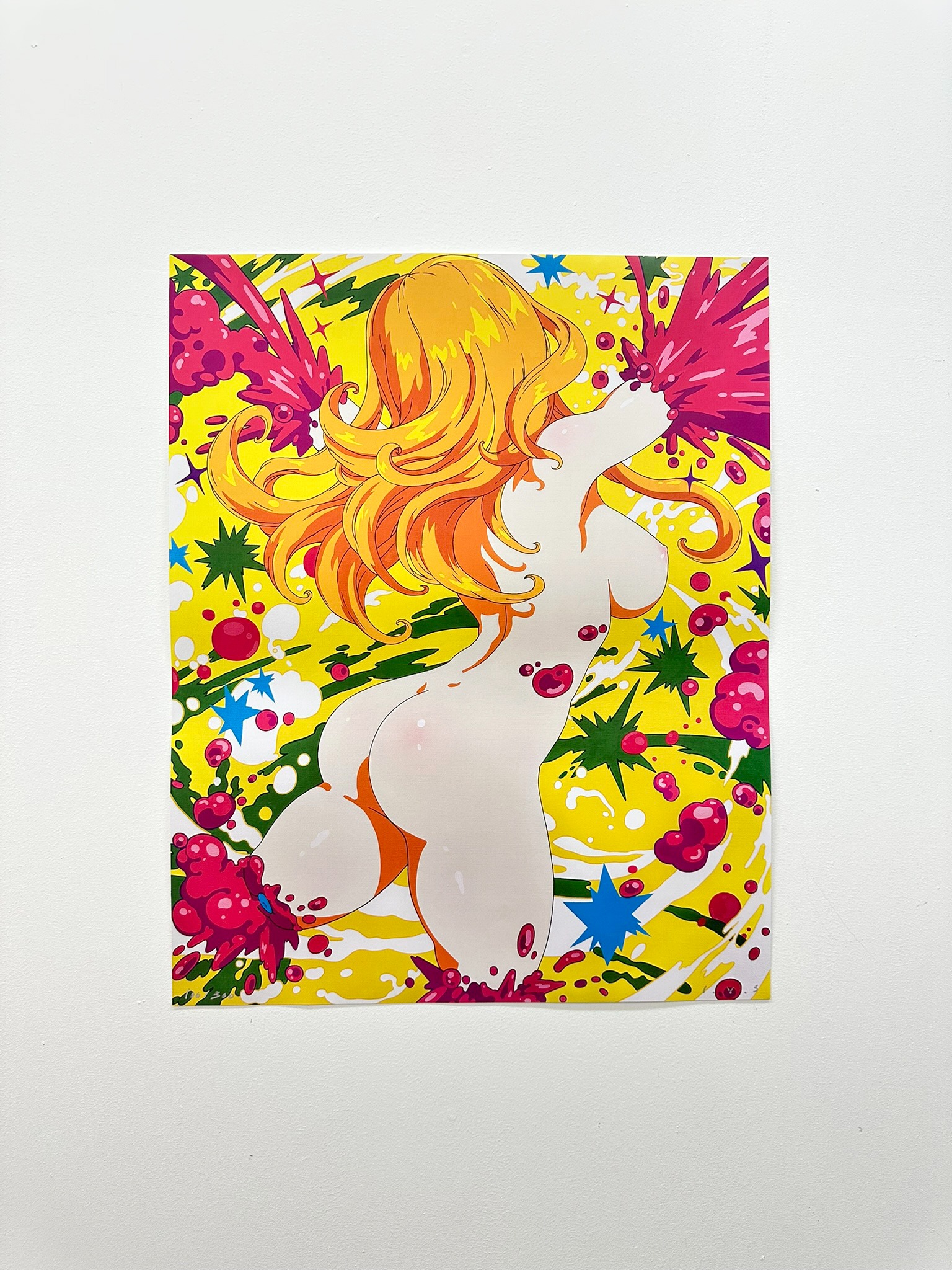
After the graduation exhibition I drew Laocoon (2010, digital print, 230 × 295 cm), Torso (2011, digital print, 116 × 92 cm) and Cronos (2011, digital print, 116 × 82 cm) in the same way. They were studies in carrying classical texts into the style of animation. Torso became the first work of the Torso series.
In Laocoon, the three figures became women, and their bodies, entangled in the coils of yellow serpents, were drawn over a pattern of red and green. The black-and-white series of 2024 set out again from this picture. The surface once full of color and pattern became black and white, and the serpents that had been visible were hidden.
Cronos depicts the god of time, who swallowed his children one after another at birth because of a prophecy that he would be overthrown by his own child. The subject was taken from Goya's Saturn Devouring His Son (1820–1823), but the composition is different. Here Cronos is a winged woman who, as befits the god of time, holds in one hand a scythe fitted with clockwork and in the other the child she is about to swallow, as she soars up among stars and pink clouds. A cruel scene is drawn bright and cute.
Working digitally gave me freedom, but once printed, it did not give the colors and textures I wanted. The colors on screen and the colors of the printed output were hard to control as I intended. A long-proven method was more certain, and it was also what I could do best, so when I decided to pursue the torso as a single subject, I returned to canvas.
Since then, digital drawing has held the place of the underdrawing rather than the work. My present method, in which an image nearly completed on the computer is transferred to canvas and developed there, came out of this period.
View work →