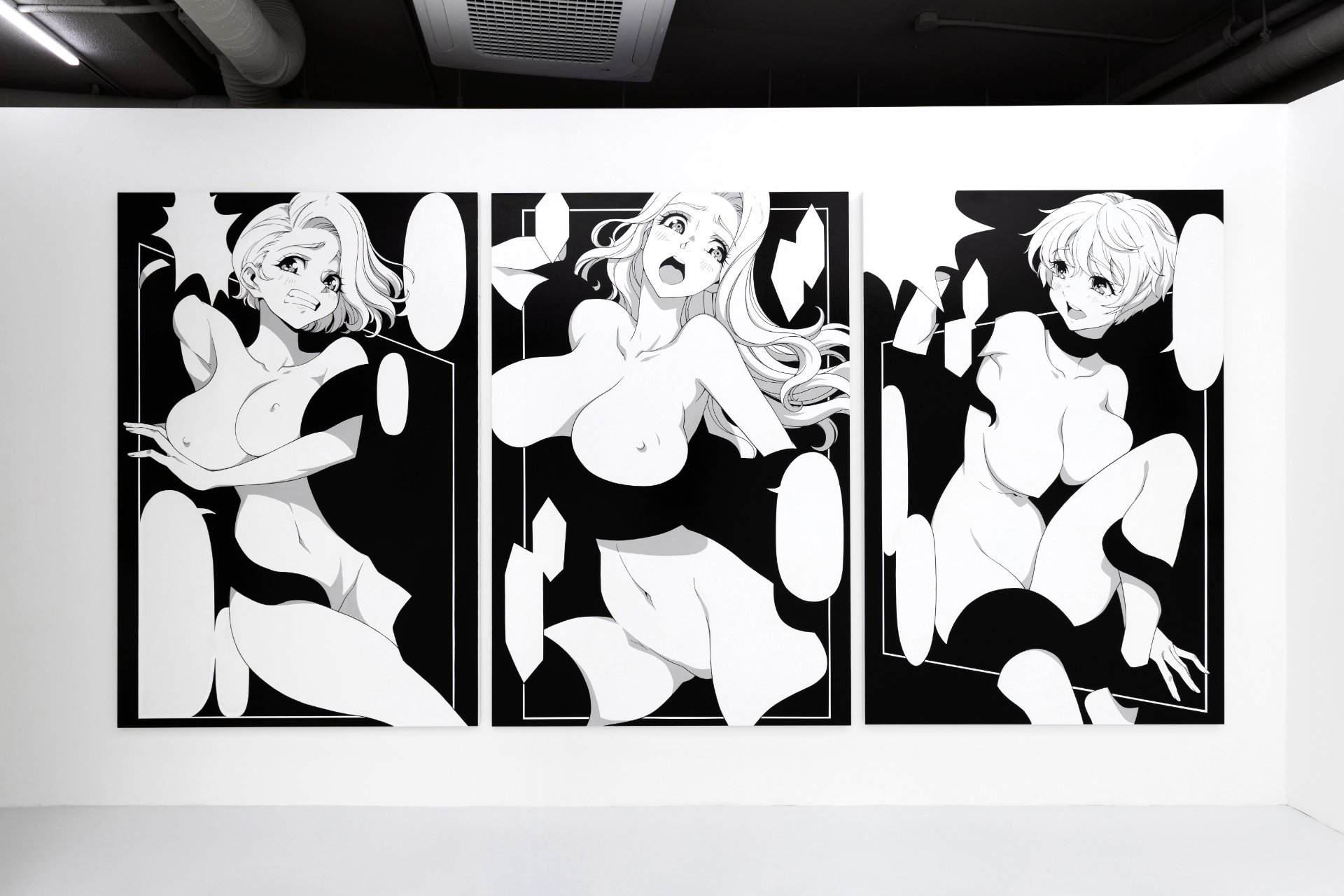
Prometheus and The Three Graces
〈Prometheus〉와 〈The Three Graces〉는 픽셀 연작에서 다룬 두 신화를 큰 화면에 다시 그린 작품이다. 금빛 바탕의 〈Prometheus〉는 픽셀을 그대로 키워 3미터가 넘는 화면을 채웠고, 흑백의 〈The Three Graces〉는 픽셀을 벗어나 선과 면으로 그렸다.
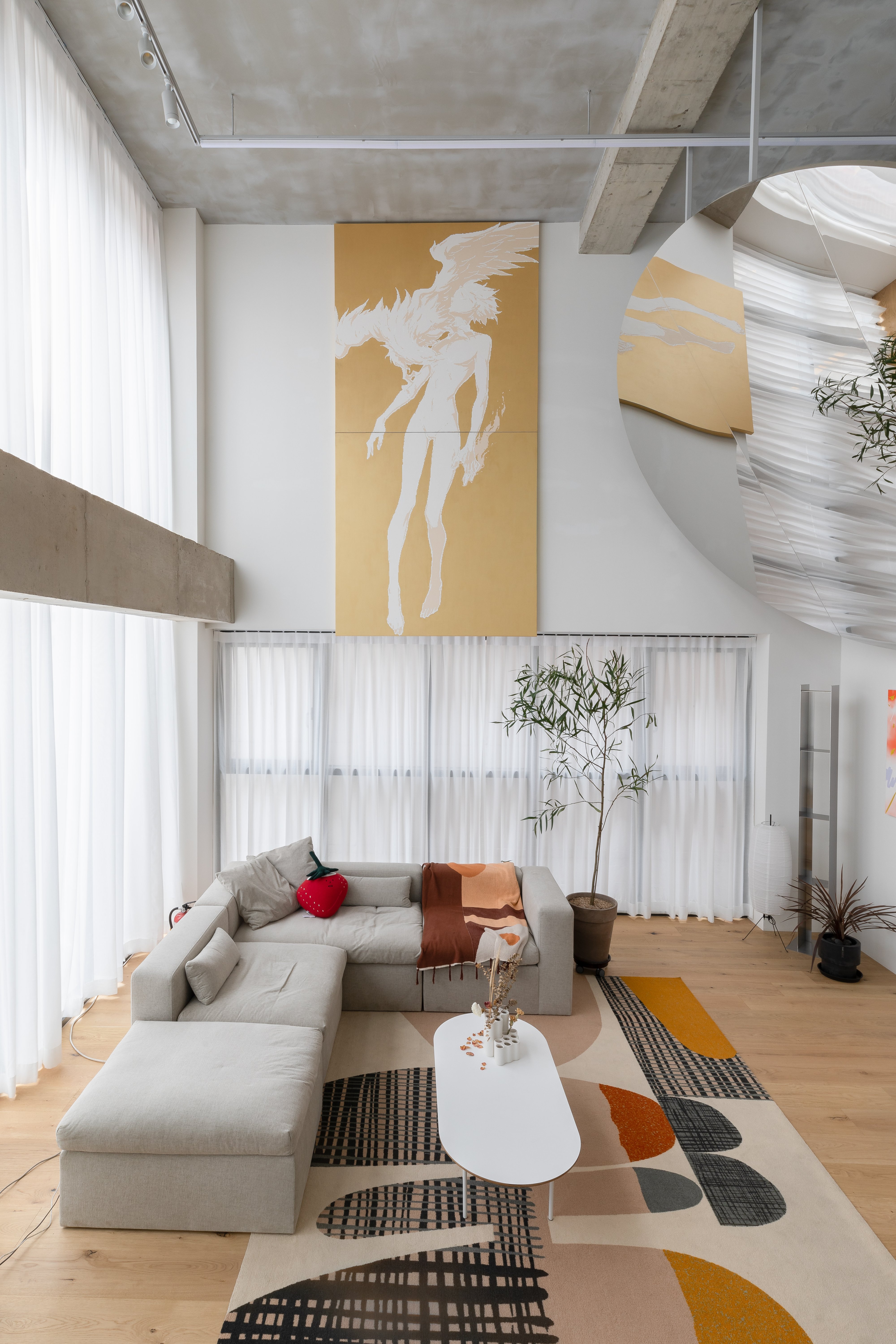
〈Prometheus〉(2020, 캔버스에 유채, 2폭, 합계 320×160cm)는 세로로 이어 붙인 두 개의 캔버스에 그렸다. 금빛 바탕 위에 픽셀로 그린 하얀 몸의 젊은 프로메테우스가 허공에 떠 있다. 등에는 날개를 펼친 독수리가 매달려 간을 쪼고 있고, 한 손에는 신에게서 훔친 불이 타오른다. 형벌의 장면이지만, 몸은 고통에 짓눌리기보다 빛 속으로 날아오르듯 승화되는 모습으로 그렸다.
인물은 흰색, 그리고 금색에 흰색을 많이 섞은 옅은 색의 픽셀로만 이루어져, 가까이서 보면 네모난 면이고 떨어져서 보면 금빛 바탕 위에 오려 붙인 실루엣처럼 보인다. 금빛 바탕은 중세 성화의 금박처럼 이 세상 너머를 떠올리게 하고, 닿는 빛에 따라 시시각각 색을 바꾼다. 신의 불을 인간에게 건넨 이를 위한, 빛에 닿아 변하는 성스러운 바탕이다.
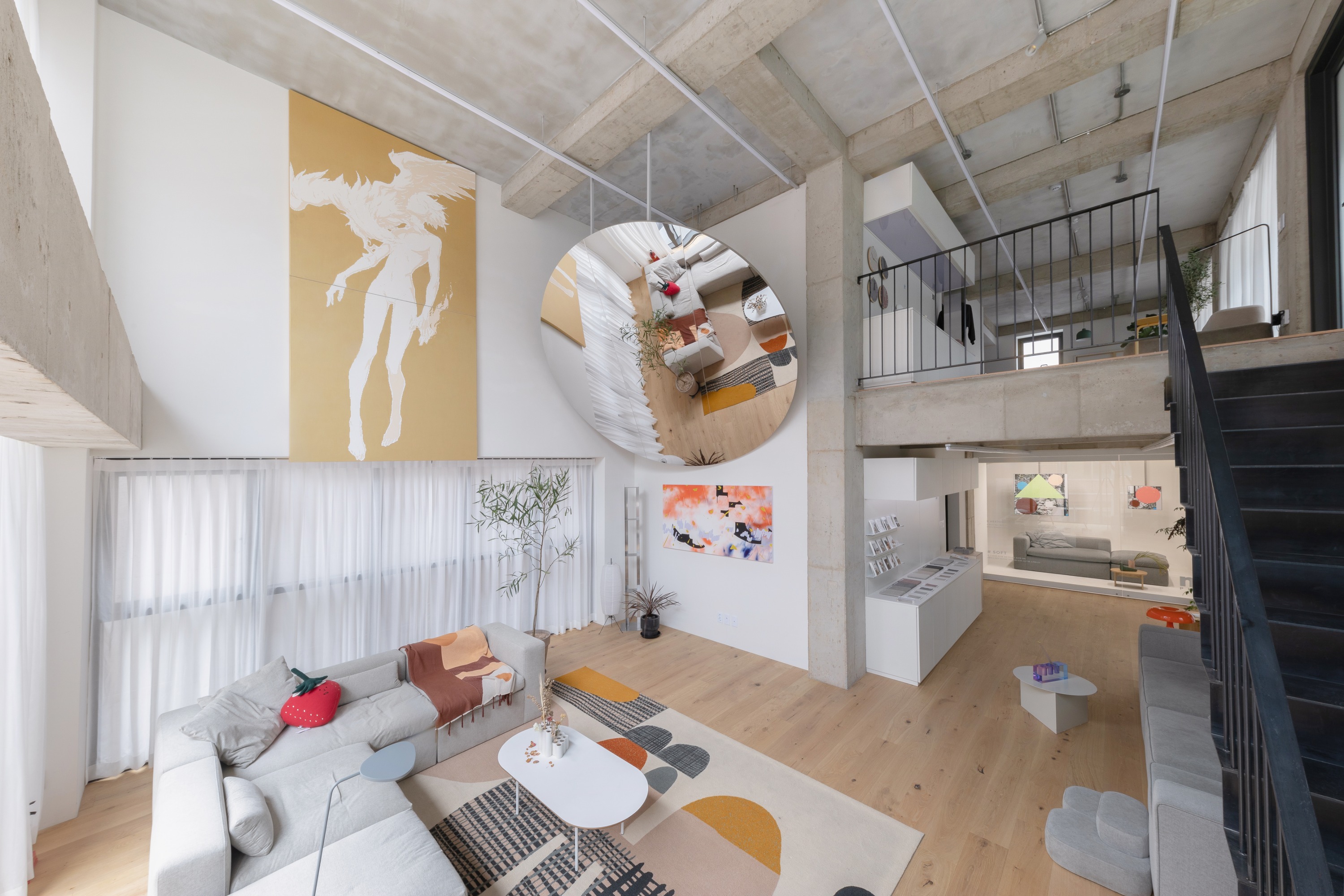
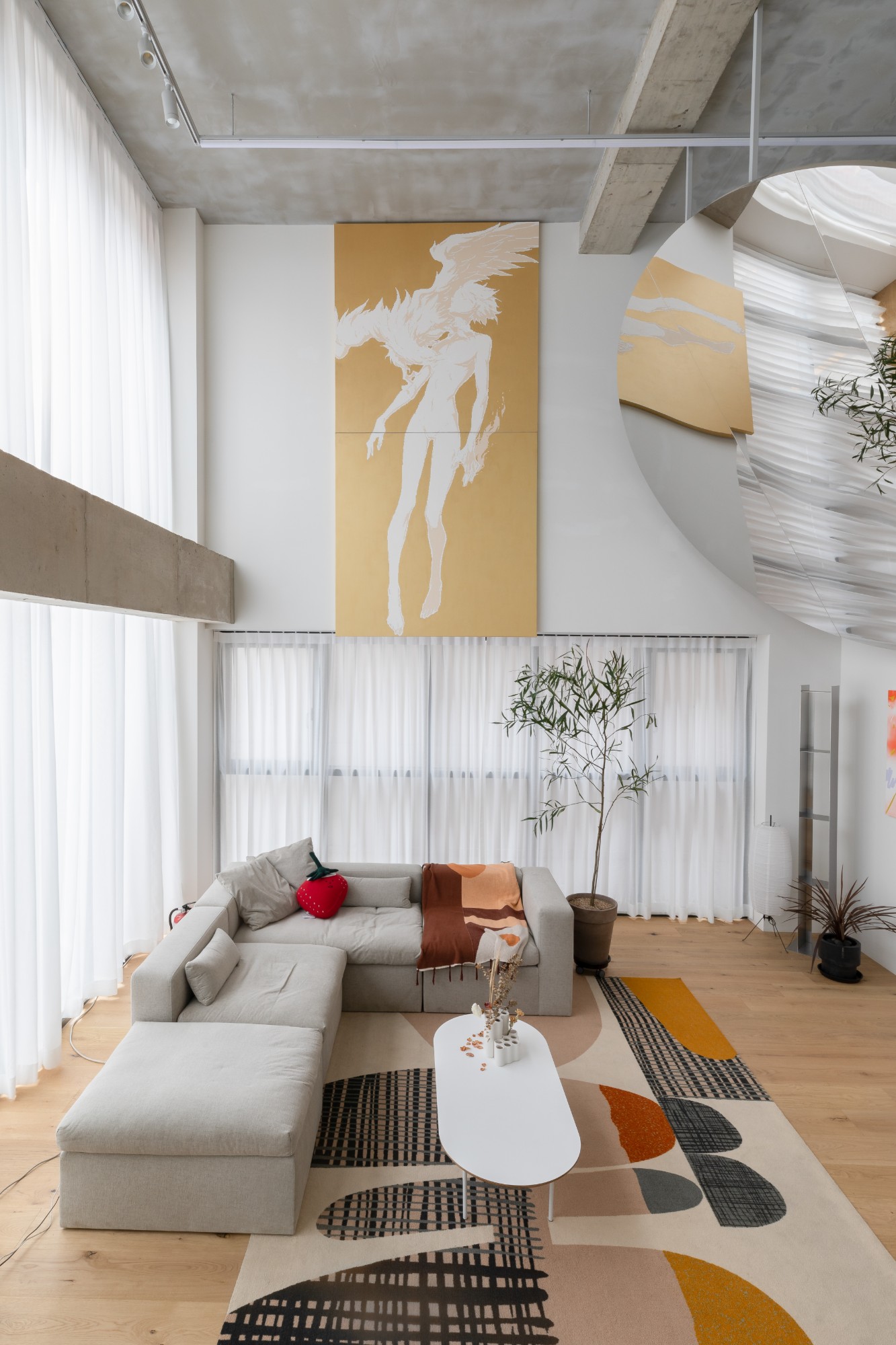
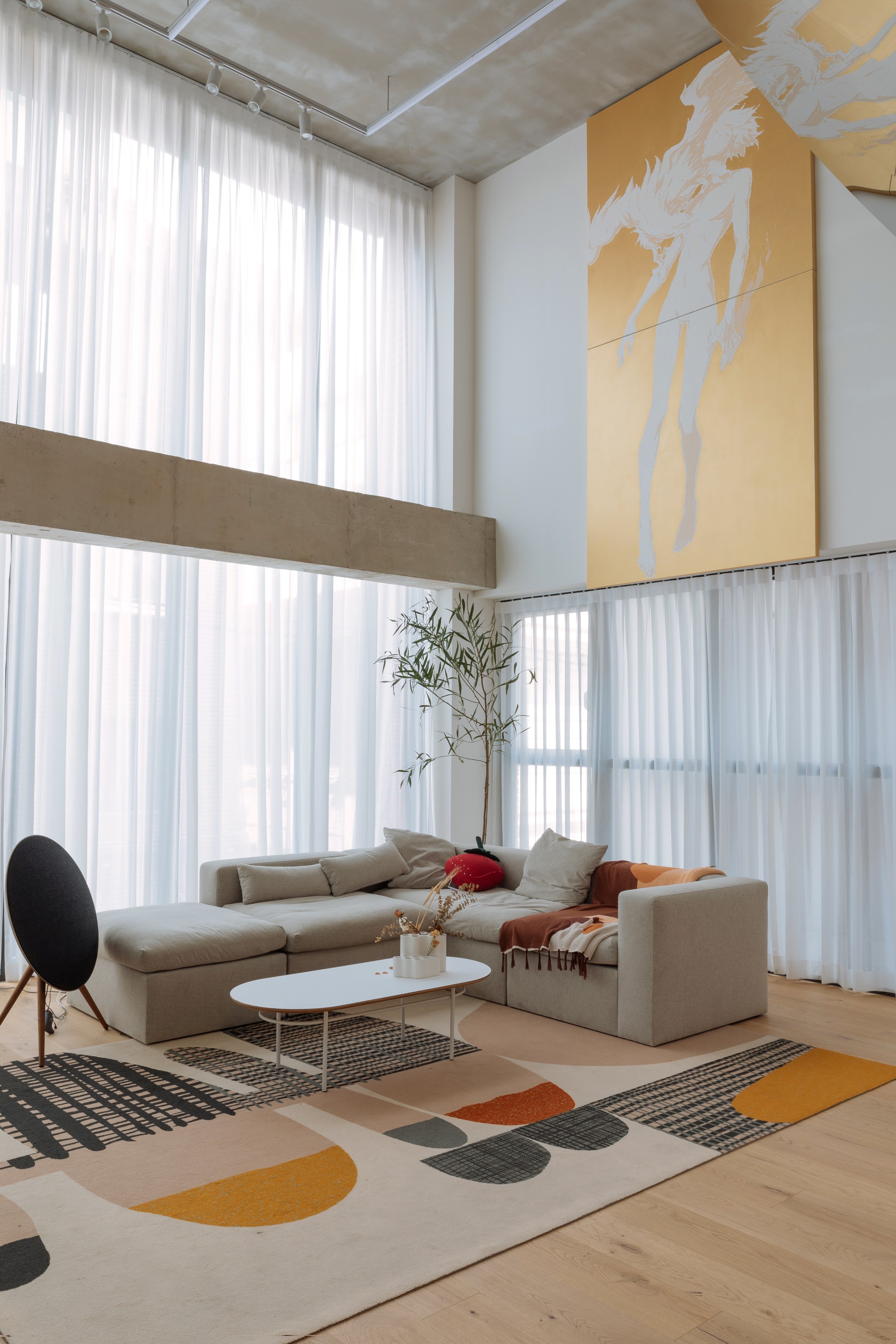
이 작품은 《Gradation: From Red to Golden》(MUNITO+Superellipse Gallery, 서울, 2020)에서 선보였다. 초타원형이 기획한 무형의 갤러리 프로젝트 Superellipse Gallery의 두 번째 전시로, 2019년 STANDARD.a 연속 개인전의 연장선에 있다. 가구 브랜드 무니토의 연남 쇼룸에서 6개월 동안 다섯 명의 회화 작가가 참여했고, 전시는 회화가 결국 놓이게 될 컬렉터의 방을 상상하며 기획되었다. 〈Prometheus〉는 층고가 높은 쇼룸의 거실 공간, 소파와 커튼 위에 걸려 아침과 저녁, 계절에 따라 달라질 빛 속에 놓였다.
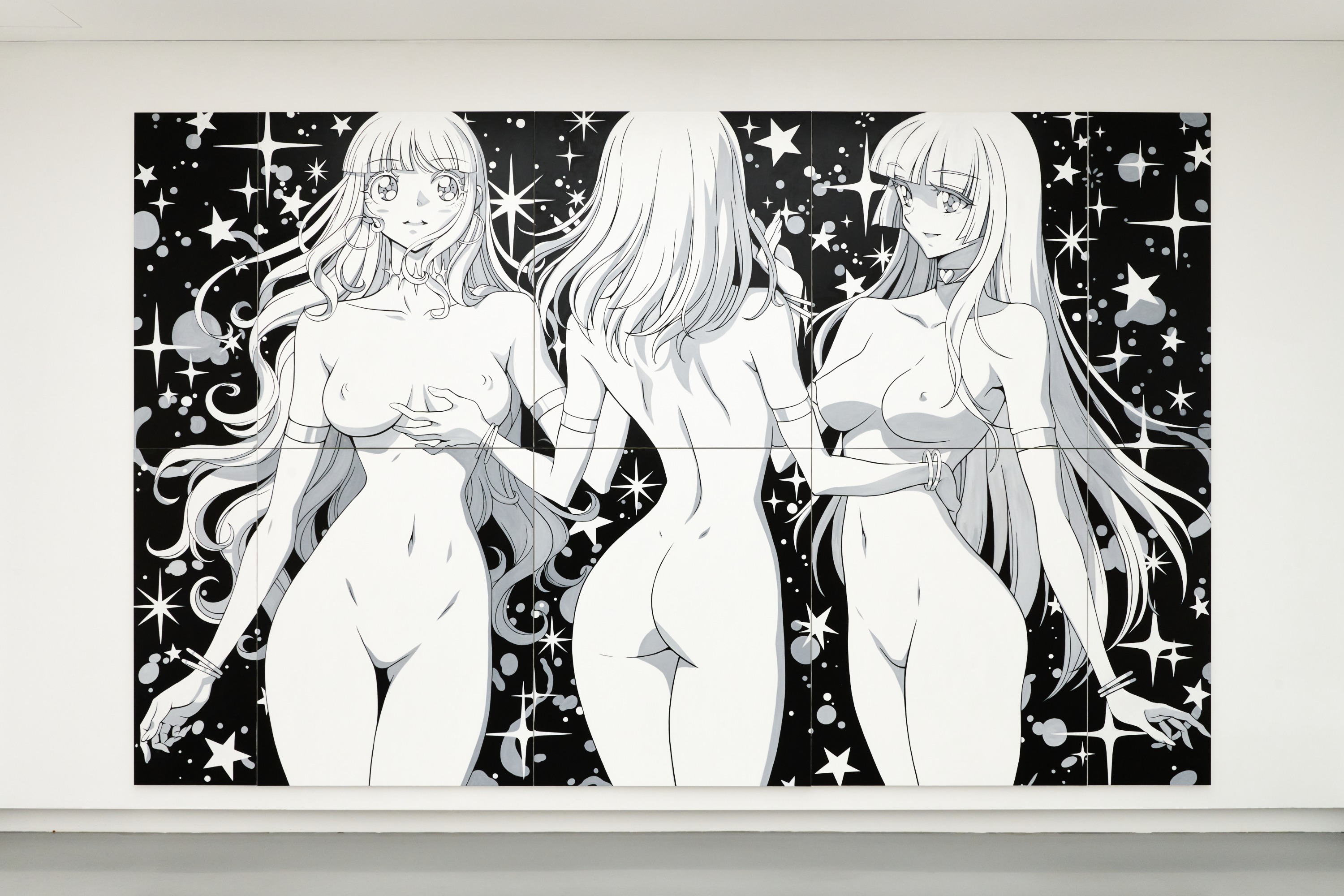
〈The Three Graces〉(2022, 캔버스에 유채, 10폭, 합계 300×480cm)는 열 개의 캔버스를 이어 붙인 화면에 세 명의 미소녀로 그린 삼미신이다. 가운데 인물은 등을 보이고 양옆의 두 인물은 정면을 향하는데, 고대 로마의 조각과 벽화, 그리고 라파엘로의 〈삼미신〉(1504~1505)으로 이어지는 고전적인 구도를 따랐다. 이 구도는 앞과 뒤, 다시 앞으로 한 몸을 세 방향에서 보여 준다. 다나에를 세 인물로 나누었던 것처럼, 시대를 넘어 이어져 온 아름다움의 전형을 여러 방향에서 들여다보는 방식이다. 검은 밤하늘과 별빛 속에서 세 인물은 서로의 어깨와 몸에 손을 얹고 있다.
색은 흰색과 검은색, 그 사이의 회색만 썼다. 2019년의 〈The Three Graces Pixel Props〉가 미소녀 삼미신의 눈과 머리카락, 몸의 일부를 같은 흑백의 픽셀로 떼어 낸 조각들이었다면, 이 그림은 세 인물의 온몸을 하나의 큰 화면에 펼쳤다. 어떤 이미지는 흑백일 때 더 아름답다. 색을 덜어 내자 세 인물의 몸은 선과 면, 빛과 어둠만으로 또렷하게 섰다.
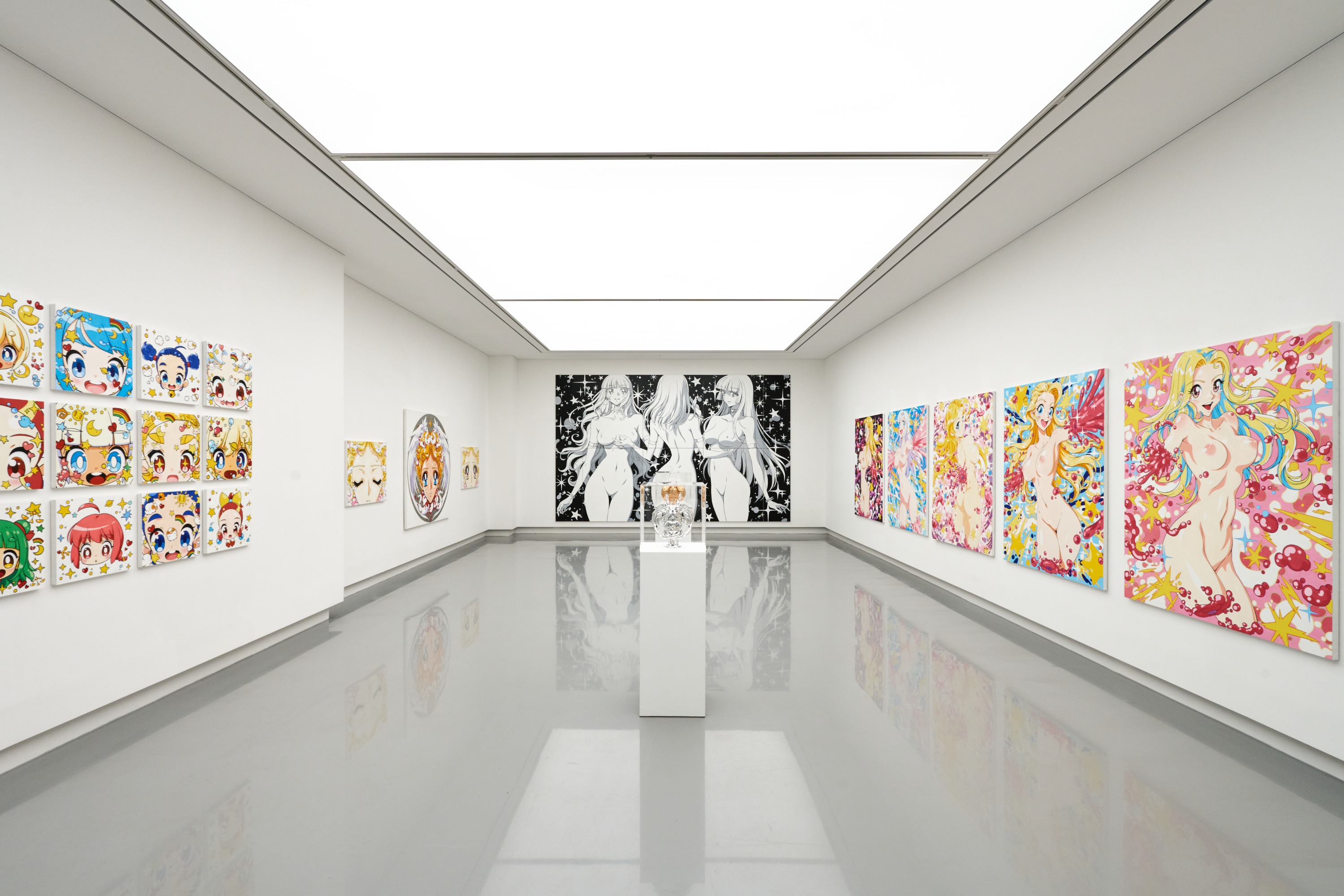
〈The Three Graces〉는 《Odd&Nu》(뮤지엄 웨이브, 서울, 2024)에서 전시장 가장 안쪽 벽에 걸렸다. 오른쪽 벽에는 토르소 연작이, 왼쪽 벽에는 SD 조디악과 메두사 연작이 이어졌다.
Prometheus and The Three Graces return, on a large scale, to two myths first taken up in the Pixel Prometheus The Three Graces series. The gold-ground Prometheus enlarges its pixels to fill a canvas more than three meters tall, while the black-and-white Three Graces leaves pixels behind and is painted in line and plane.
Prometheus (2020, oil on canvas, 2 panels, 320 × 160 cm overall) is painted on two canvases joined vertically. On a gold ground, a young, white-bodied Prometheus rendered in pixels hangs in the air. An eagle clings to his back with its wings spread, pecking at his liver, and in one hand burns the fire he stole from the gods. It is a scene of punishment, yet the body is not crushed by pain; it seems to soar into the light, as if transfigured.
The figure is built only from white pixels and pixels of gold mixed with a great deal of white: up close it is a field of square planes, and from a distance it looks like a silhouette cut out and laid on the gold. Like the gold leaf of medieval icons, the gold ground calls to mind something beyond this world, and it shifts color moment by moment with the light that falls on it: a sacred ground, changed by light, for the one who gave the gods' fire to humankind.
The work was shown in Gradation: From Red to Golden (MUNITO + Superellipse Gallery, Seoul, 2020). It was the second exhibition of Superellipse Gallery, a gallery project without a physical space organized by Superellipse, and a continuation of the 2019 series of solo exhibitions at STANDARD.a. Five painters took part over six months in the Yeonnam showroom of the furniture brand MUNITO, and the exhibition was planned by imagining the collector's room where a painting finally comes to rest. Prometheus hung high in the showroom's double-height living space, above a sofa and curtains, in a light that would change from morning to evening and with the seasons.
The Three Graces (2022, oil on canvas, 10 panels, 300 × 480 cm overall) depicts the Three Graces as three bishōjo across ten joined canvases. The central figure turns her back while the two at either side face forward, following the classical composition handed down from Roman sculpture and wall painting to Raphael's Three Graces (1504–1505). This composition shows one body from three directions at once, front, back, and front again. Much as I once divided Danae into three figures, it is a way of looking at a timeless ideal of beauty from several sides. Against a black night sky scattered with starlight, the three rest their hands on one another's shoulders and bodies.
The palette is limited to white, black, and the grays between them. Where the 2019 Three Graces Pixel Props lifted the eyes, hair, and parts of the bodies of the bishōjo Graces as fragments in the same black-and-white pixels, this painting spreads the three whole figures across a single large picture. Some images are more beautiful in black and white. Once color was taken away, the three bodies stood out clearly in line and plane, light and dark alone.
In Odd&Nu (MUSEUM WAVE, Seoul, 2024), The Three Graces hung on the far wall of the gallery, with the Torso series along the right wall and the SD Zodiac and Medusa series along the left.