PIXEL PROMETHEUS THE THREE GRACES
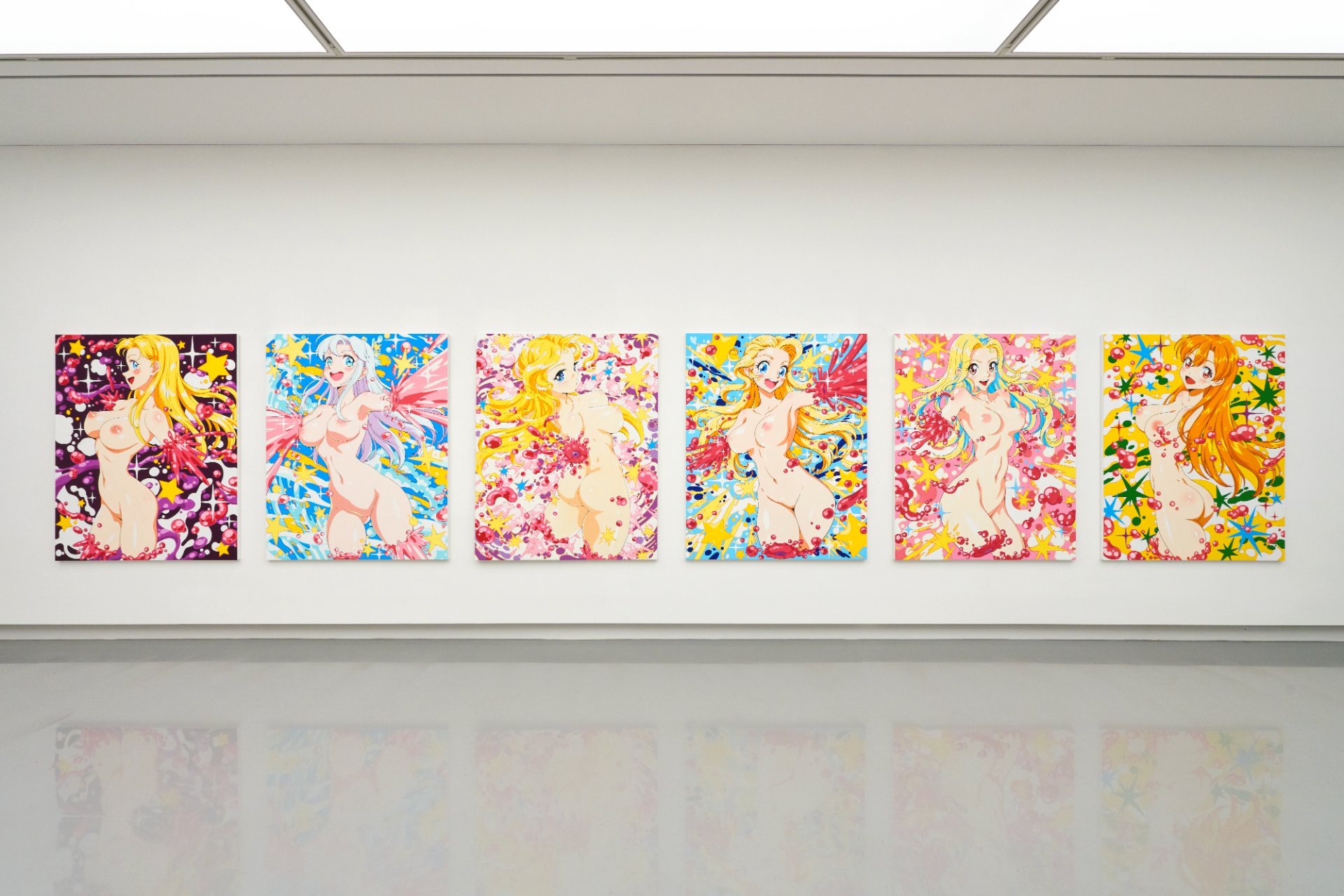
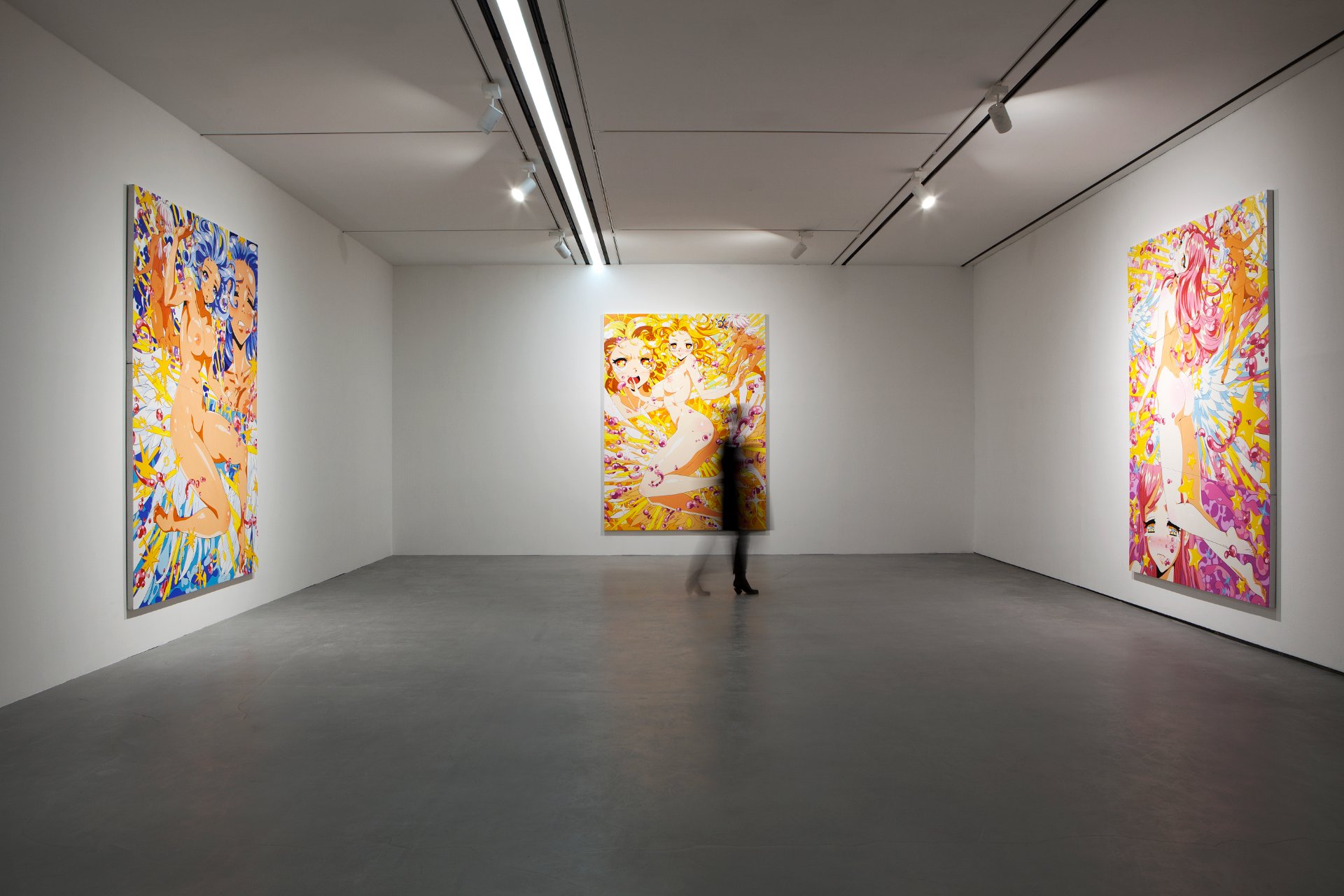
《PIXEL PROMETHEUS THE THREE GRACES》(STANDARD.a + Superellipse Gallery, 서울, 2019)는 픽셀로 그린 작은 그림을 크게 확대해 캔버스에 옮긴 회화를 모아 보인 전시다. 픽셀 하나하나가 캔버스 위에서 네모난 면이 된다. 게임의 라이프 바에서 가져온 픽셀 하트 〈Prometheus' Heart〉와 픽셀 이미지의 〈Prometheus〉, 삼미신의 얼굴과 몸의 일부를 픽셀로 옮긴 〈The Three Graces Pixel Props〉 연작으로 이루어진다.
나는 컴퓨터로 드로잉을 하는 것이 언제나 조금 어렵다고 느끼는데, 그 이유가 해상도를 어떻게 설정해야 하는가 하는 지점에서 오는 것 같다. 그런 생각을 하다 이번엔 오히려 가장 작게 그려 보자는 생각으로 픽셀을 시도했다. 컴퓨터에서 그린 그림은 어떻게든 깨지니까, 애초에 깨져 있는 이미지로 그리면 더 이상 깨지지 않을 것이고, 그렇다면 그것은 다이아몬드처럼 단단할 것이라고 생각했다.
지금은 디지털로 보이는 모든 것이 대부분 고해상도가 되었지만, 어릴 때는 픽셀 이미지를 아주 많이 보고 자랐다. 하드웨어의 제약 때문에 드러난 형태이자 양식이지만, 그로 인해 발견되는 특유의 미감이 있다고 본다. 만화의 흑백과 애니메이션의 표현들이 그랬던 것처럼, 제약이 양식이 된 또 하나의 경우다.
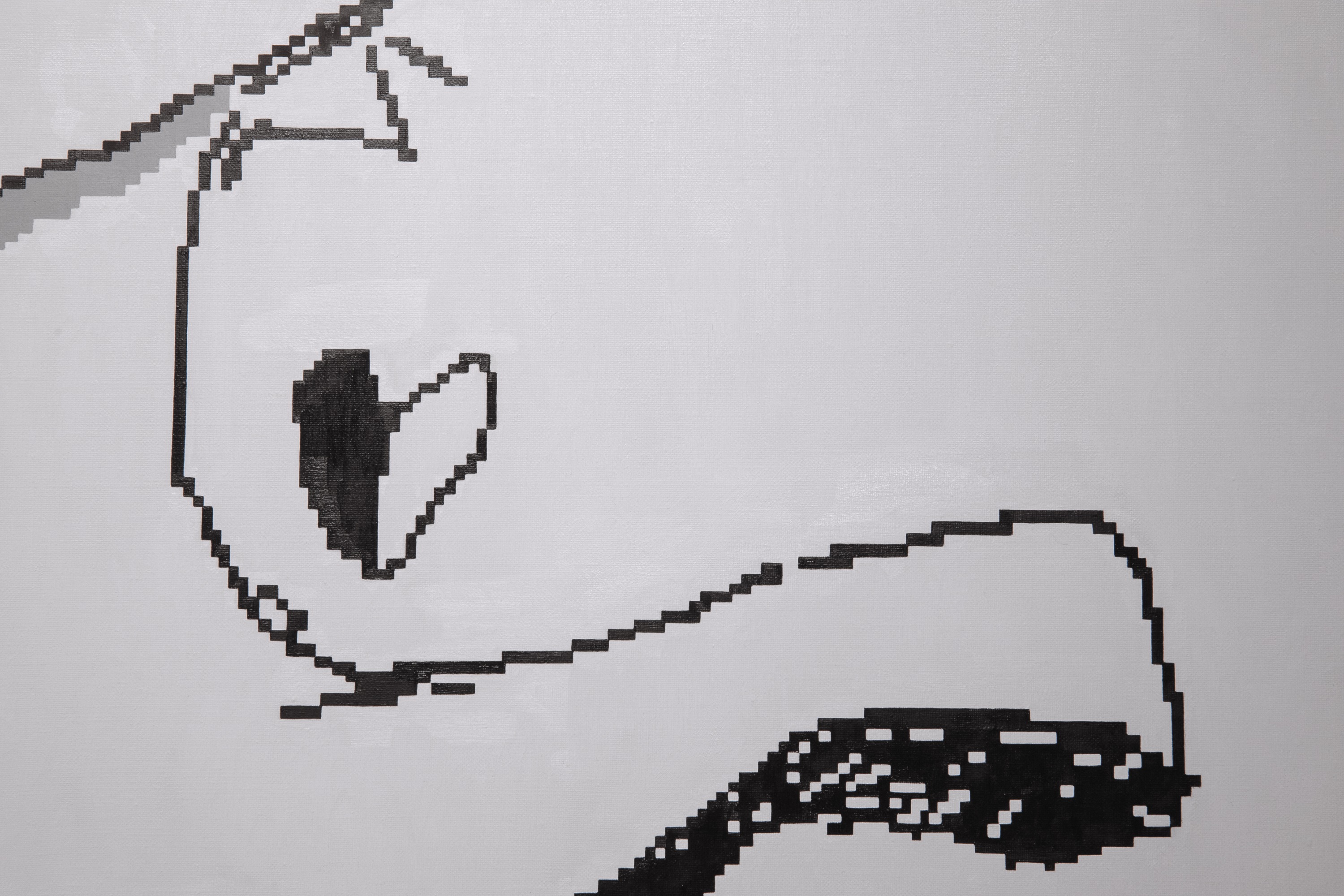
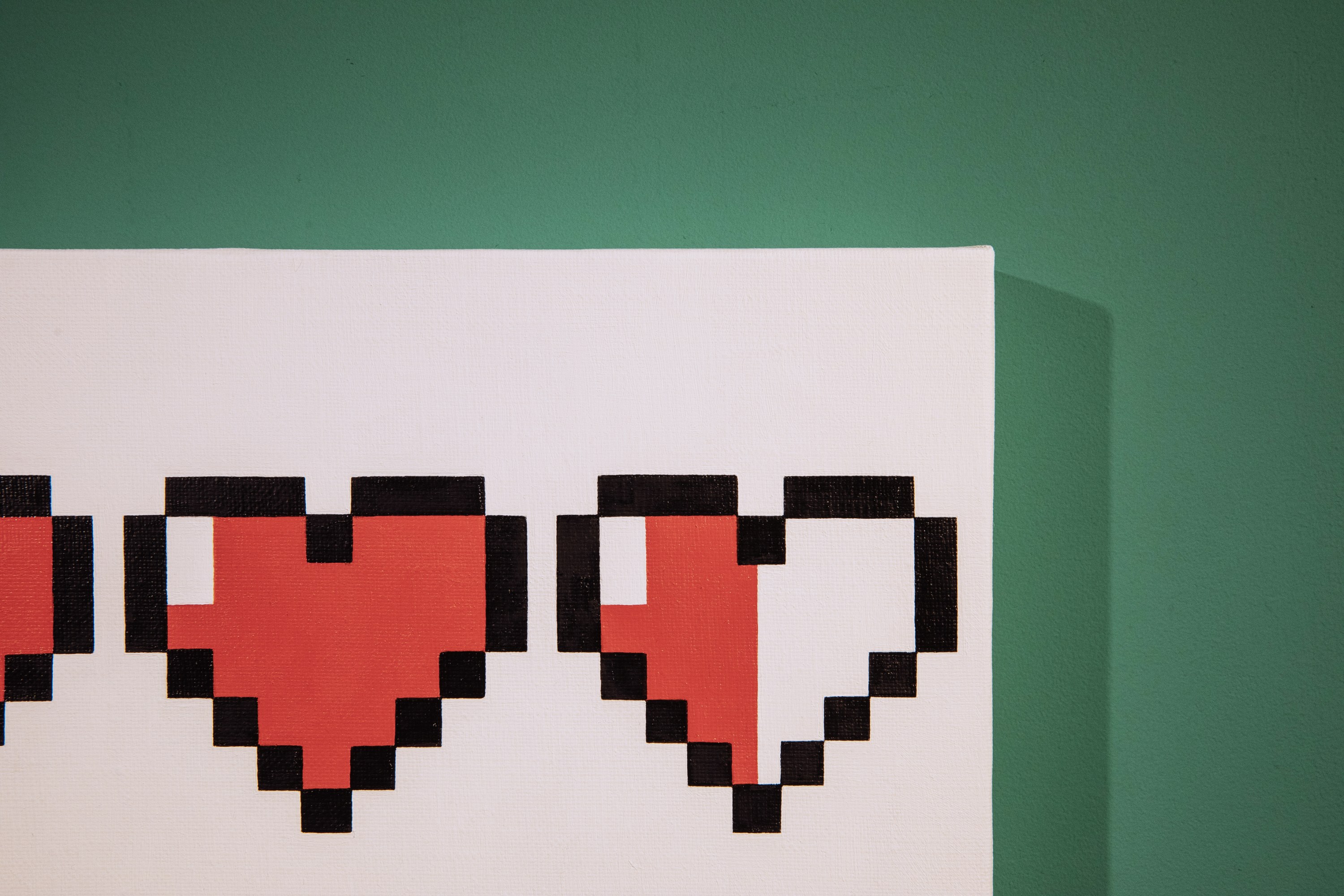
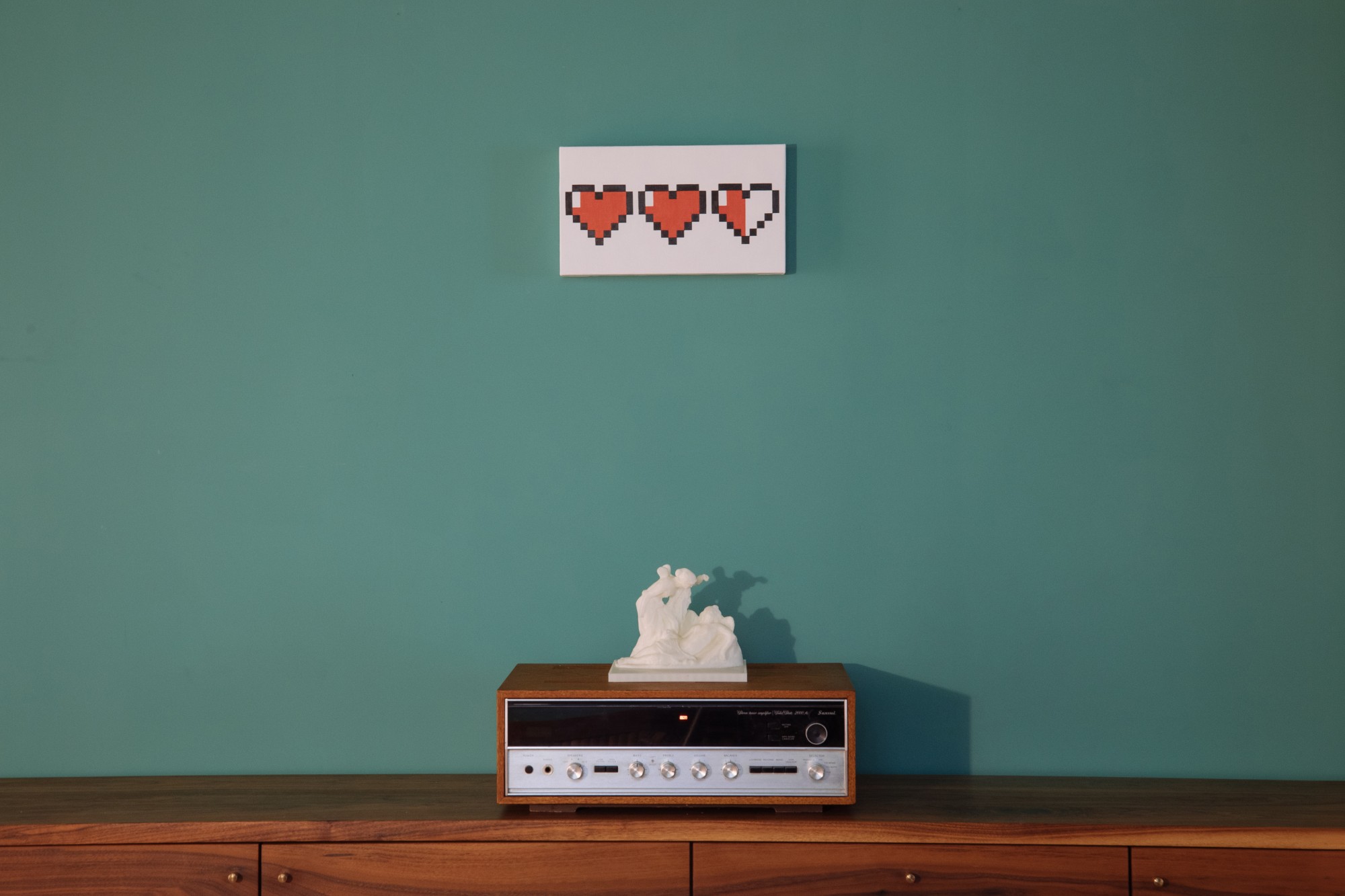
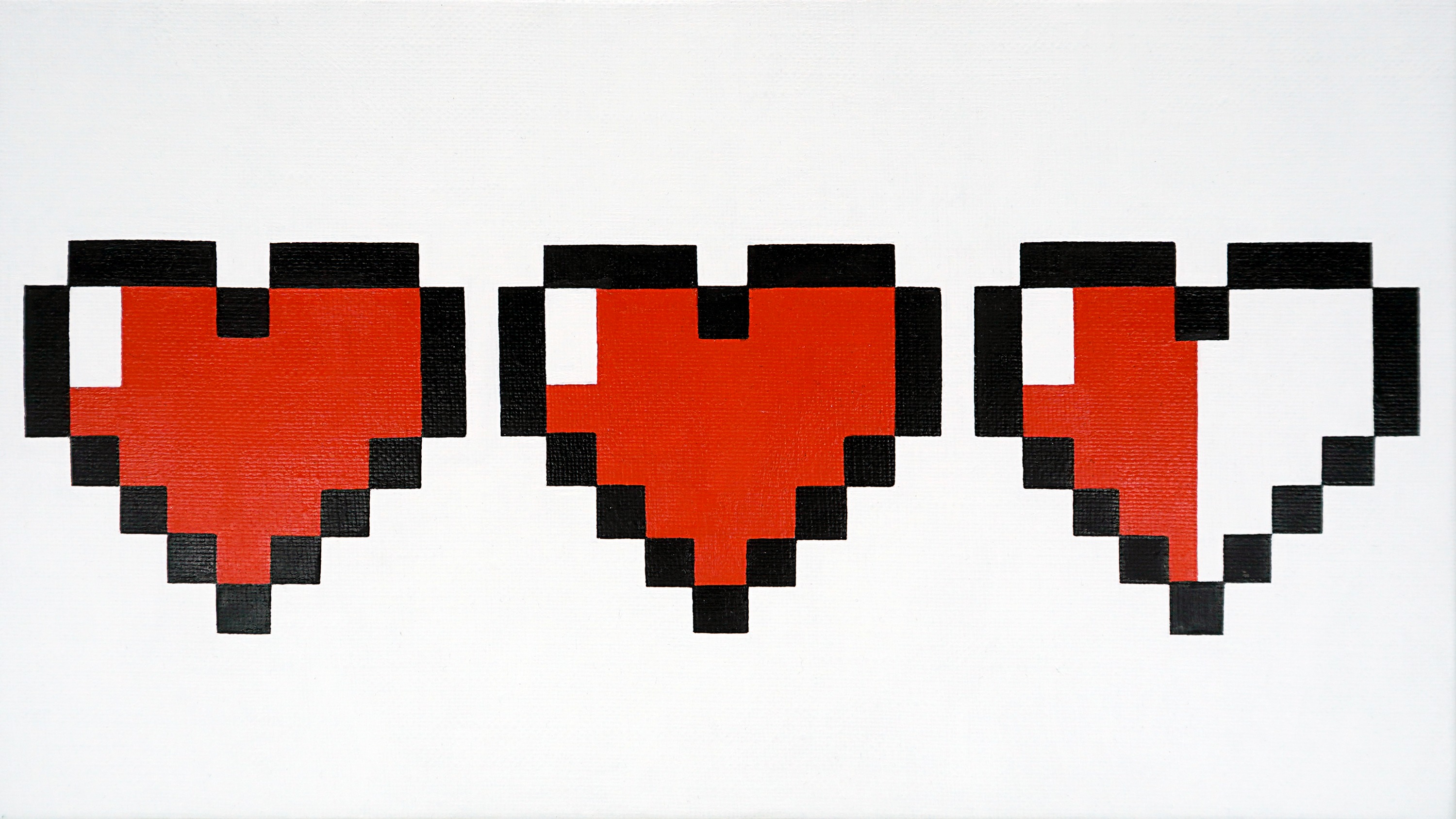
〈Prometheus' Heart〉(2019, 캔버스에 유채, 18×32cm)는 닌텐도의 게임 〈젤다의 전설〉(1986~)의 라이프 바에서 가져온 픽셀 하트로 구성되었다. 마지막 하나는 반만 채워져 있다. 그림에서는 하트가 닳는 중인지 차는 중인지 알 수 없는 한순간에 멈춰 있다. 매일 독수리에게 간을 쪼이고 밤마다 다시 자라나는 프로메테우스의 몸이, 닳았다가 회복되는 게임의 라이프와 닮았다고 생각했다. 하트의 개수와 색을 바꾸며 지금도 같은 이미지를 여러 유형으로 그리고 있다.
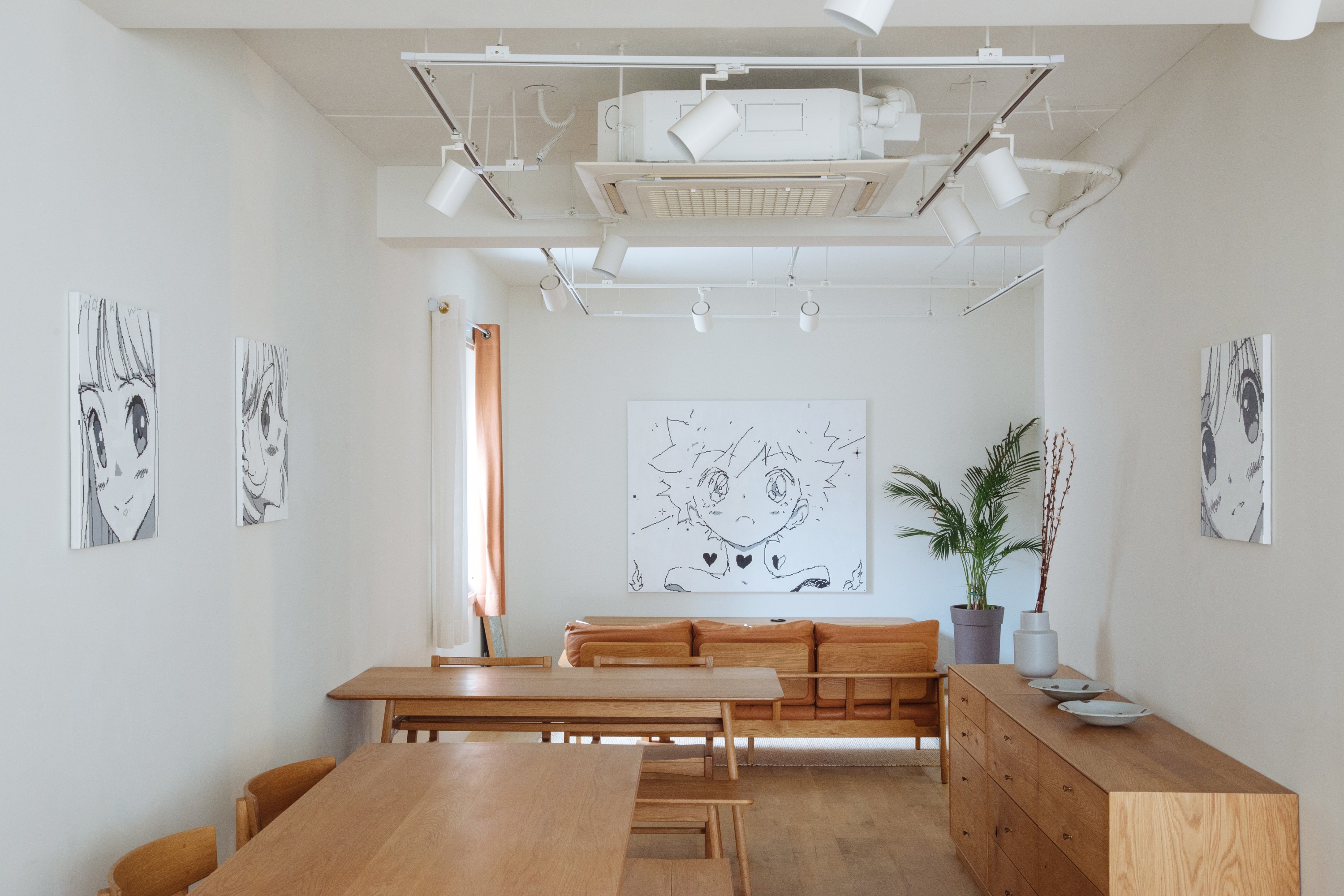
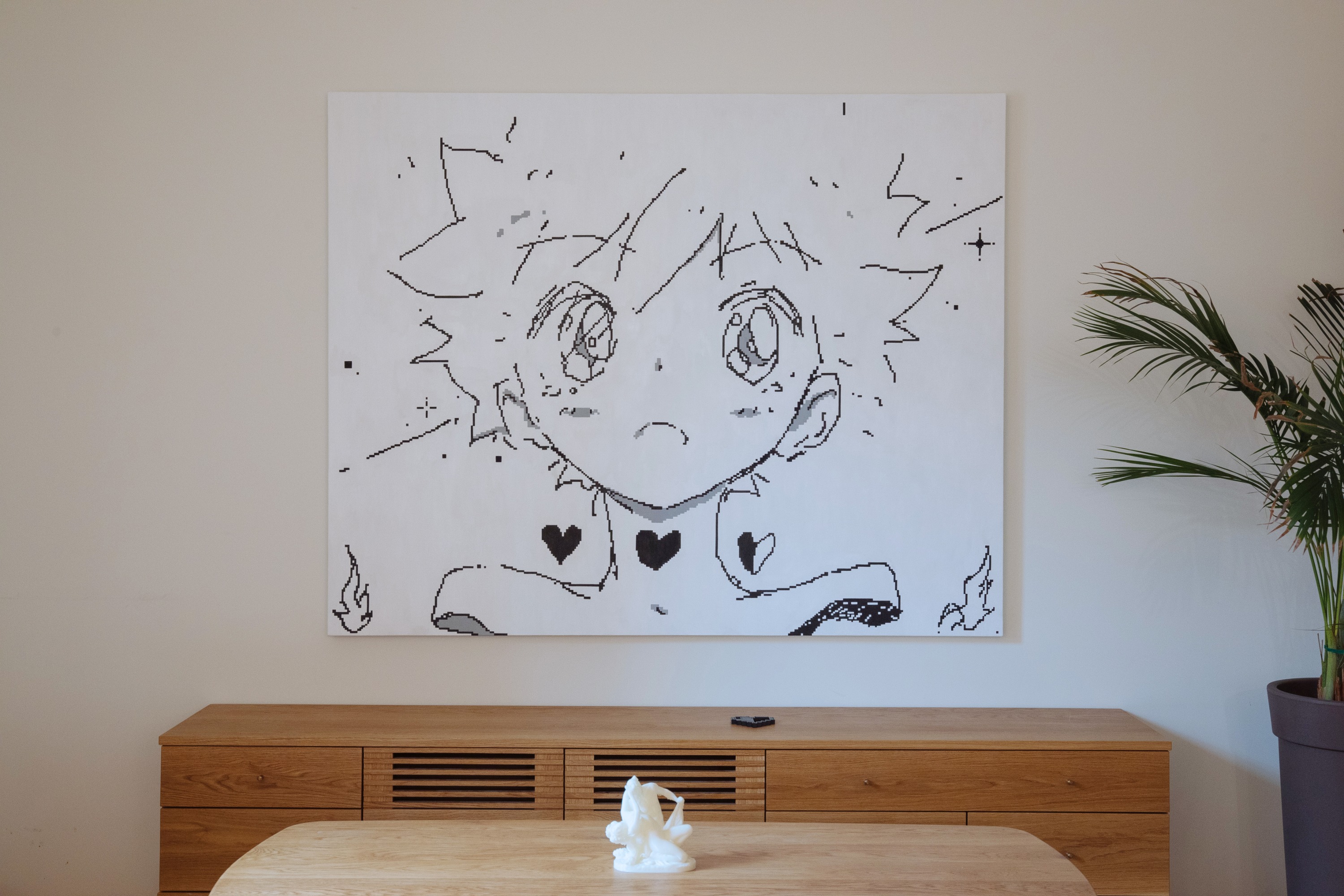
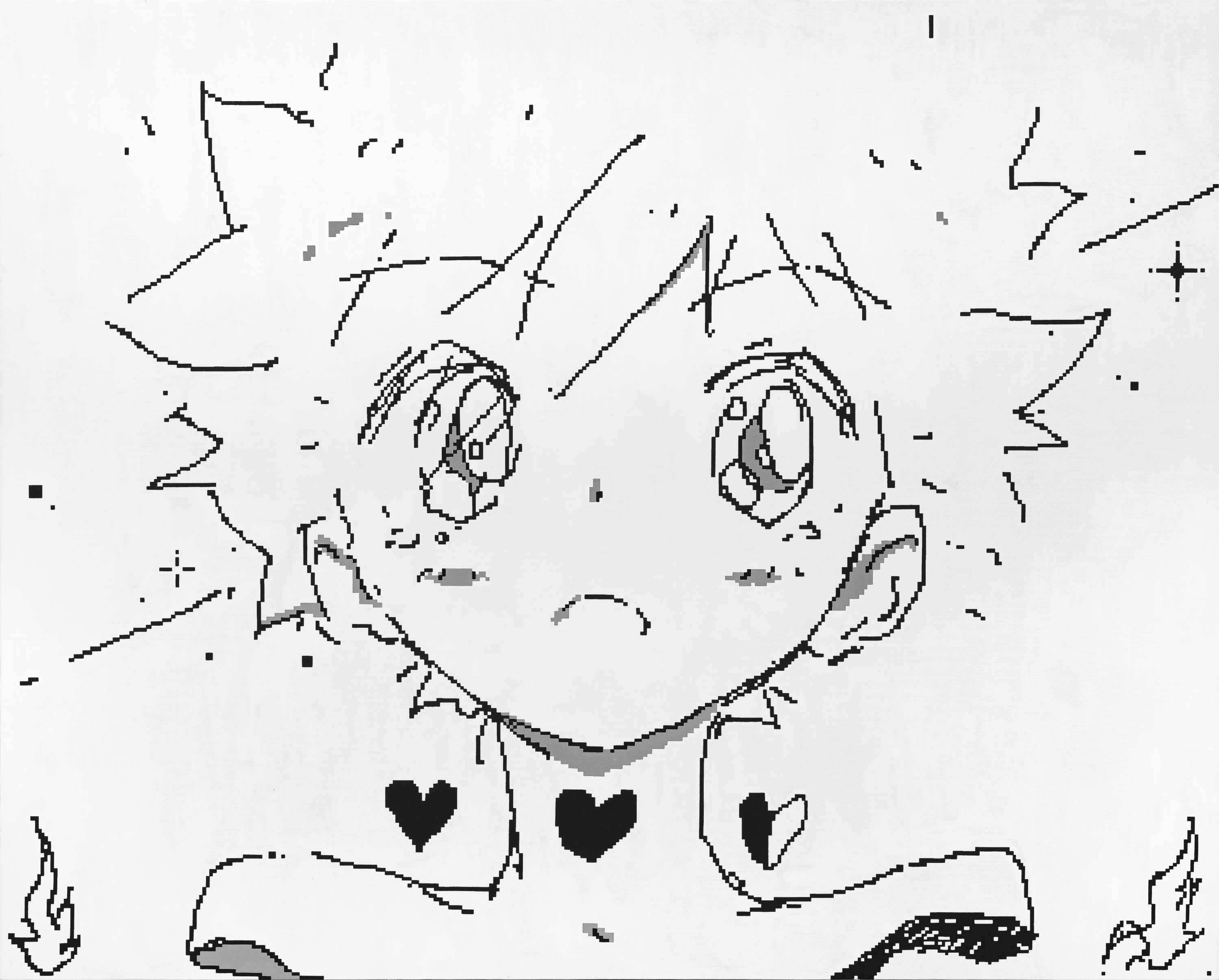
〈Prometheus〉(2019, 캔버스에 유채, 130×162cm)는 전시에서 가장 큰 작품으로, 다른 작품들과 같은 방식으로, 흰 바탕에 검은 선과 회색 면의 픽셀로 어린 모습의 프로메테우스를 그렸다. 화면 오른쪽 아래에는 하트를, 왼쪽 아래에는 불꽃을 두어, 게임의 로딩 화면에 뜨는 표시처럼 보이기를 바랐다.
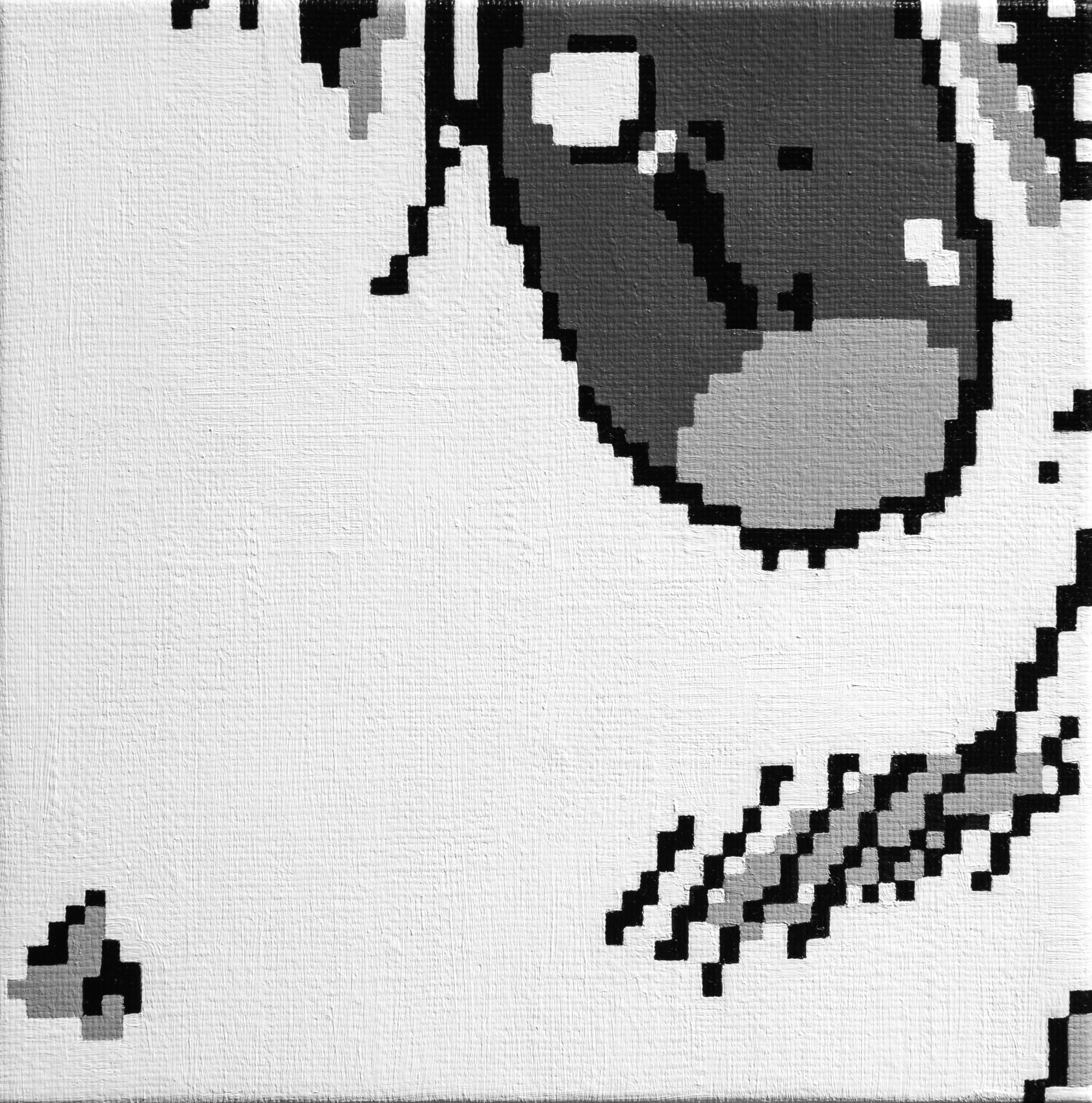
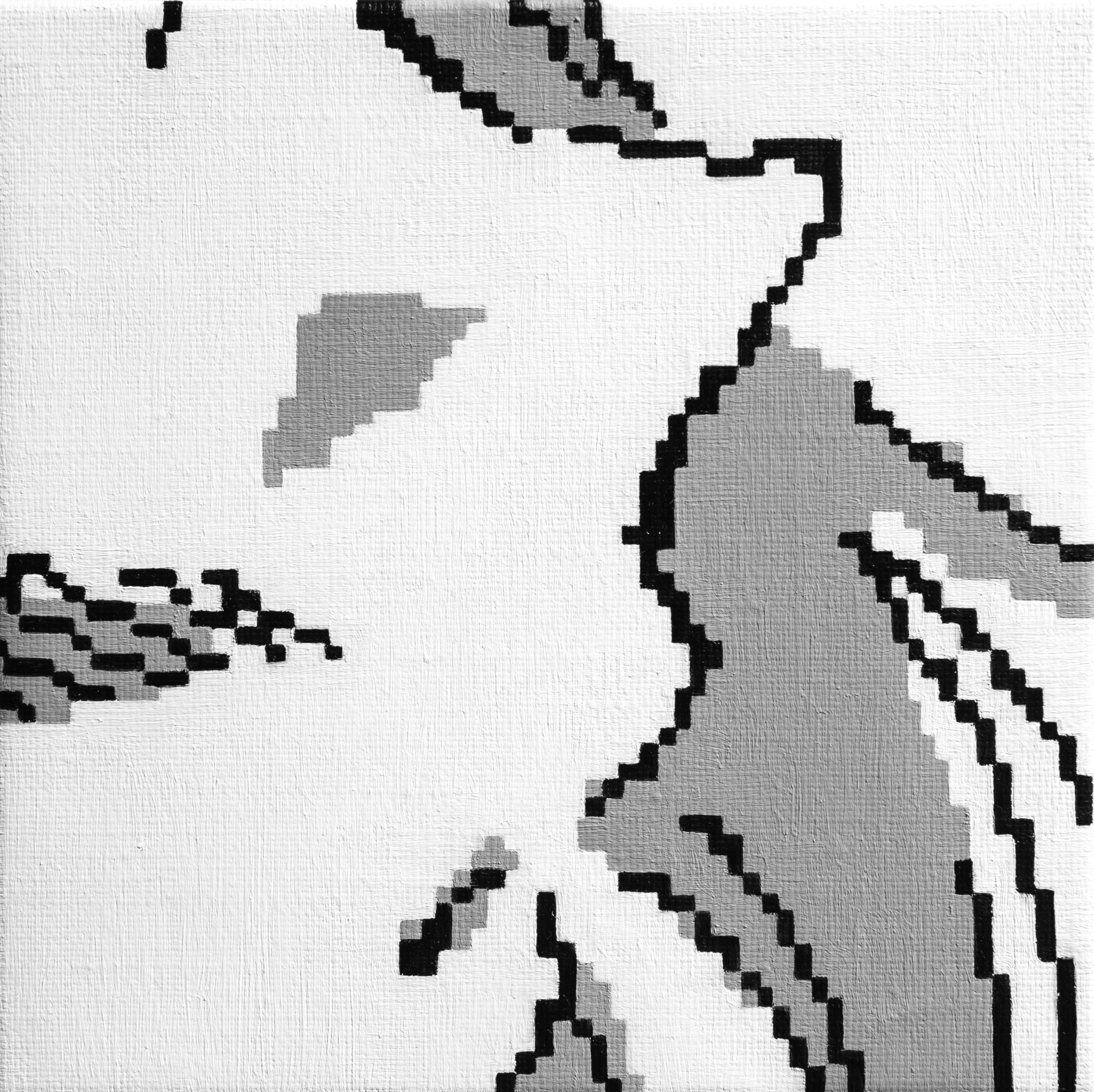
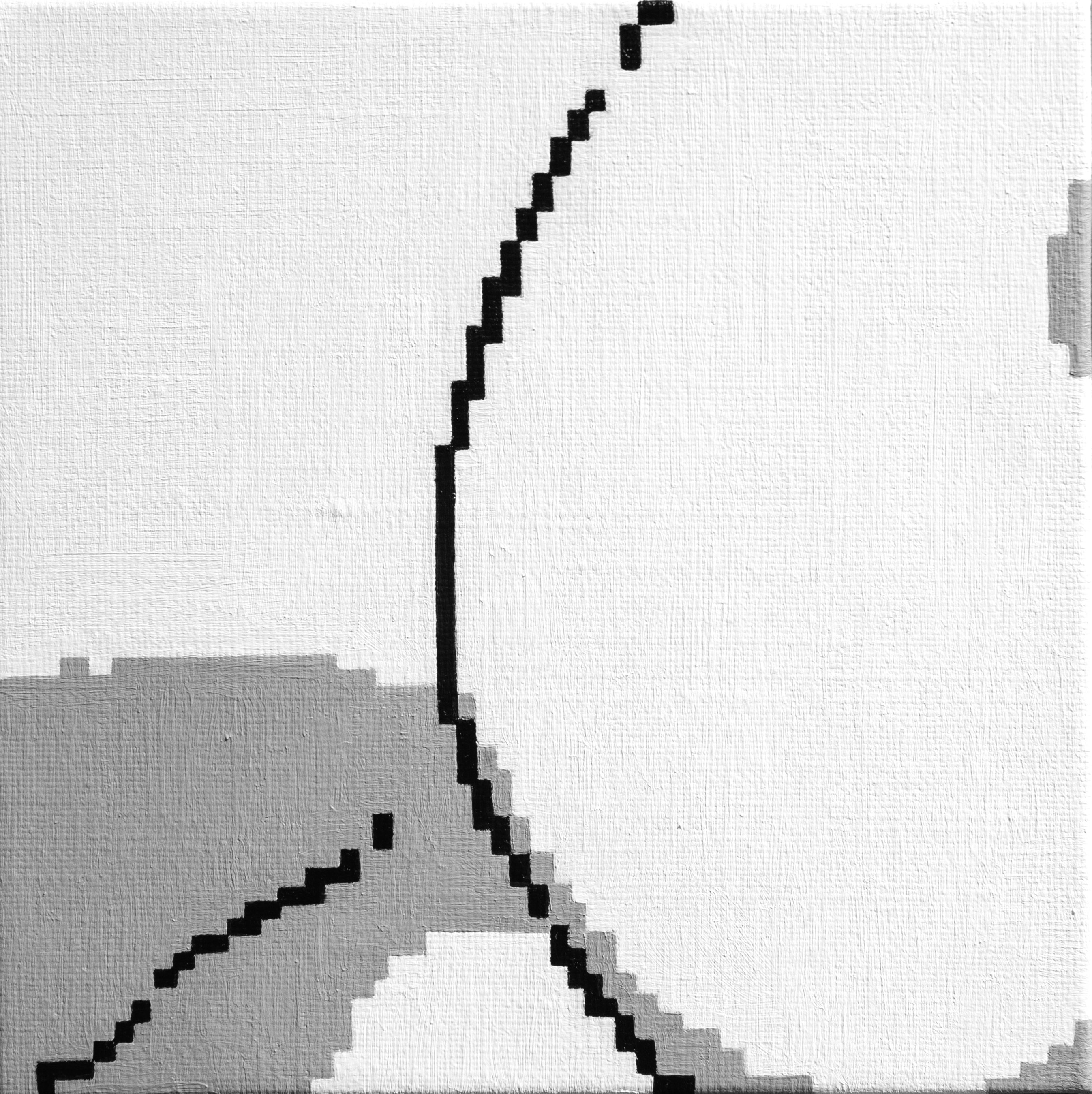
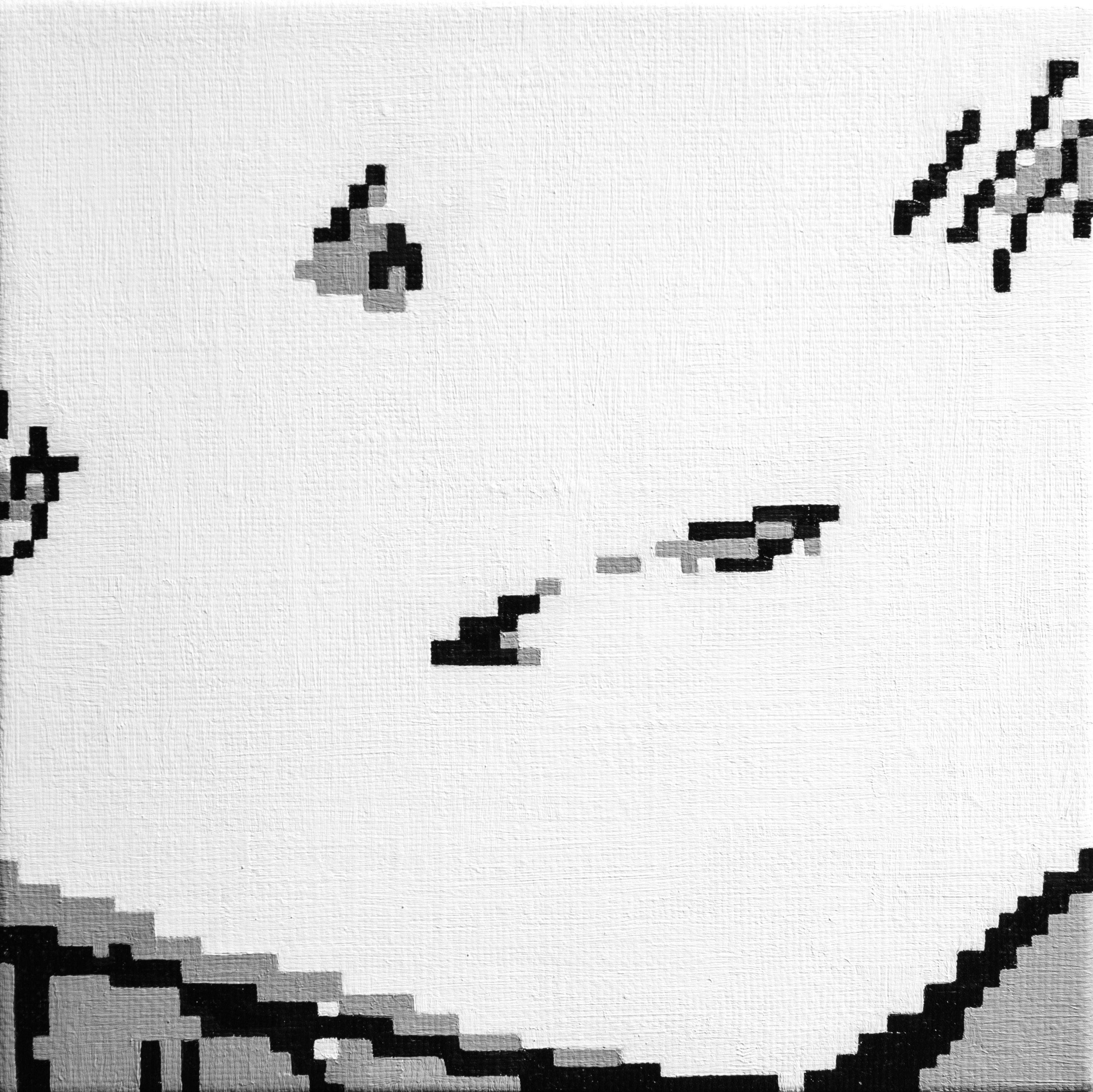
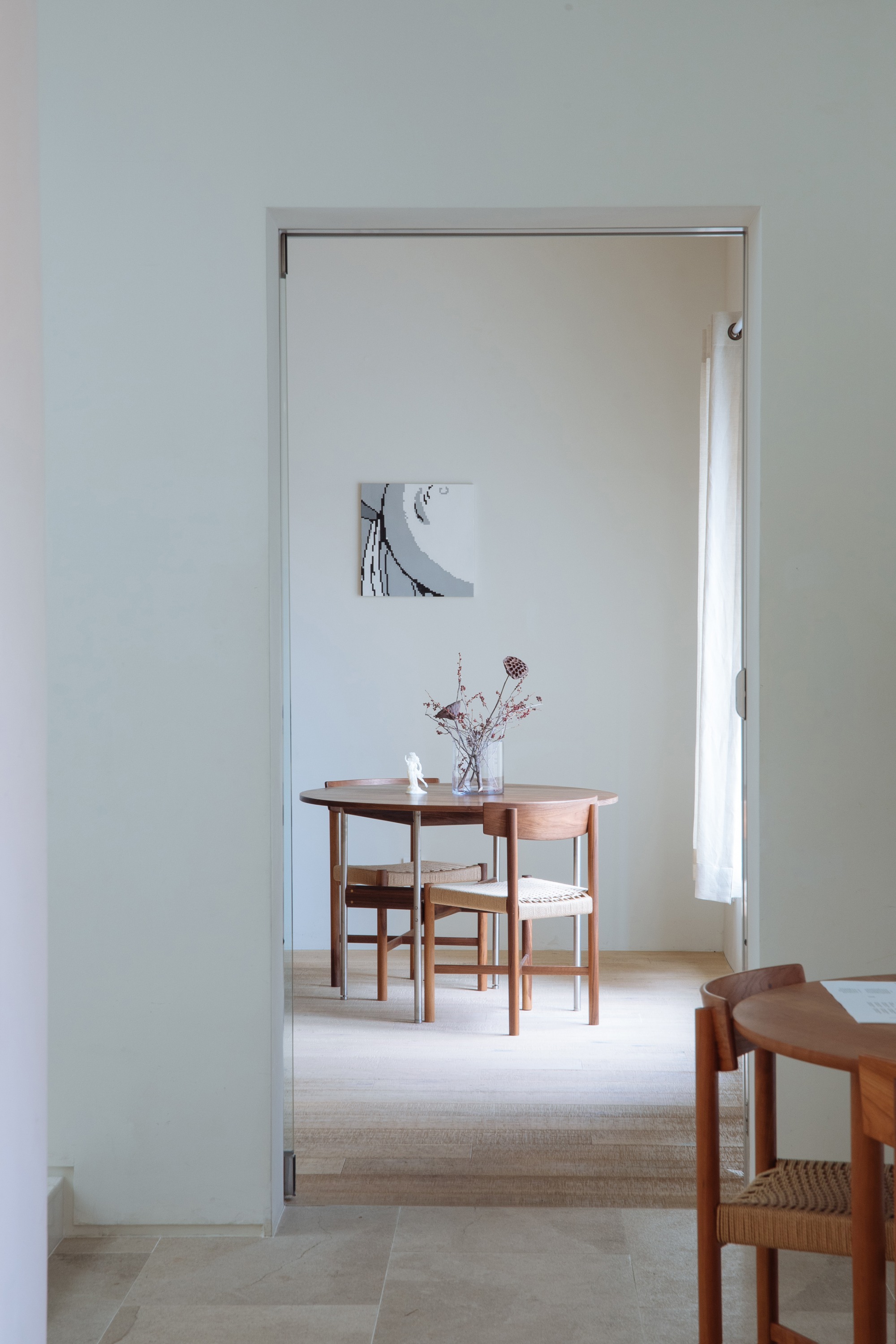
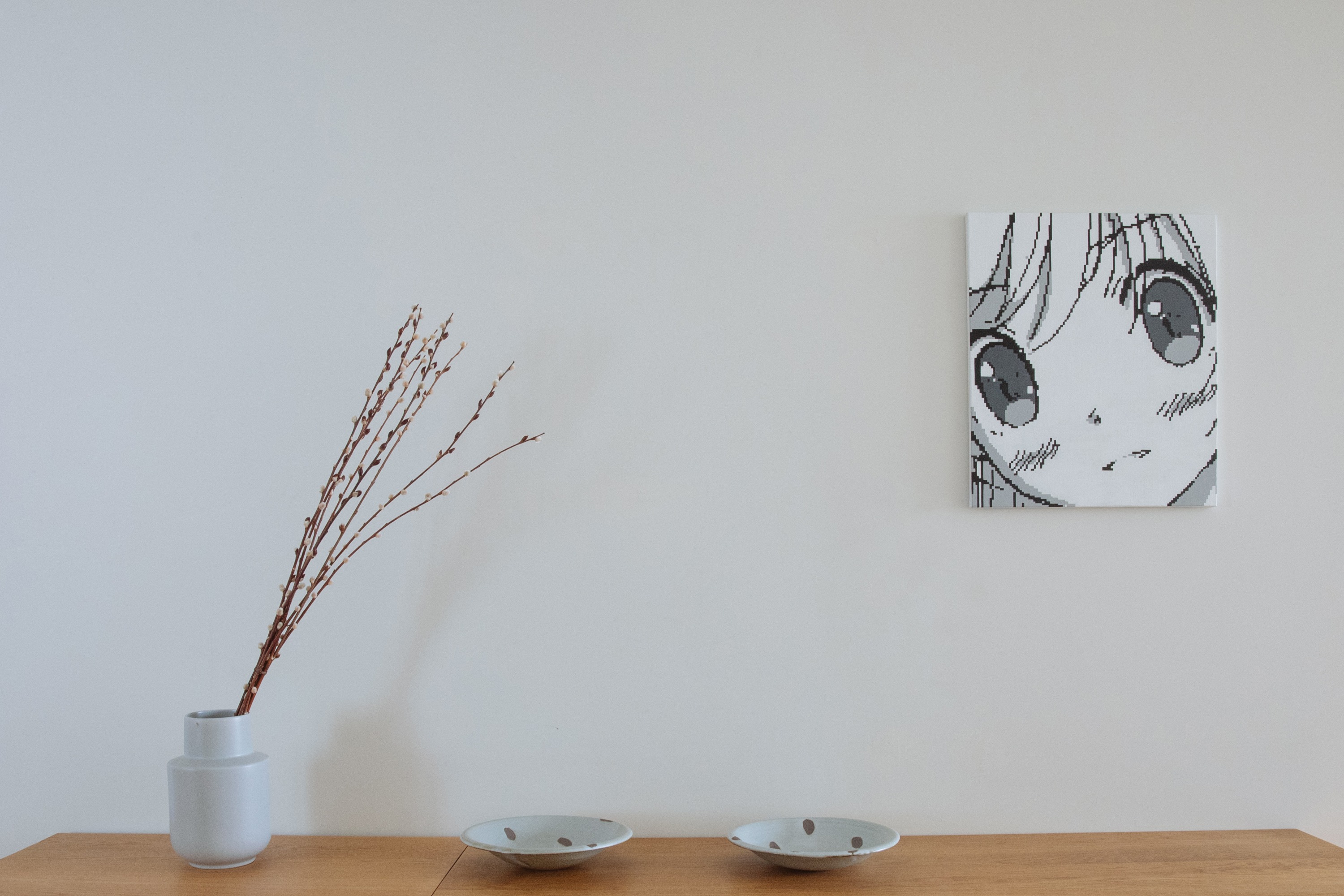
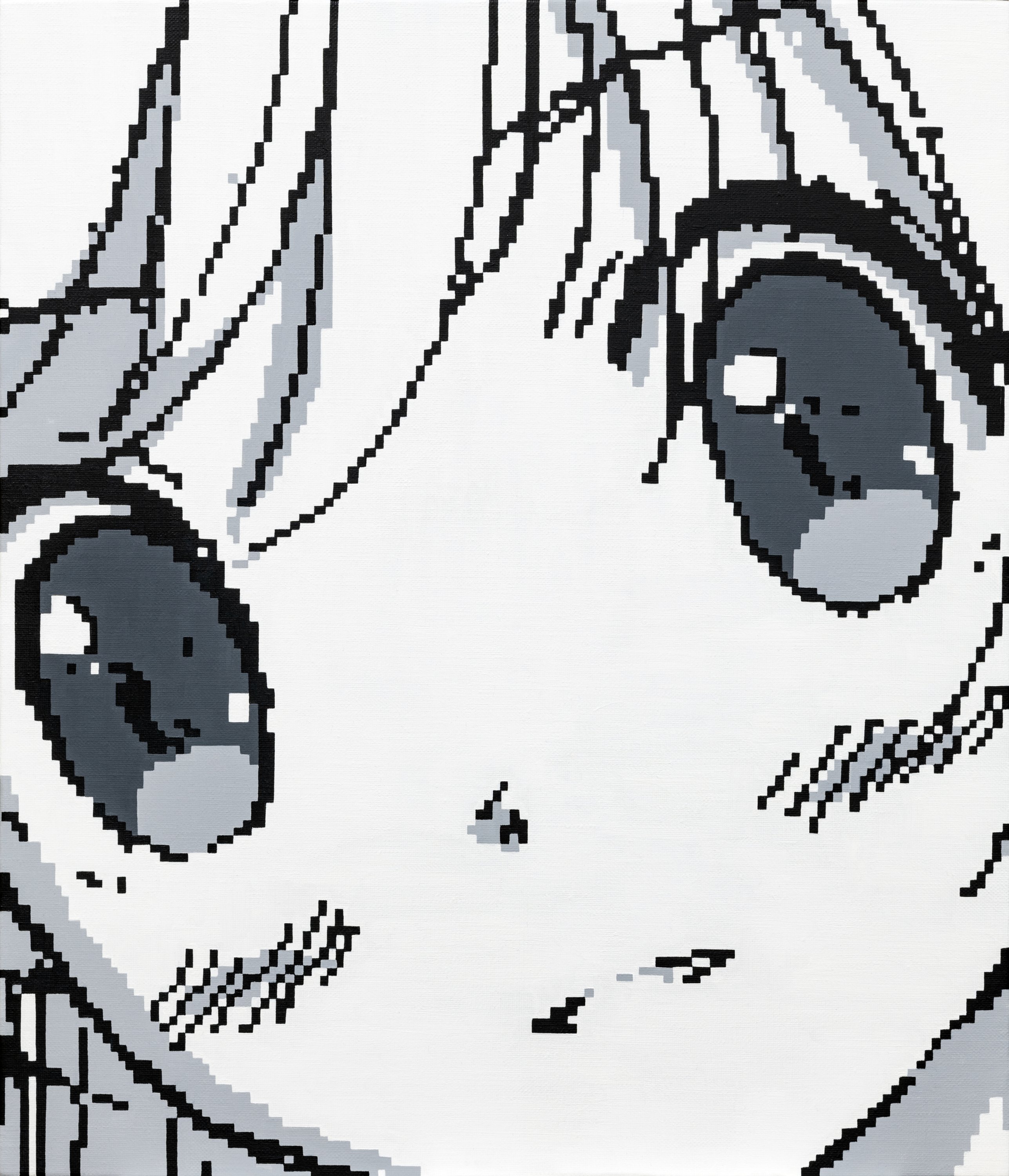
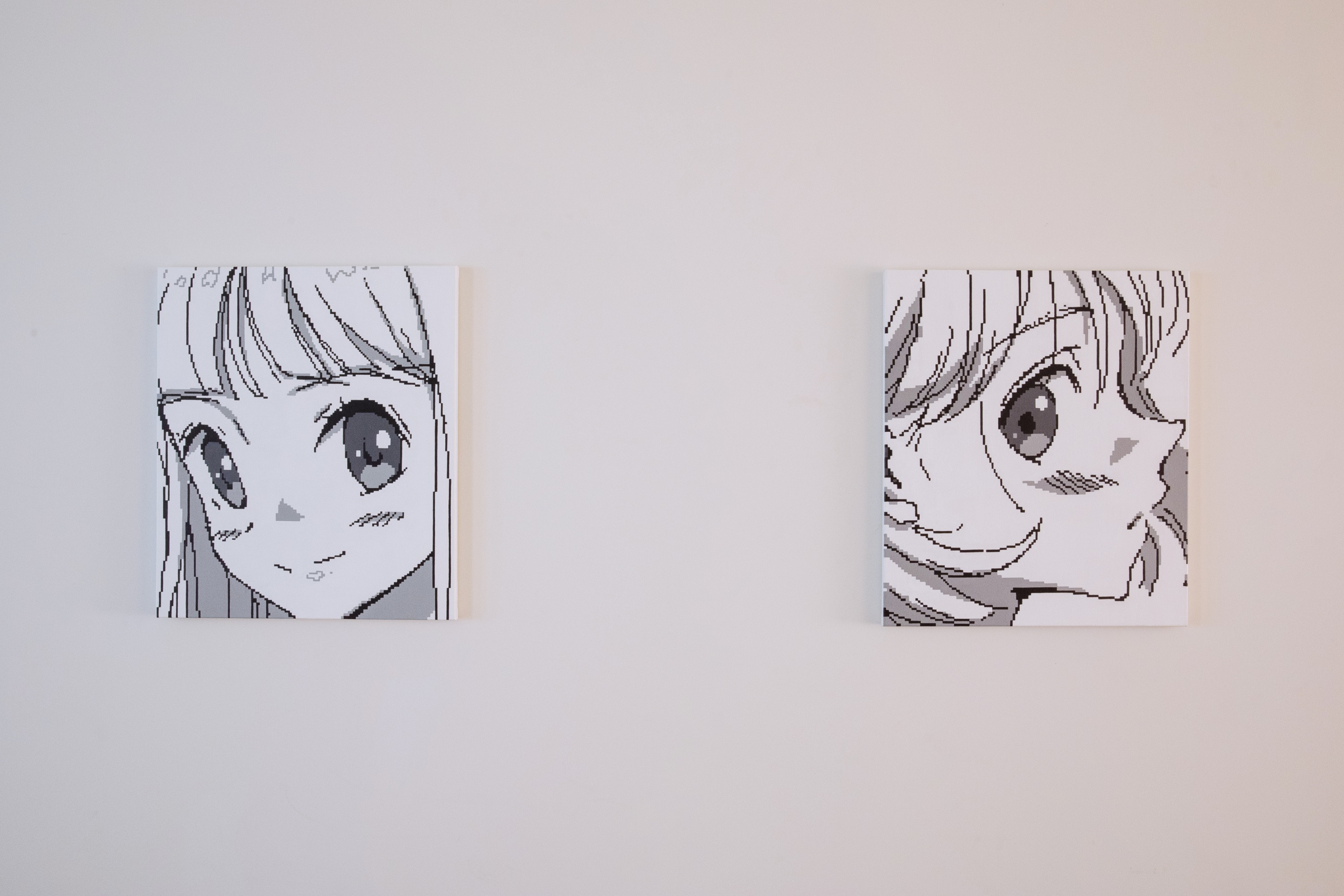
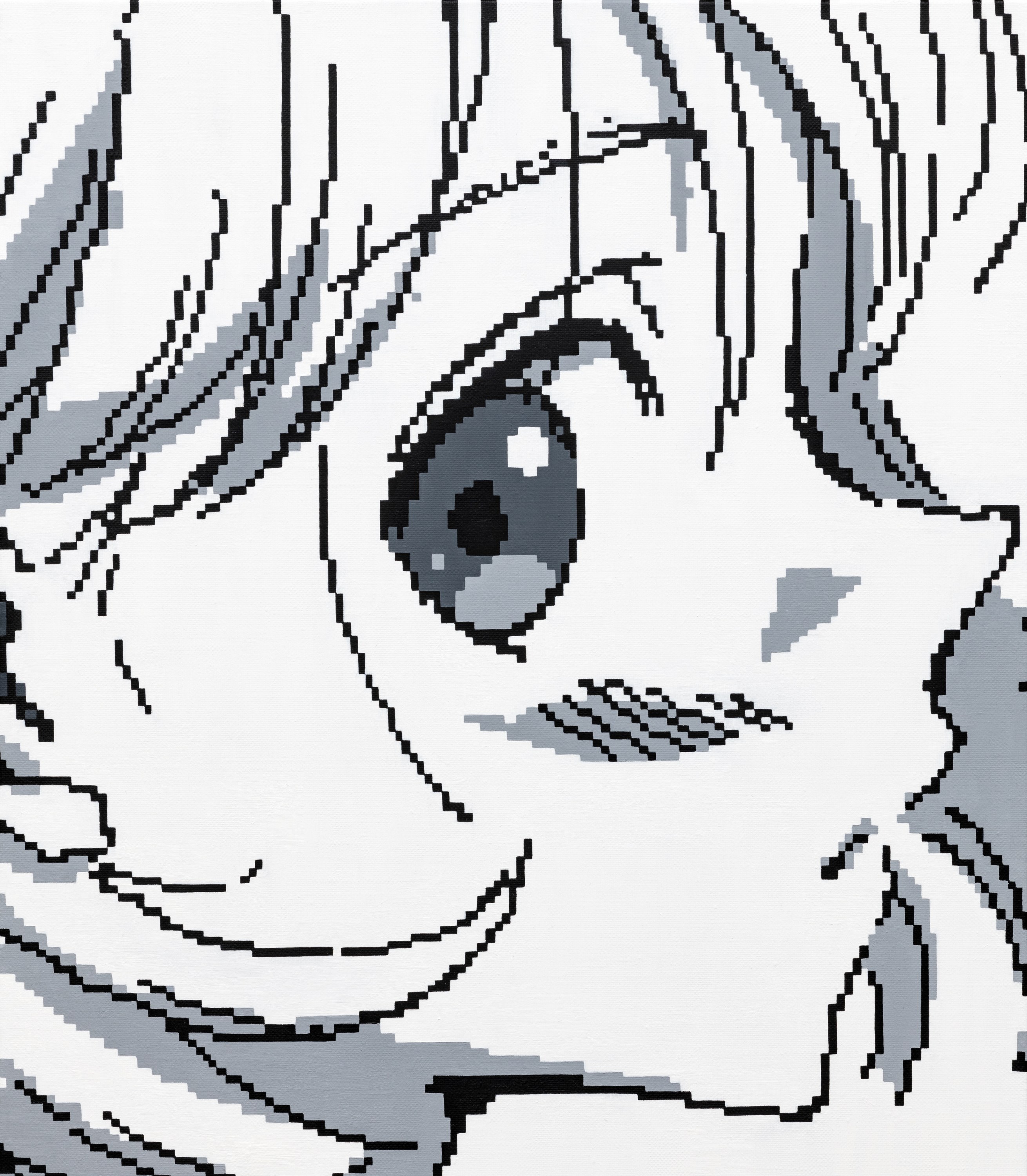
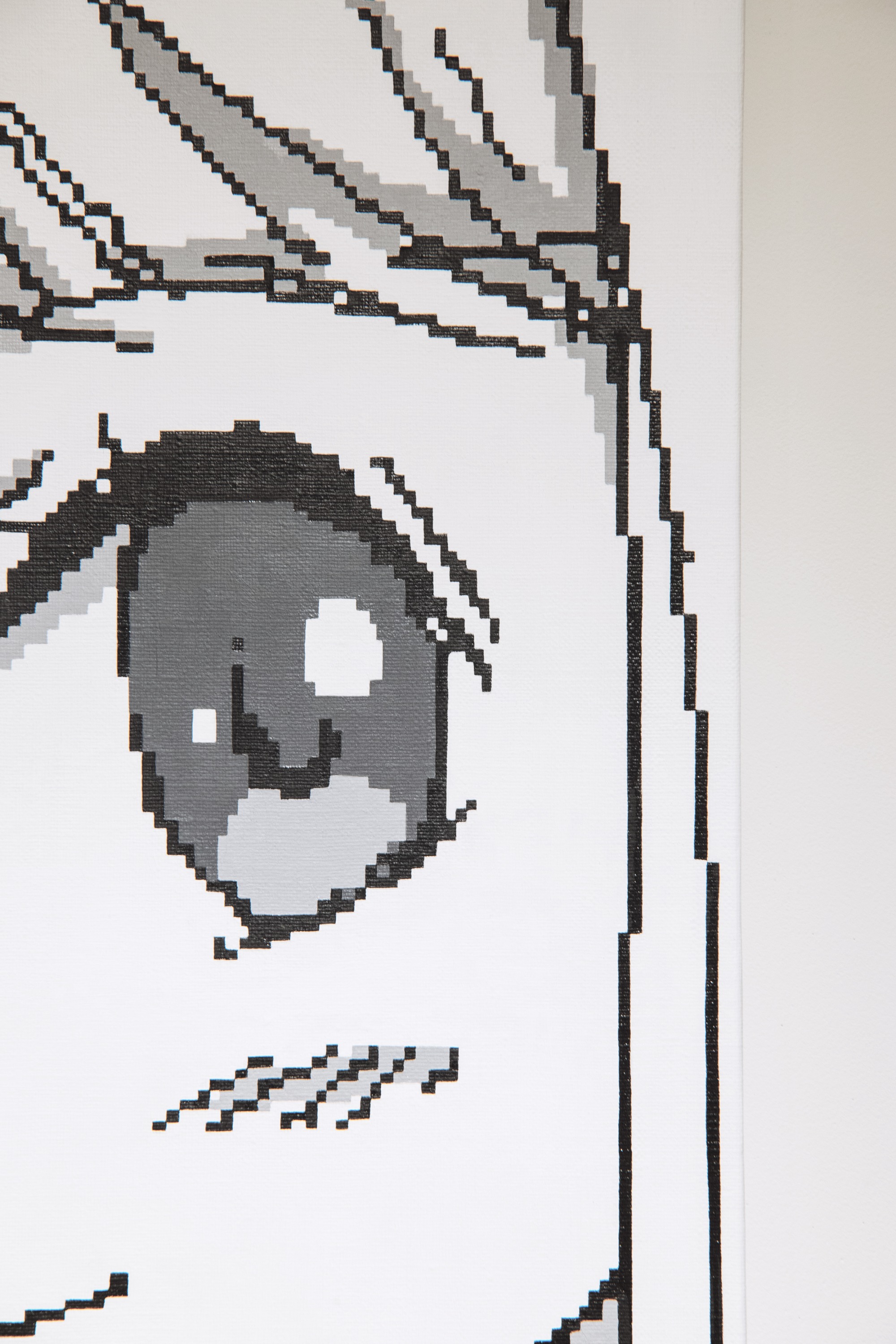
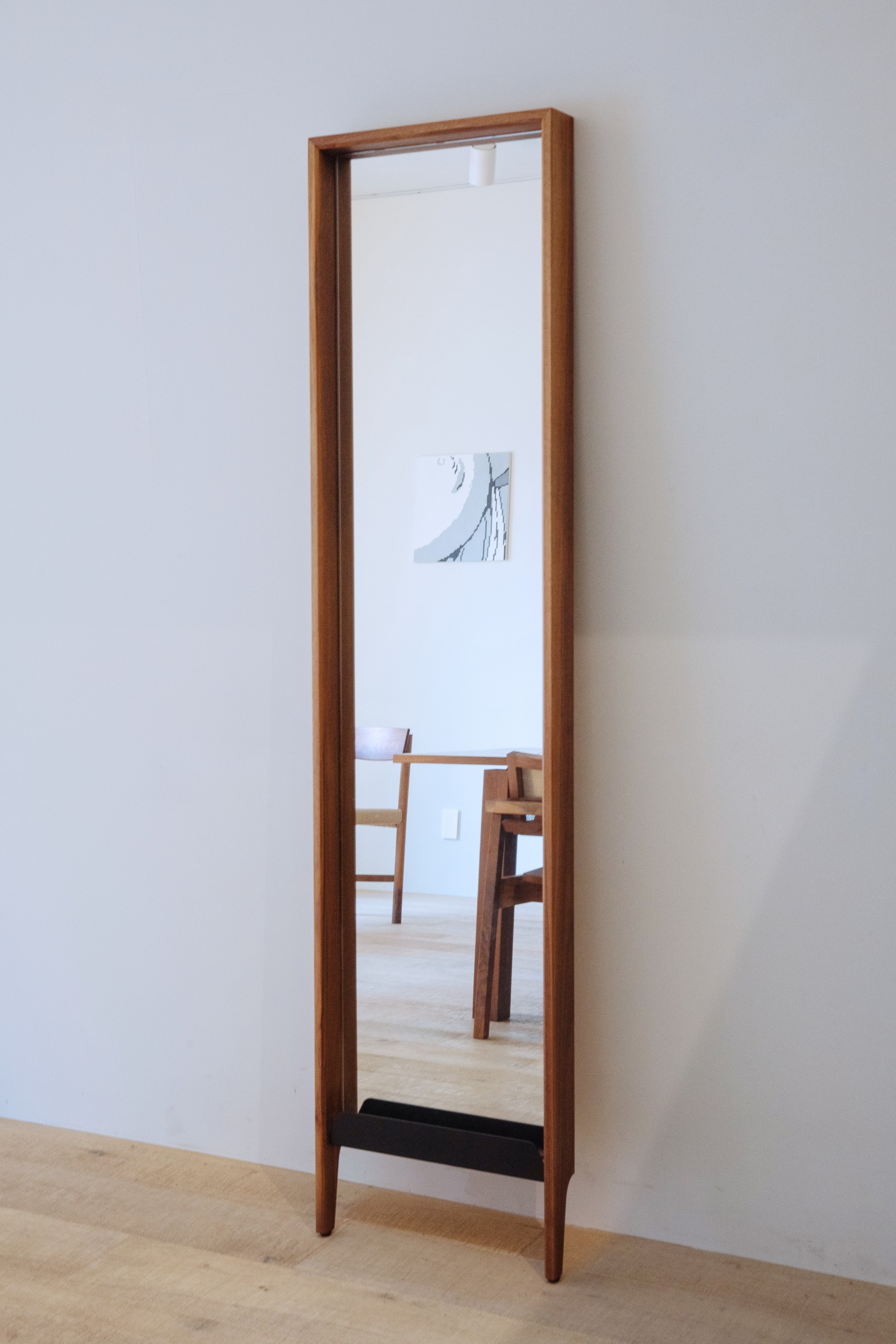
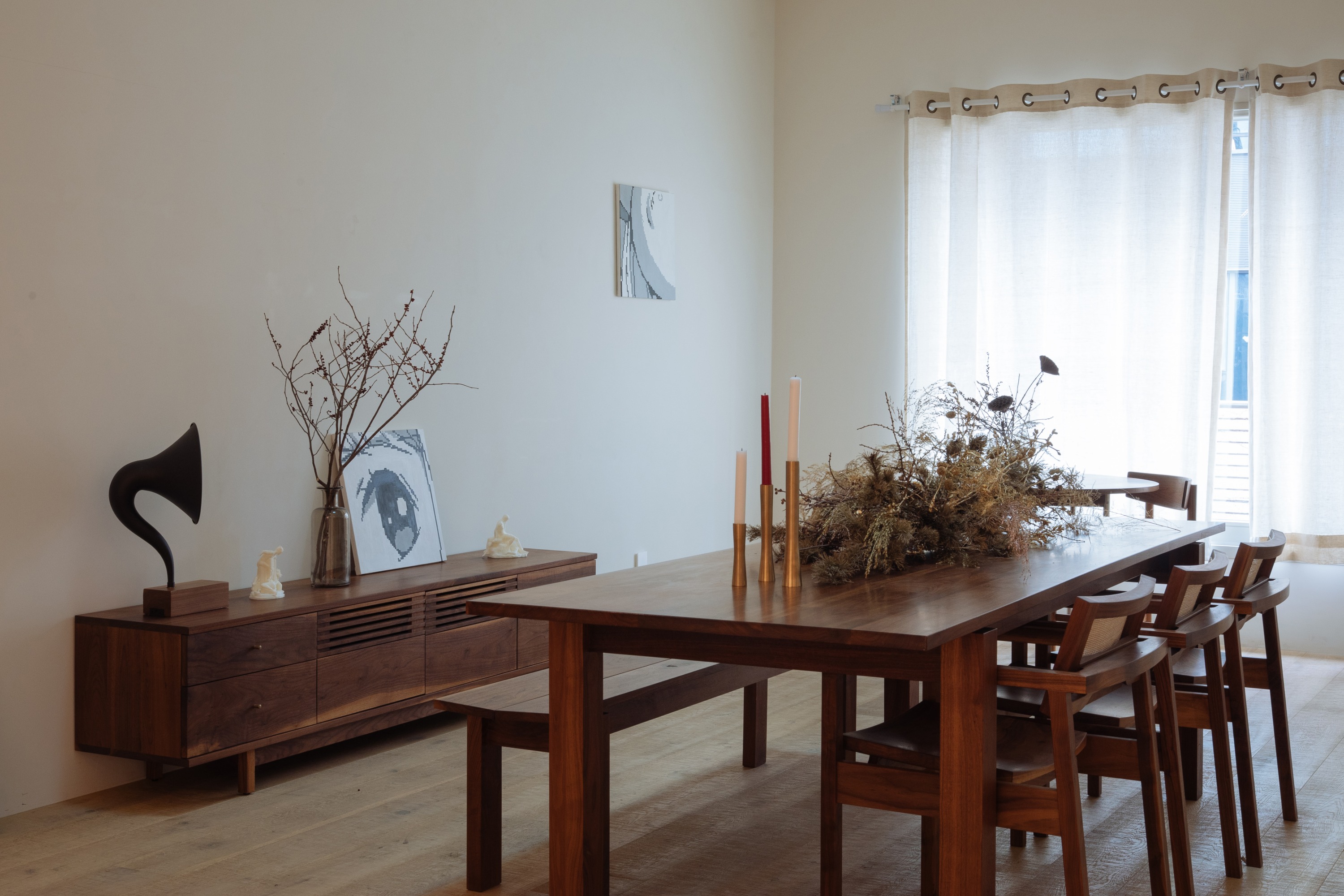
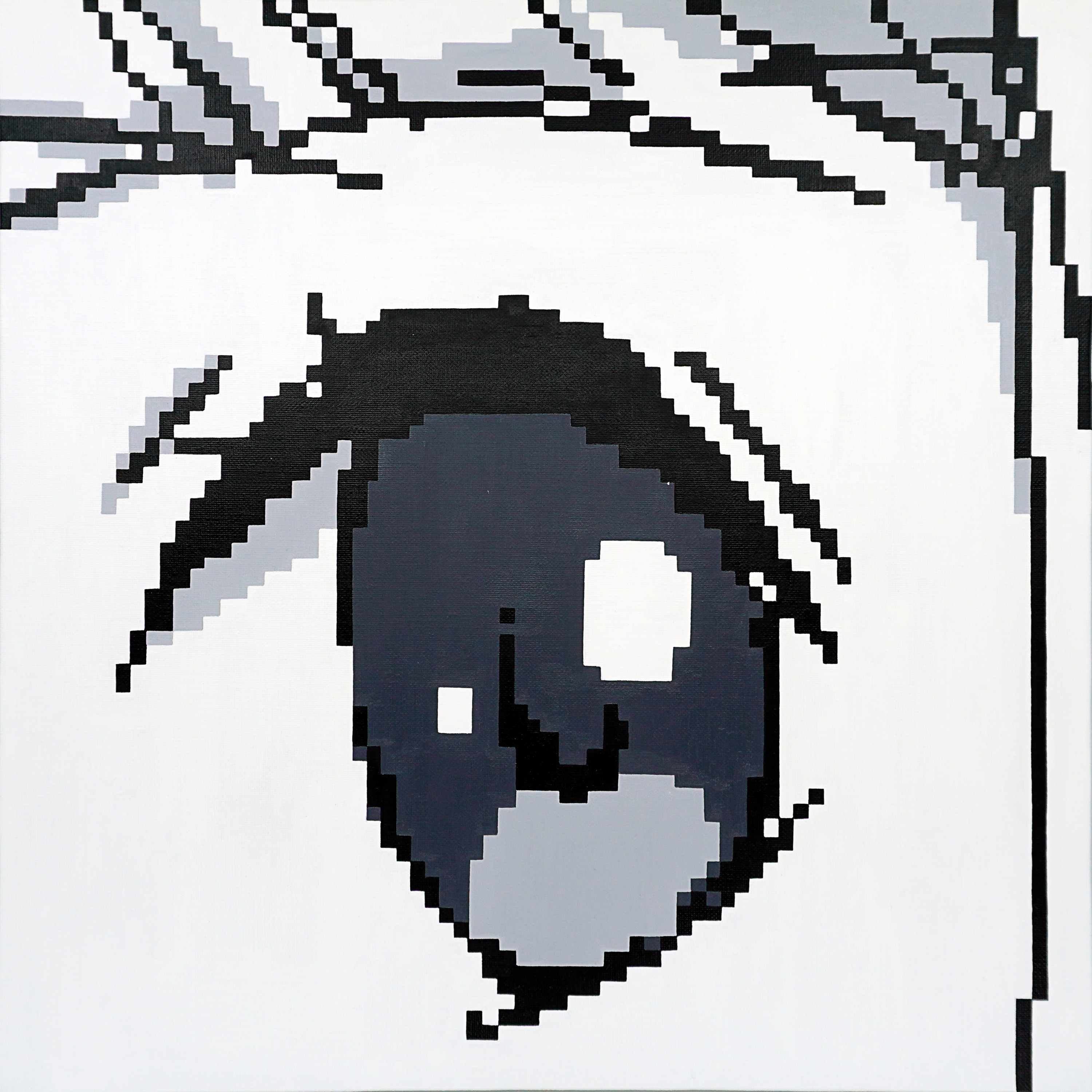
〈The Three Graces Pixel Props〉(2019, 캔버스에 유채, 15×15cm·45×45cm·53×45cm)는 세 명의 미소녀로 그린 삼미신의 픽셀 이미지에서 눈, 머리카락, 몸의 일부분만 확대하거나 따와서 작은 캔버스에 옮긴 연작이다. 전체 원작은 디지털로만 존재한다. 색은 흰색과 검은색, 그 사이의 회색으로 최소한의 단계만 썼다. 픽셀은 가까이서 보면 네모난 면이고 떨어져서 보면 얼굴이 된다. 토르소가 몸의 일부로 전체를 상상하게 하듯, 이 작은 조각들도 한 장면의 일부다.
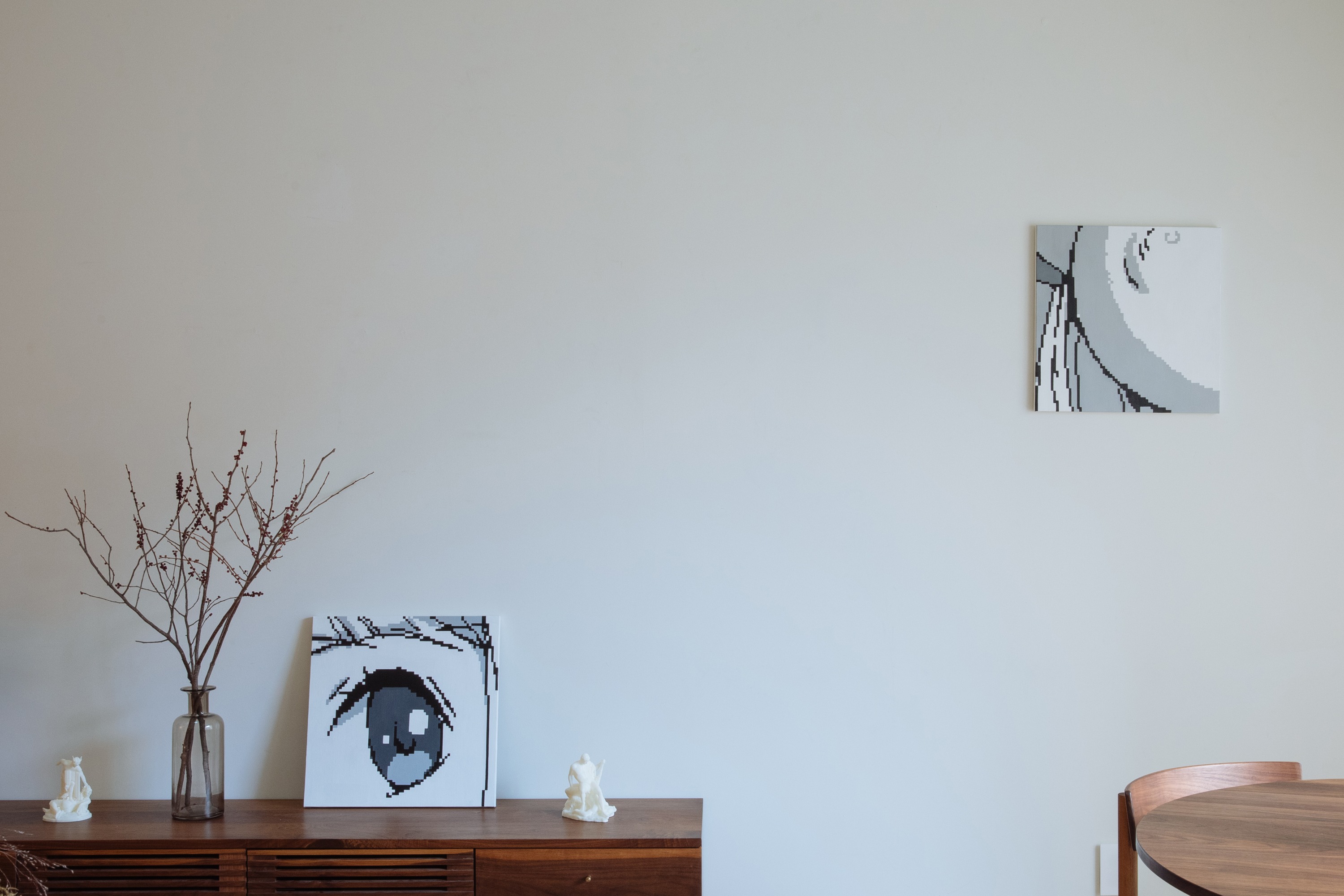
전시는 가구 쇼룸 STANDARD.a에서, 초타원형이 기획한 무형의 갤러리 프로젝트인 Superellipse Gallery와 협업해 열었다. 작품이 공간에 어떻게 놓여야 하는가를 생각하며 기획한 전시라, 작품은 흰 벽에 걸리기도 하고 선반과 서랍장 위에 쇼룸의 소품들과 나란히 놓이기도 했다. 작은 캔버스들은 쇼룸 안의 물건들 사이에 있을 때 더 자연스러워 보였다.
PIXEL PROMETHEUS THE THREE GRACES (STANDARD.a + Superellipse Gallery, Seoul, 2019) was an exhibition of paintings made by enlarging small pixel drawings and transferring them to canvas. Each pixel becomes a square plane on the canvas. It consisted of Prometheus' Heart, pixel hearts taken from a game's life bar; Prometheus, a pixel image; and The Three Graces Pixel Props series, parts of the faces and bodies of the Three Graces rendered in pixels.
I have always found drawing on a computer a little difficult, and I think the reason lies in the question of what resolution to set. Thinking about that, this time I tried pixels with the idea of drawing as small as possible instead. A picture drawn on a computer will break down one way or another, so if I drew an image that was already broken from the start, it could not break any further, and in that case it would be as hard as a diamond.
Today almost everything we see digitally is high resolution, but I grew up seeing a great many pixel images. It is a form and a style that emerged from the limits of hardware, but I think there is a particular aesthetic that comes to light because of it. Like the black and white of comics and the visual devices of animation, it is another case in which a constraint became a style.
Prometheus' Heart (2019, oil on canvas, 18 × 32 cm) is composed of pixel hearts taken from the life bar of Nintendo's game The Legend of Zelda (1986–). The last one is only half filled. In the painting it is stopped at a single moment in which there is no way to tell whether the heart is draining or filling. The body of Prometheus, whose liver is pecked out by an eagle each day and grows back each night, seemed to me like a game's life gauge, worn down and recovered. I am still painting the same image in a number of variations, changing the number and color of the hearts.
Prometheus (2019, oil on canvas, 130 × 162 cm) was the largest work in the exhibition. In the same manner as the other works, it depicts a young Prometheus in pixels of black line and gray plane on a white ground. A heart sits at the lower right of the picture and a flame at the lower left, meant to look like the indicators that appear on a game's loading screen.
The Three Graces Pixel Props (2019, oil on canvas, 15 × 15 cm, 45 × 45 cm, 53 × 45 cm) is a series in which only the eyes, the hair or parts of the body were enlarged or excerpted from a pixel image of the Three Graces drawn as three bishōjo, and transferred to small canvases. The complete original exists only in digital form. The colors are kept to the minimum number of steps: white, black and the grays between them. Up close a pixel is a square plane; from a distance it becomes a face. Just as a torso makes one imagine the whole from a part of the body, these small fragments are each part of a single scene.
The exhibition was held at the furniture showroom STANDARD.a, in collaboration with Superellipse Gallery, a gallery project without a physical space, organized by Superellipse. Because the exhibition was planned around the question of how the works should be placed in a space, some works hung on the white walls while others were set on shelves and chests of drawers alongside the showroom's objects. The small canvases looked more natural when they sat among the things in the showroom.
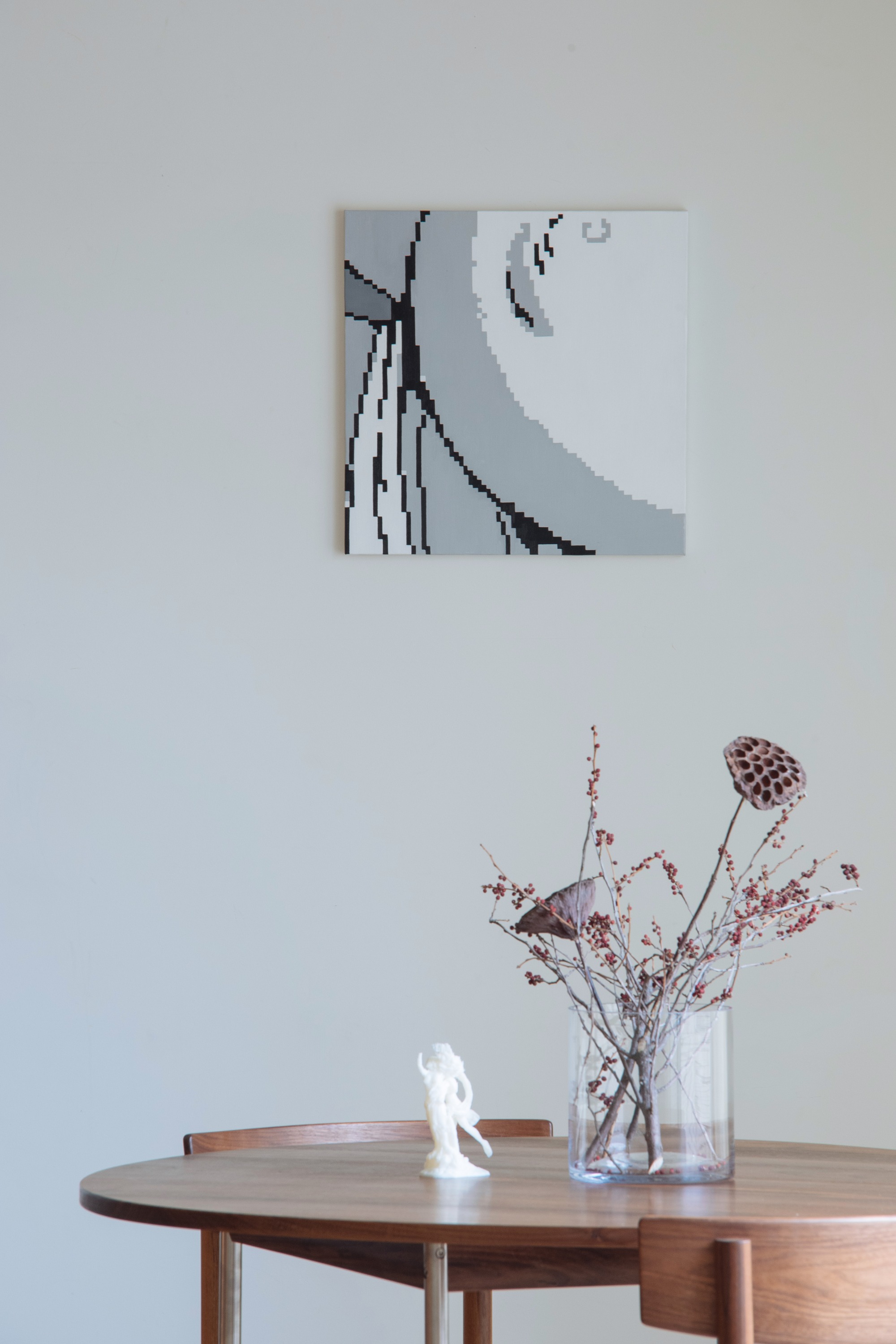
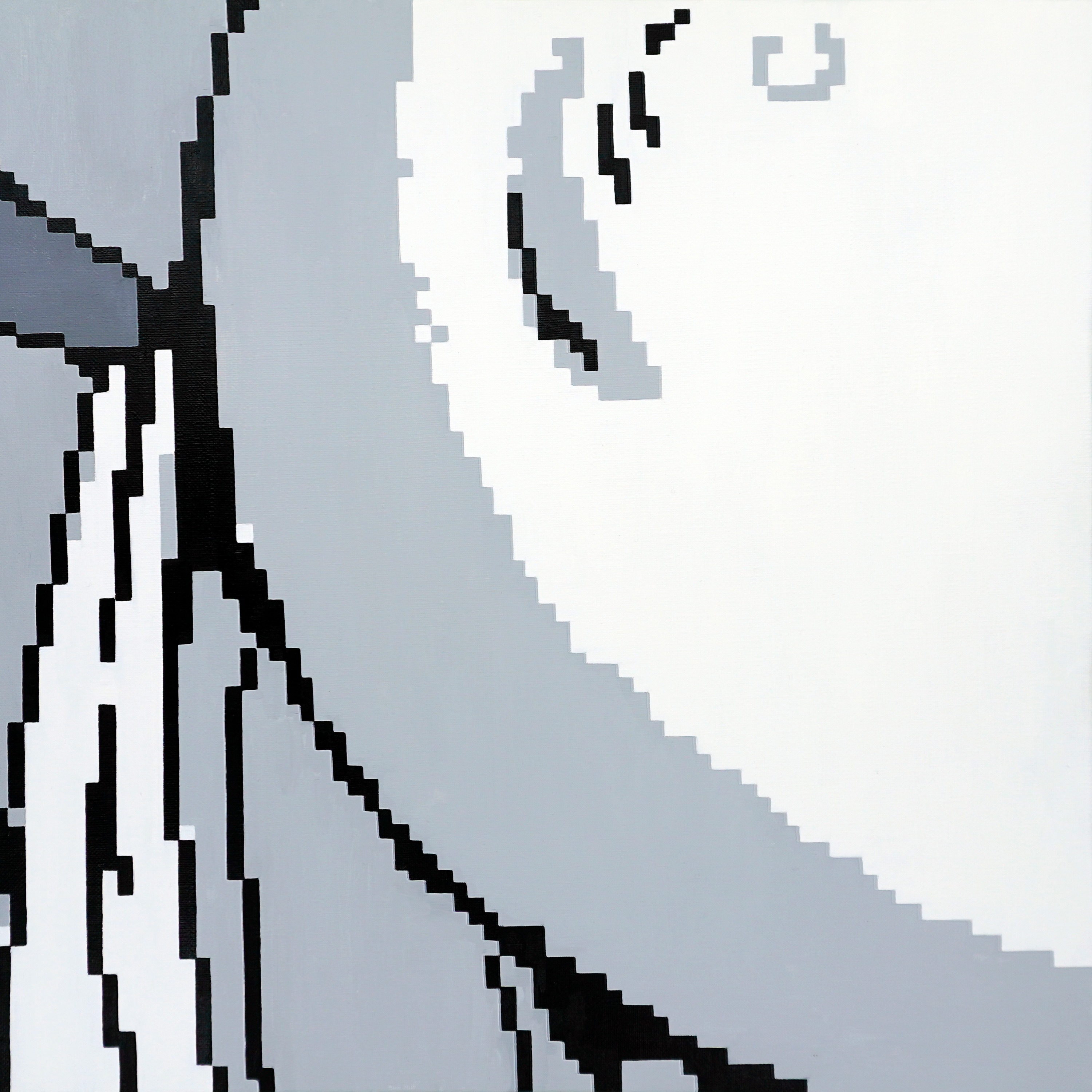
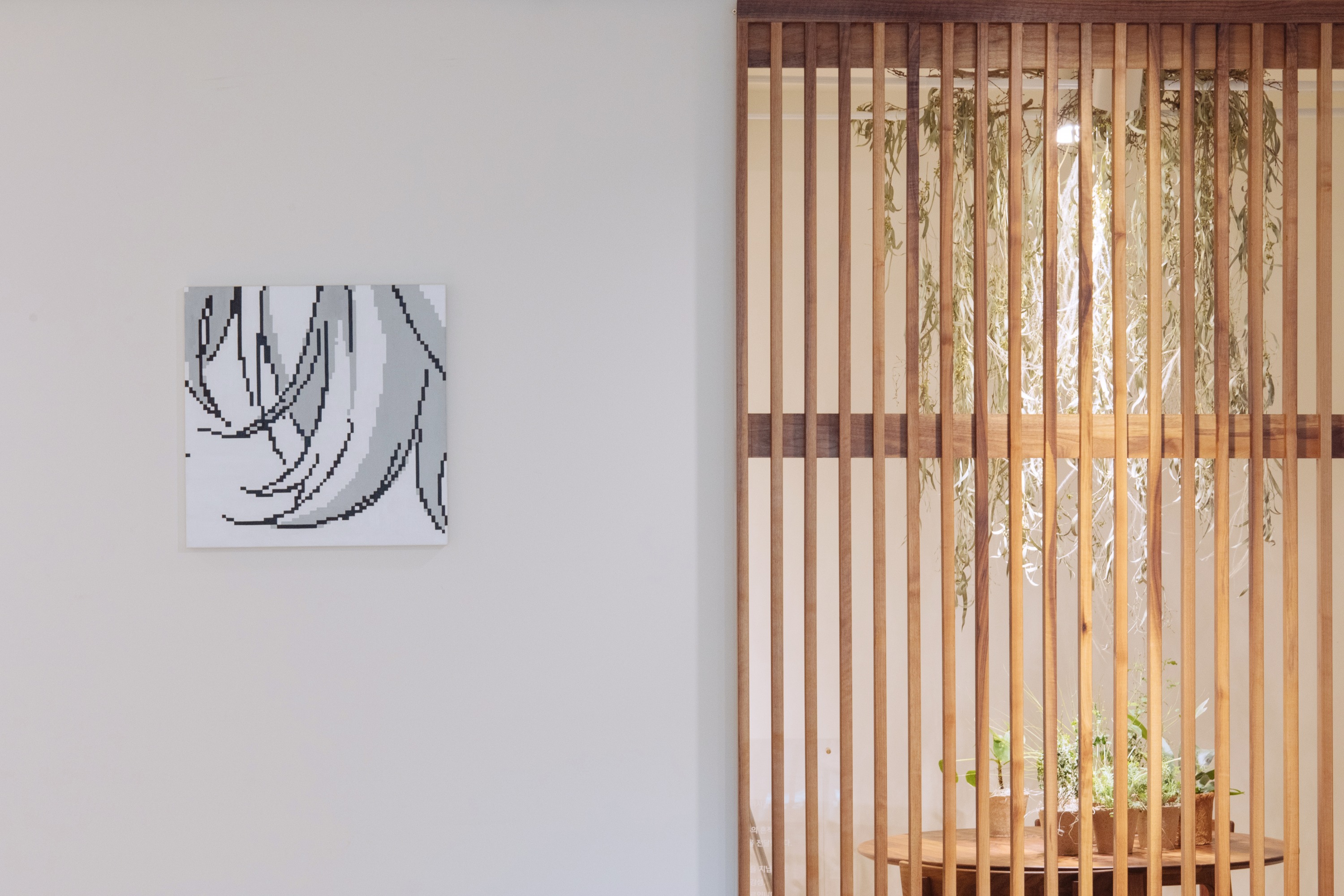
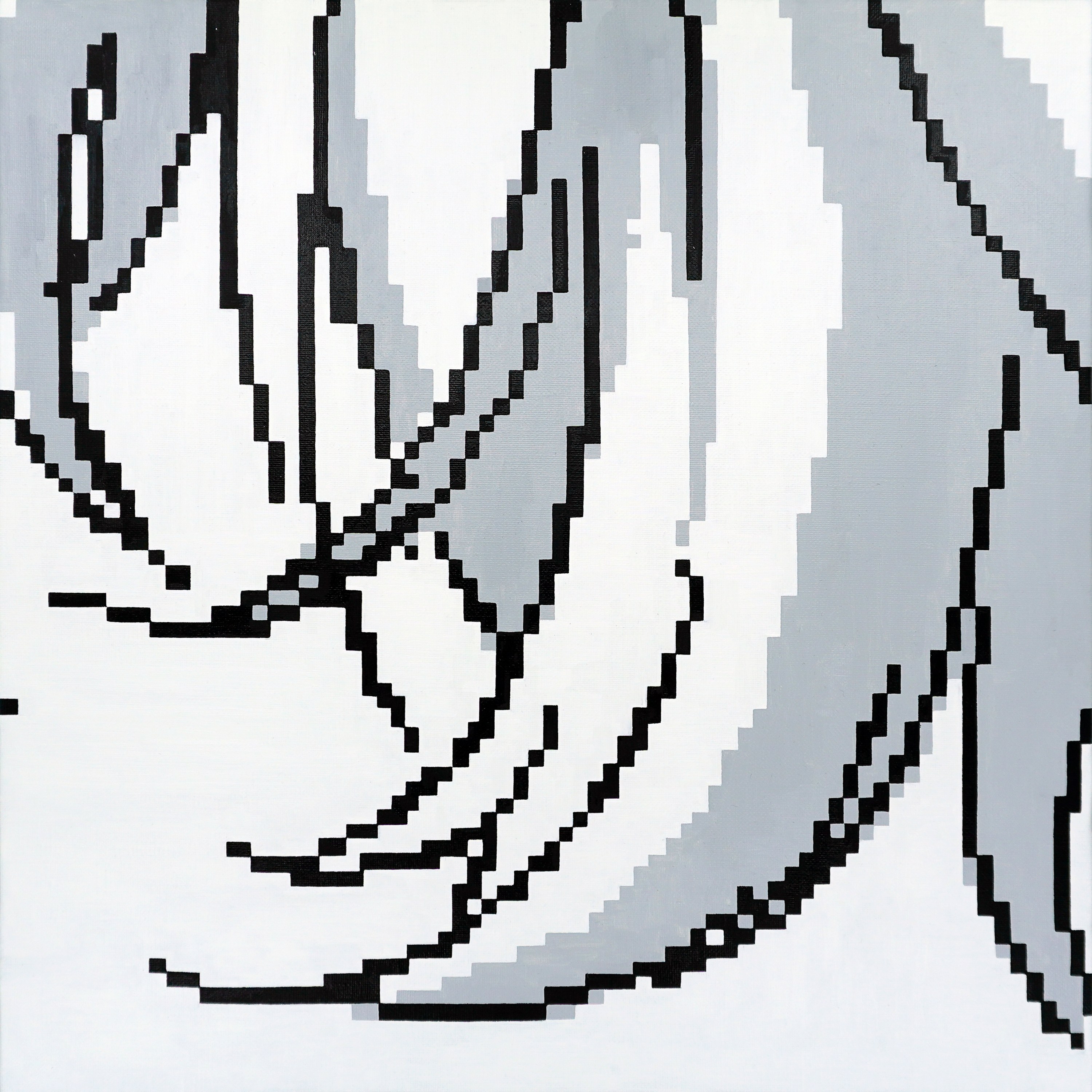
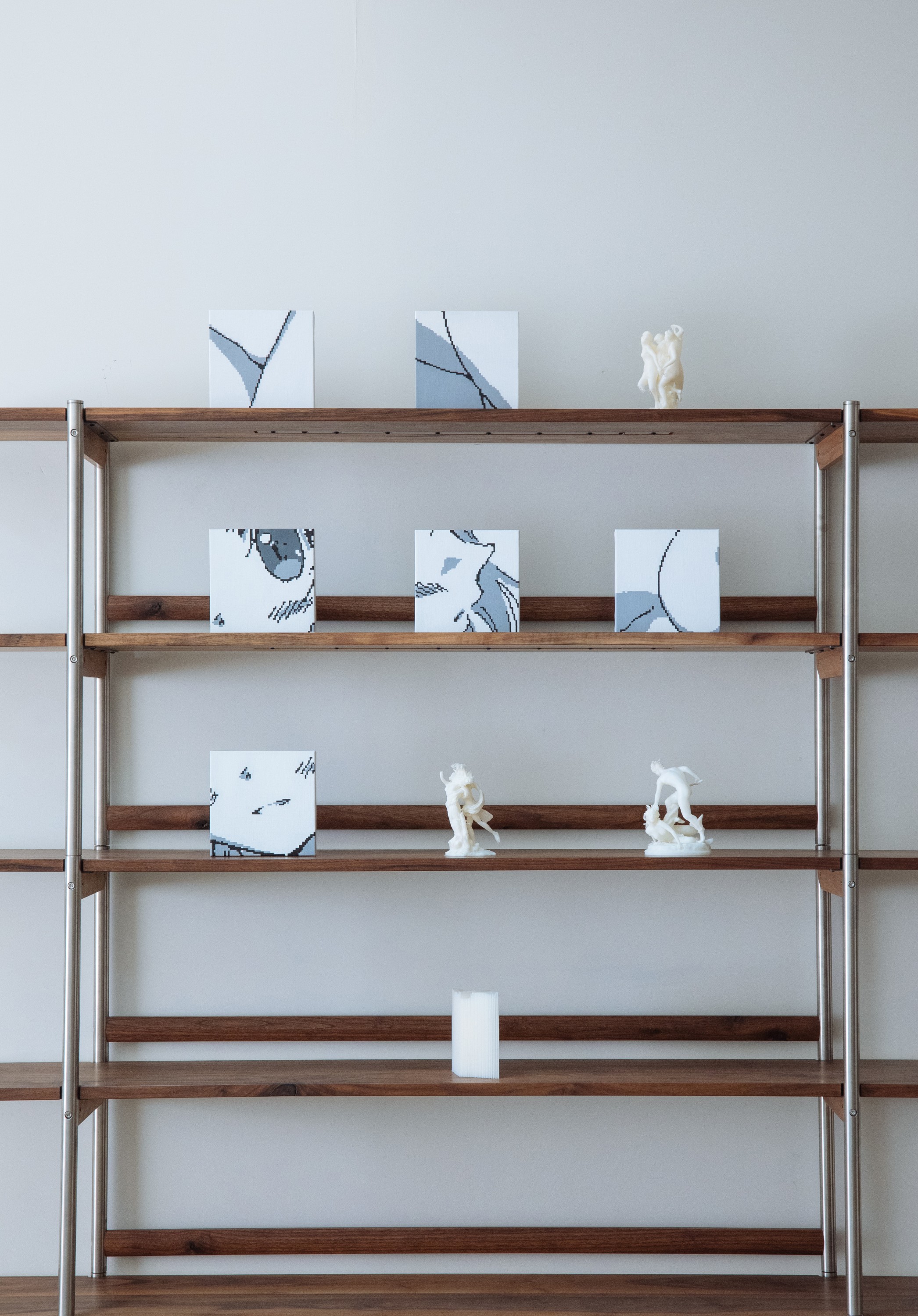
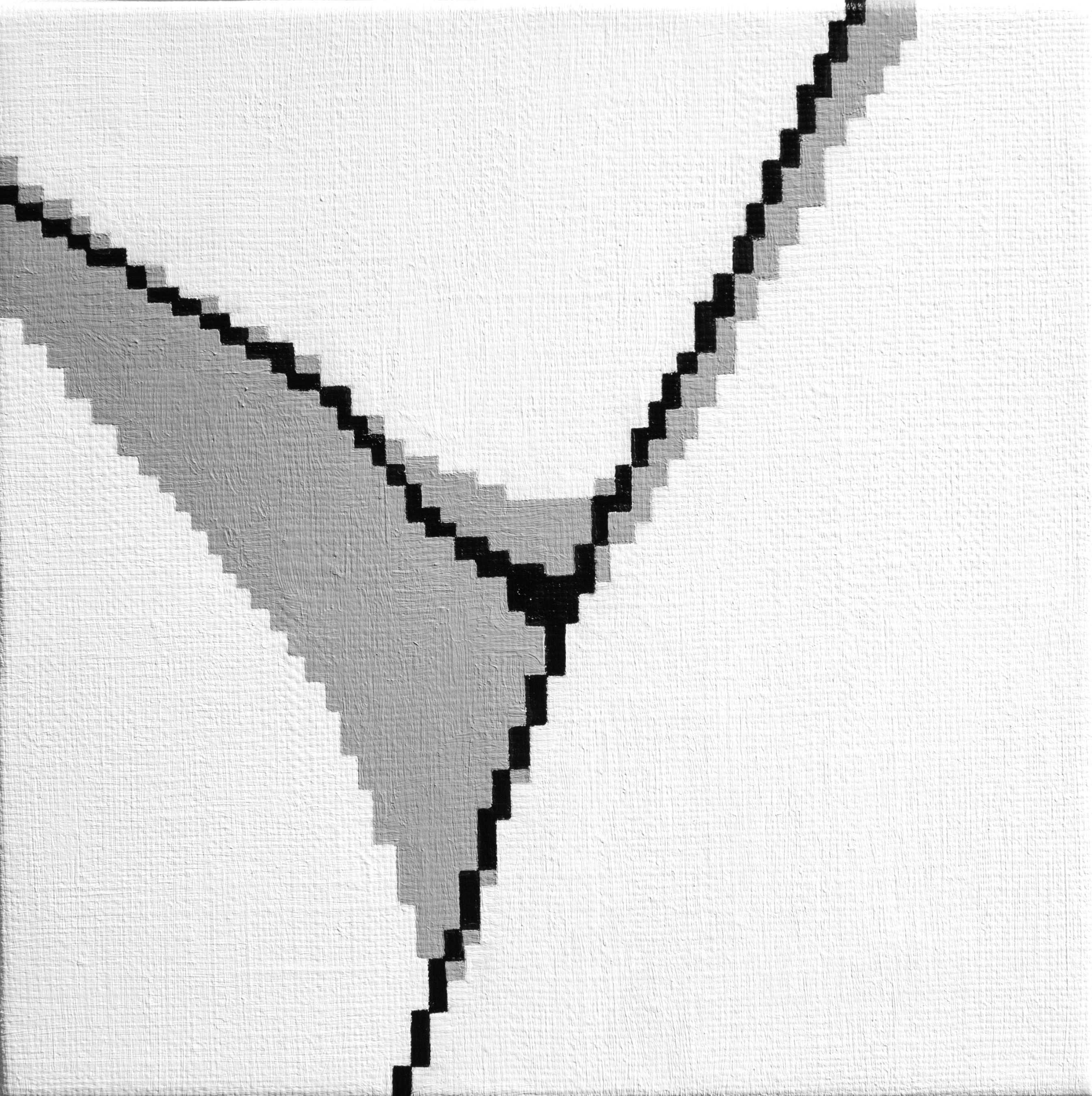
The Three Graces Pixel Props 09, 2019, Oil on canvas, 15 × 15 cm
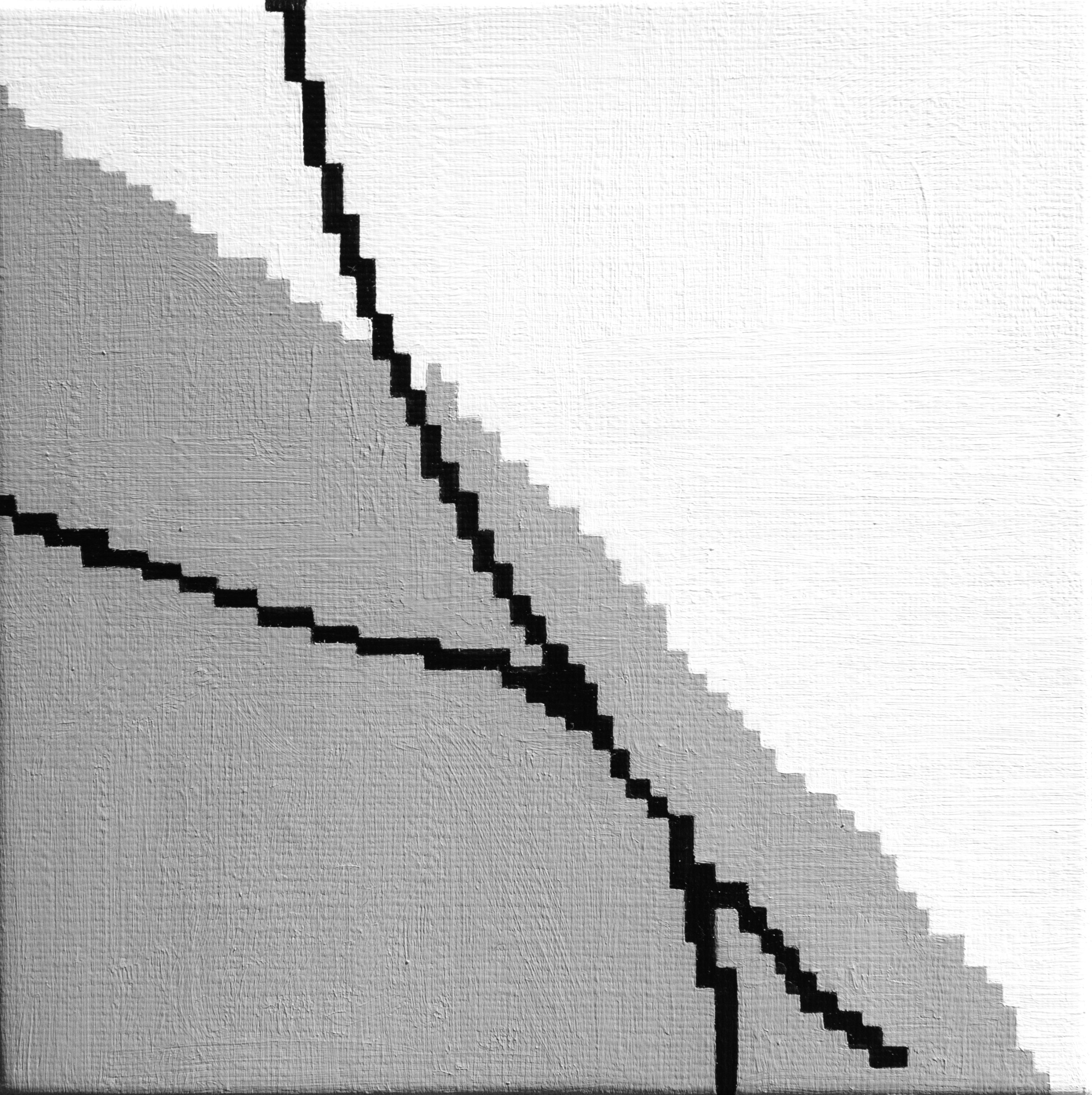
The Three Graces Pixel Props 07, 2019, Oil on canvas, 15 × 15 cm