Digital
디지털 작업은 2010년 졸업작품 〈At the Last Judgment〉에서 2011년까지 이어진, 디지털 드로잉을 크게 출력한 작품들이다. 고전 회화와 조각의 주제를 애니메이션의 양식으로 옮기는 첫 시도였다.
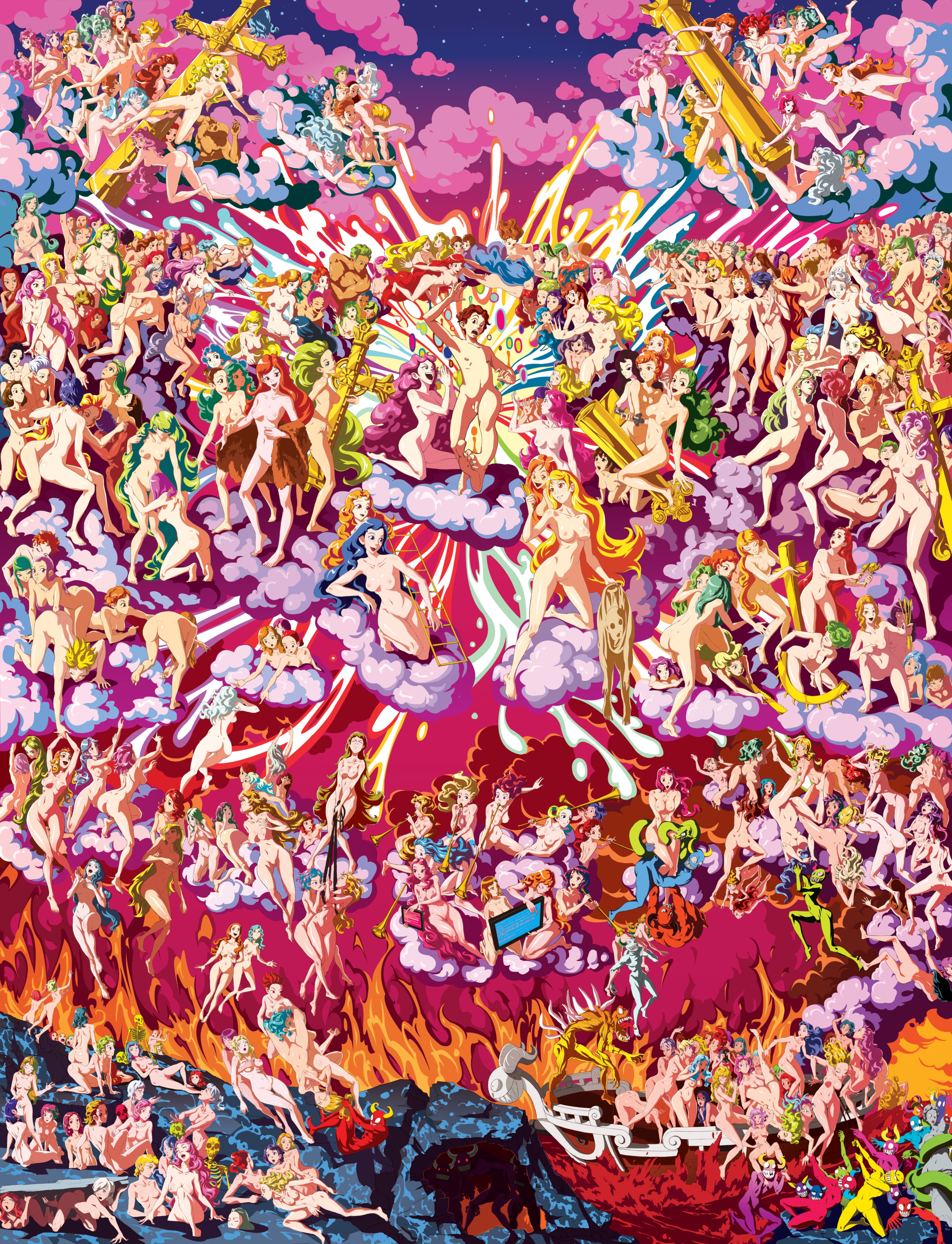
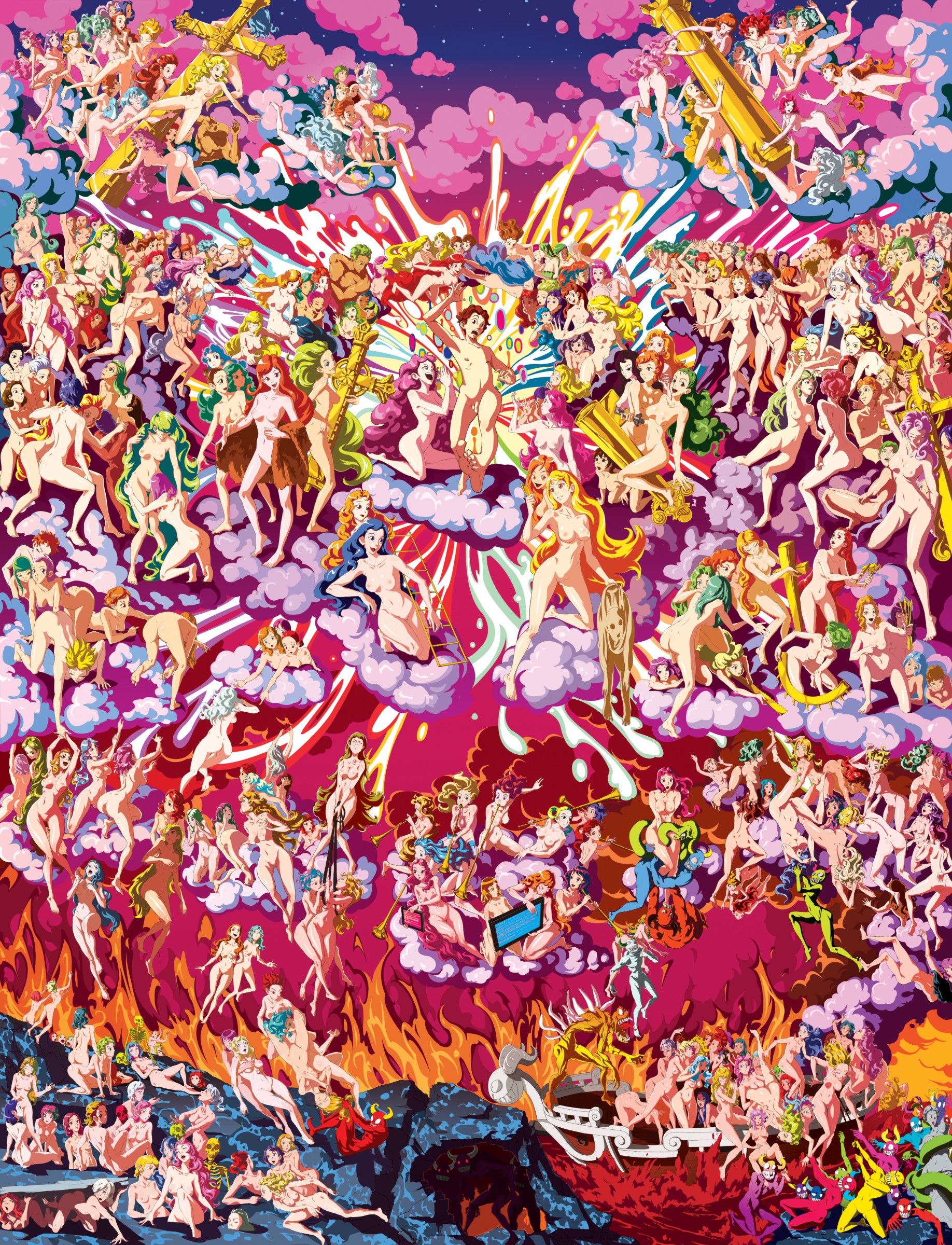
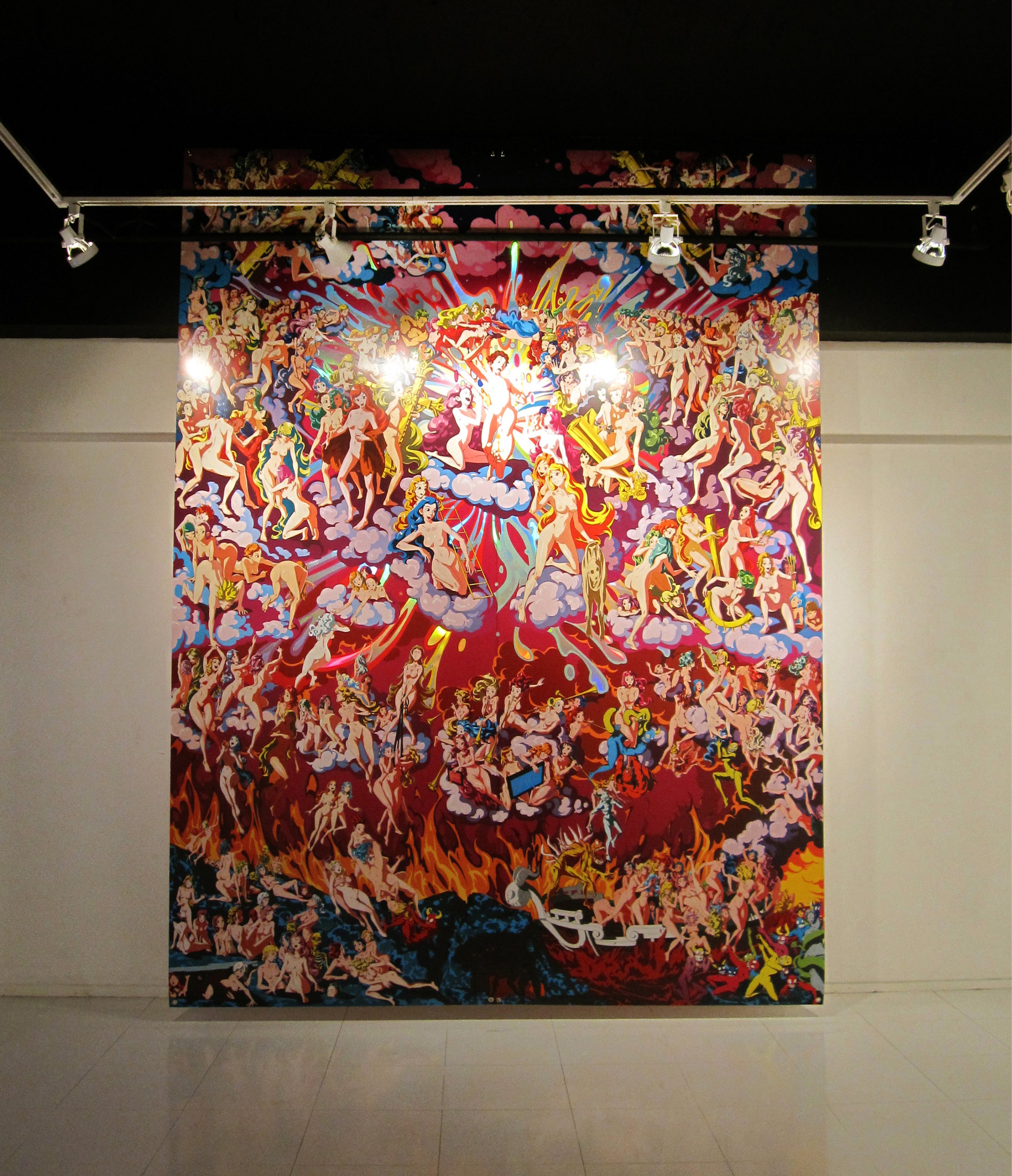
〈At the Last Judgment〉(2010, 디지털 프린트, 380×290cm)는 내가 만화의 양식으로 그린 첫 작품이다. 그전까지는 회화적인 인물화와 여러 습작을 그려 왔는데, 막상 만화의 이미지를 작품으로 그리려고 하니 어려움이 따랐다. 만화의 형식을 익혀 작업에 반영하기까지는 시간이 오래 걸릴 것 같았고, 작품이면서 동시에 그림 연습이 될 수 있는 것이 무엇일까 고민하다가 군중을 그리는 쪽으로 방향을 잡았다. 미켈란젤로의 〈최후의 심판〉(1536~1541, 시스티나 예배당 프레스코)이 꼭 맞는 소재였다. 애니메이션 버전으로 옮겨 그리면 드로잉 연습이 되는 동시에, 첫 작업으로서 충분한 인상을 남길 수 있을 것 같았다.
구도는 원작을 따랐다. 가운데에 심판하는 예수가 있고, 왼쪽에서는 올라가고 오른쪽에서는 떨어지며, 아래에는 지옥으로 가는 배가 있다. 성인들의 지물도 그대로 두었다. 다만 생명의 책을 든 천사는 노트북과 태블릿을 들고 있고, 지옥의 불 위로는 분홍 구름이 피어오르며, 인물은 대부분 여성으로 그렸다.
원작의 예수는 하늘과 땅을 가르는 엄숙한 자세이지만, 이 그림의 주인공은 소년만화의 소년처럼, 발을 헛디뎌 금방이라도 엎어질 듯한 순간에 있다. 누가 무엇을 심판하고 심판받는지에 대해 생각하게 되었다.
대학 졸업 전시(공평갤러리 서울아트센터, 서울, 2010)에서 처음 선보였다.
높이가 4미터에 가까운 그림을 디지털 드로잉으로 그려 출력했다. 미대에서는 늘 유화를 그렸지만, 새로운 것을 시작할 때는 새로운 매체로 옮겨 가야 환기가 된다는 생각도 있었고, 당시엔 디지털이 미래적이고 새롭게 느껴지기도 했다. 포토샵으로 그렸지만 크게 출력해도 선이 깨지지 않도록 대부분 펜 툴로 벡터화했다.
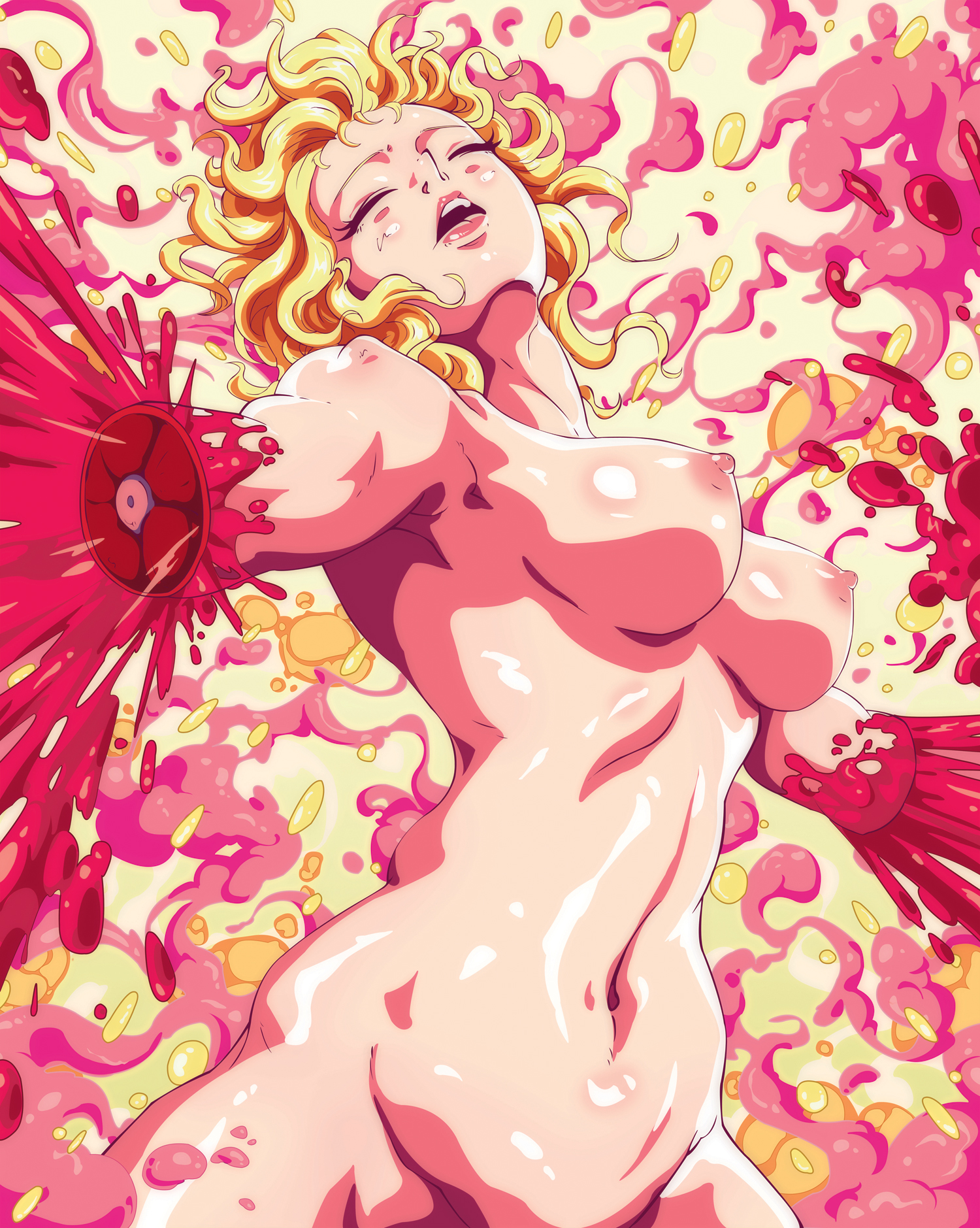
졸업 전시 이후 〈Laocoon〉(2010, 디지털 프린트, 230×295cm), 〈Torso〉(2011, 디지털 프린트, 116×92cm), 〈Cronos〉(2011, 디지털 프린트, 116×82cm)를 같은 방식으로 그렸다. 고전의 텍스트를 애니메이션의 양식으로 옮겨 보는 습작들이었다. 〈Torso〉는 토르소 연작의 첫 작품이 되었다.
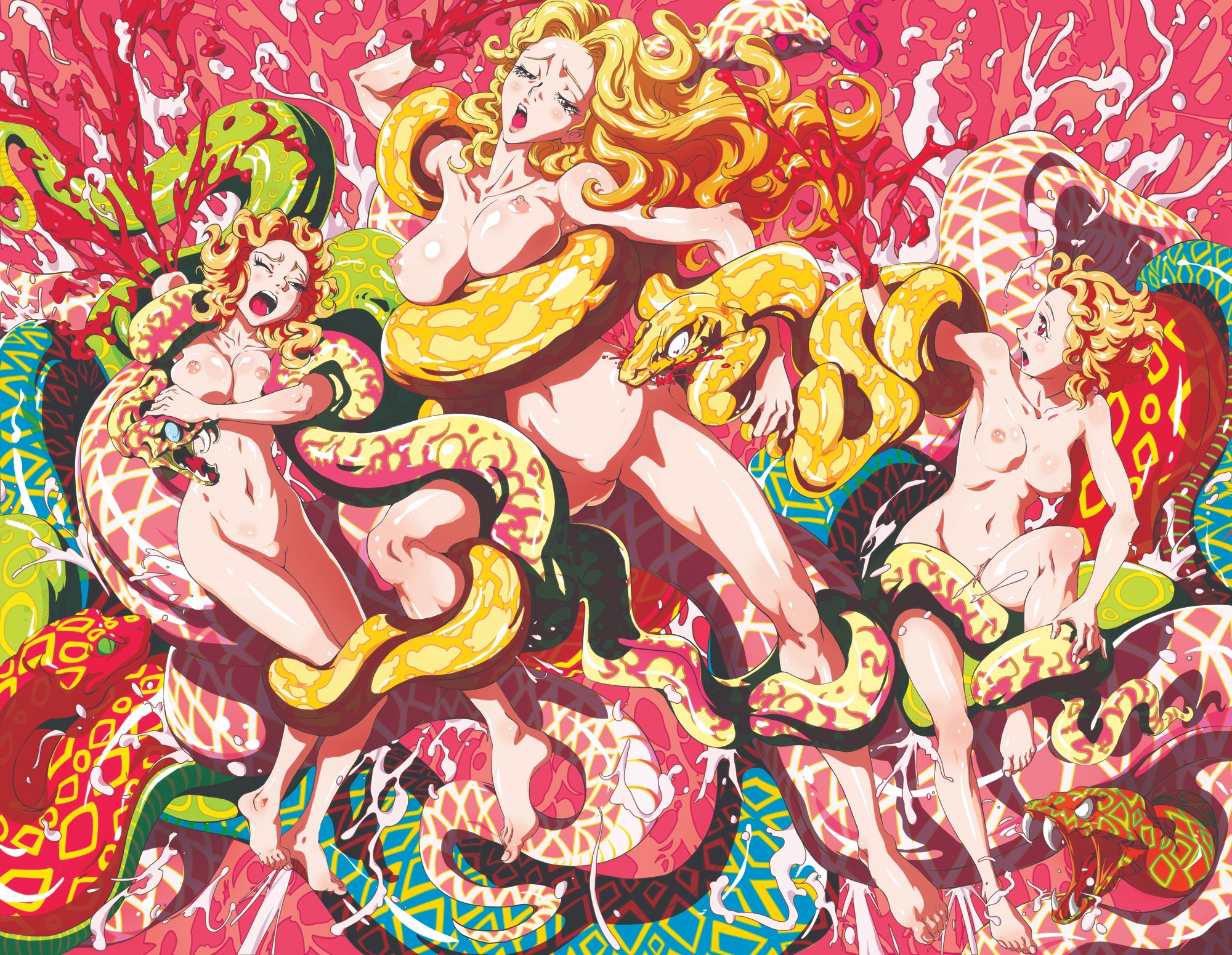
〈Laocoon〉은 세 인물을 여성으로 바꾸고, 노란 뱀에 감겨 뒤엉킨 몸을 붉은색과 초록색의 무늬 위에 그렸다. 2024년의 흑백 연작은 이 그림에서 다시 출발했다. 색과 무늬로 가득했던 화면은 흑백이 되었고, 눈에 보이던 뱀은 감춰졌다.
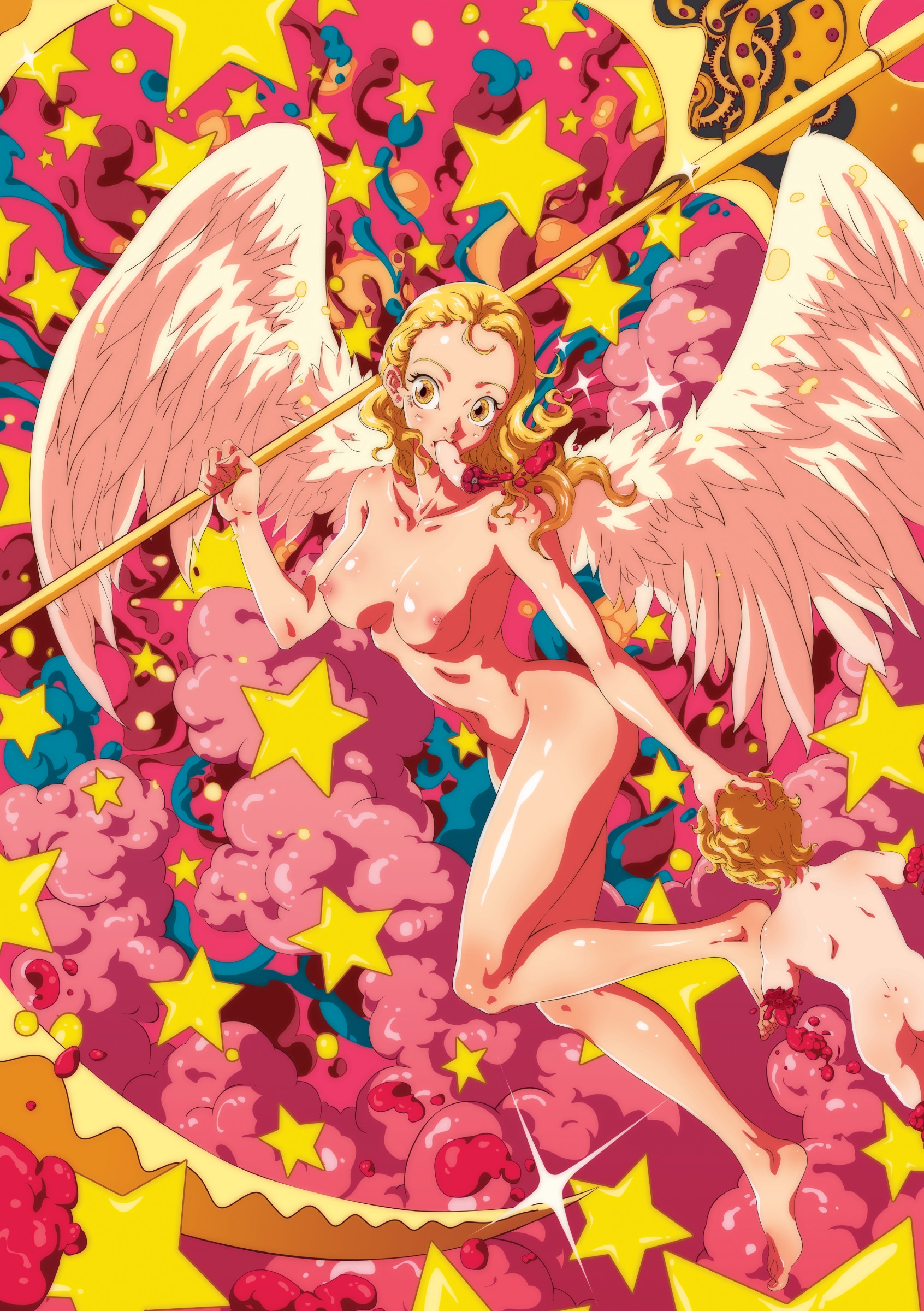
〈Cronos〉는 자식에게 자리를 빼앗기리라는 예언 때문에 태어난 아이들을 차례로 삼킨 시간의 신 크로노스를 그렸다. 고야의 〈아들을 잡아먹는 사투르누스〉(1820~1823)에서 주제를 가져왔지만 구도는 다르다. 크로노스는 날개 달린 여성이고, 시간의 신답게 한 손에는 시계태엽이 달린 낫을, 다른 손에는 삼키려는 자식을 든 채 별과 분홍 구름 속을 날아오른다. 잔혹한 장면을 밝고 귀엽게 그렸다.
디지털은 작업할 때는 자유로웠지만, 출력하면 원하는 색과 질감이 나오지 않았다. 화면의 색과 출력된 인쇄물의 색을 뜻대로 다루기 어려웠다. 오래 검증된 방법이 더 확실하고 내가 가장 잘할 수 있는 것이기도 해서, 토르소를 하나의 주제로 파고들기로 하면서 캔버스로 돌아갔다.
그 뒤로 디지털 드로잉은 작품이 아니라 밑그림의 자리에 있다. 컴퓨터에서 거의 완성한 이미지를 캔버스에 옮겨 그리며 발전시키는 지금의 방식은 이 시기에서 나왔다.
The digital works are large-format prints of digital drawings, from the 2010 graduation piece At the Last Judgment through 2011. They were my first attempt to carry the subjects of classical painting and sculpture into the style of animation.
At the Last Judgment (2010, digital print, 380 × 290 cm) is the first work I drew in the style of comics. Until then I had made painterly figure paintings and a range of studies, but when I actually set out to make a work from comic imagery, it proved difficult. Learning the form of comics well enough to bring it into my work looked as though it would take a long time, and while wondering what could be a work and drawing practice at once, I settled on painting a crowd. Michelangelo's The Last Judgment (1536–1541, fresco, Sistine Chapel) was exactly the right subject. Redrawing it in an animation style would serve as drawing practice and, at the same time, make a strong enough impression for a first work.
The composition follows the original. Christ in judgment is at the center, figures rise on the left and fall on the right, and below is the boat bound for hell. The attributes of the saints were kept as they were. But the angel holding the Book of Life holds a laptop and a tablet, pink clouds rise above the fires of hell, and most of the figures are drawn as women.
The Christ of the original stands in a solemn pose that divides heaven from earth, but the protagonist of this picture, like a boy in a shōnen manga, is caught at the instant of missing a step, about to fall flat at any moment. It made me think about who judges what, and who is judged.
It was first shown in my university graduation exhibition (Gongpyeong Gallery, Seoul Art Center, Seoul, 2010).
A picture nearly four meters tall, it was drawn digitally and printed. I had always painted in oils at art school, but I also thought that starting something new called for moving to a new medium to refresh my thinking, and at the time digital felt futuristic and new. It was drawn in Photoshop, but most of it was vectorized with the pen tool so that the lines would not break up when printed large.
After the graduation exhibition I drew Laocoon (2010, digital print, 230 × 295 cm), Torso (2011, digital print, 116 × 92 cm) and Cronos (2011, digital print, 116 × 82 cm) in the same way. They were studies in carrying classical texts into the style of animation. Torso became the first work of the Torso series.
In Laocoon, the three figures became women, and their bodies, entangled in the coils of yellow serpents, were drawn over a pattern of red and green. The black-and-white series of 2024 set out again from this picture. The surface once full of color and pattern became black and white, and the serpents that had been visible were hidden.
Cronos depicts the god of time, who swallowed his children one after another at birth because of a prophecy that he would be overthrown by his own child. The subject was taken from Goya's Saturn Devouring His Son (1820–1823), but the composition is different. Here Cronos is a winged woman who, as befits the god of time, holds in one hand a scythe fitted with clockwork and in the other the child she is about to swallow, as she soars up among stars and pink clouds. A cruel scene is drawn bright and cute.
Working digitally gave me freedom, but once printed, it did not give the colors and textures I wanted. The colors on screen and the colors of the printed output were hard to control as I intended. A long-proven method was more certain, and it was also what I could do best, so when I decided to pursue the torso as a single subject, I returned to canvas.
Since then, digital drawing has held the place of the underdrawing rather than the work. My present method, in which an image nearly completed on the computer is transferred to canvas and developed there, came out of this period.