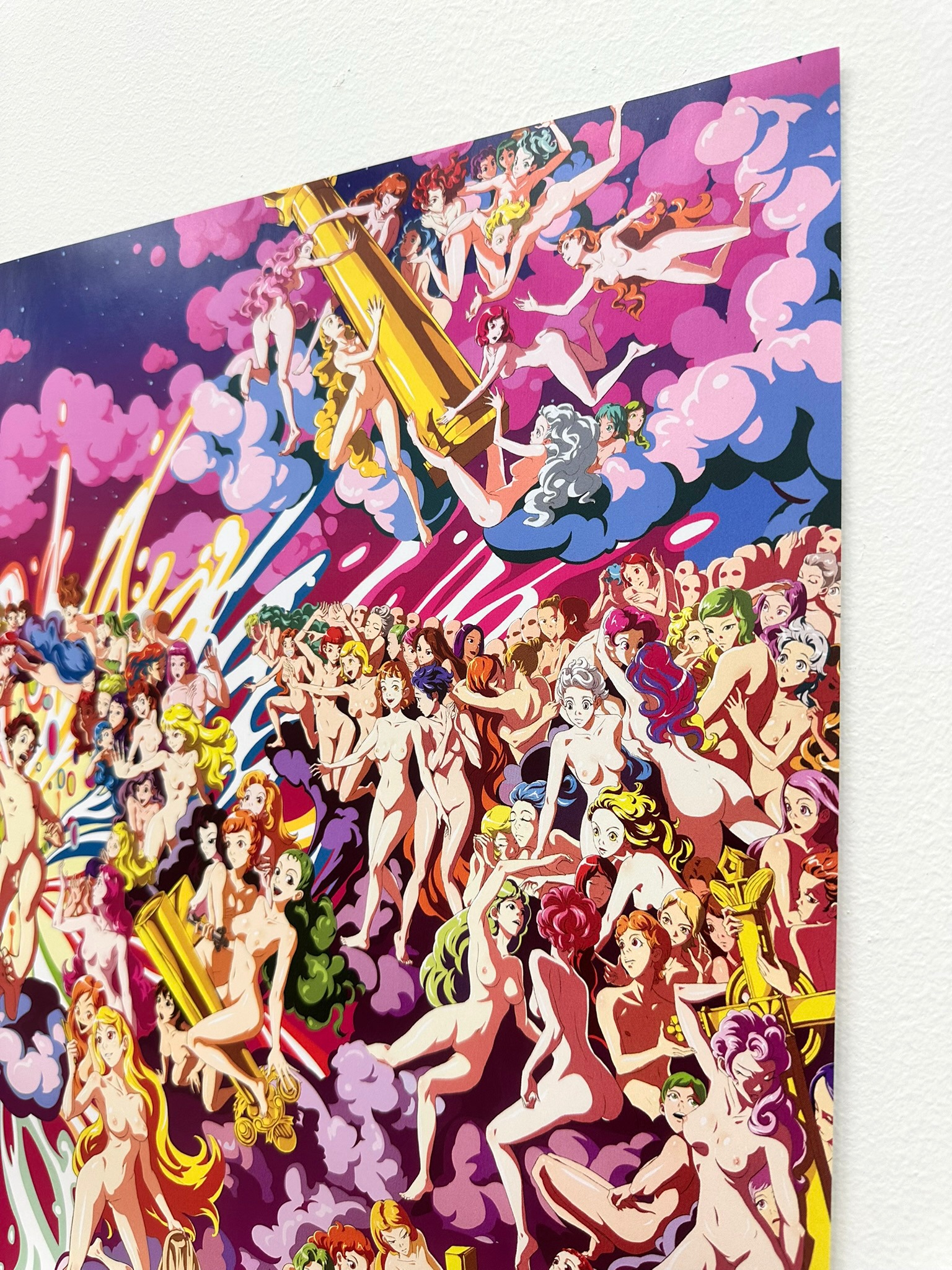
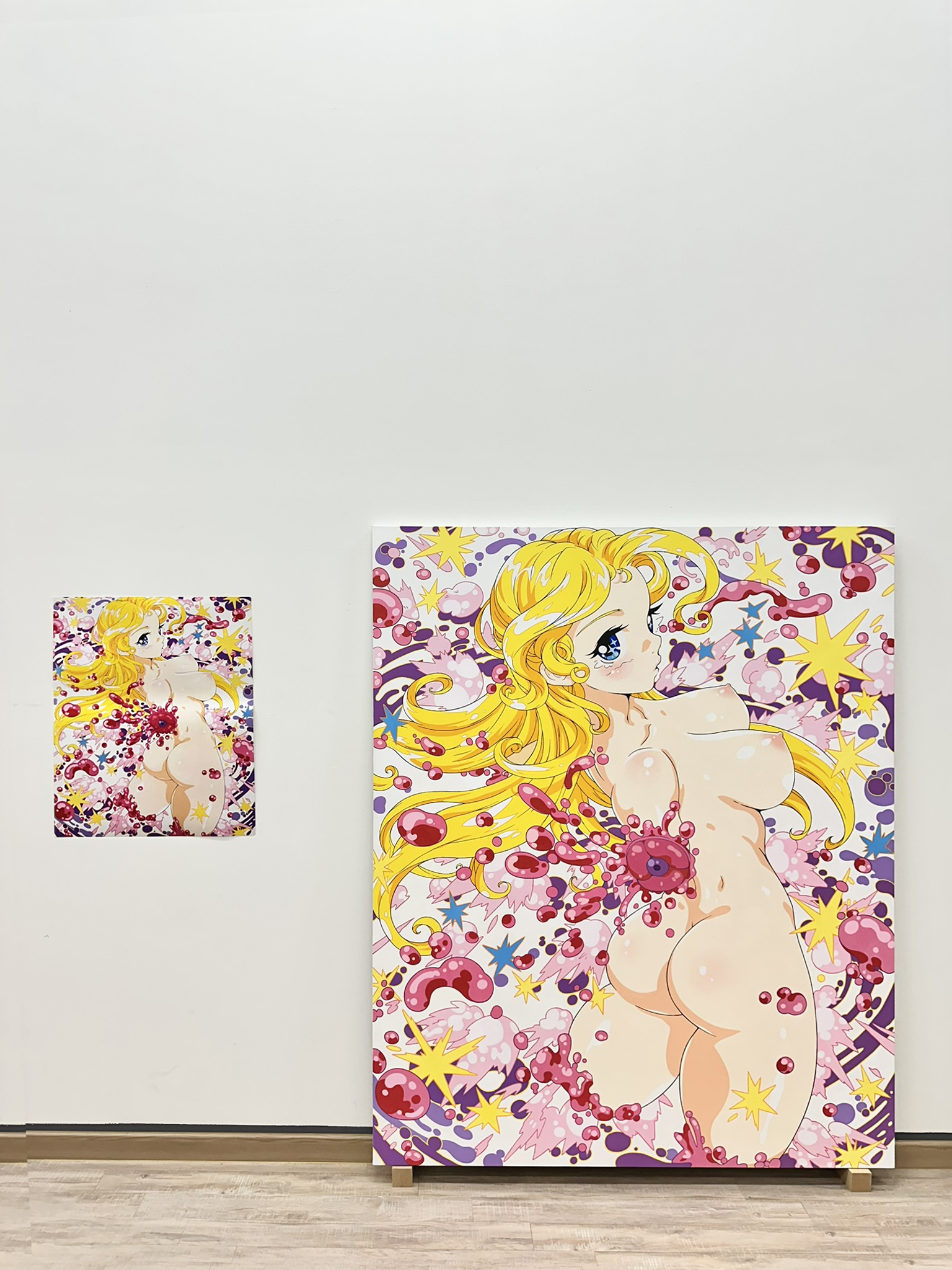
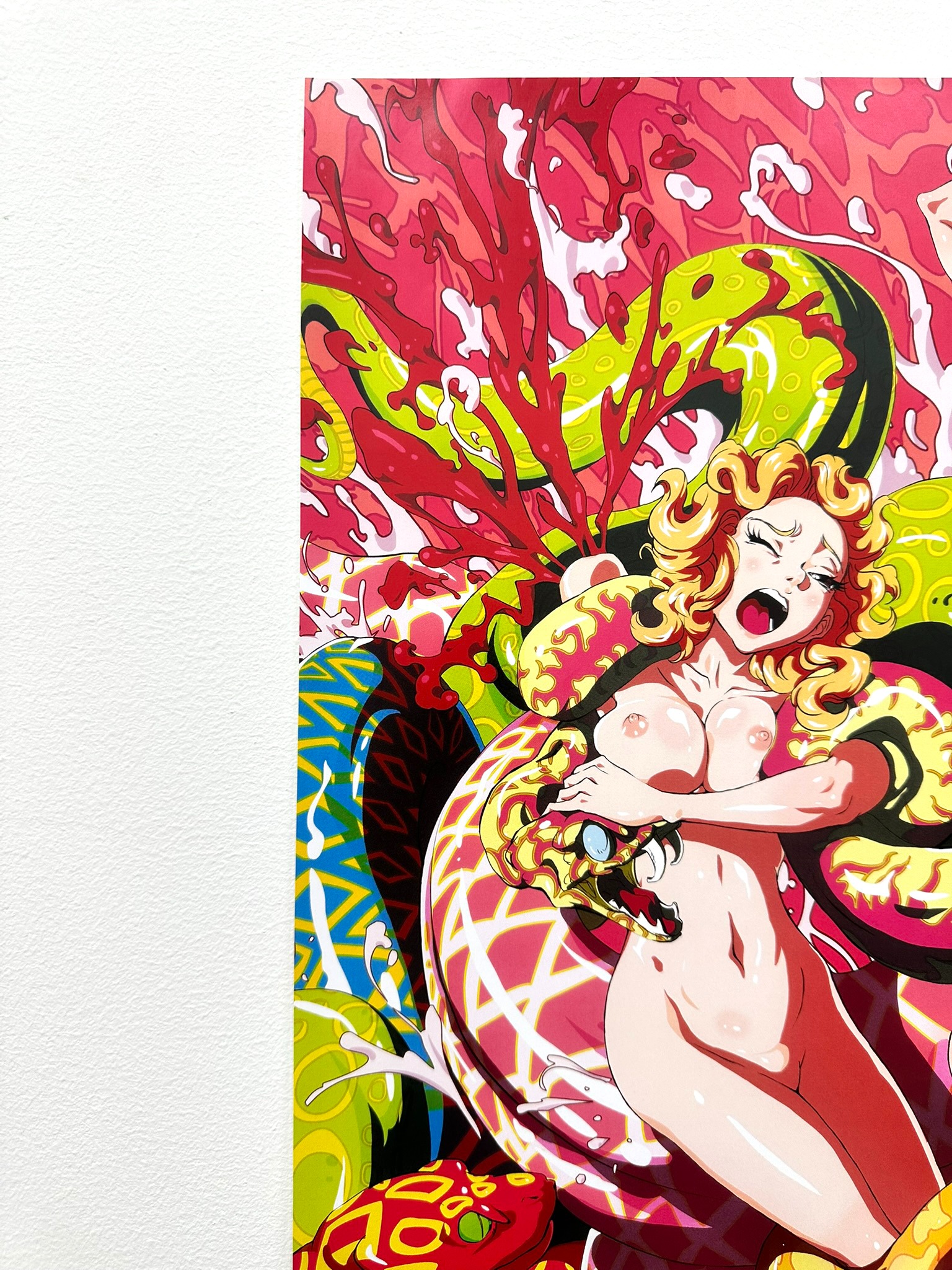
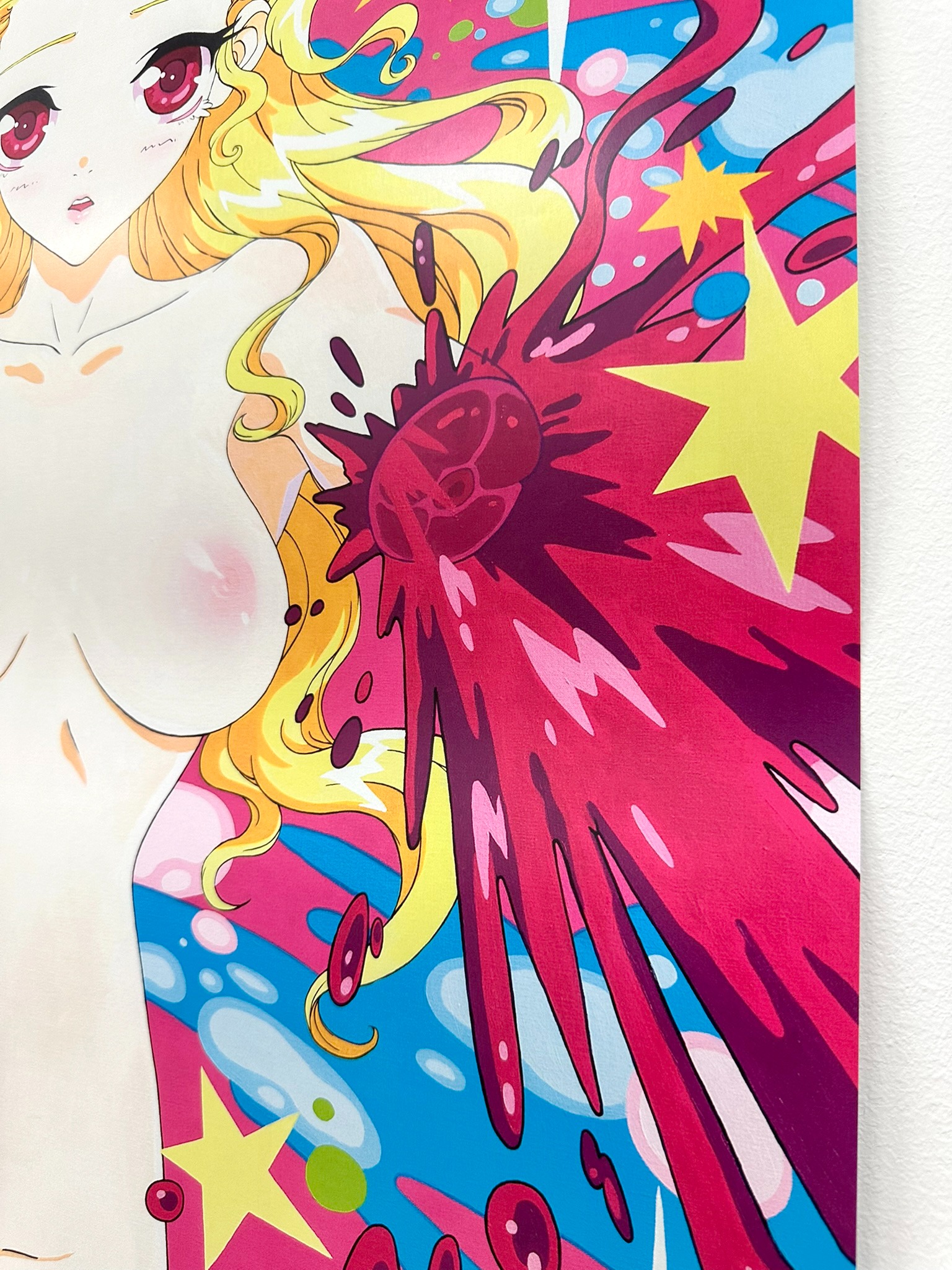
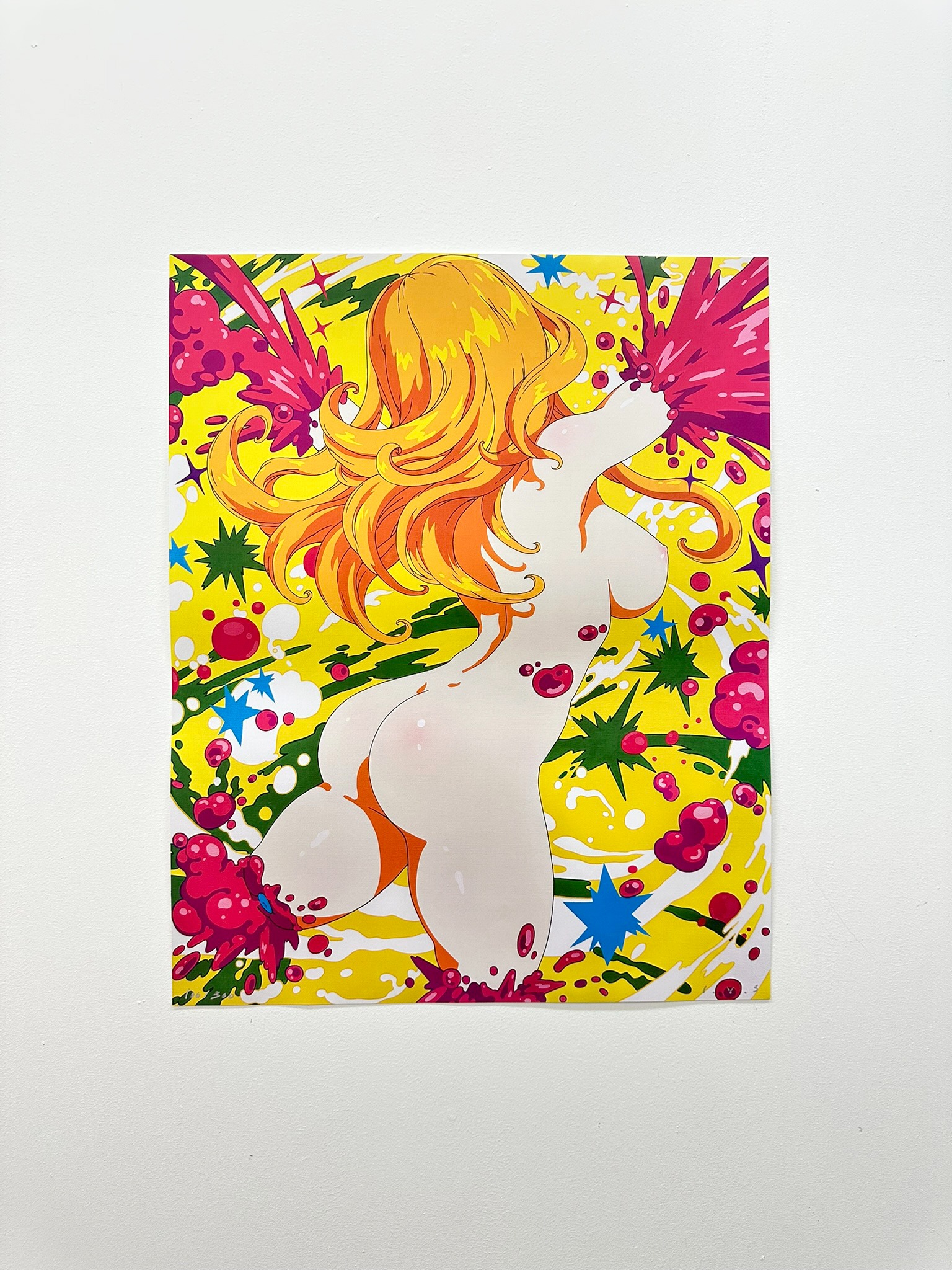
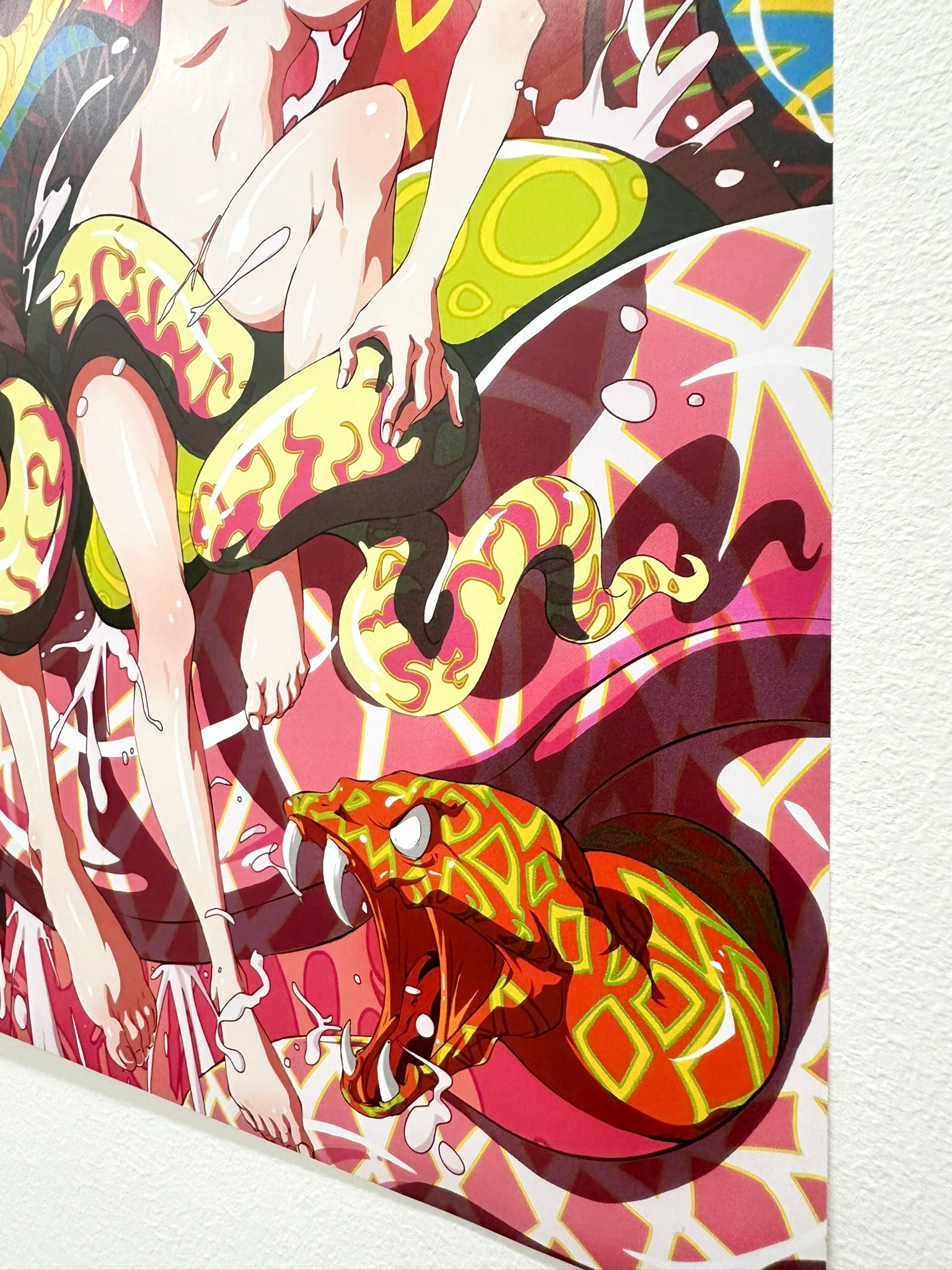
Torso 07 - Art Poster (2021)
62 × 50 cm
Digital Print on Paper
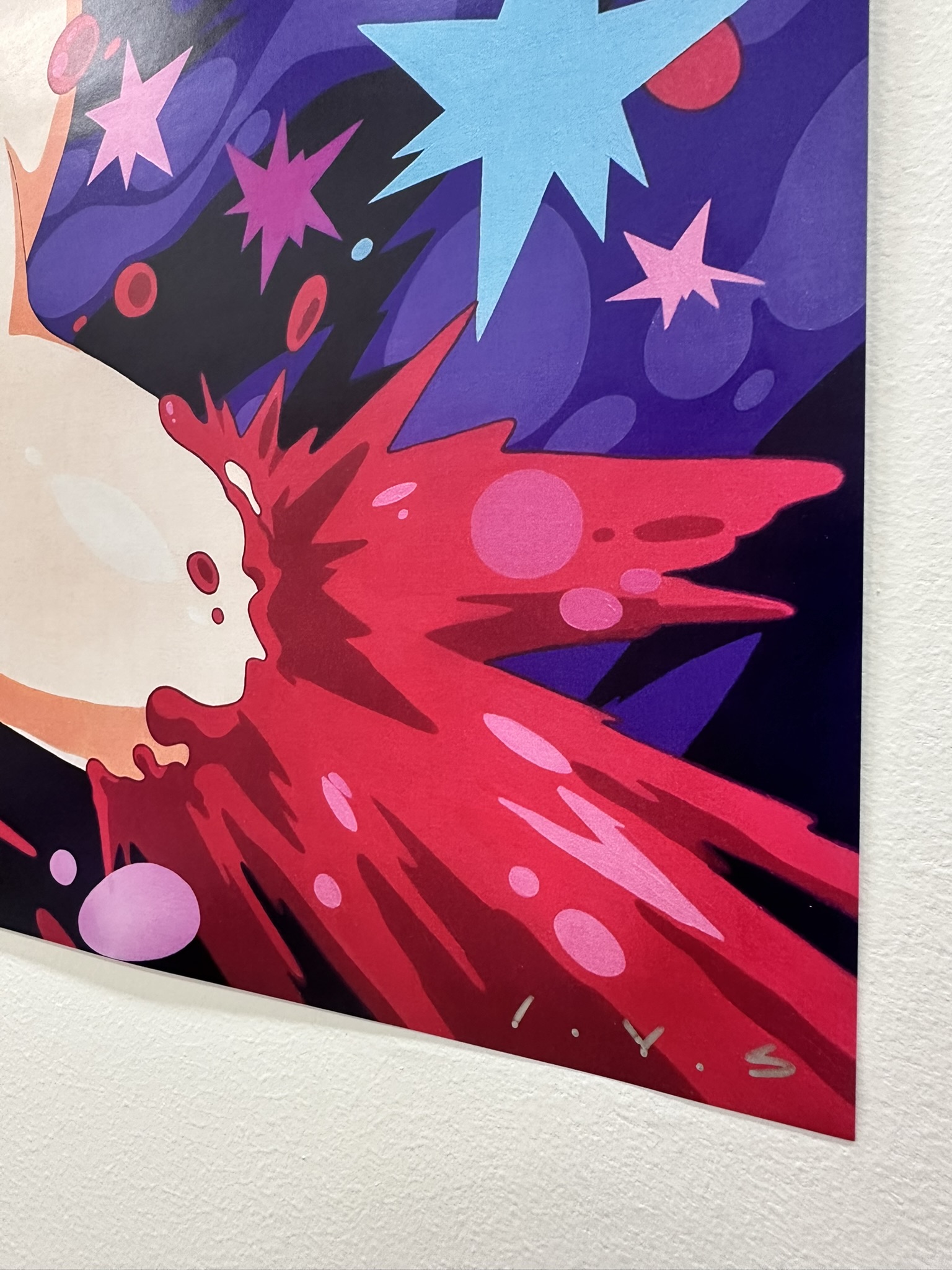
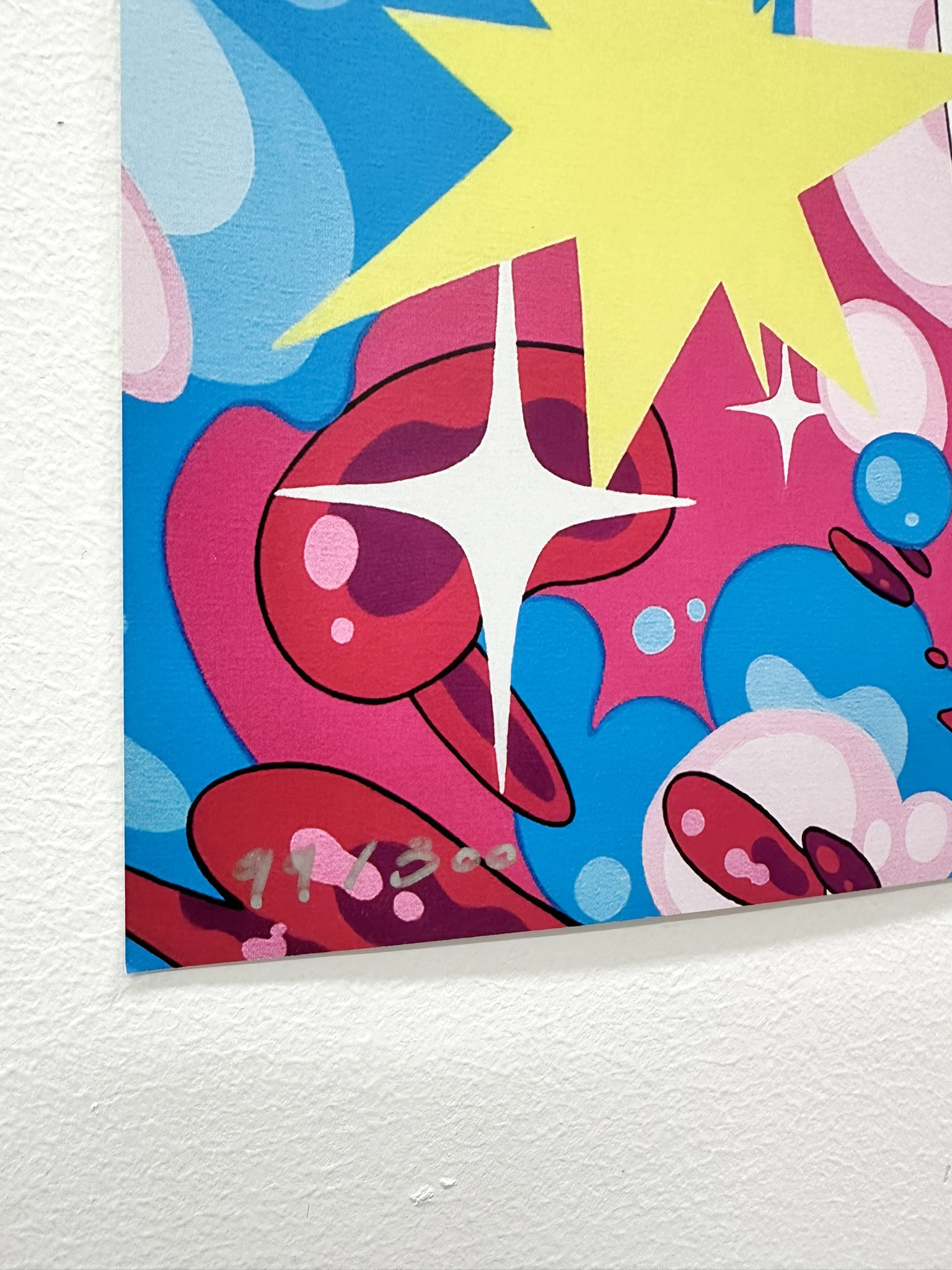
Signed and numbered, edition of 300
₩35,000$30
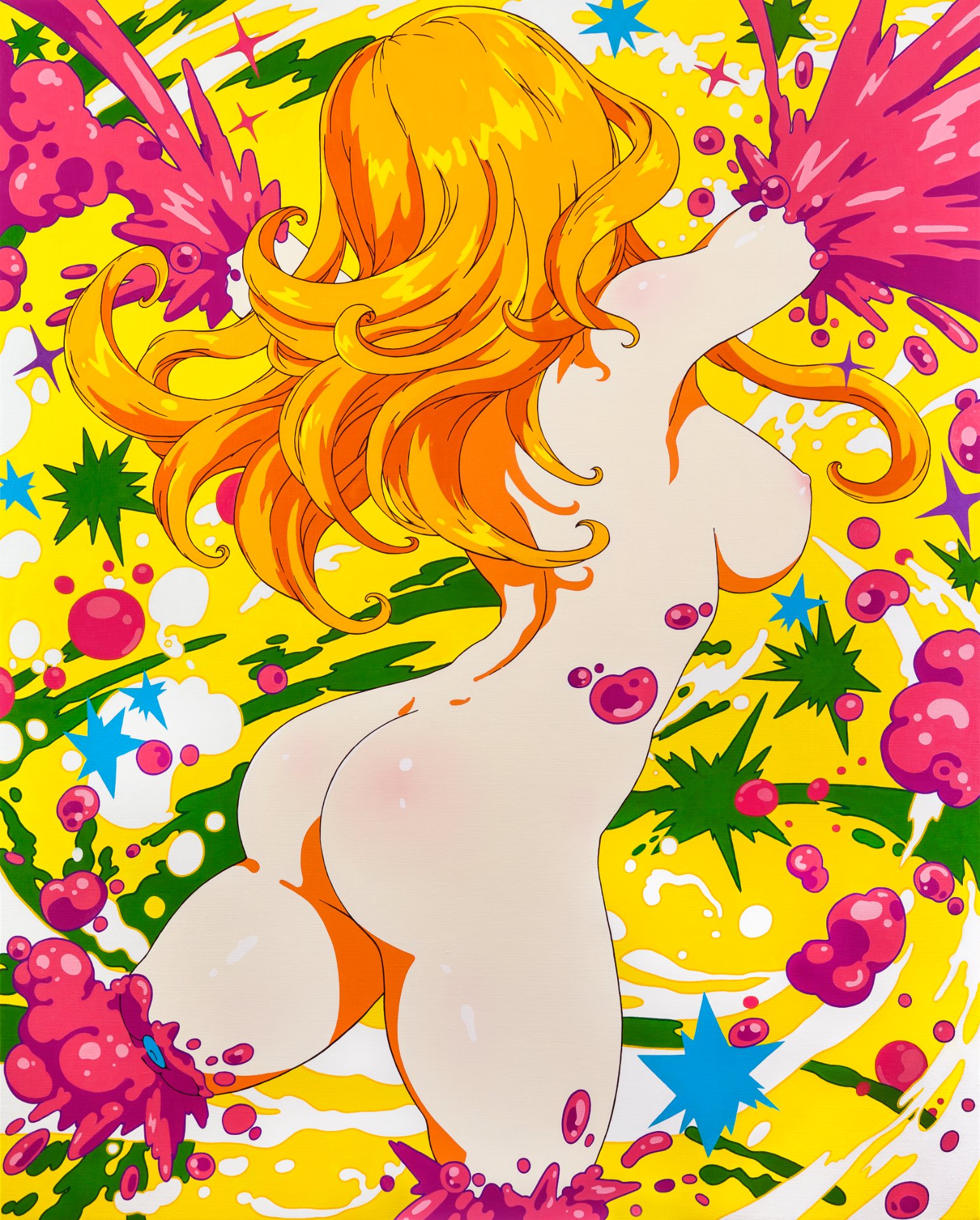
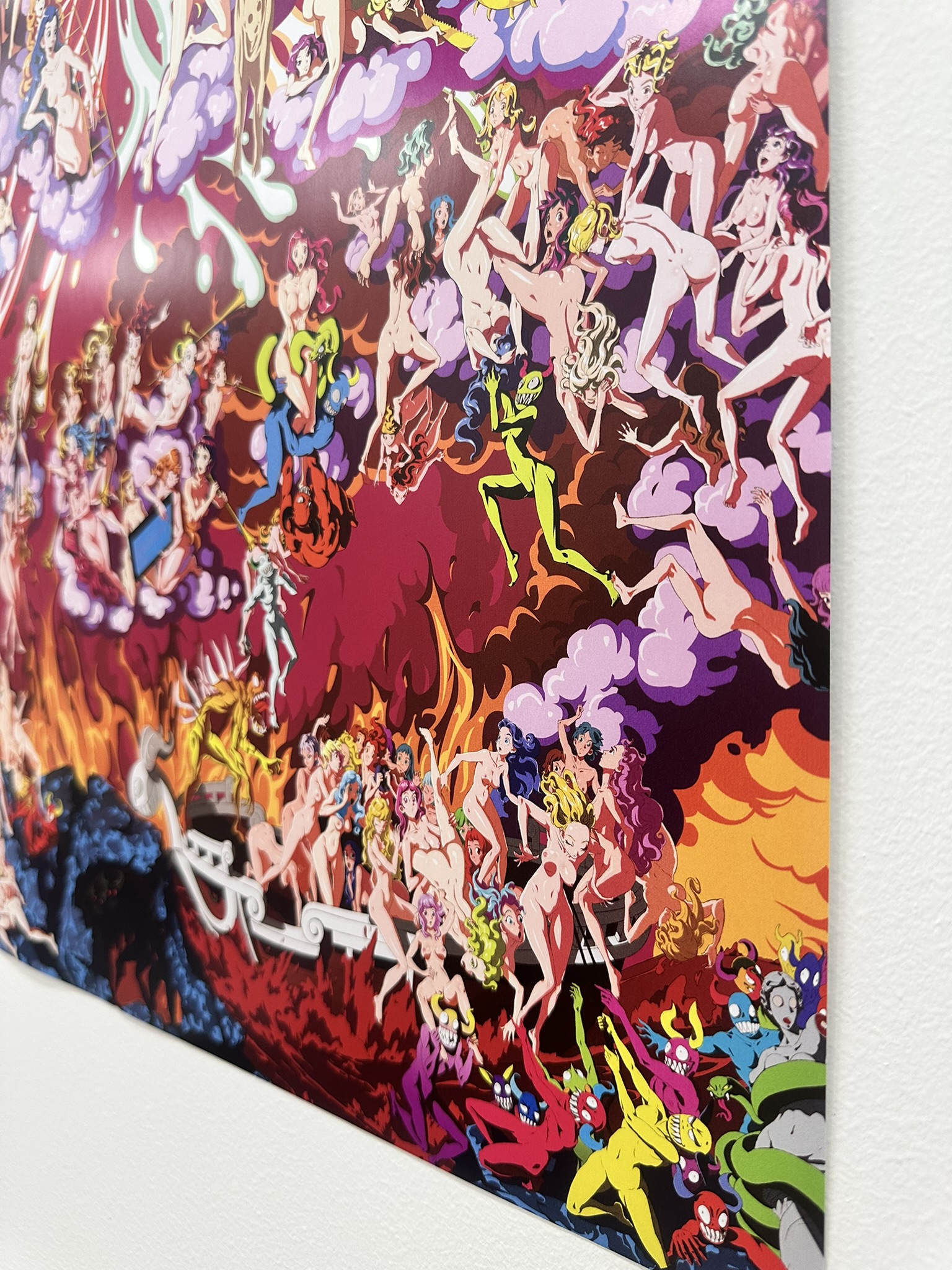
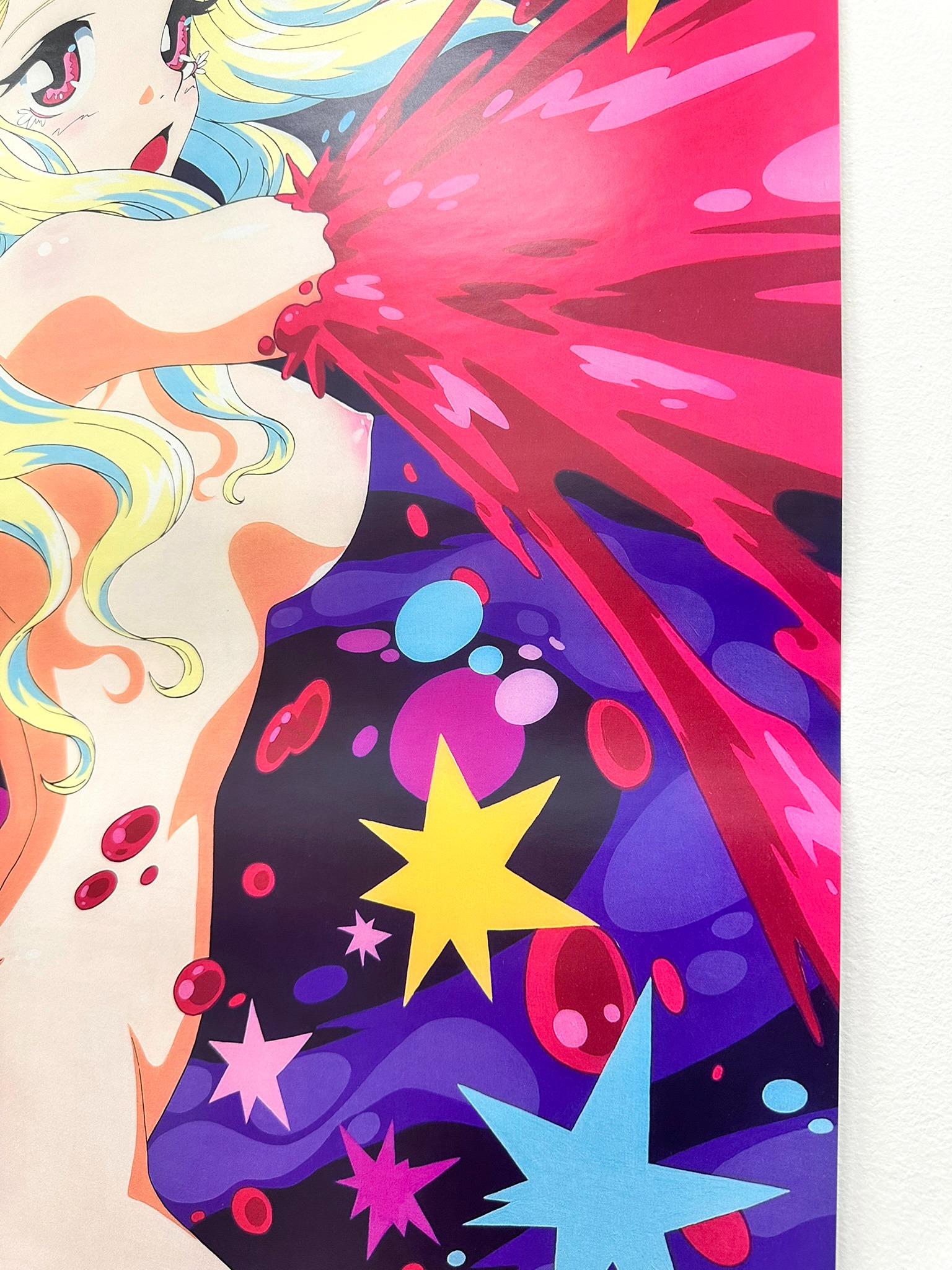
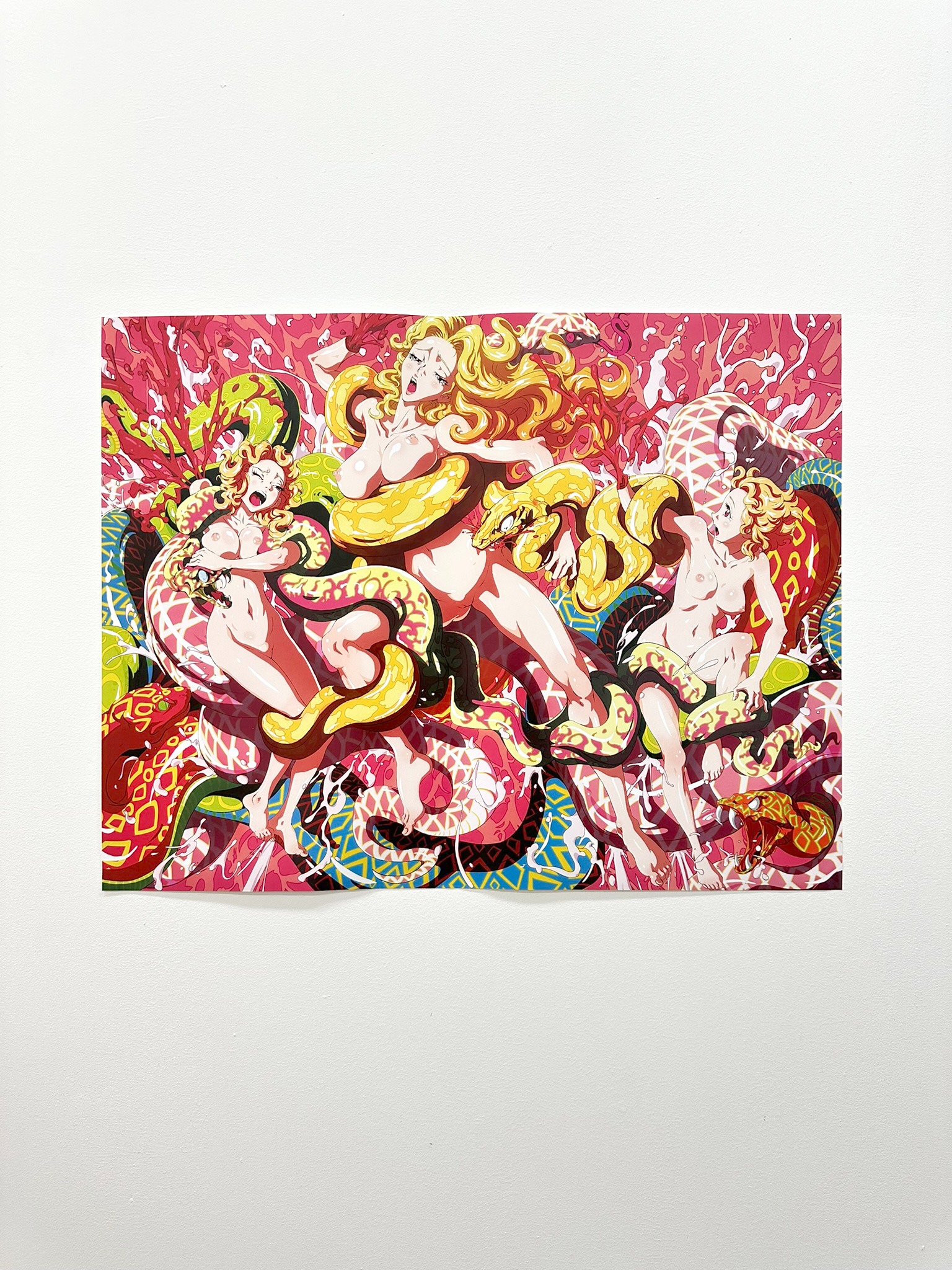
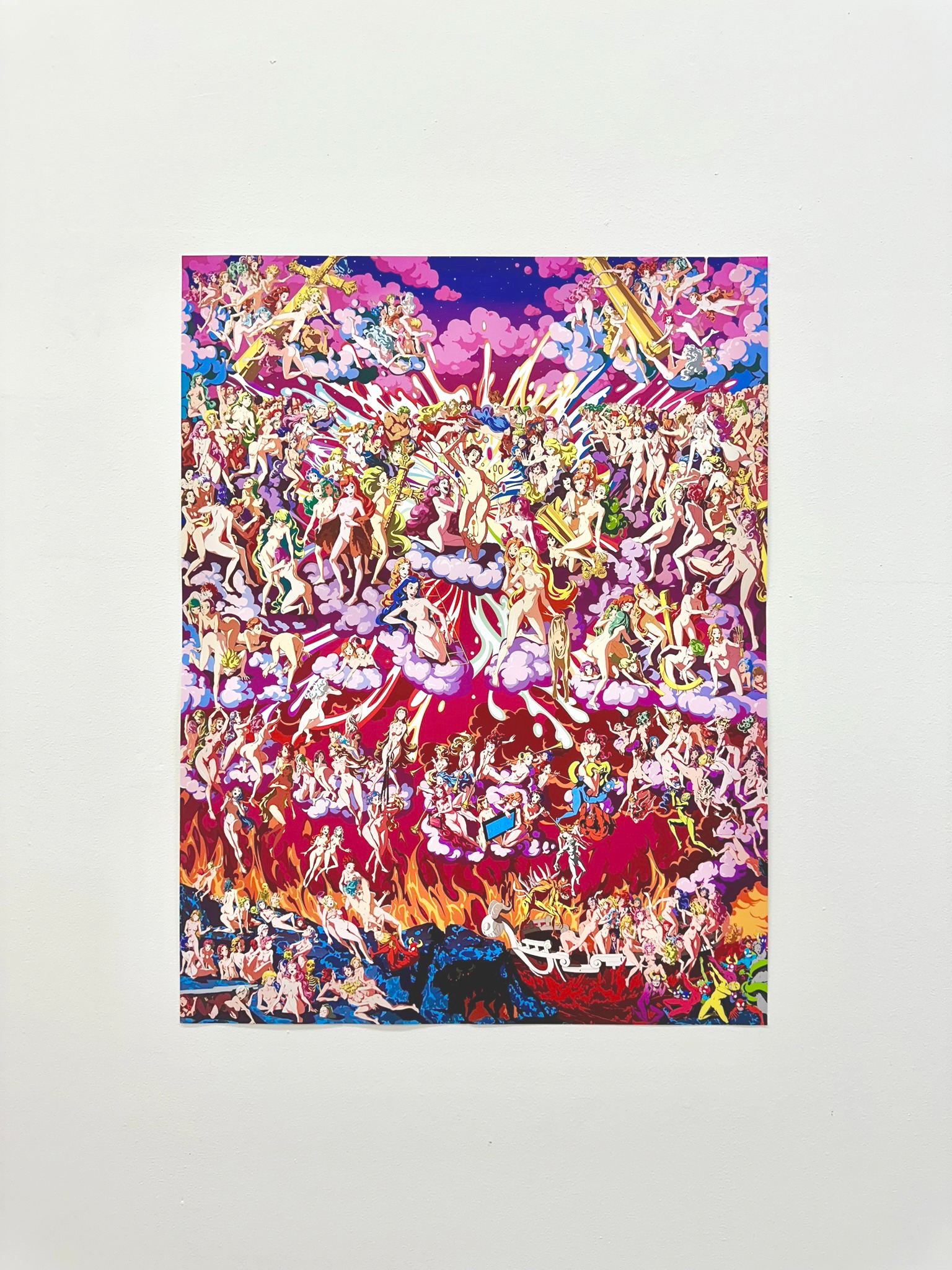
2013년작 〈Torso 07〉의 포스터 에디션입니다.
2021년 한정 에디션으로 처음 제작·출시되었으며,
웹사이트 리뉴얼을 맞아 남은 수량을 다시 선보입니다.
A poster edition of Torso 07 (2013), originally produced and released as a limited edition in 2021. To mark the relaunch of the website, the remaining prints are now available once again.

62 cm
50 cm
62 × 50 cm
Digital Print on Paper
Signed and numbered, edition of 300
원작Original Work
Torso
Torso 07, 2013, Oil on canvas, 162 × 130 cm
〈토르소〉 연작은 팔과 다리가 없는 고전 조각의 토르소를 바탕으로, 애니메이션과 서브컬처의 시각 언어로 재구성한 작업이다. 1990년대 일본 마법소녀 만화 속 변신 장면의 클라이맥스를 참조하며, 소용돌이치는 움직임과 팔다리가 없는 신체, 분출하는 피가 휘몰아치는 시공간을 그려낸다.
미술사를 처음 배우던 때, 밀로의 비너스로 비례와 조형을 배웠다. 학자들이 사라진 두 팔을 여러 방식으로 복원해 보았지만 결국 없는 편이 낫다는 결론에 이르렀다는 이야기가 오래 남았다. 훼손된 것을 되돌리는 대신 남겨진 형태를 받아들이고 그 안에서 새로운 관점을 찾아내는 것. 그것이 현대적인 시선이라고 생각했다.
오시이 마모루의 극장판 애니메이션 〈공각기동대〉(1995)의 마지막 전투에서 전차의 해치를 열다 주인공의 팔이 뜯겨 나가는 장면을 인상 깊게 보았다. 어릴 때는 조금 충격적인 이미지였지만, 시간이 흐른 뒤 다시 보았을 때 부서질 수밖에 없는 신체의 한계와 그것을 넘어서려는 의지가 함께 보였고, 그 연출이 숭고하게 느껴졌다.
팔다리를 잃은 고대 조각, 마법소녀의 변신, 합체 로봇이 분해되고 조각이 되어 다시 하나가 되는 장면. 서로 다른 시대와 문화에서 온 장면들이지만, 불완전한 상태에서 다음 단계로 넘어가는 순간이라는 점에서 같다. 파괴되고 충돌하며 다시 생성되는 지점들이다.
토르소 연작의 시작은 〈공각기동대〉의 그 장면에서 아이디어를 얻은 디지털 드로잉 〈Torso〉(2011, 디지털 프린트, 116×92cm)였다. 끊임없이 뿜어져 나오는 것들, 폭발하면서 빛이 되는 순간을 생각했다. 원작의 느낌에 가까운 그림이었다.
캔버스에 유화로 옮겨 그리면서부터는 마법소녀물의 변신 장면을 참조해 그리기 시작했다. 반짝이는 별과 소용돌이치는 공간 속에서 머리카락이 흩날리는, 다양한 표정과 포즈의 역동적인 이미지를 그리려고 했다. 이렇게 그린 작품들을 개인전 《NU-TYPE》(메이크샵 아트스페이스, 파주, 2014)에서 선보였고, 지금도 연작을 이어 가고 있다.
밑그림은 컴퓨터 드로잉으로 완성한 뒤 캔버스로 옮겨 그리면서 발전시키는 편이다. 애니메이션의 셀 채색 방식으로 신체를 표현하되, 어두운 부분에도 최대한 선명한 색을 사용하려 한다. 만화나 애니메이션의 화면에서 보던 것과 다른, 회화 앞에 서는 느낌을 위해 되도록 인물은 실제 사람보다 크게 그리려고 한다. 주요 작품은 캔버스에 유채, 162×130cm다.
대부분의 인물은 여성의 누드다. 여성의 신체는 미술에서 가장 오래 다루어진 주제이고, 그 축적된 역사 위에서 그릴 때 비로소 지금의 맥락이 생긴다고 본다. 다만 내가 그리는 것은 몸 자체라기보다 몸에 어떤 사건이 일어나는 순간이다.
얼굴이 있는 토르소에서 분홍색 피가 분출하며, 다양한 별빛들과 함께 새로운 공간을 열어 간다. 생명의 원천이자 죽음의 상징인 피는 젤리처럼 반짝이는 방울이 되어 그 순간을 채운다.
배경은 무중력 상태의 액체와 휘몰아치는 애니메이션의 이펙트들로 이루어진다. 평면의 이미지에서 인물만이 주인공은 아니다.
토르소의 첫 작품은 원작의 장면을 따라 몸이 뒤틀리고 눈을 감은, 고통과 황홀을 가르지 않는 모습이었다. 캔버스에 다시 그리면서 토르소는 만화적 상상력을 거쳐 밝은 표정을 갖게 되었다. 팔다리가 없는 몸은 잘려 나간 것일 수도, 아직 생성되지 않은 것일 수도 있다. 안에서 무언가를 표출하는 순간이라는 것만 남는다.
불완전한 형태의 고대 조각을 이미 완결된 형식으로 받아들이듯, 나는 하위문화였기에 가능했던 만화와 애니메이션의 과감한 표현을 회화의 언어로 옮긴다. 고전의 형식을 현재로 가져오는 것이 목적이라기보다, 내 안에 쌓인 이미지들을 회화 안에서 부딪히게 해 새로운 의미가 생성되는 지점을 찾는 것에 가깝다.
The Torso series takes the torso of classical sculpture, a body without arms or legs, as its basis and reconfigures it in the visual language of animation and subculture. Drawing on the climactic transformation scenes of 1990s Japanese magical-girl anime and manga, the paintings depict a space and a time swept up in whirling motion, limbless bodies and spurting blood.
When I first studied art history, I learned proportion and form from the Venus de Milo. Scholars had tried to reconstruct the missing arms in various ways, and the conclusion, that she was better off without them, stayed with me for a long time. Rather than restoring what was damaged, to accept the form that remains and find a new way of seeing within it: that, I thought, was a contemporary way of looking.
In the final battle of Mamoru Oshii's animated feature Ghost in the Shell (1995), as the protagonist strains to pry open the hatch of a tank, her arms are torn from her body. The scene stayed with me. As a child I found the image somewhat shocking, but when I saw it again years later I saw both the limit of a body that cannot help but break and the will to go beyond it, and the staging struck me as sublime.
An ancient sculpture that has lost its limbs, a magical girl's transformation, a combining robot that breaks into pieces and becomes one again. The scenes come from different periods and cultures, but they are alike in being the moment when an incomplete state passes into the next stage. They are points of destruction, collision and regeneration.
The Torso series began with a digital drawing, Torso (2011, digital print, 116 × 92 cm), that took its idea from that scene in Ghost in the Shell. I was thinking of things that keep pouring out, of the moment when an explosion turns into light. The picture stayed close to the feel of the original.
Once I began painting the torsos in oil on canvas, I started drawing on the transformation scenes of the magical-girl genre. I wanted dynamic images, with a range of expressions and poses, hair streaming amid glittering stars and whirling space. These paintings were shown in my solo exhibition NU-TYPE (Makeshop Art Space, Paju, 2014), and the series continues today.
I usually complete the underdrawing on the computer, then transfer it to the canvas and develop it as I paint. The bodies are rendered in the flat, cel-style coloring of animation, but I try to keep the color as vivid as possible even in the dark areas. To give the sense of standing before a painting rather than a comic or an animation screen, I tend to paint the figures larger than life-size. The main works are oil on canvas, 162 × 130 cm.
Most of the figures are female nudes. The female body is the subject art has treated longest, and I believe a painting acquires its present context only when it is made on top of that accumulated history. What I paint, though, is not so much the body itself as the moment some event happens to it.
From a torso with a face, pink blood spurts out and, together with starlight of many kinds, opens up a new space. Blood, the source of life and the sign of death, becomes glittering, jelly-like drops that fill that moment.
The background is made of weightless liquid and the whirling effects of animation. In a flat image, the figure is not the only protagonist.
The first torso, following the original scene, had a twisted body and closed eyes, a look that did not separate pain from ecstasy. Repainted on canvas, the torso passed through the imagination of comics and took on a cheerful expression. A body without limbs may have had them cut away, or may not yet have grown them. All that remains is the moment something is released from within.
Just as the incomplete form of an ancient sculpture is accepted as a finished one, I carry the bold expressions of manga and animation, possible precisely because they were subculture, into the language of painting. The aim is not so much to bring classical form into the present as to let the images that have accumulated in me collide within painting, and to find the point at which new meaning is generated.