The Annunciation
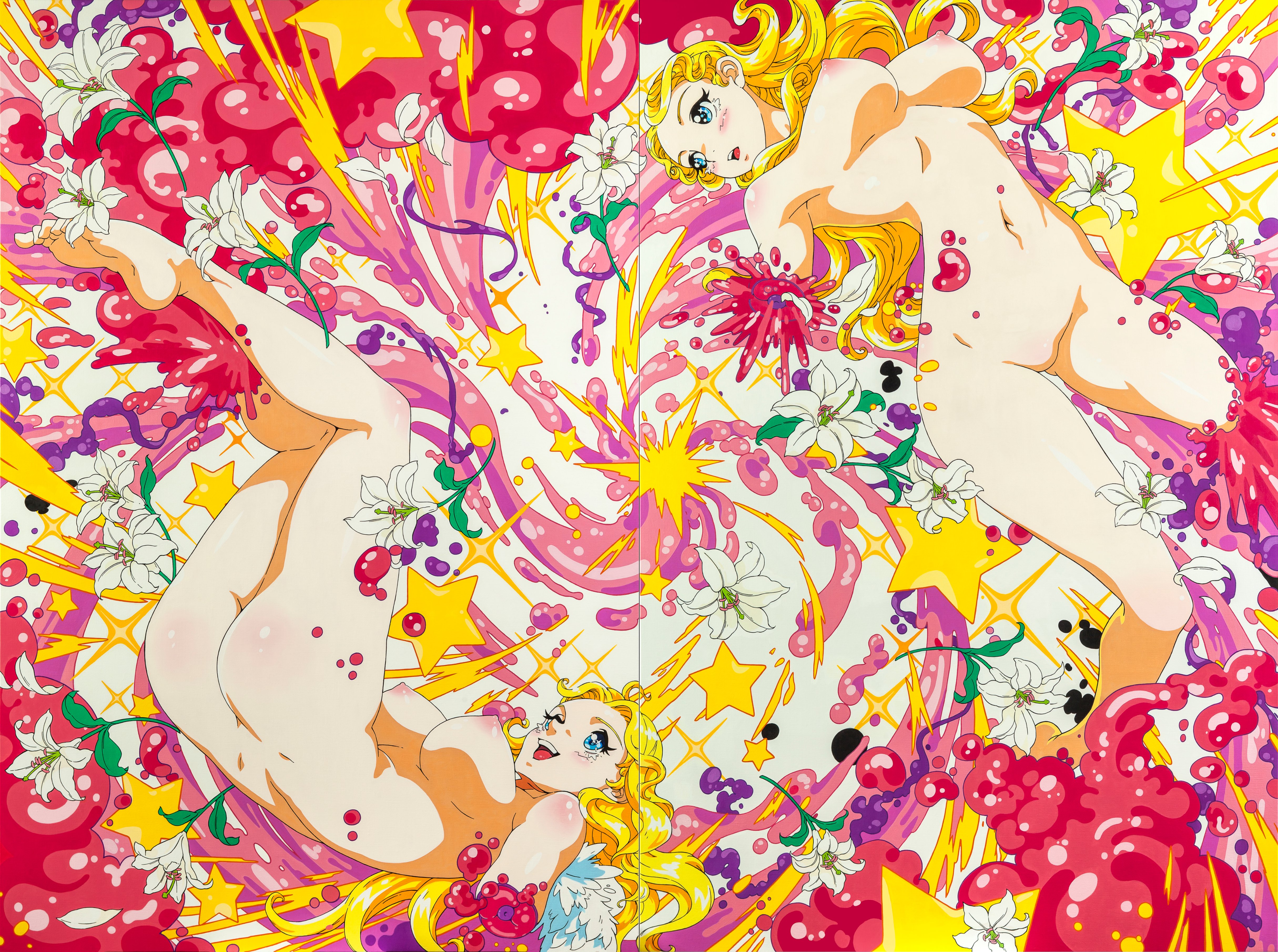
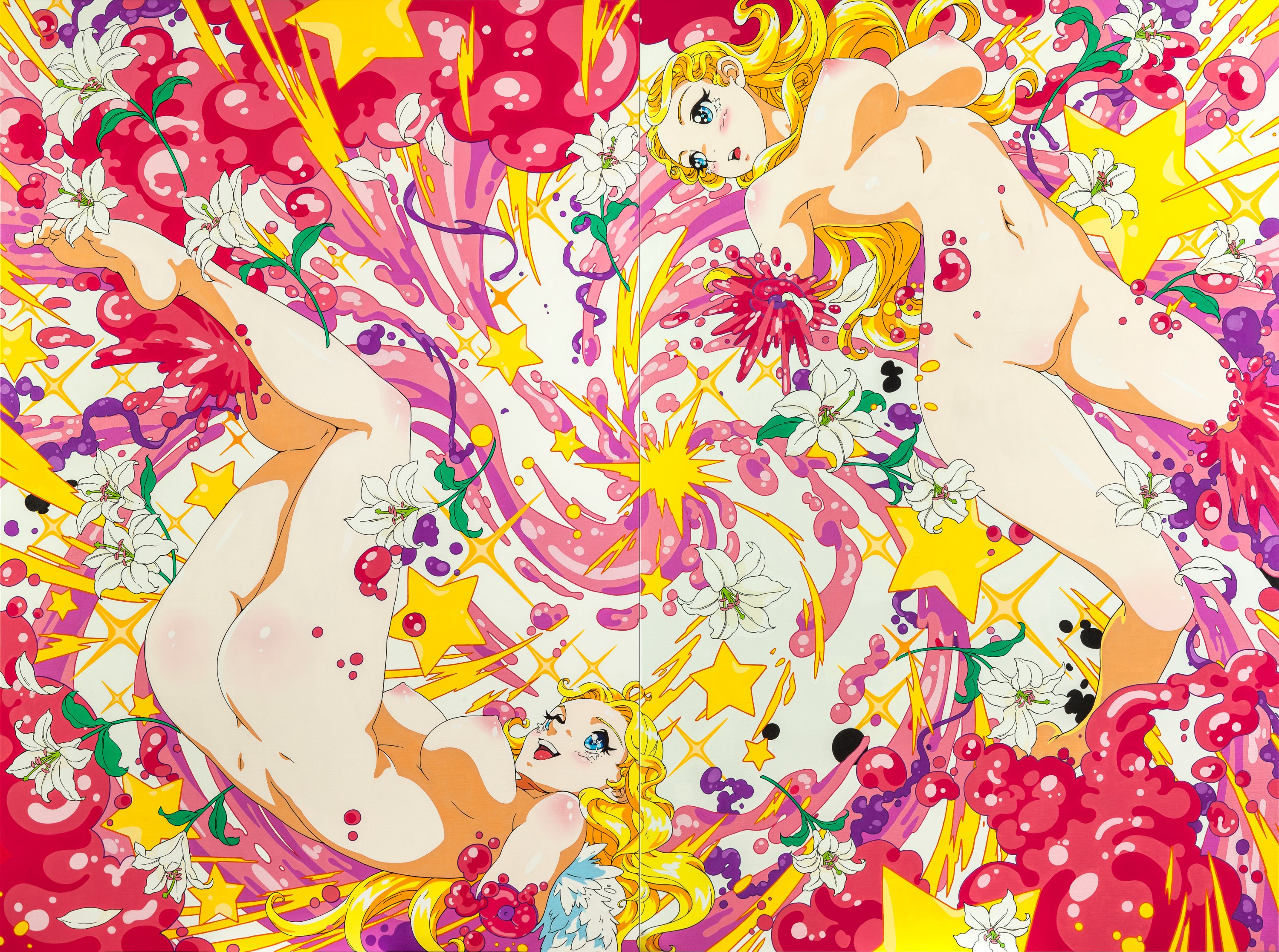
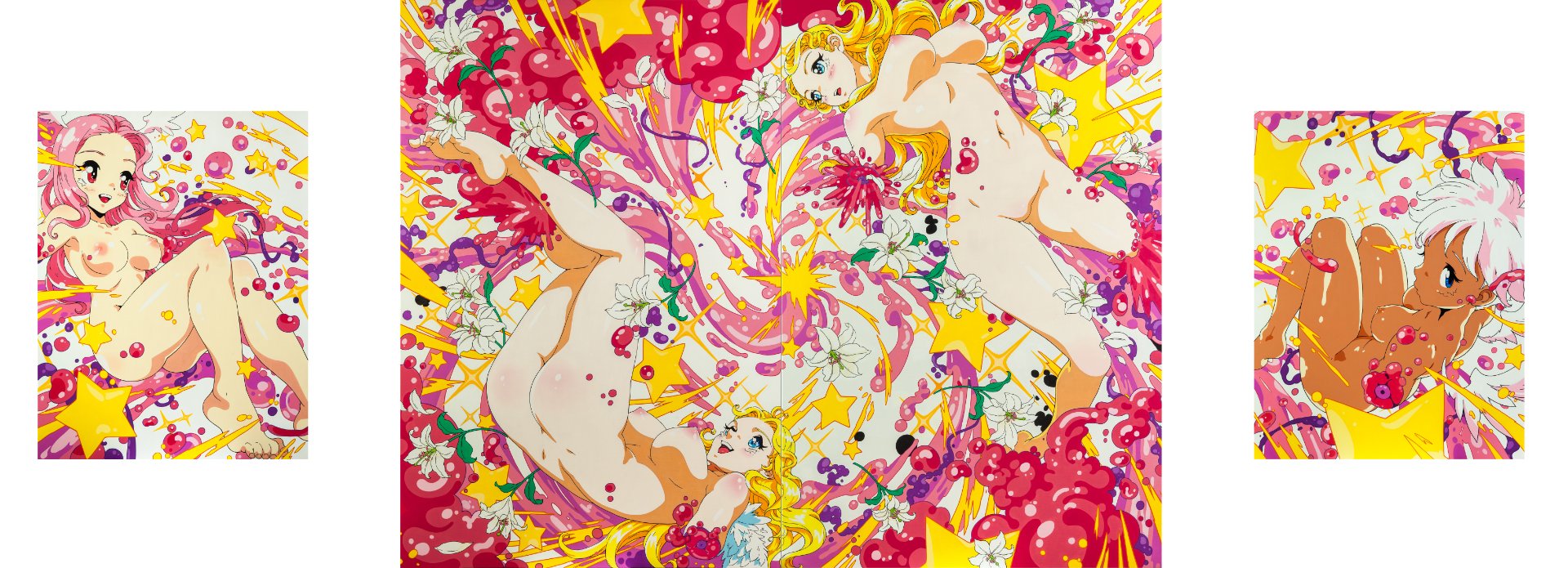
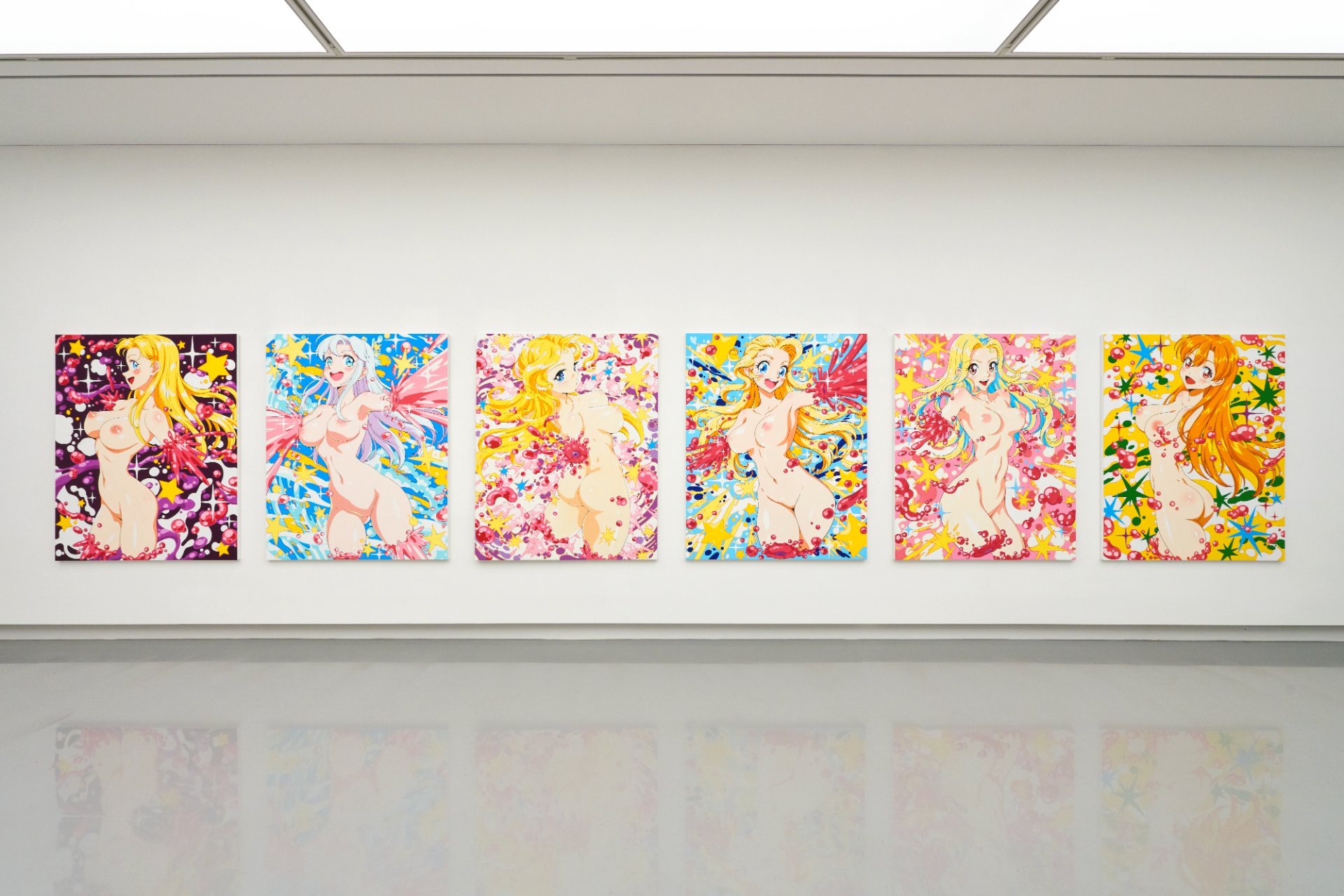
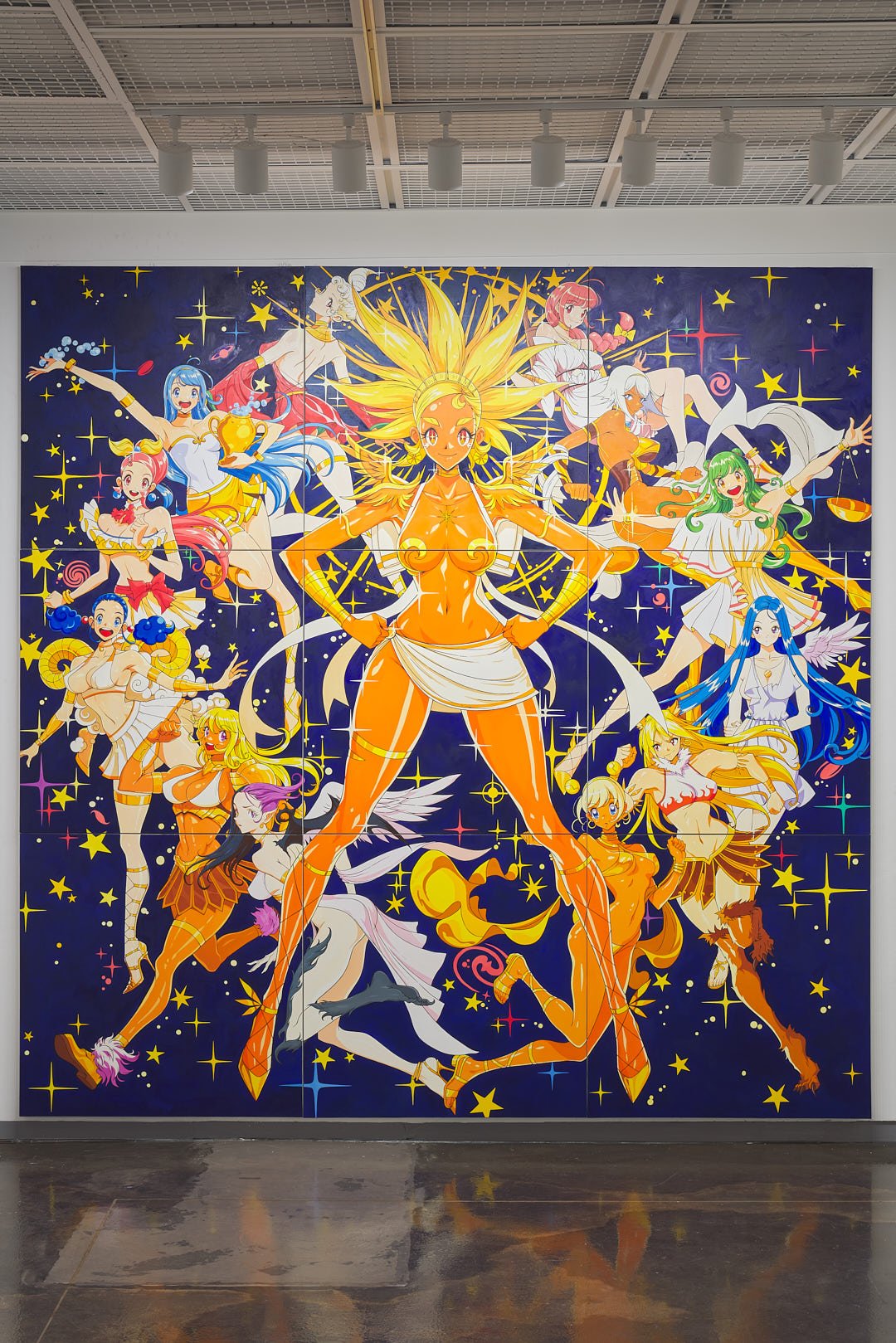
The Annunciation continues the Torso series into a subject Western painting has returned to again and again. Gabriel and Mary are painted as two figures, and the space around them is filled with lilies, stars and a vortex of bursting pink blood.
In the final scene of Mamoru Oshii's animated feature Ghost in the Shell (1995), the vision of an angel descends and the protagonist and the Puppet Master merge into a single new being. To me that scene looked like an Annunciation, and I thought at the time that the Annunciation itself might be a picture not of the birth of Jesus but of the moment something is born.
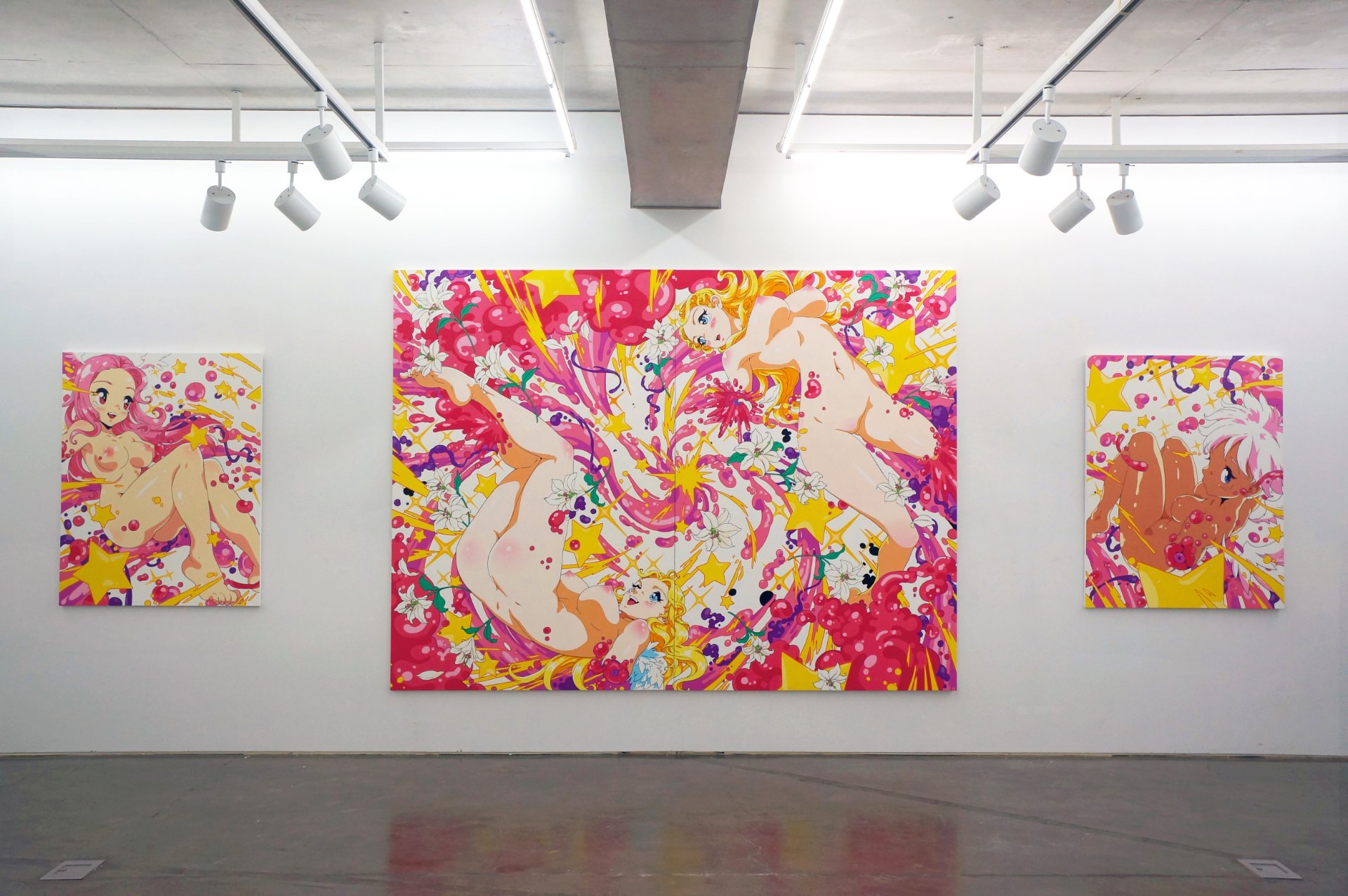
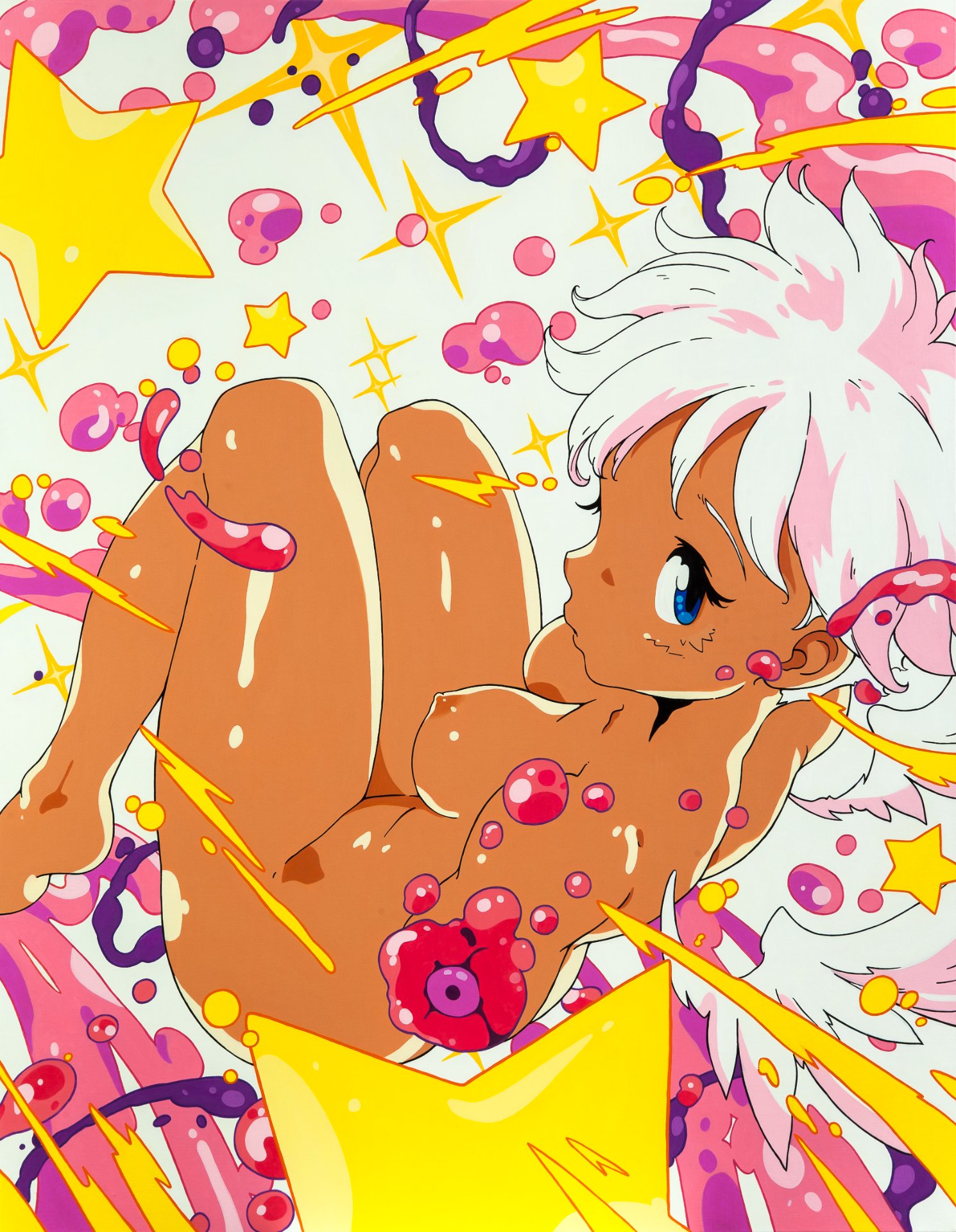
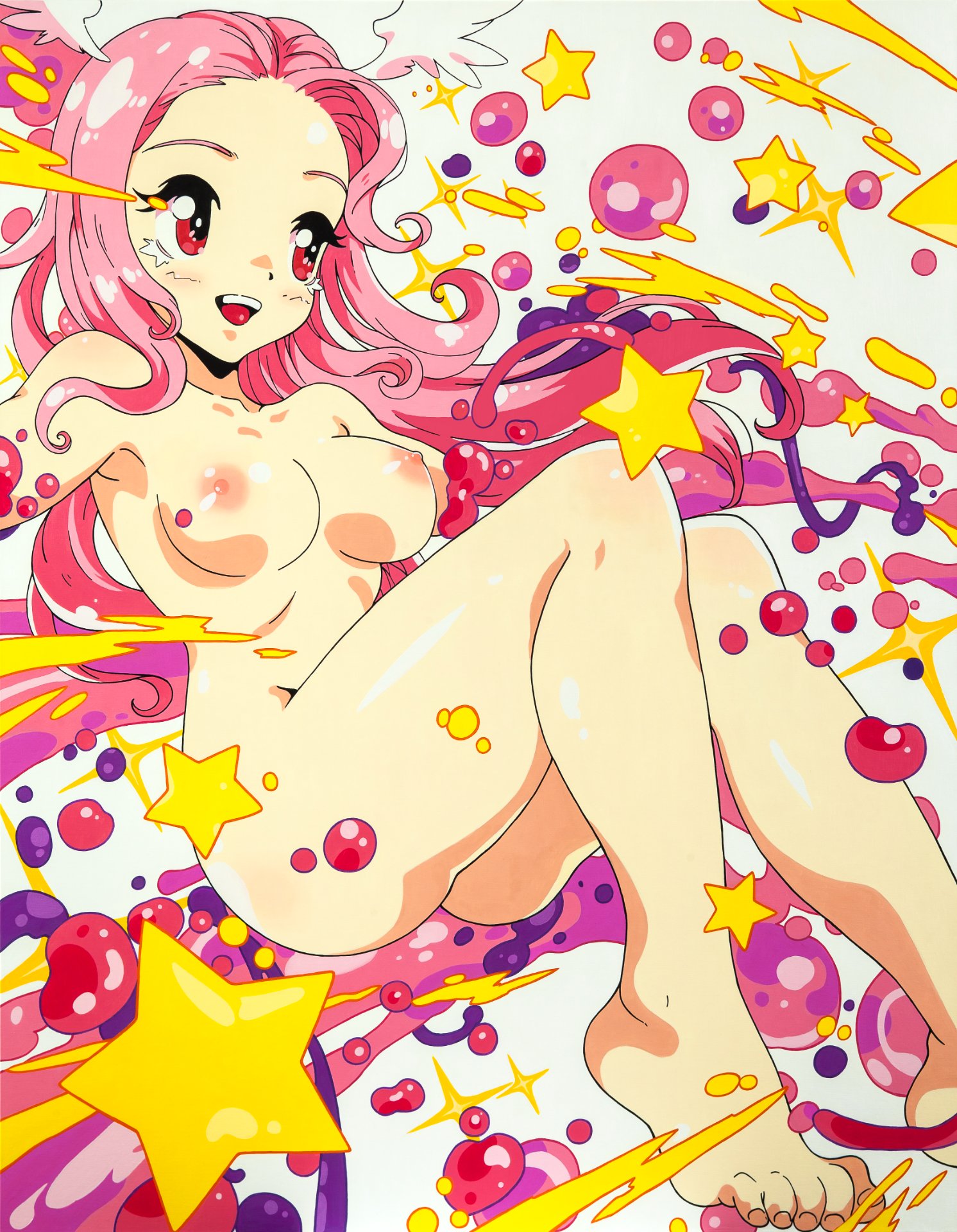
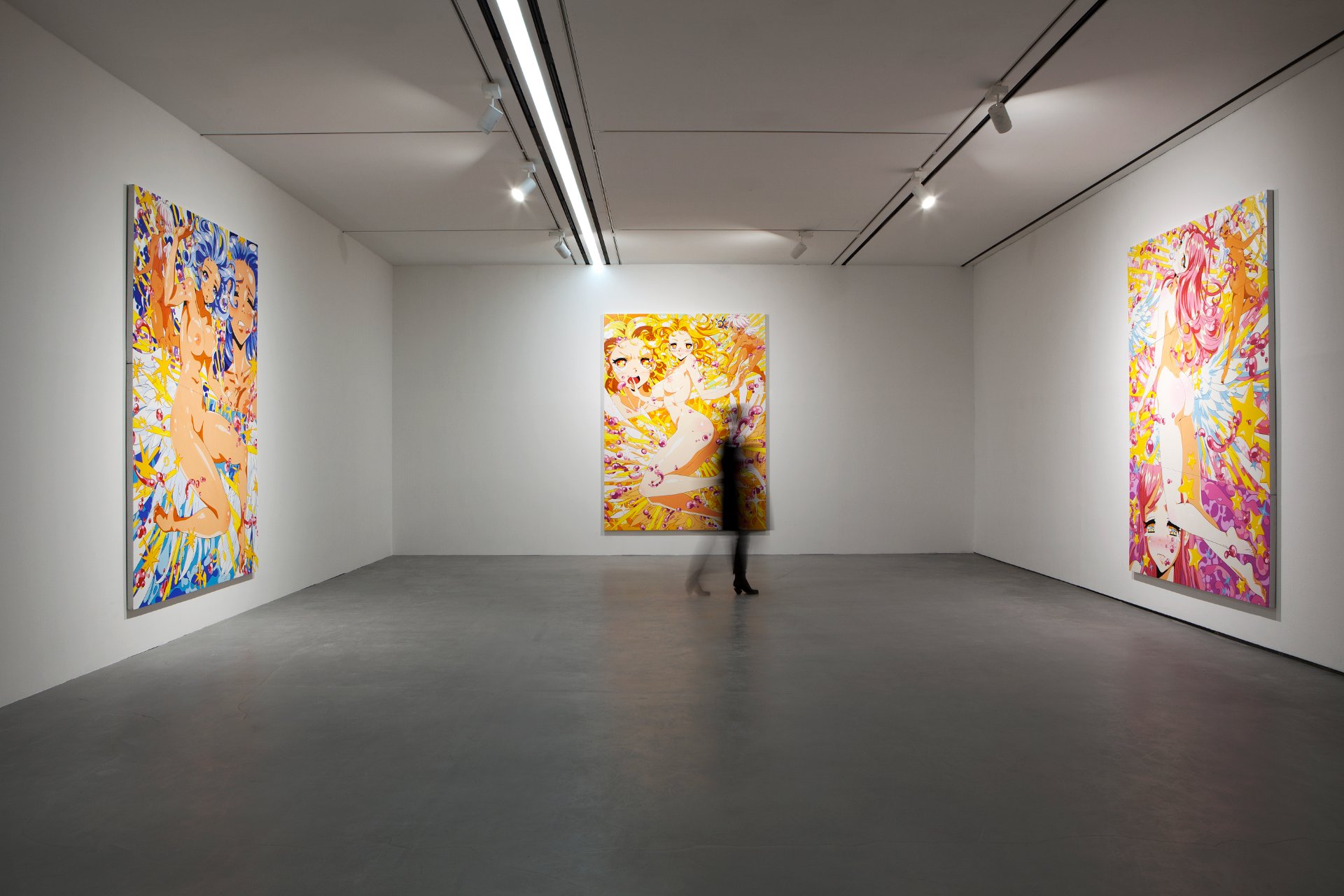
As the Torso series went on I needed a larger picture plane than the torsos allowed, and this seemed the right subject for the central work of my first solo exhibition, NU-TYPE. Four canvases are used, but the two central panels join into a single image, so the work reads as three. It follows the triptych structure of religious painting while, I hoped, also looking like the open spread of a comic book. Oil on canvas; the two central panels measure 194 × 261 cm together, the side panels 117 × 91 cm each. It was shown at NU-TYPE (Makeshop Art Space, Paju, 2014).
On the left of the central image, the winged figure is Gabriel; on the right is Mary. The two resemble each other, and the wing alone tells us which one is Gabriel. Identifying a figure by one attribute is a method the iconography of religious painting has used for centuries, and it is also how animation tells its characters apart, by hair color or a prop. Each figure is missing one arm and one leg, and the two face each other, turning, with the explosion at the center of the picture between them.
In a traditional Annunciation the light comes down from heaven. In mine it bursts out from the center. The whole picture may be one great explosion; it may be something generated between the two figures; it may be an explosion from within. What mattered to me was that it comes from the center, not from above.
Pink blood spreads out from the figures, and around it lilies bloom, stars glitter and liquid bursts. I wanted to paint a moment in which something explodes and is made at the same time.
The figures in the work appear nude. Just as the protagonist of an anime glows naked at the climax as she awakens, and just as a transformation sequence flashes with light and the body is bared for an instant, I wanted to paint it as a decisive event, yet a moment not of this world.
The blonde female character is a conventional image of beauty that recurs in Japanese comics. She belongs to no nation, neither Western nor Asian, and in that respect she is like classical sculpture, which is also an idealized type of beauty. The angels on the side panels are painted with different hair and skin colors; I wanted to paint as many types as I could beyond the standard bishōjo character. The ground is white with a hint of cream, so that the whole painting would read as pure and bright.
In Western painting the lily is a symbol of purity. In the context of manga it is read to mean something else. I am interested in the way the same iconographic motif is read differently across periods and cultures, and in the state in which those readings collide within a single picture.
I have not decided what kind of birth this painting depicts. At the heart of the explosion the two figures turn slowly, and within that turning something is being born at this very moment. Only that moment remains on the canvas.