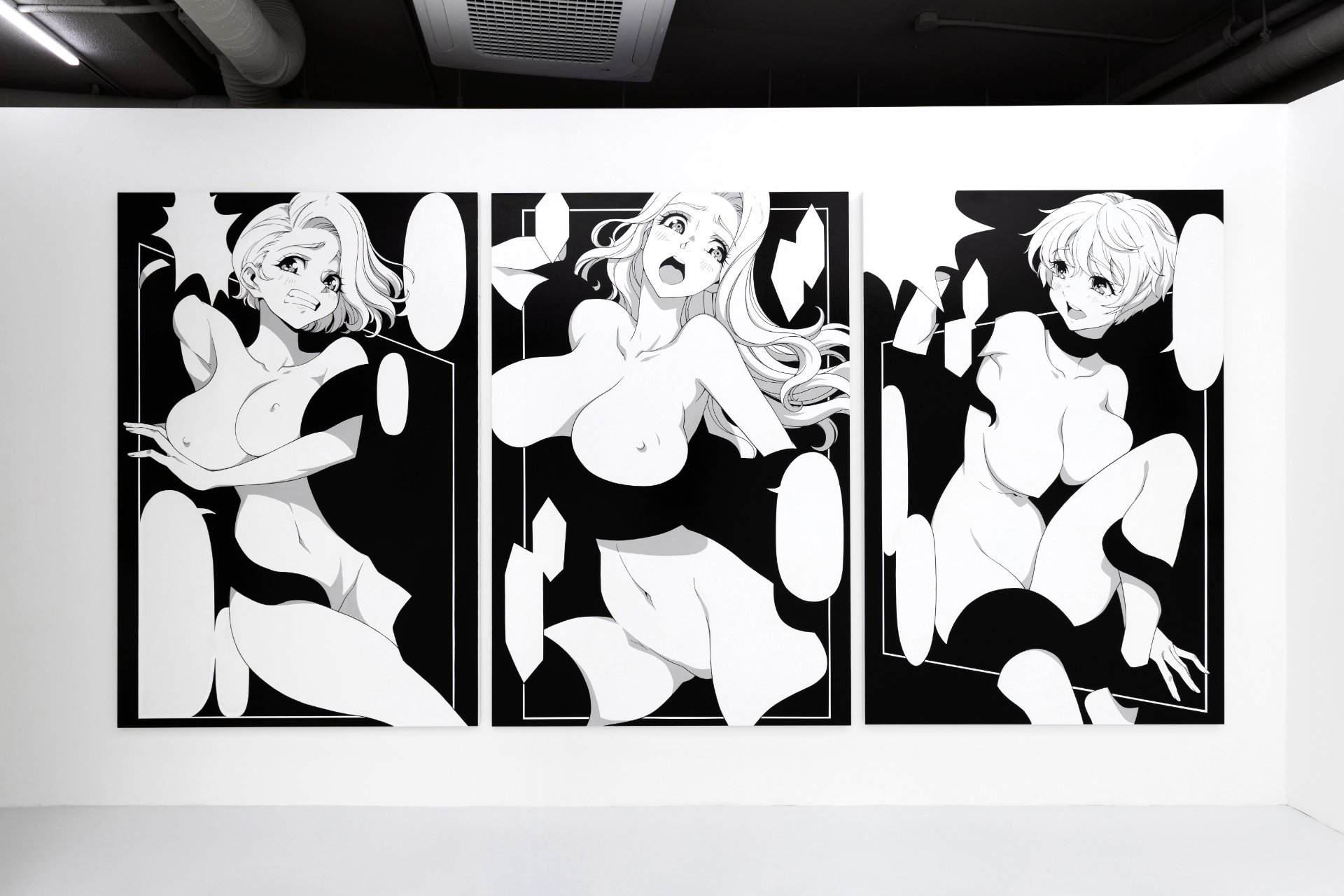
Pixel Prometheus The Three Graces
Pixel Prometheus The Three Graces is a series of paintings made by enlarging small pixel drawings and transferring them to canvas. Each pixel becomes a square plane on the canvas. The series comprises Prometheus' Heart, pixel hearts modeled on a game's life meter; Prometheus, a pixel image; and The Three Graces Pixel Props, parts of the faces and bodies of the Three Graces rendered in pixels. It was first shown in PIXEL PROMETHEUS THE THREE GRACES (STANDARD.a + Superellipse Gallery, Seoul, 2019).
I have always found drawing on a computer a little difficult, and I think the reason lies in the question of what resolution to set. So, instead, I tried pixel drawing, with the idea of drawing as small as possible. A picture drawn on a computer is bound to break down one way or another, so if I drew with an image already split into tiny pieces from the start, there would be nothing left to shatter, and then it would be as hard as a diamond.
Today most of what we see digitally is high resolution, but I grew up looking at a great many pixel images. Pixels are a form and a style that arose from the technical limits of hardware, and I think a particular aesthetic comes to light because of them. Just as with the black and white of manga and the visual devices of animation, pixels are another case in which a limitation became a style.
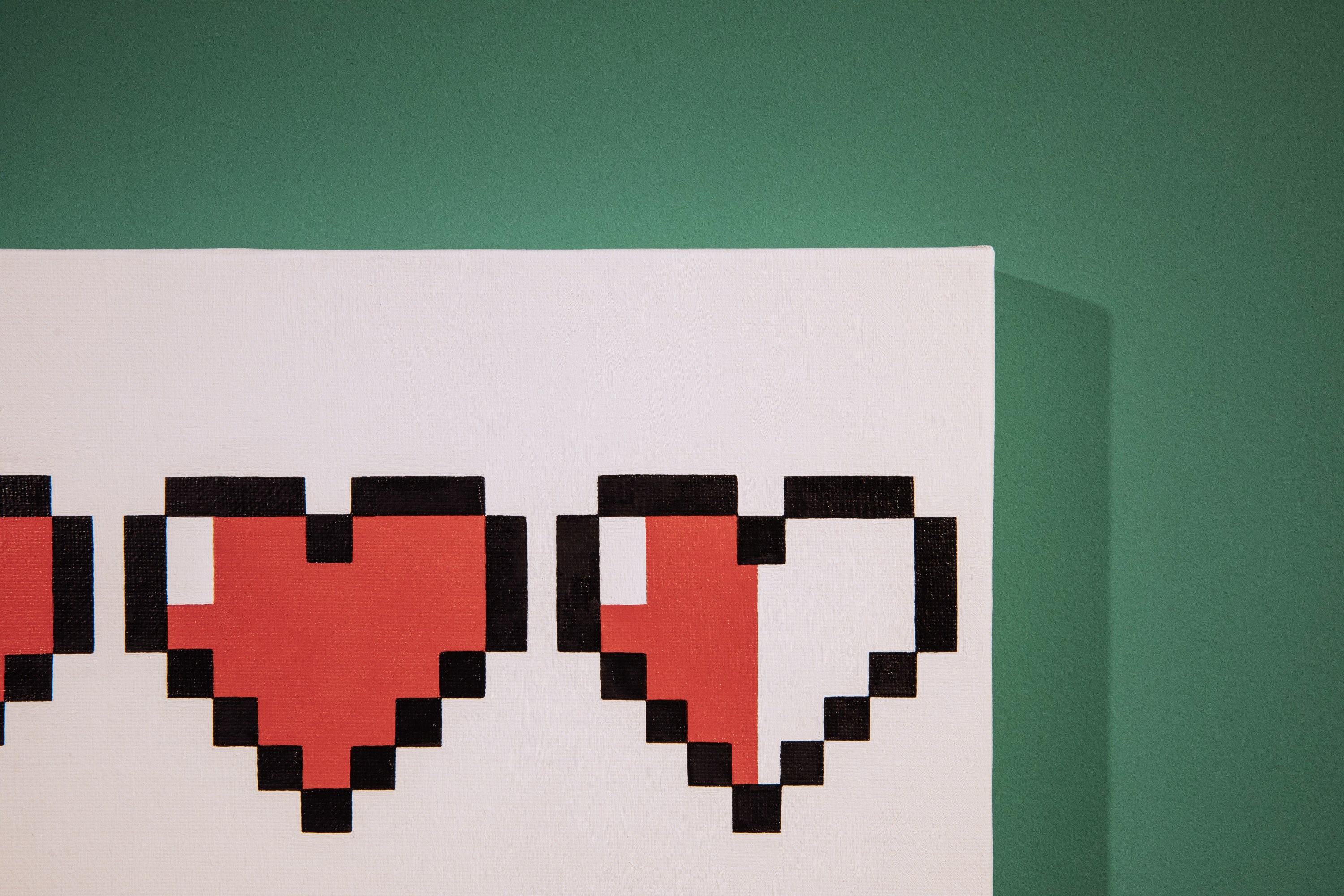
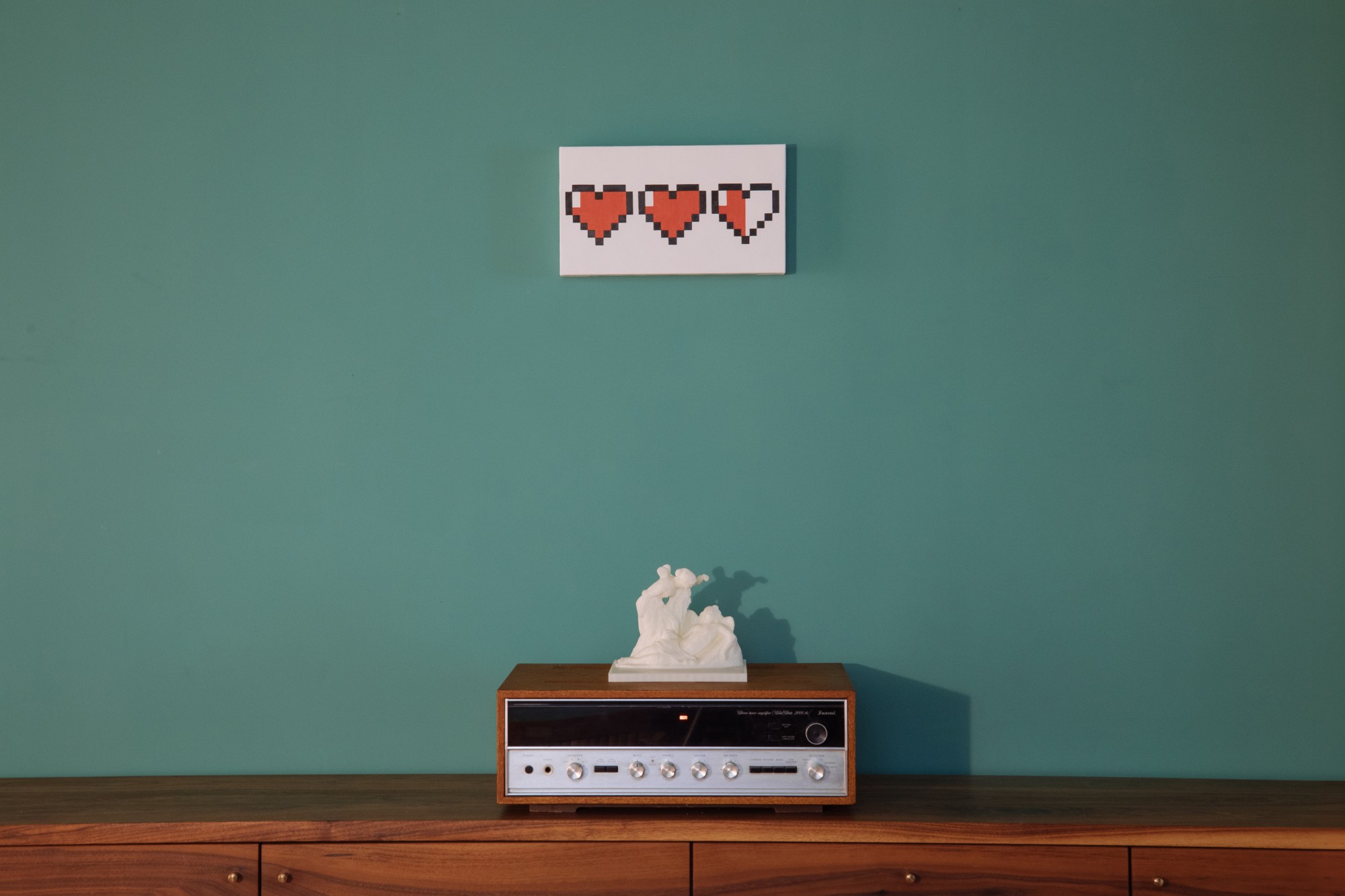
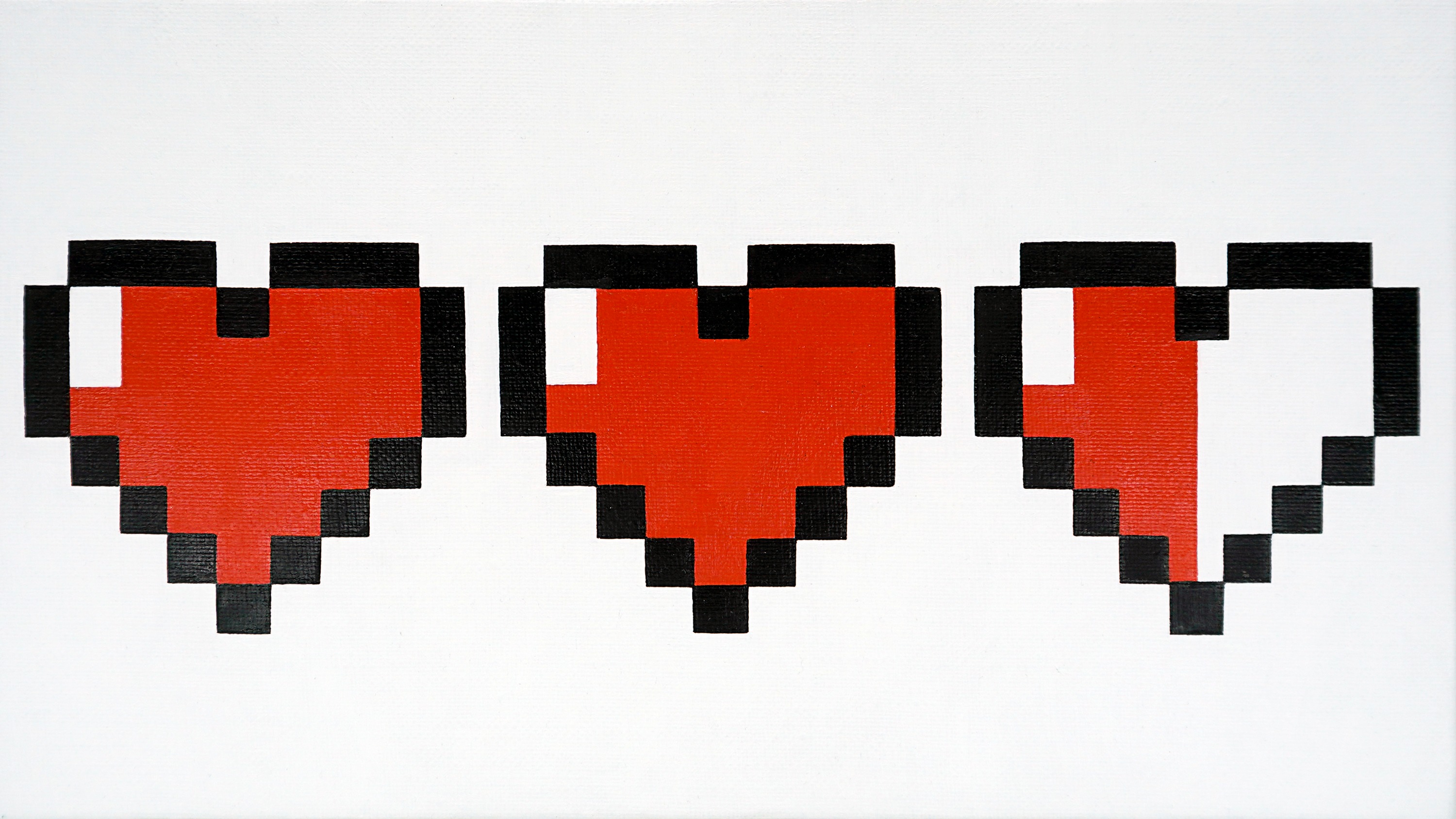
Prometheus' Heart (2019, oil on canvas, 18 × 32 cm) is made up of pixel hearts modeled on the life meter of Nintendo's game The Legend of Zelda (1986–). The last heart is only half filled, so the painting is held at a single moment in which there is no telling whether the hearts are draining or filling. The body of Prometheus, whose liver is pecked out by an eagle each day and grows back each night, seemed to me like a game's life meter, running low and filling up again. I am still painting variations of this image, changing the number and color of the hearts.
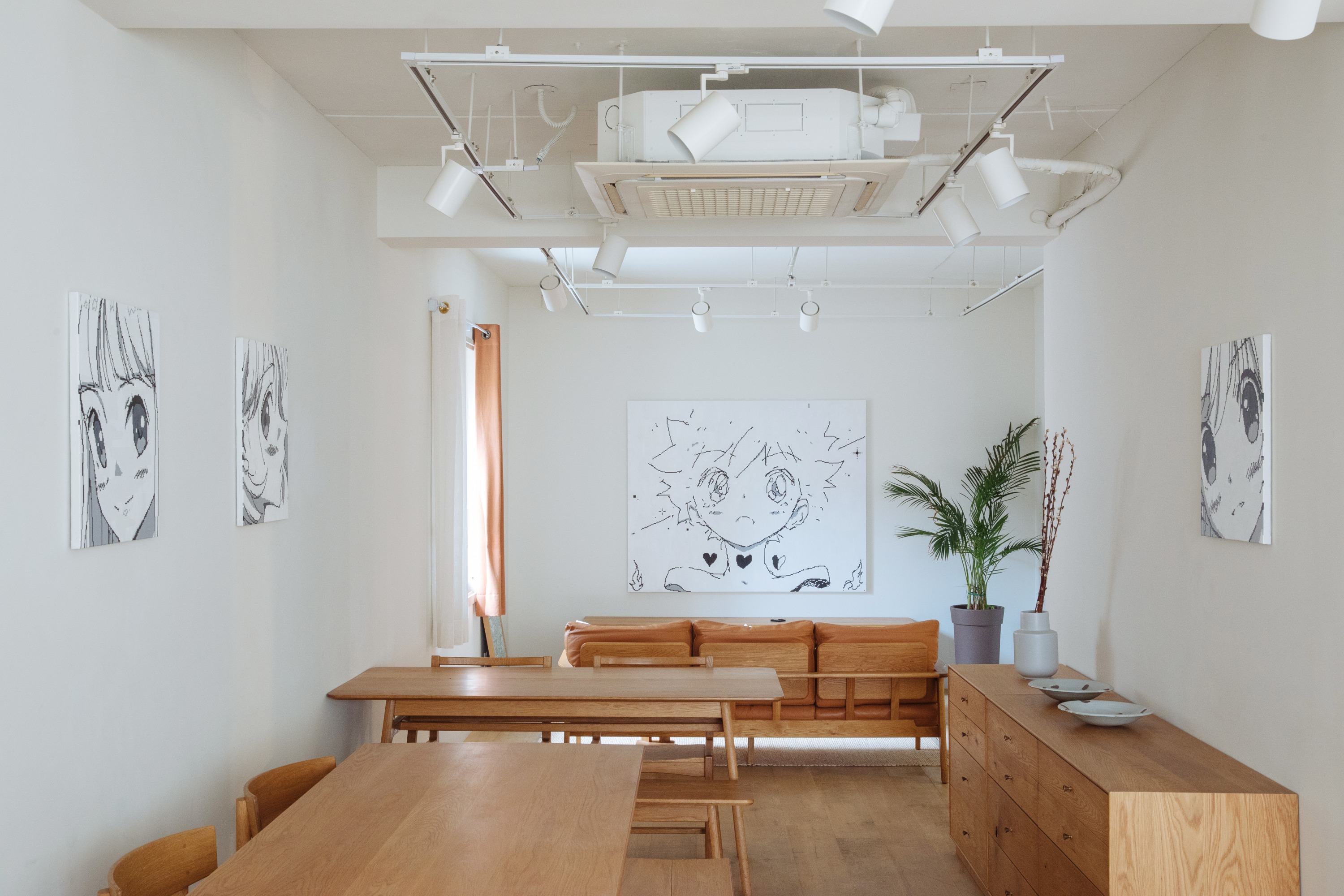
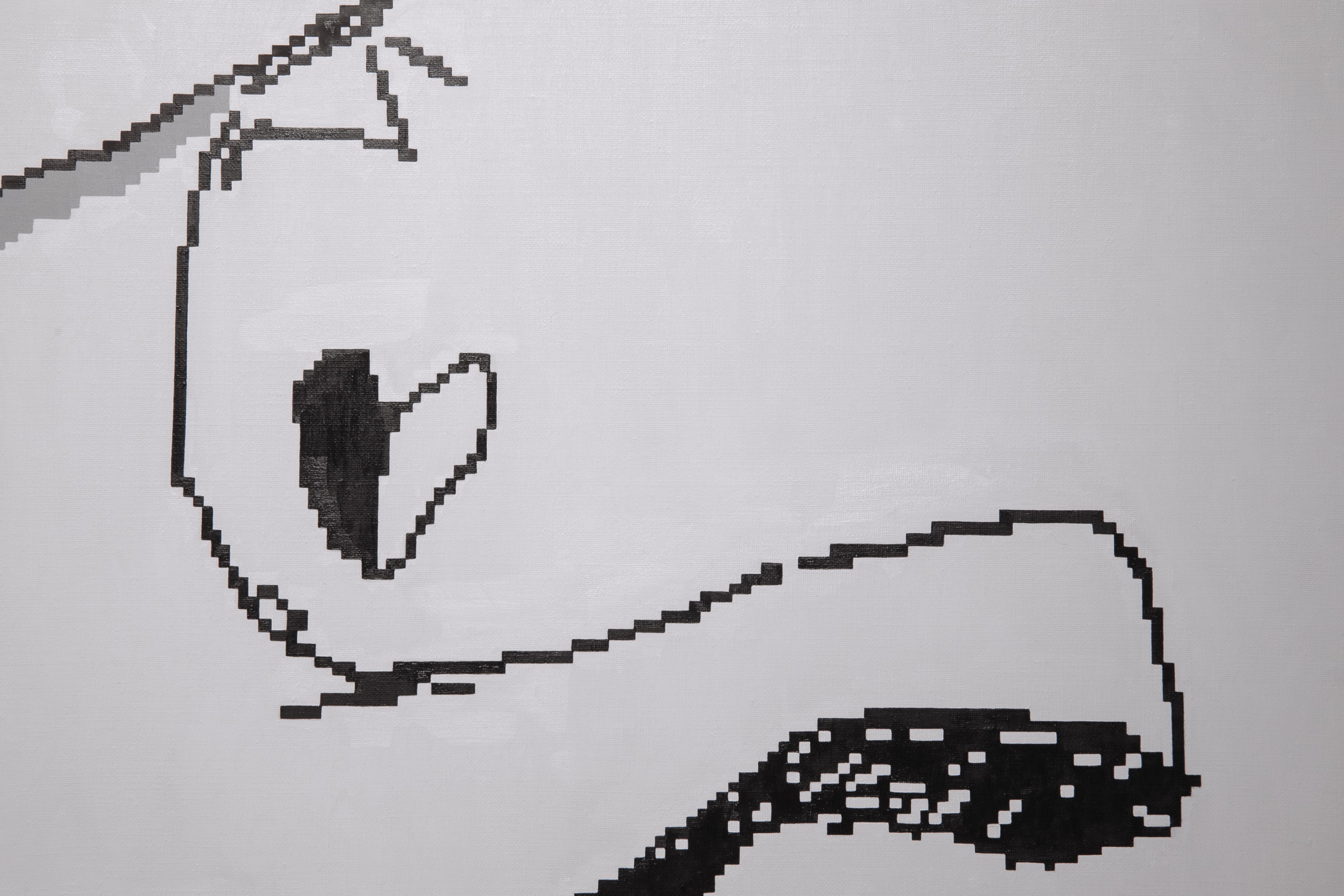
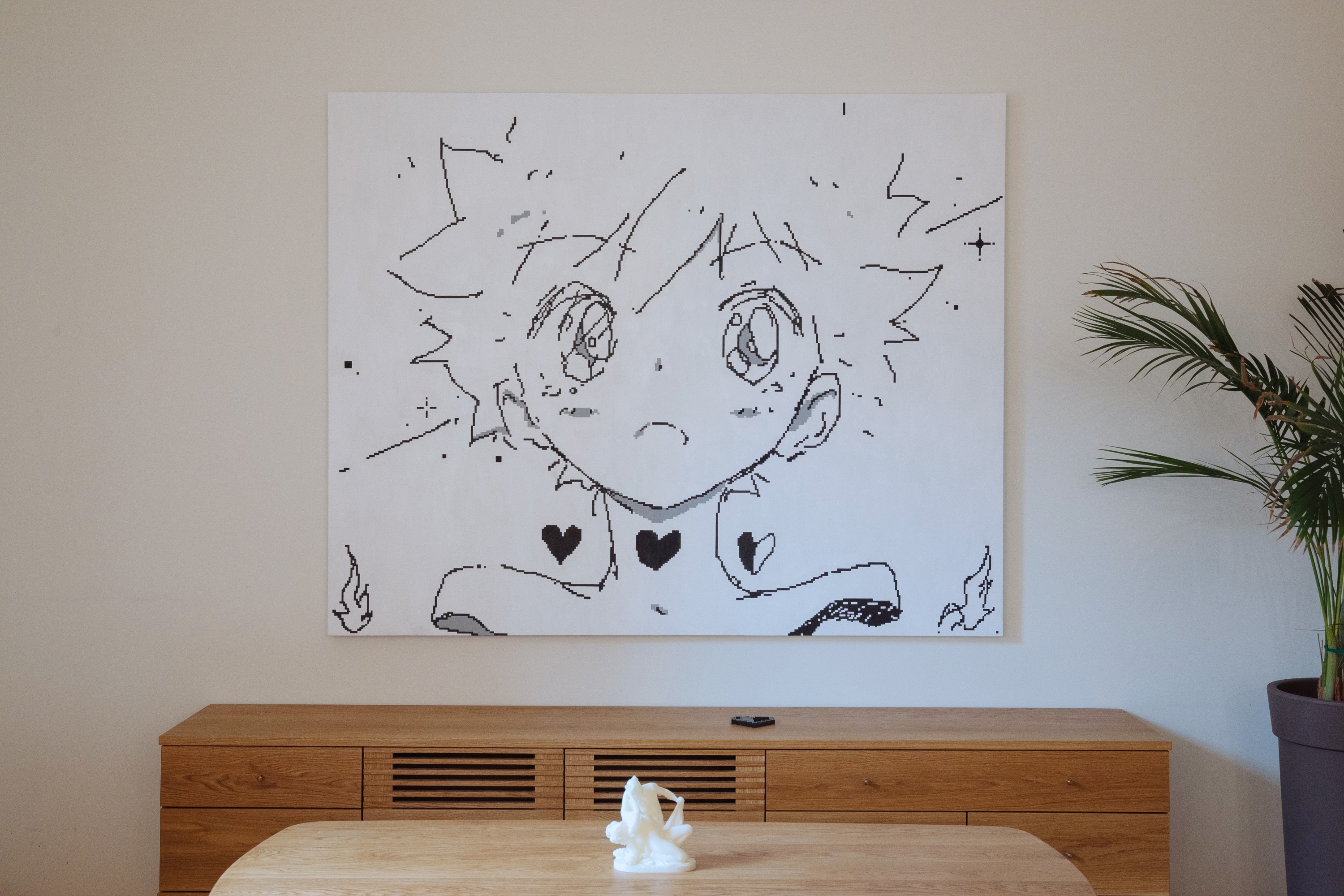
Prometheus (2019, oil on canvas, 130 × 162 cm) was the largest work in the exhibition. In the same manner as the other works, it depicts a young Prometheus in pixels of black line and gray plane on a white ground. A heart sits at the lower right of the picture and a flame at the lower left, meant to look like the icons that appear on a game's loading screen.
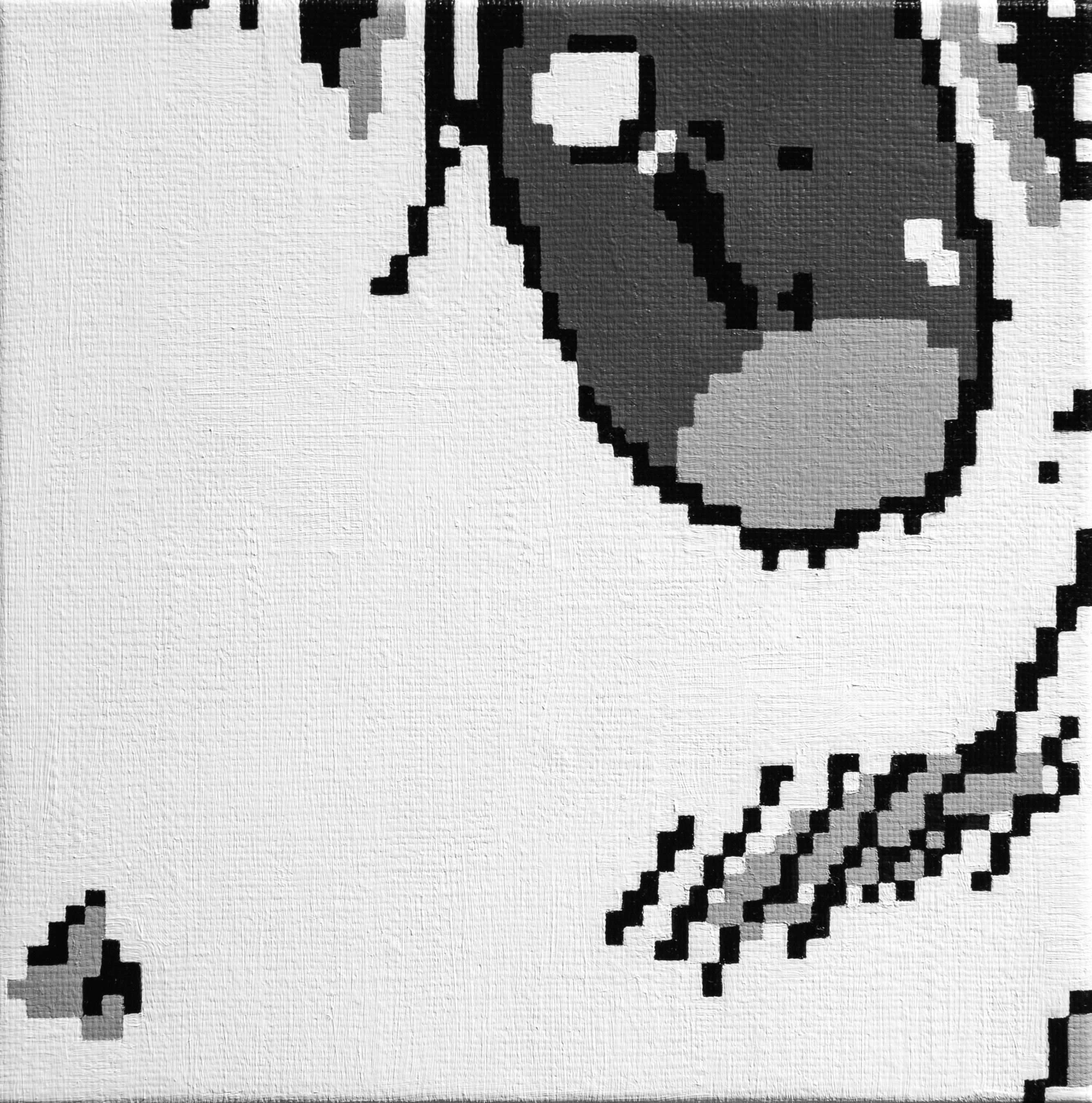
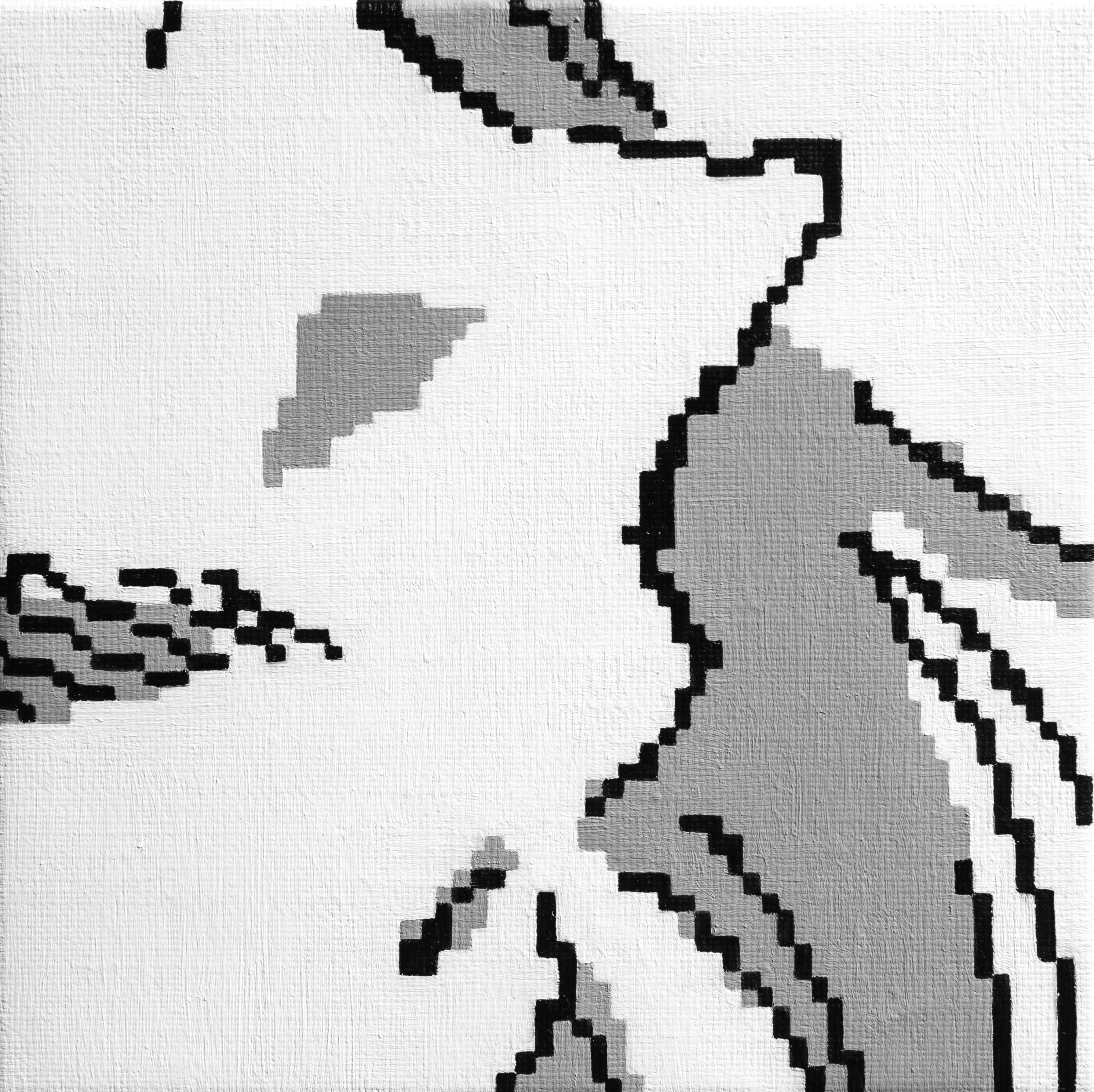
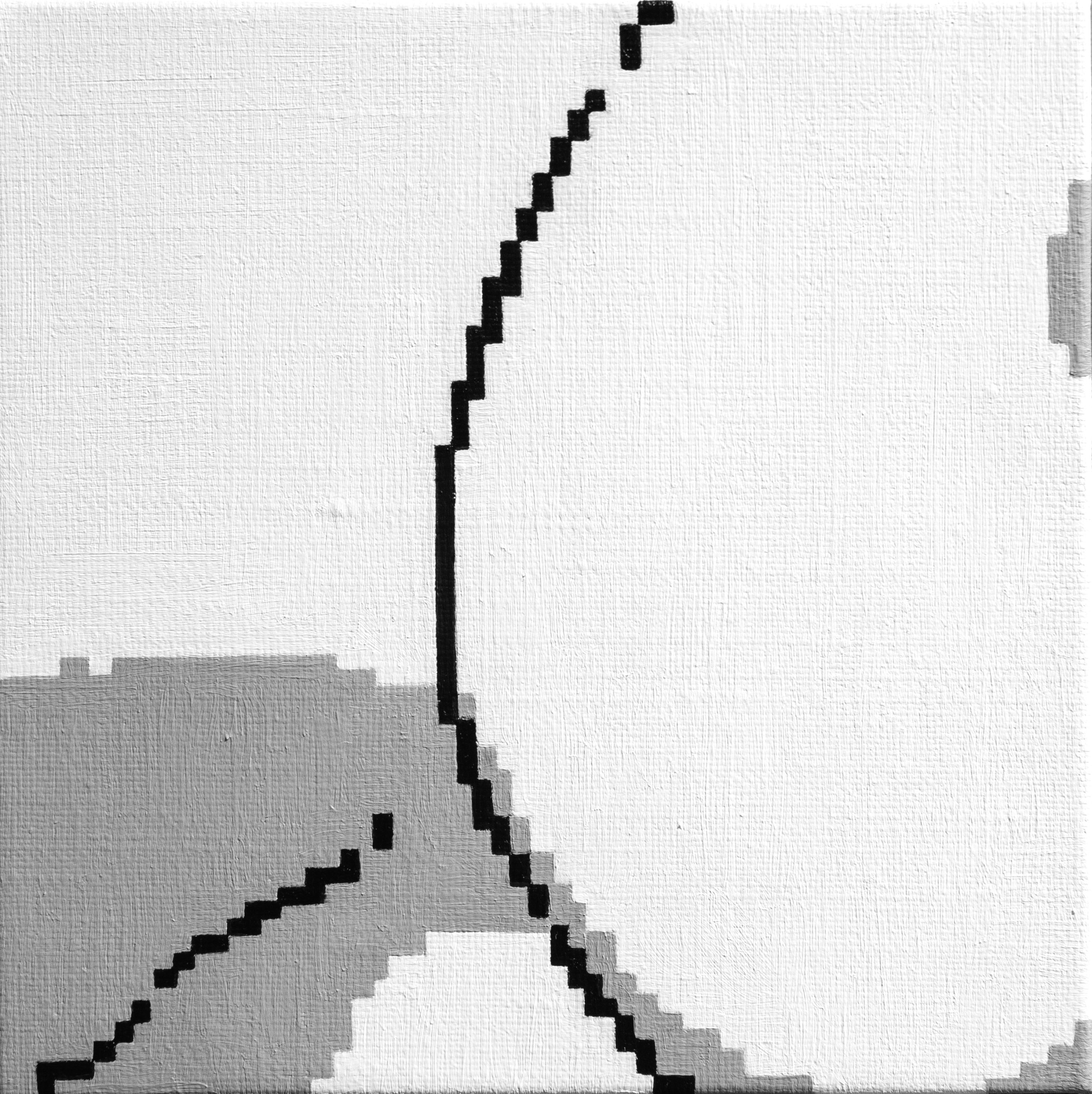
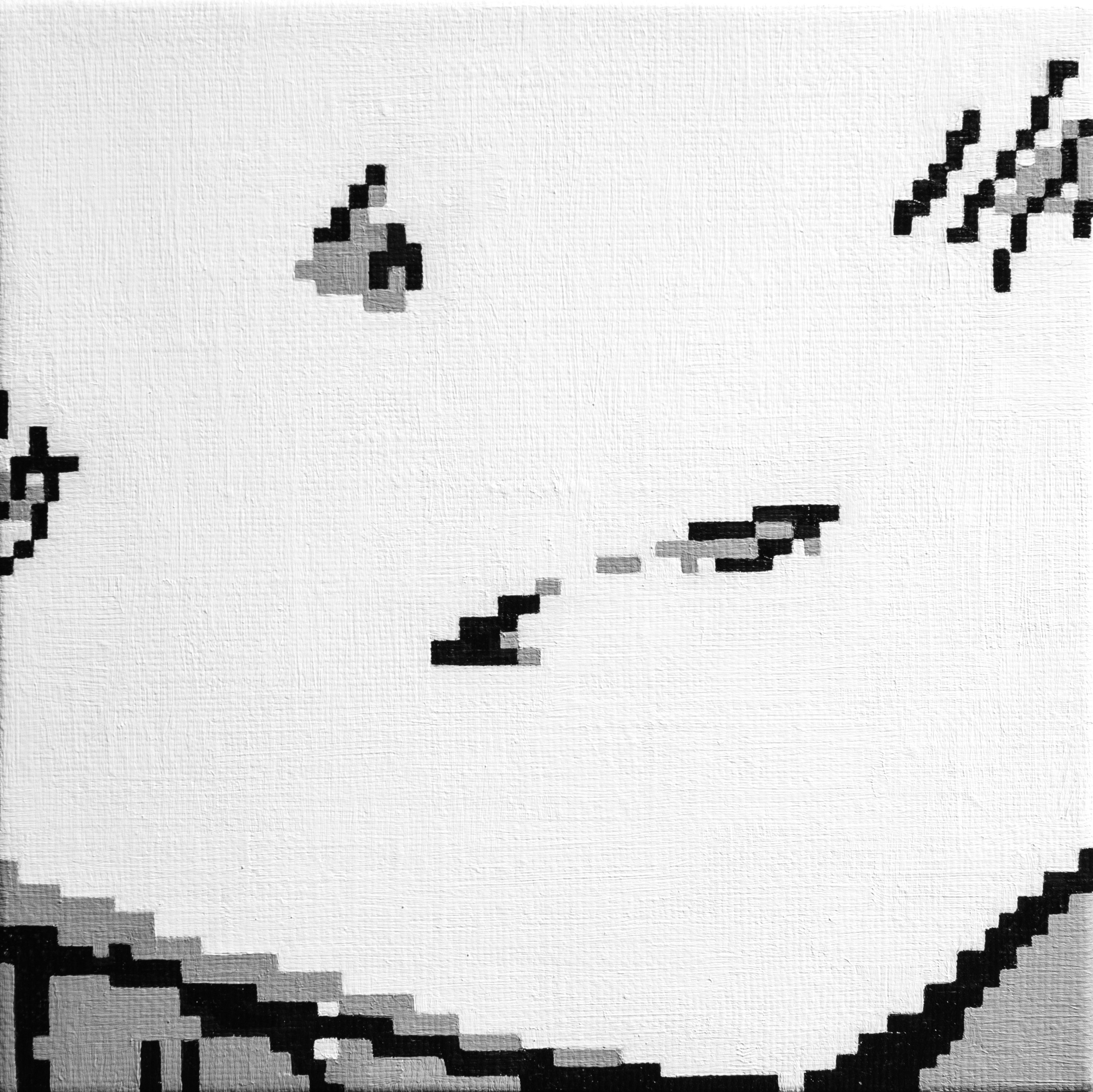
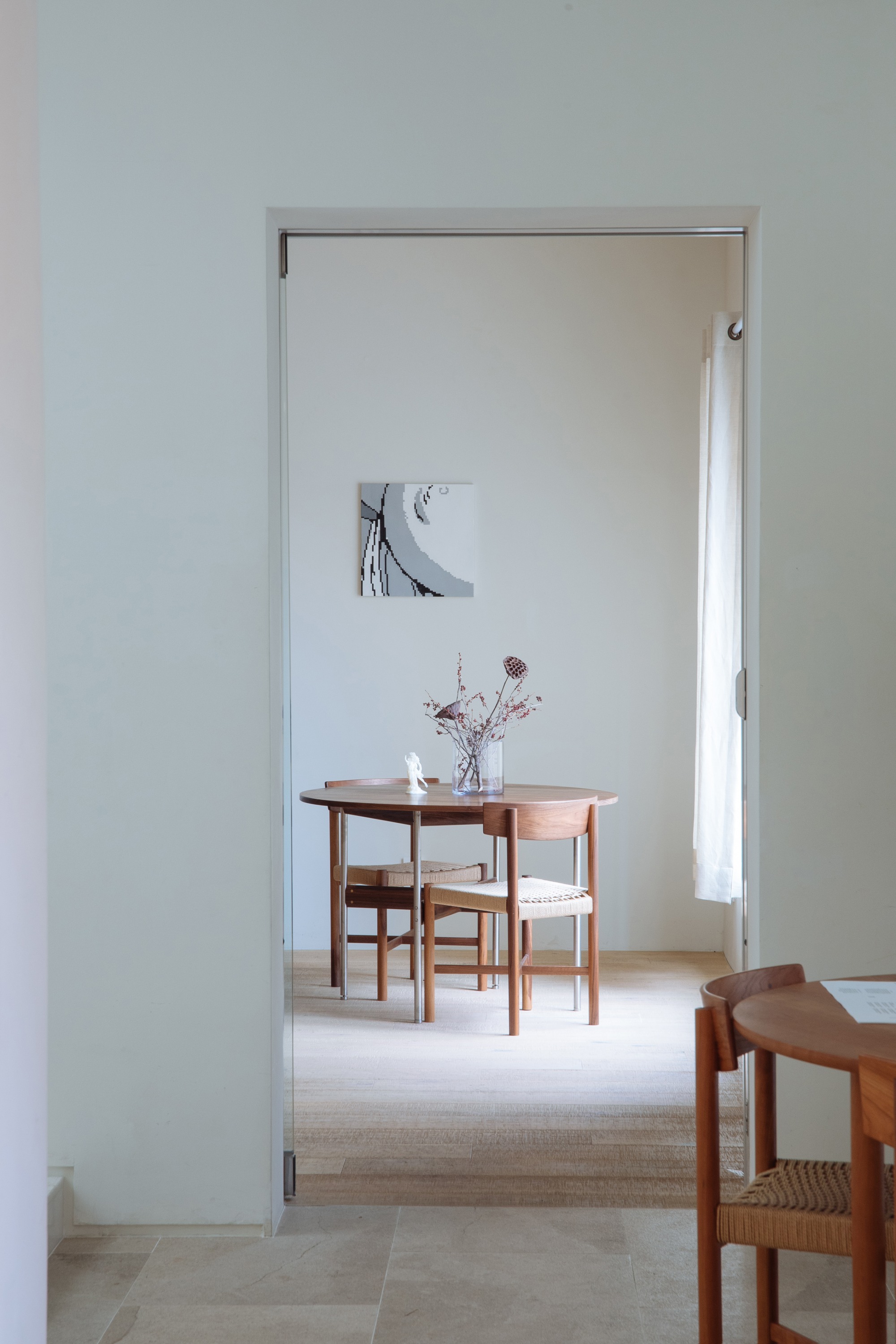
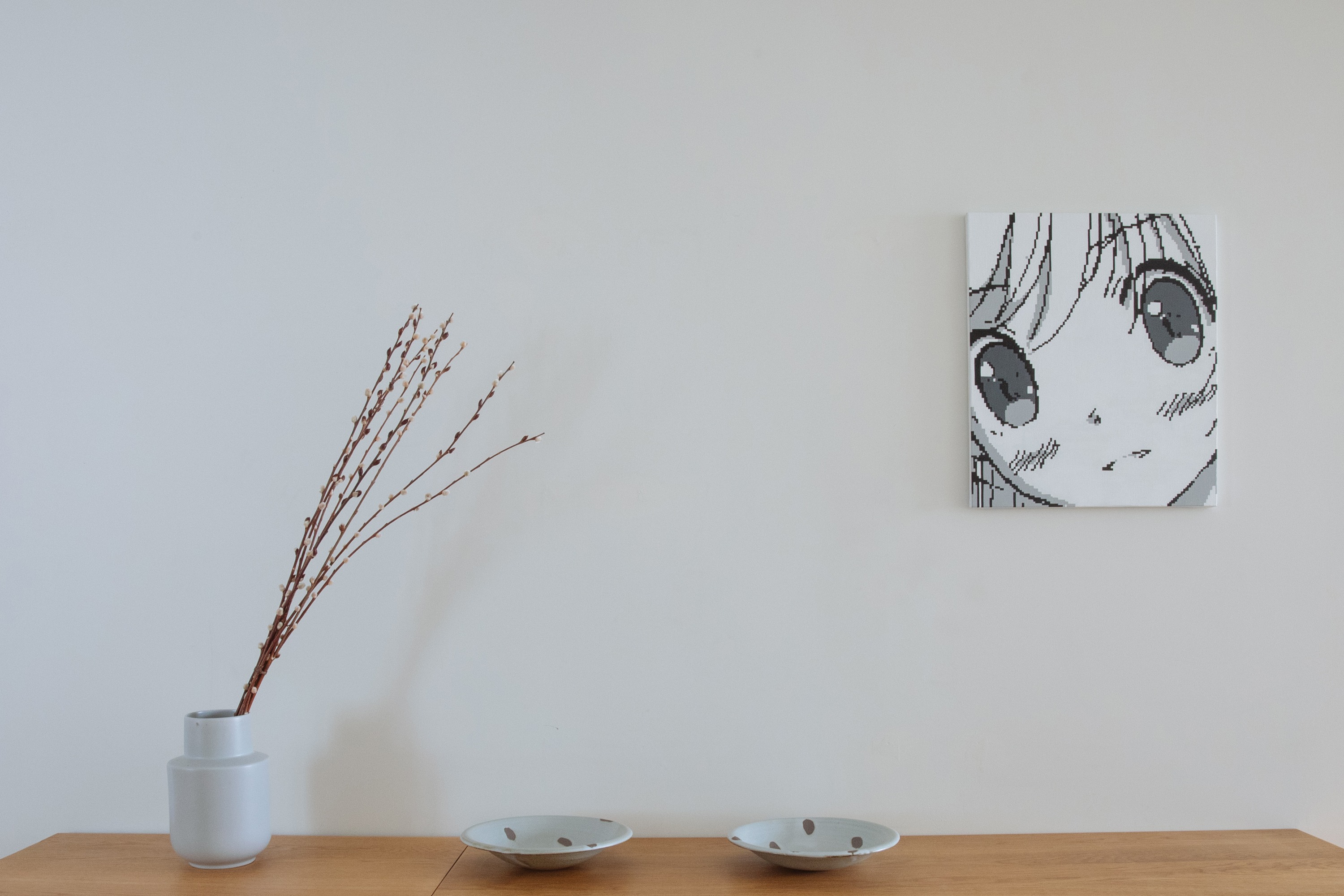
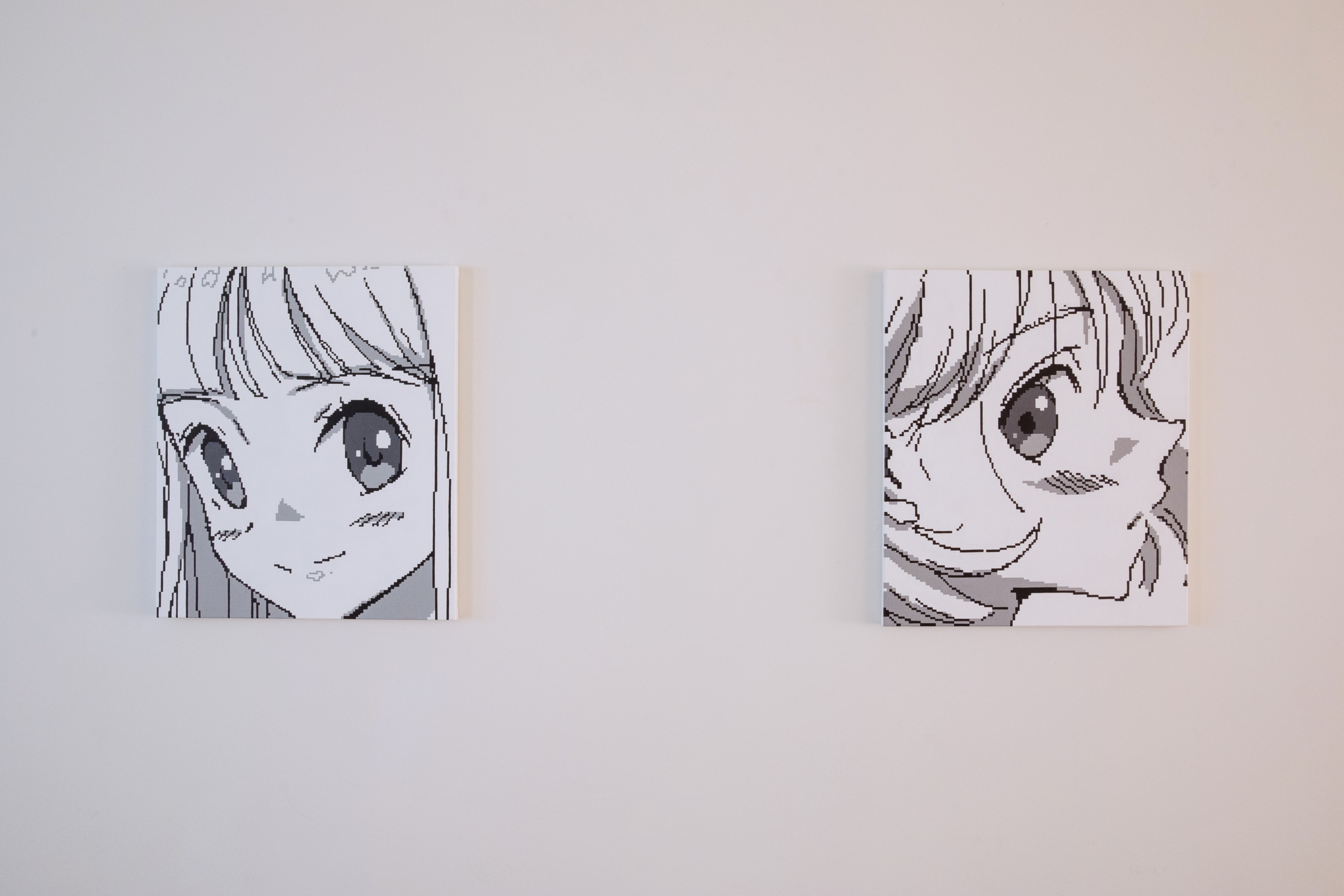
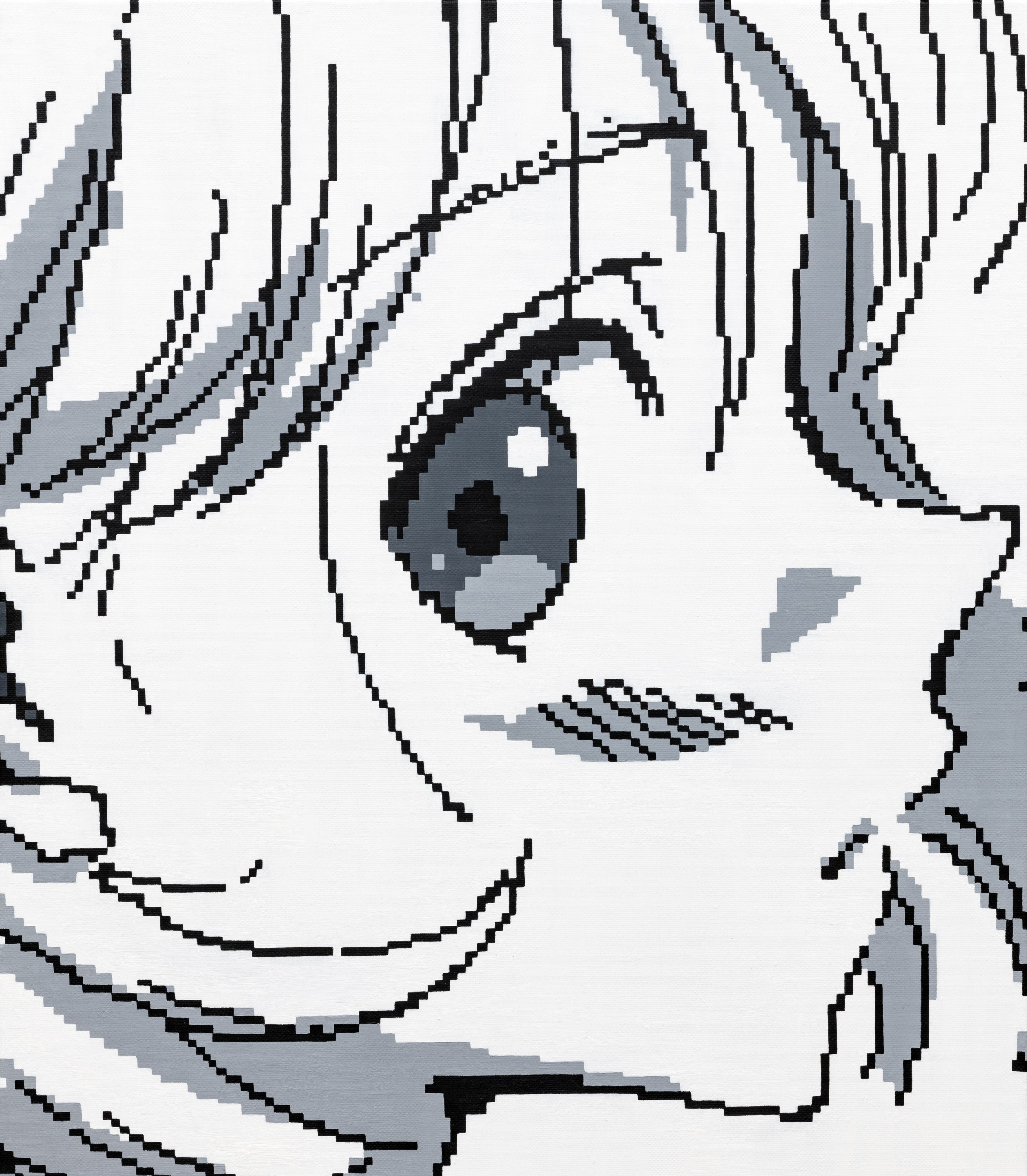
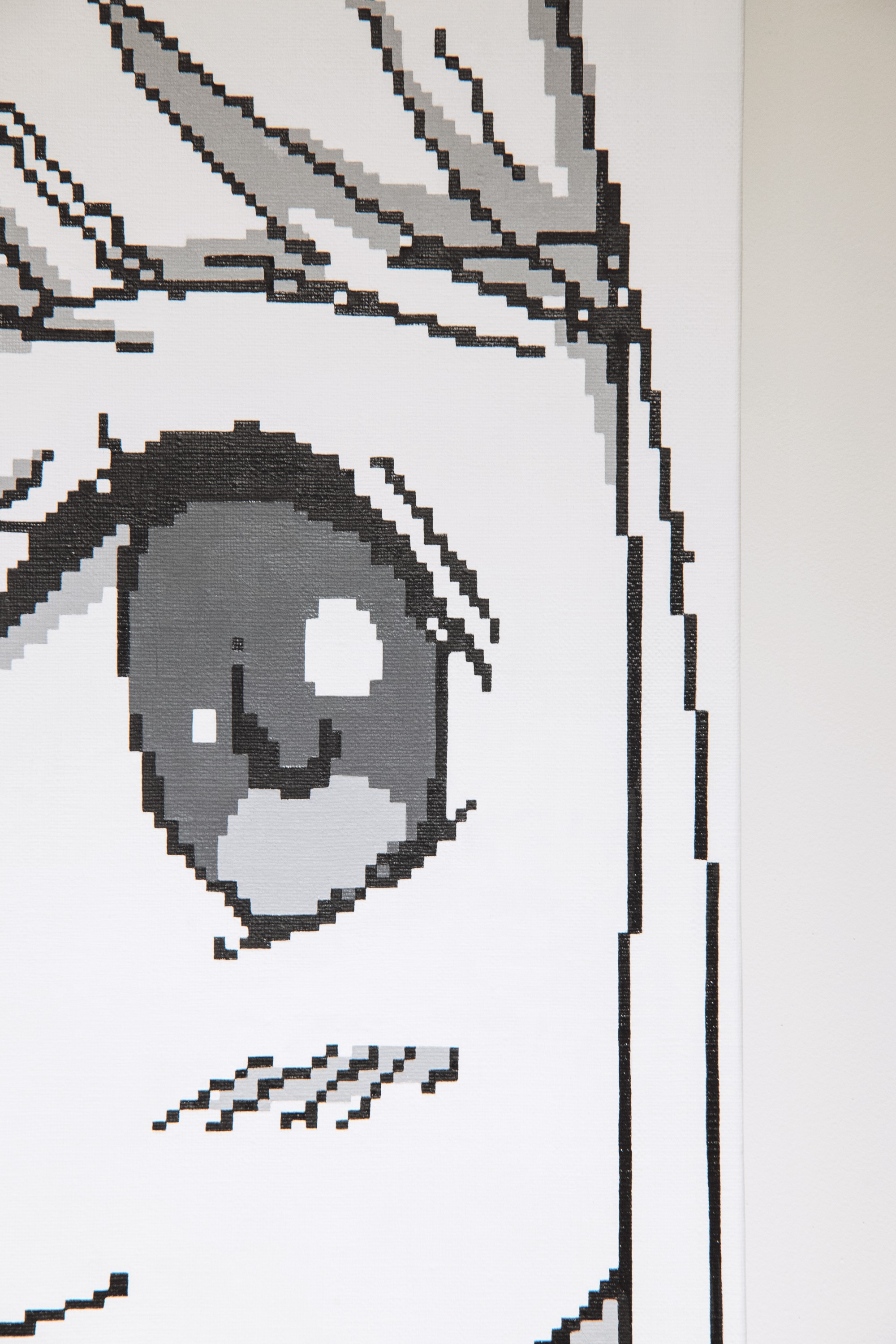
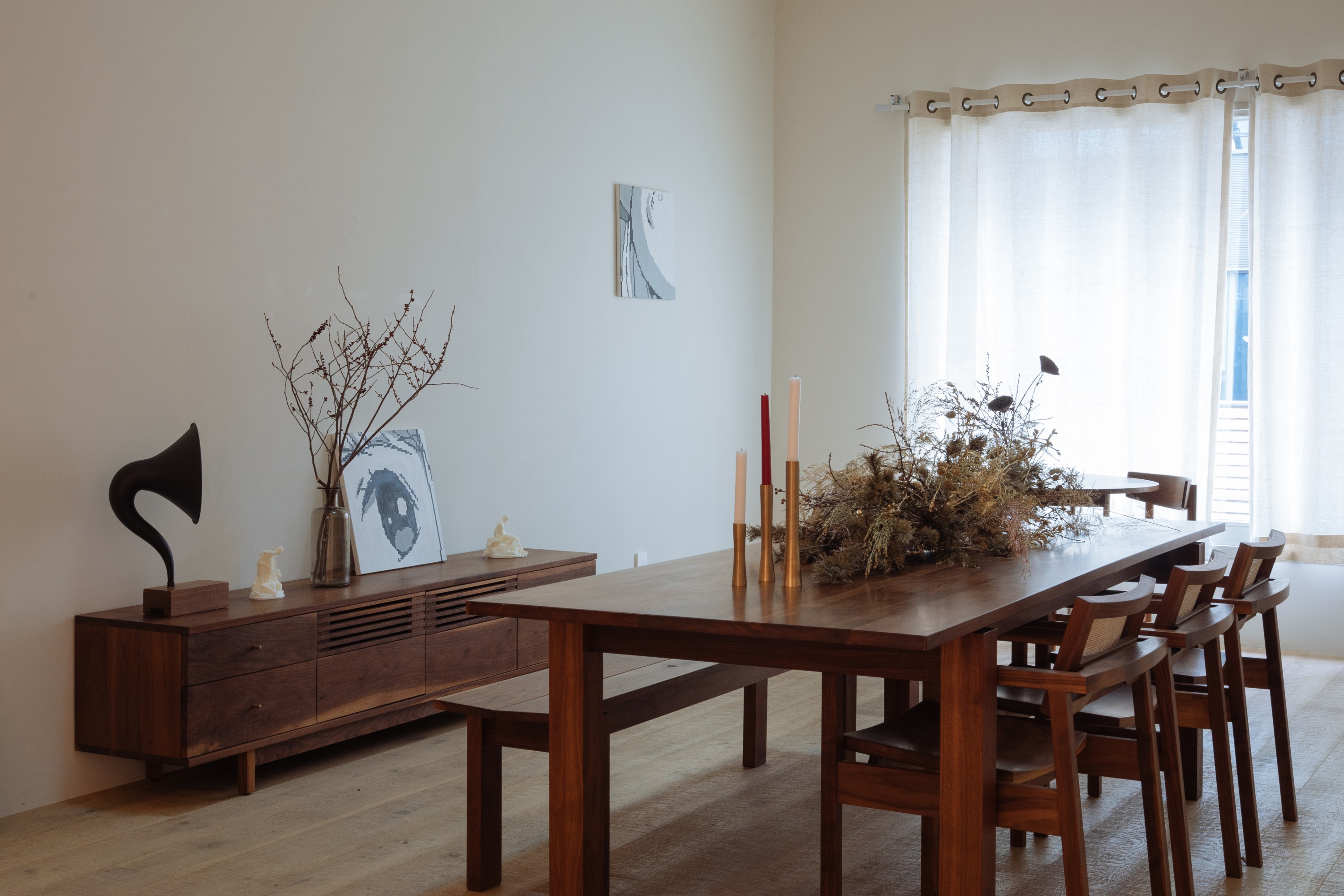
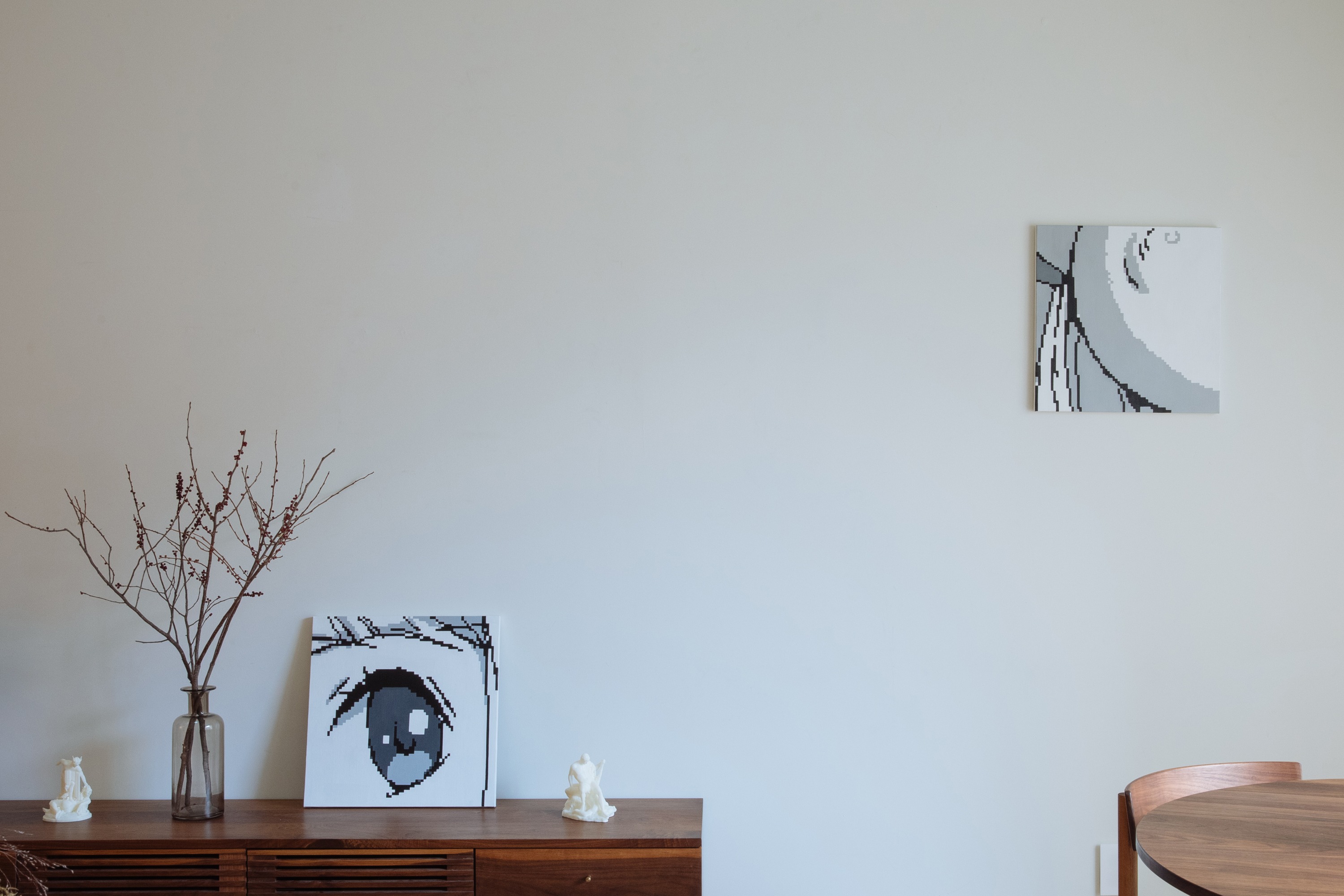
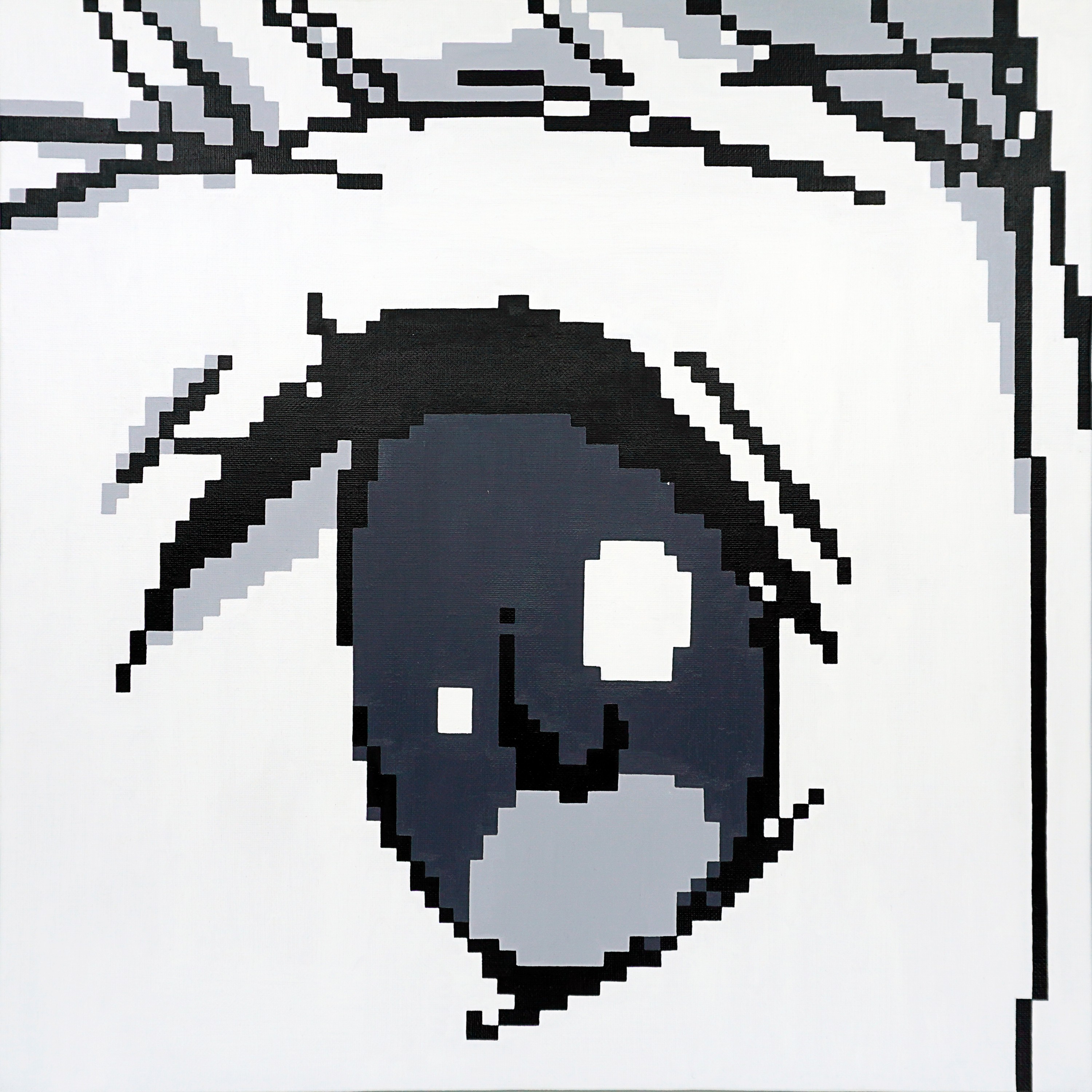
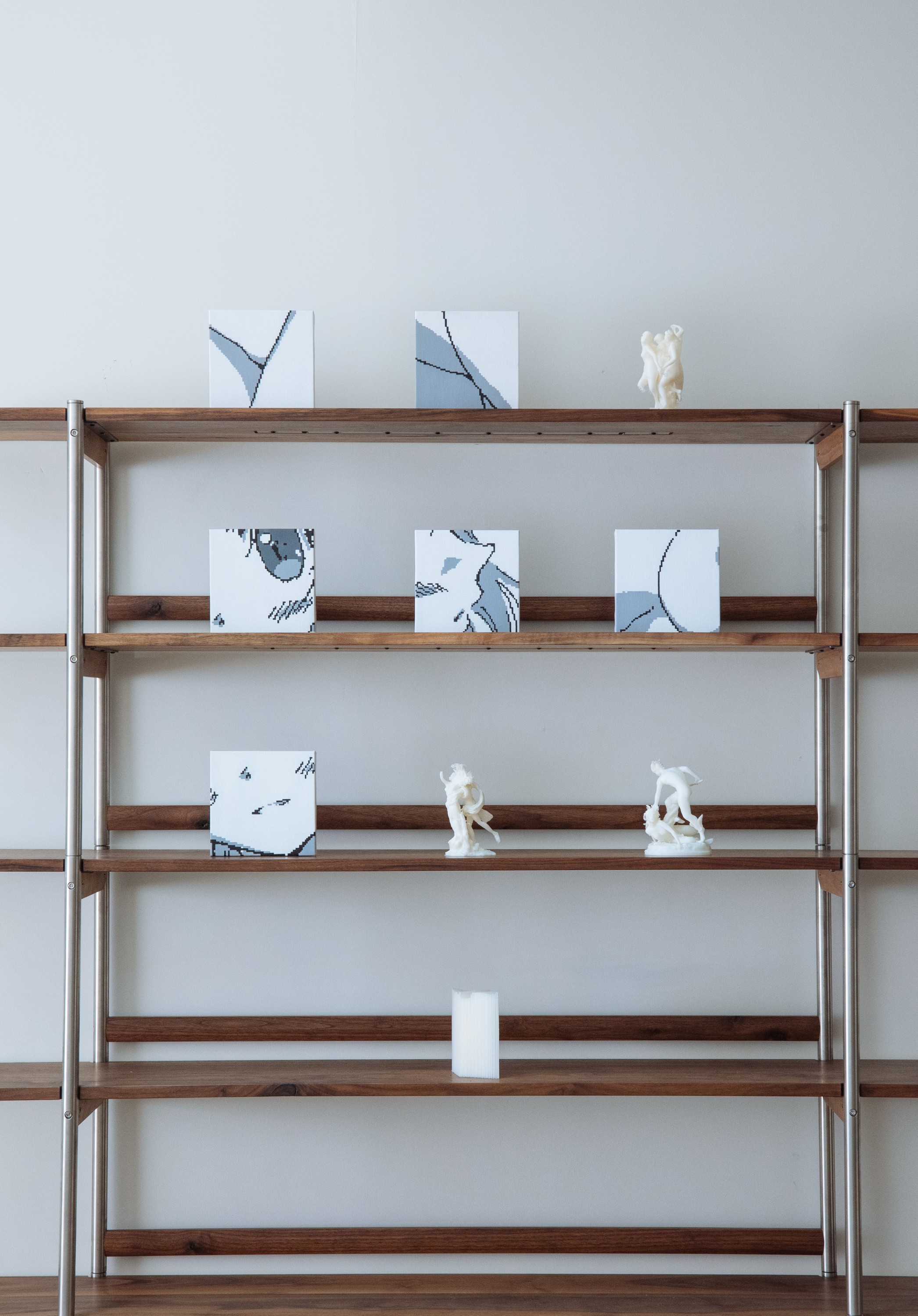
The Three Graces Pixel Props (2019, oil on canvas, 15 × 15 cm, 45 × 45 cm, 53 × 45 cm) is a series of twelve works in which only the eyes, the hair, or parts of the body were enlarged or lifted from a pixel image of the Three Graces drawn as three bishōjo, and transferred to small canvases. The complete original exists only in digital form. The colors are kept to the fewest possible steps: white, black, and the grays between them. Up close a pixel is a square plane; from a distance it becomes a face. Just as a torso lets one imagine the whole from a part of the body, these small fragments are each part of a single scene that lives only on the screen.
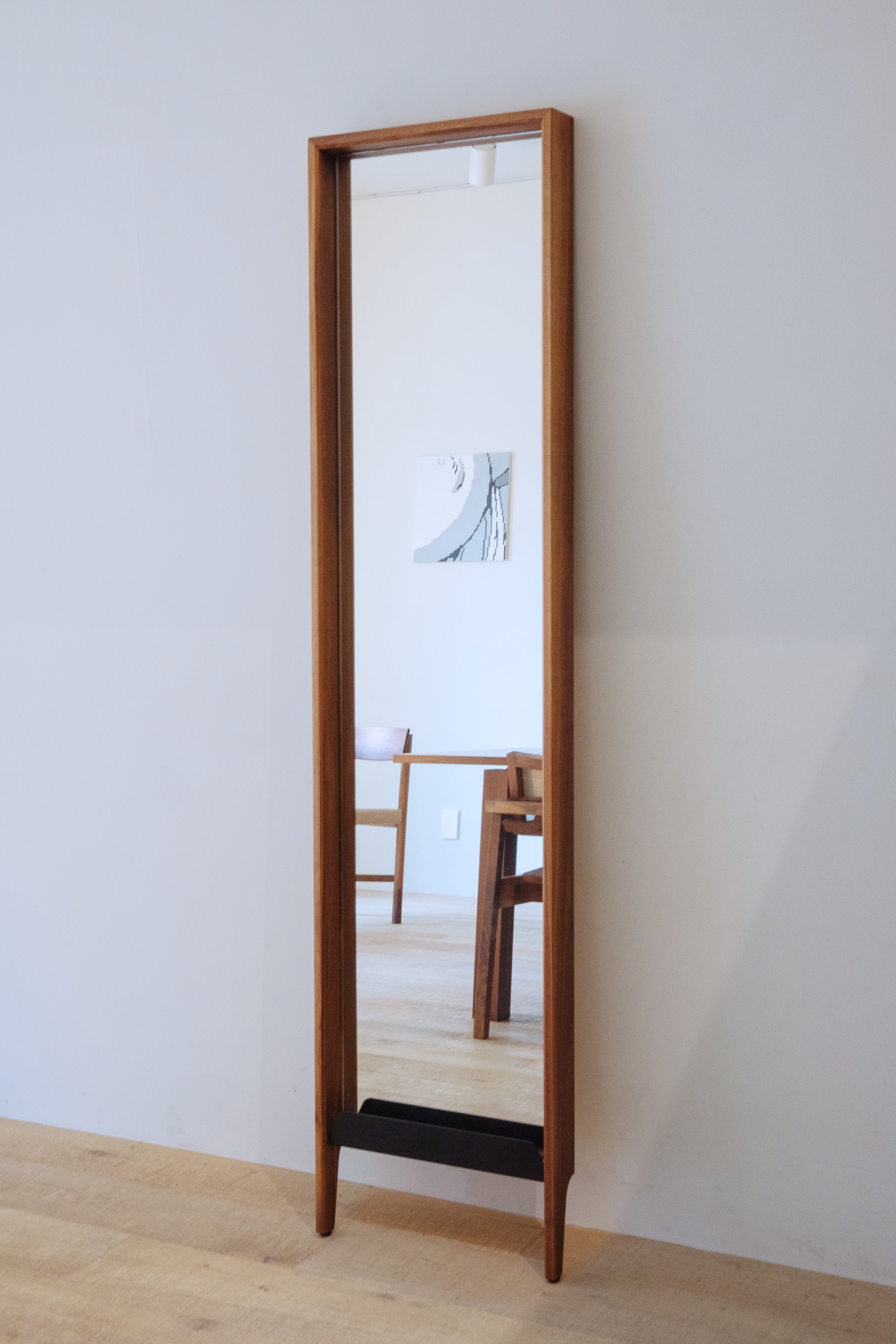
The exhibition was held at the furniture showroom STANDARD.a, in collaboration with Superellipse Gallery, a gallery project without a physical space organized by Superellipse. Because the exhibition was planned around the question of how works should sit in a space, the paintings hung on the white walls or were set on shelves and chests of drawers alongside the showroom's objects. The small canvases looked more natural among those objects. There, the pixels became a landscape that does not vanish when the screen goes dark.
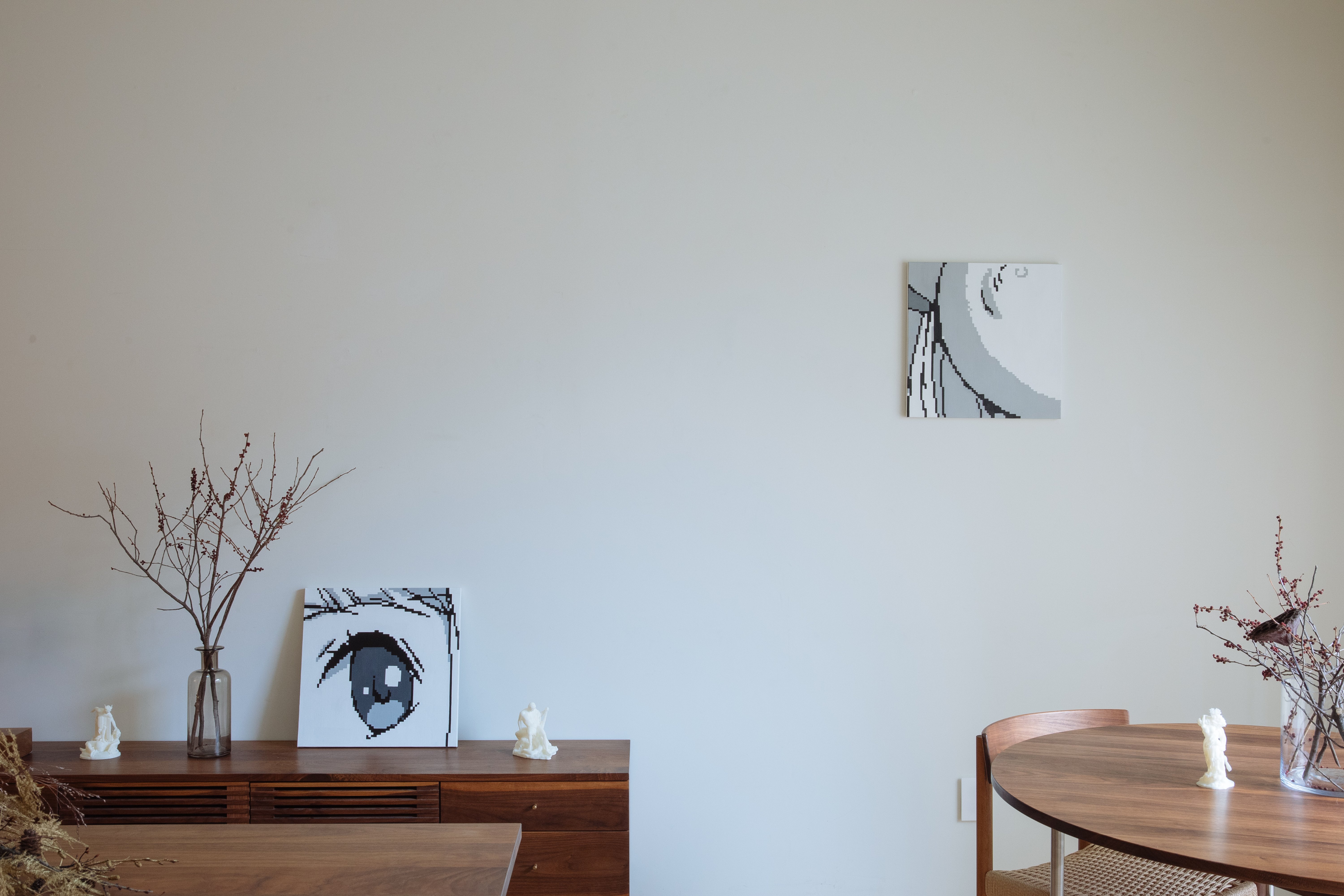
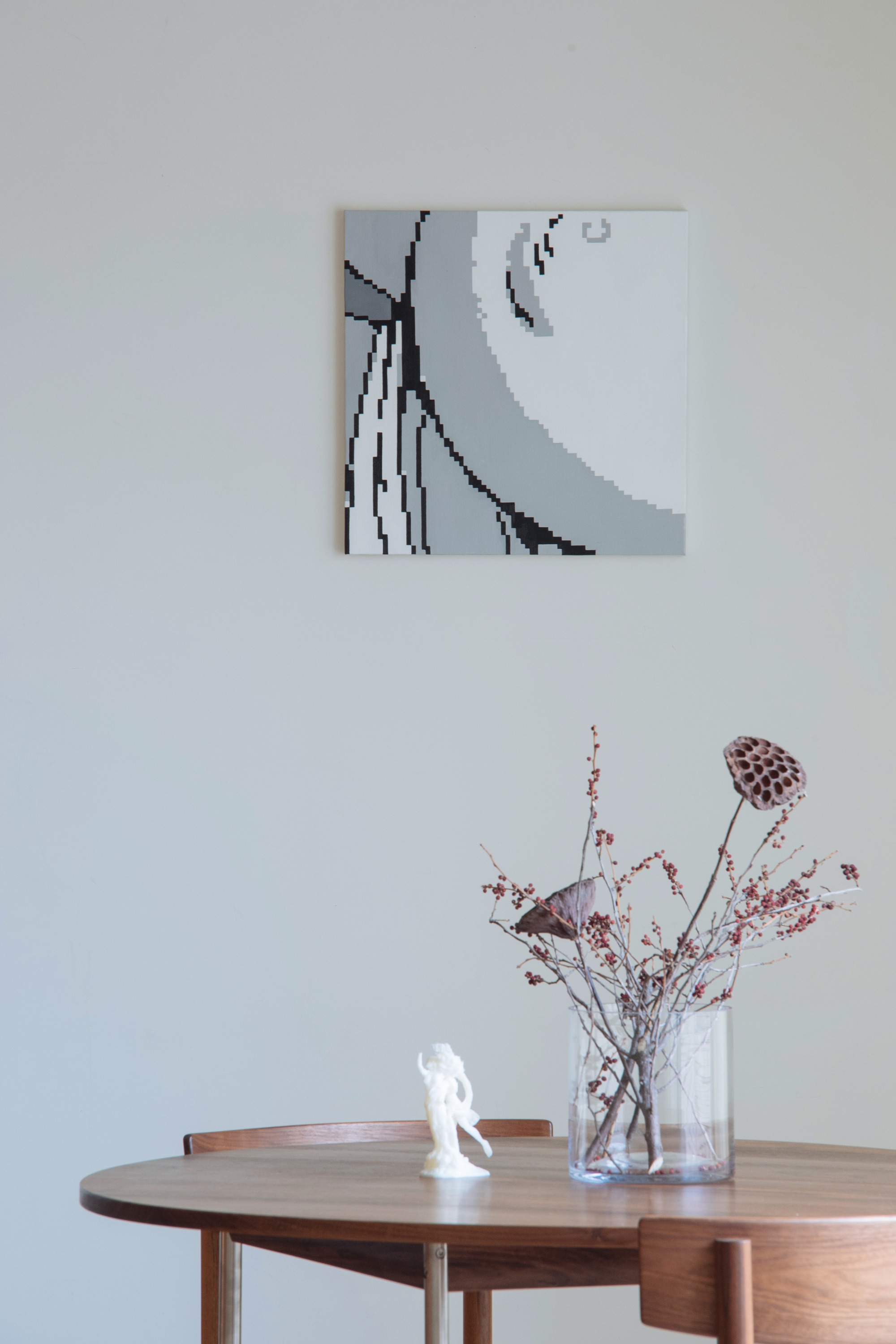
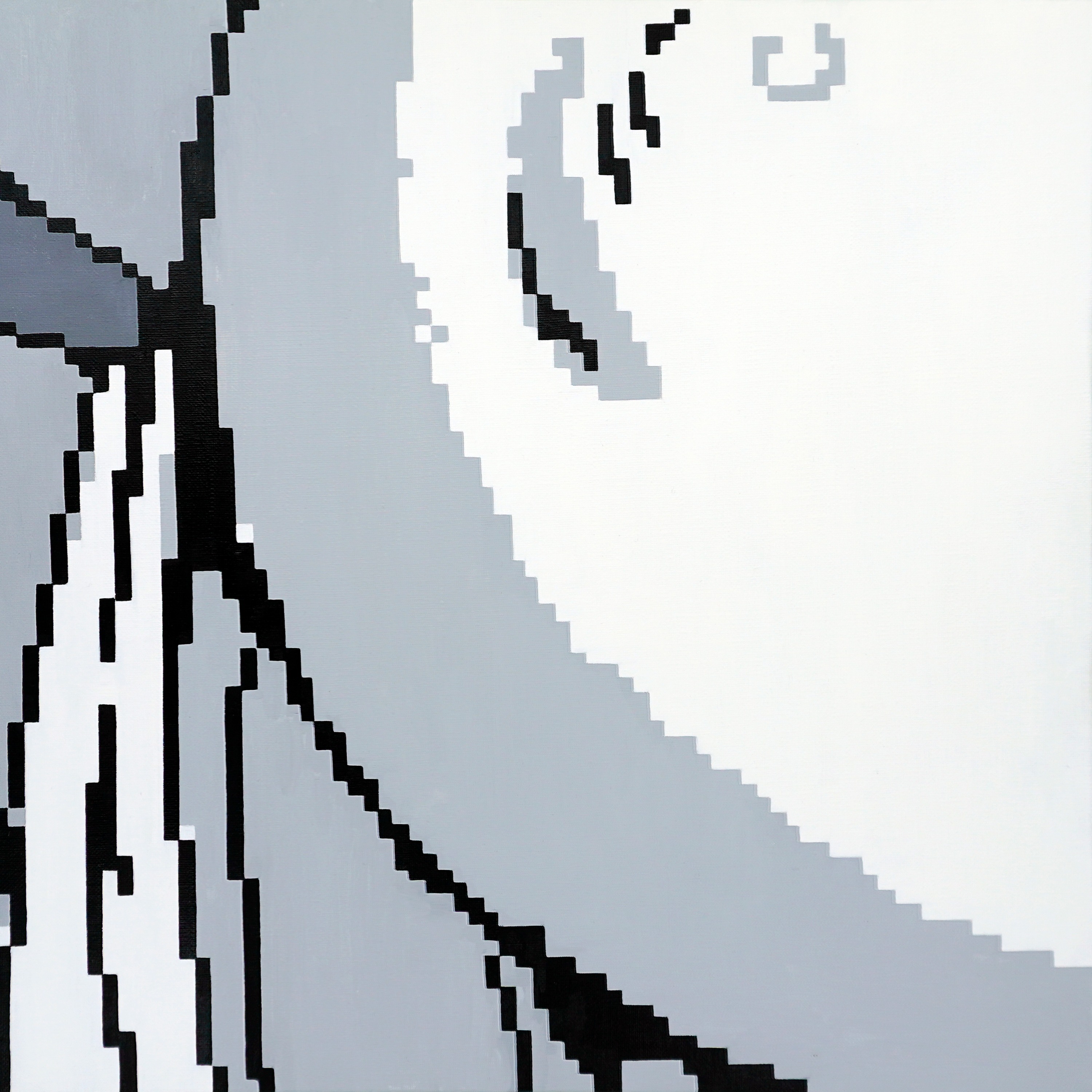
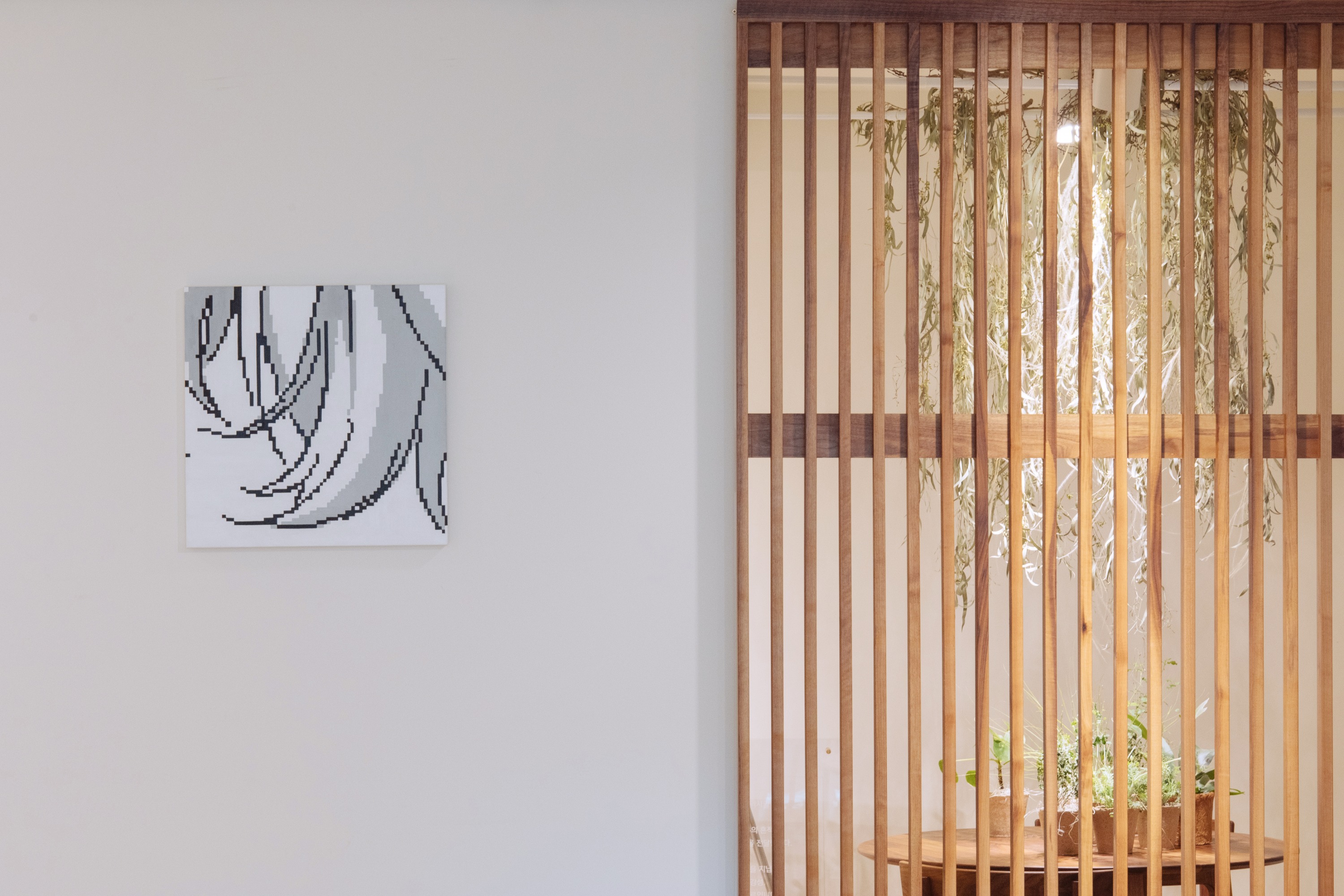
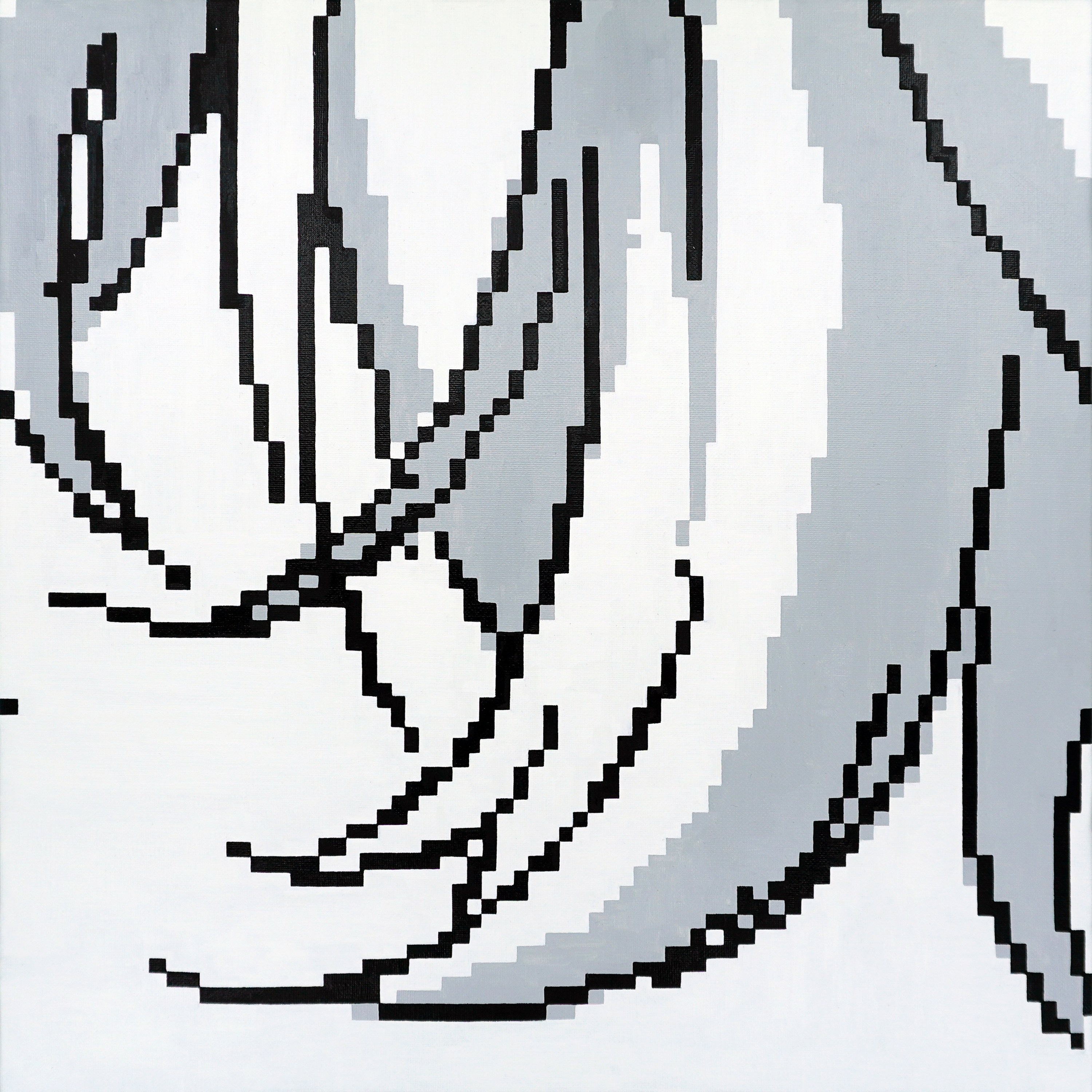

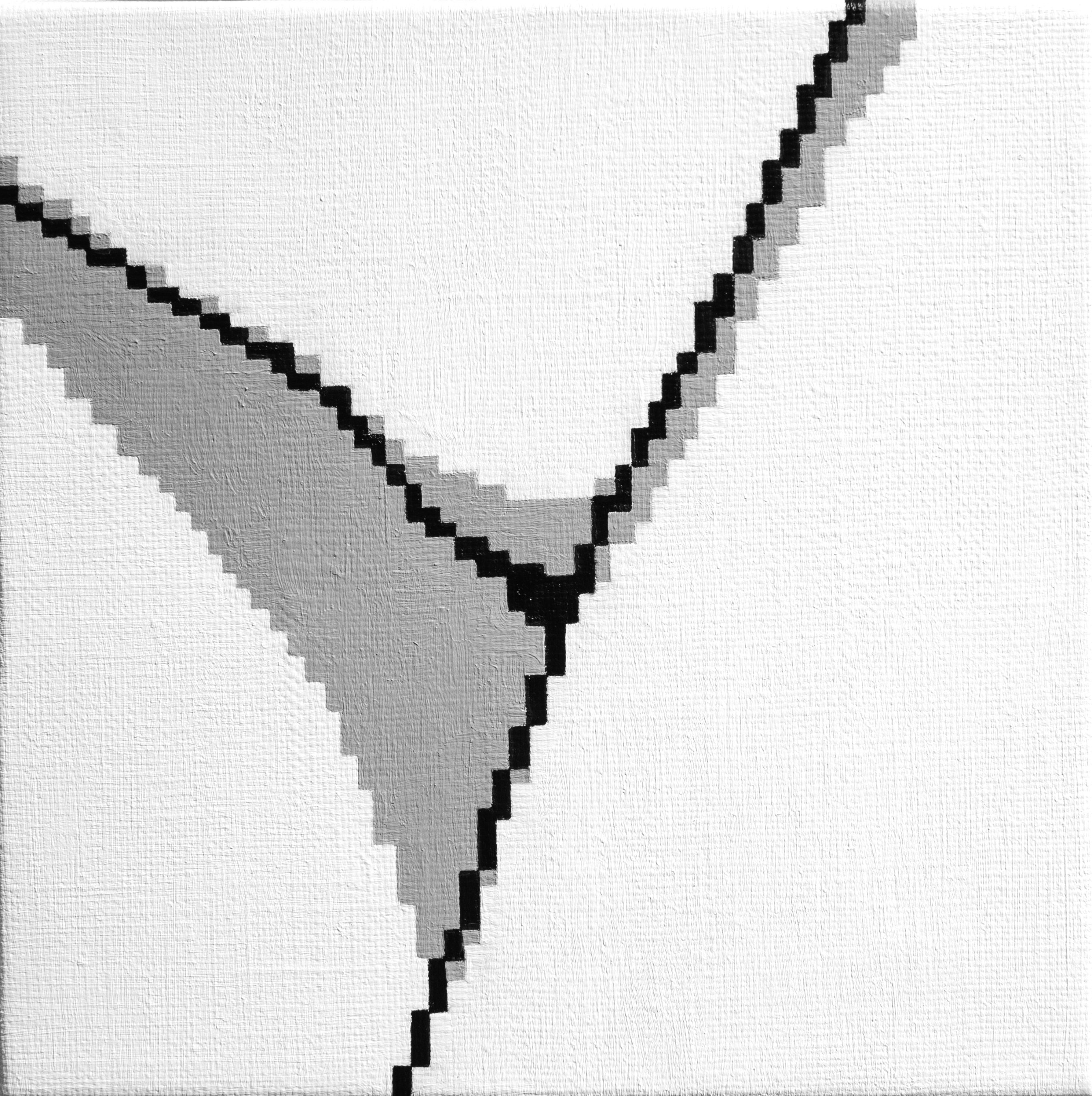
The Three Graces Pixel Props 09, 2019, Oil on canvas, 15 × 15 cm
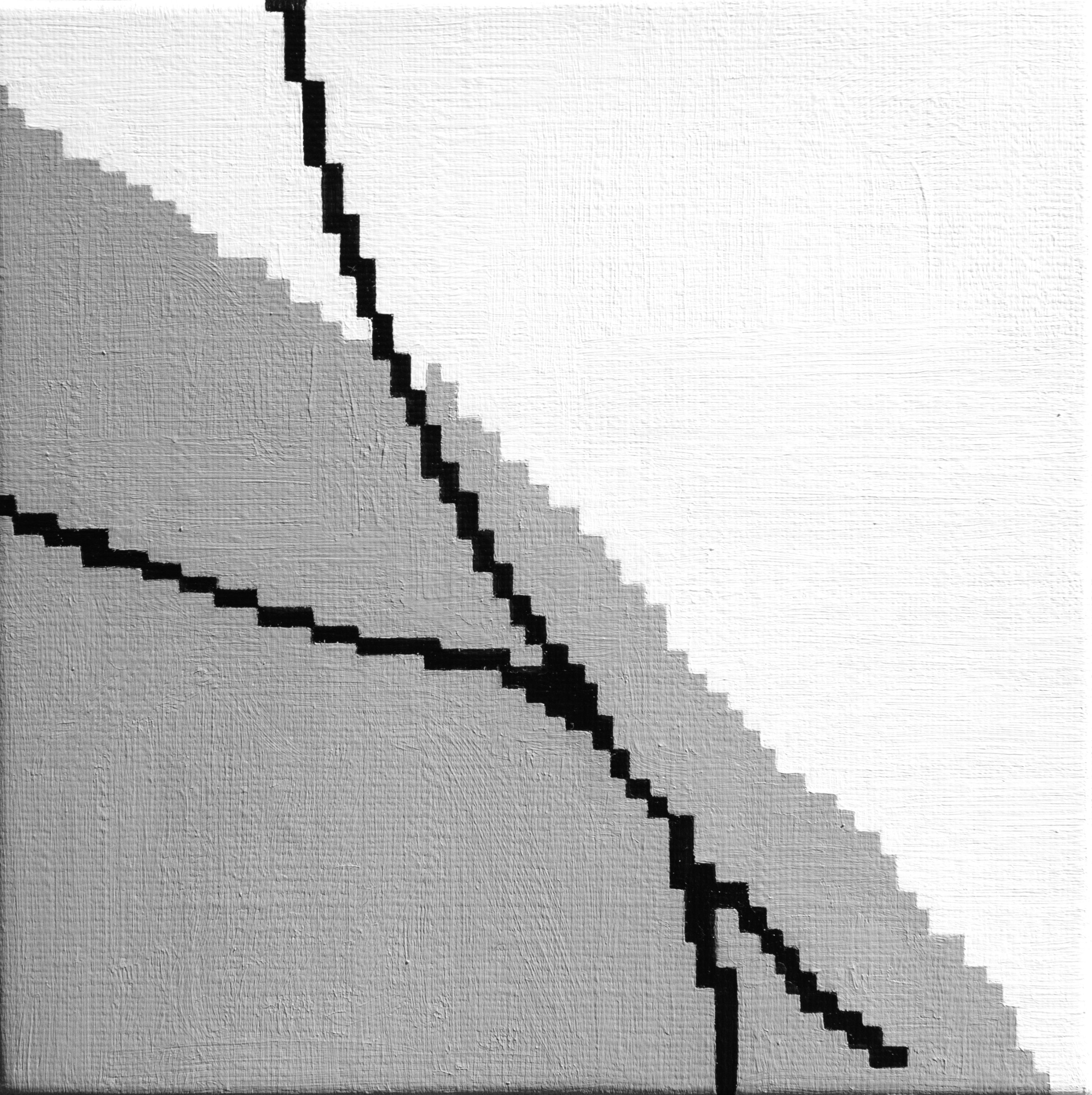
The Three Graces Pixel Props 07, 2019, Oil on canvas, 15 × 15 cm