Medusa
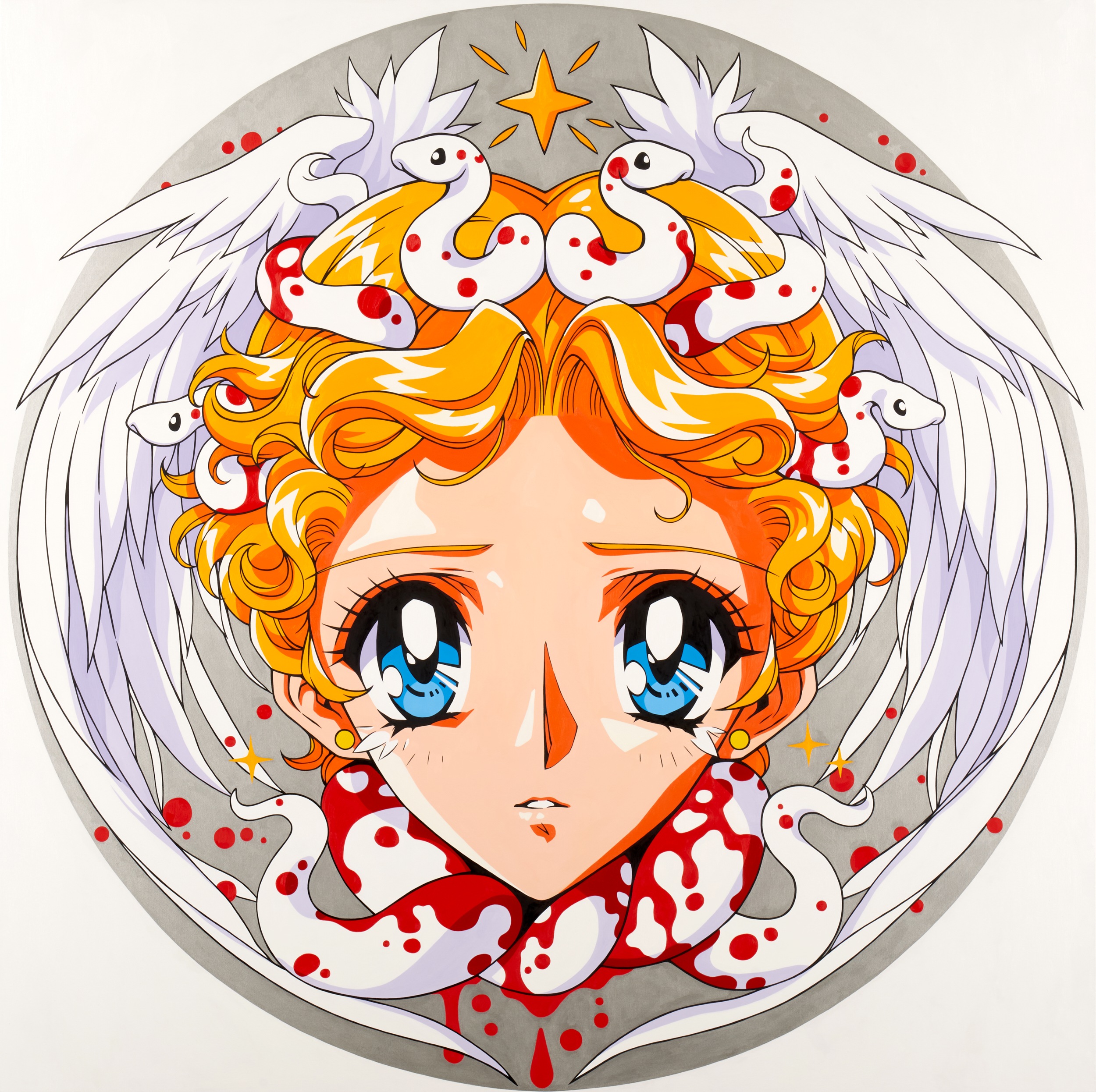
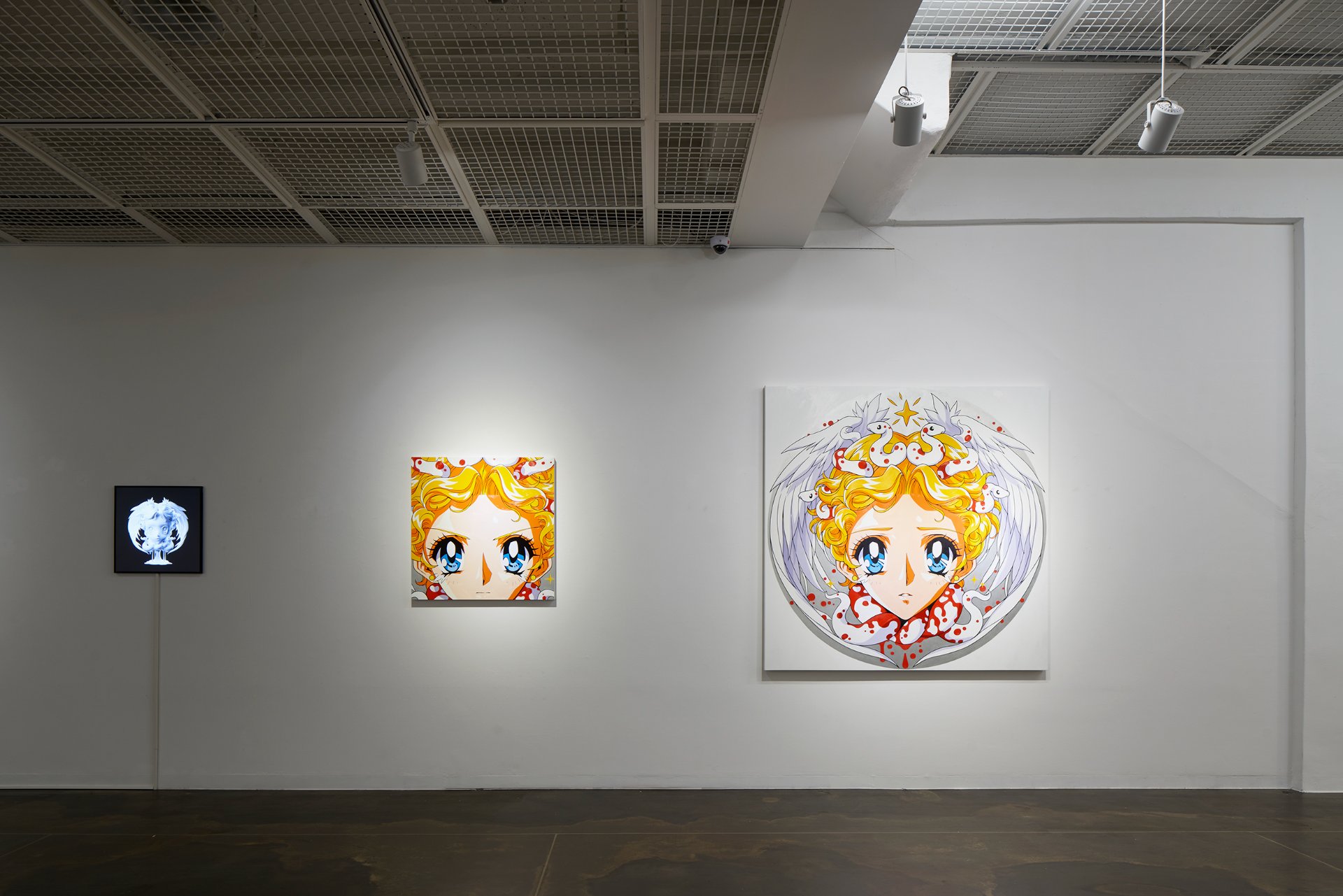
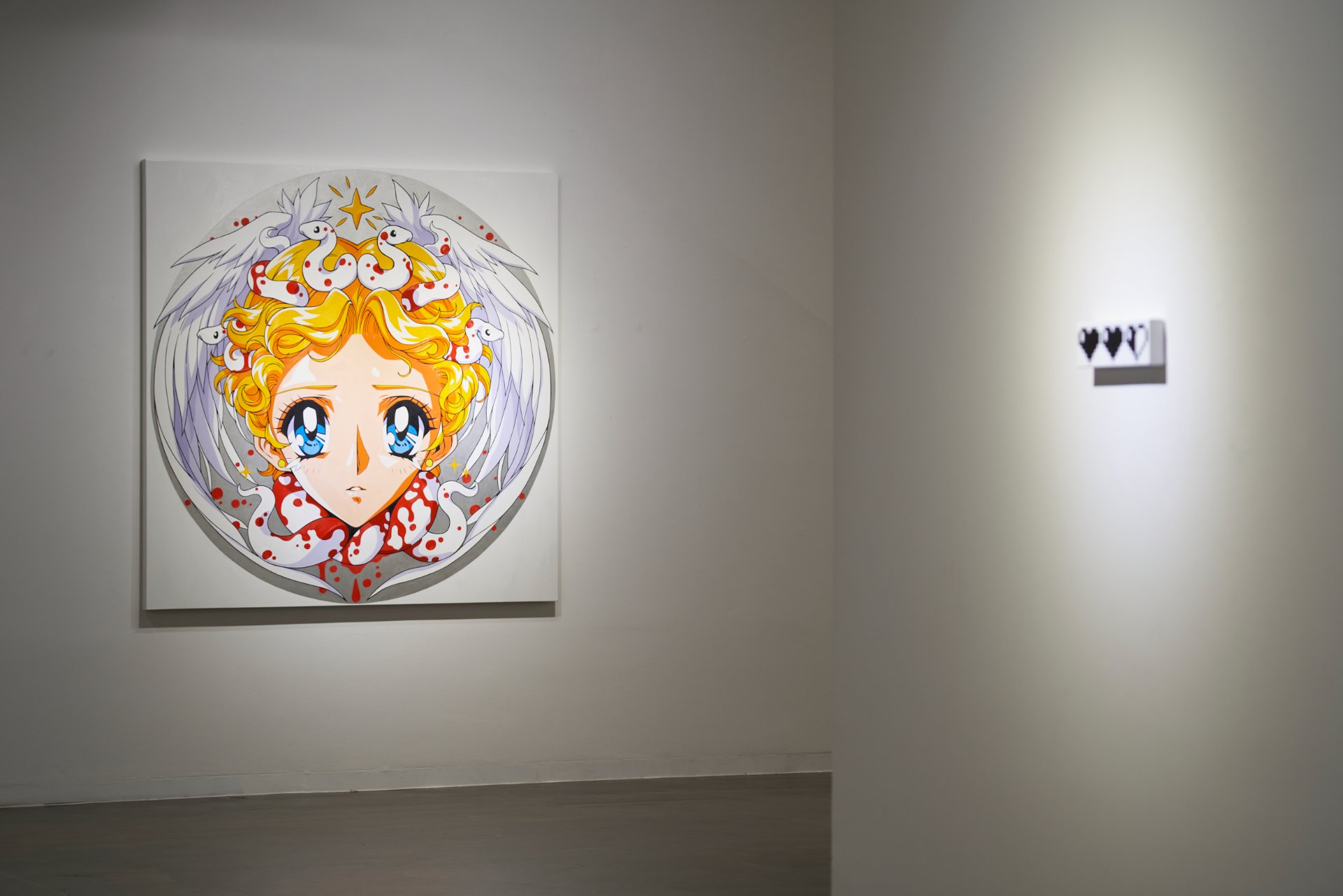
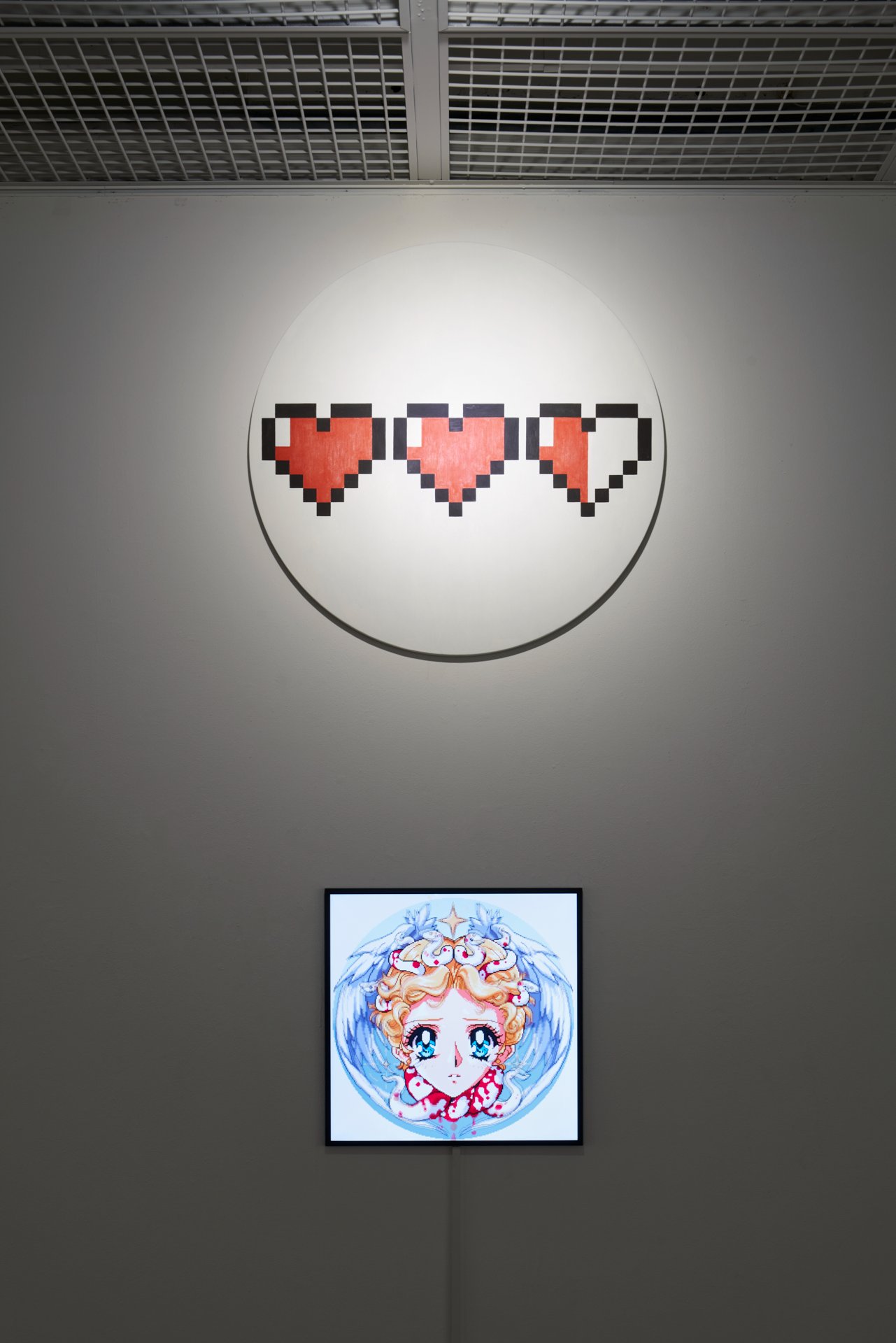
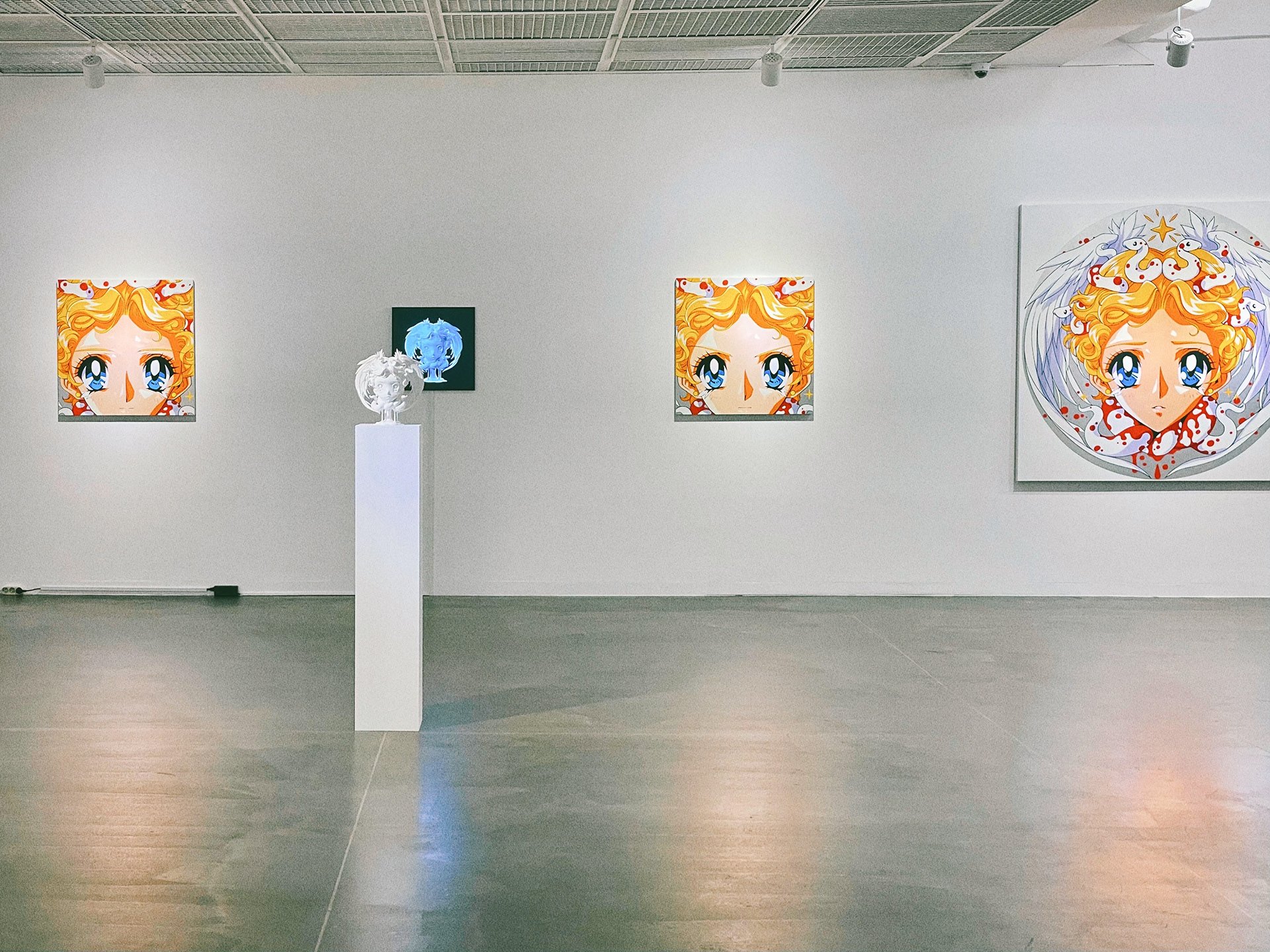
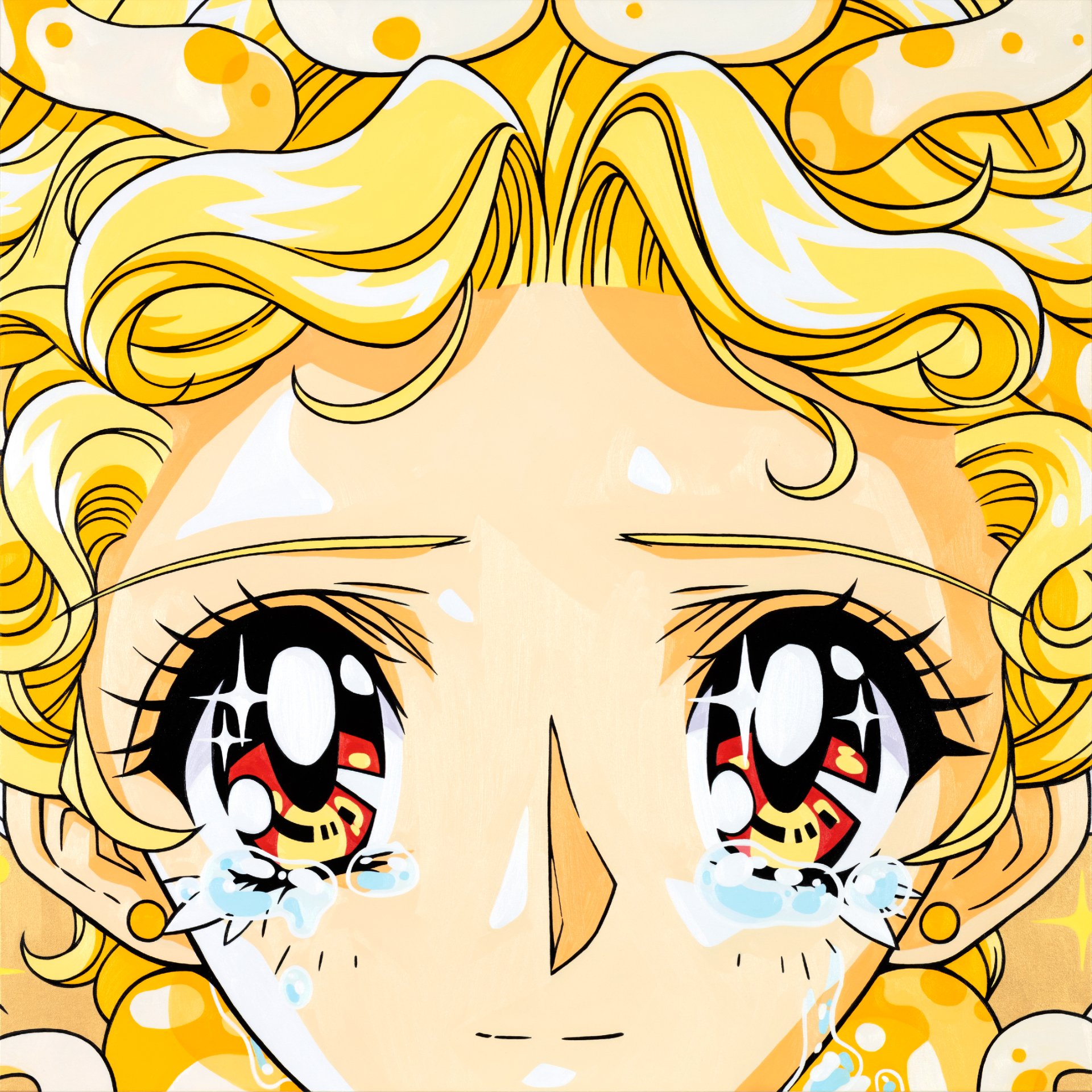
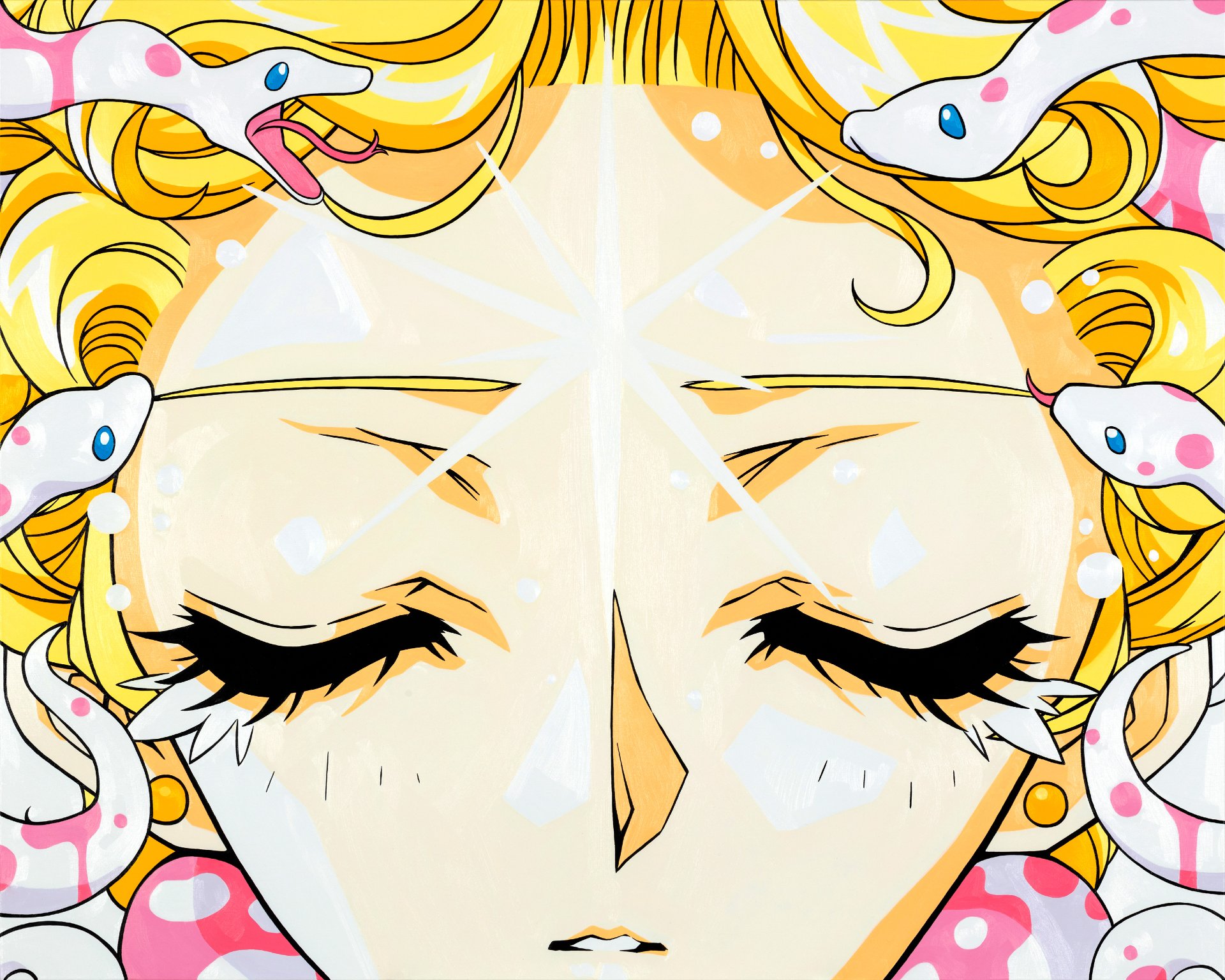
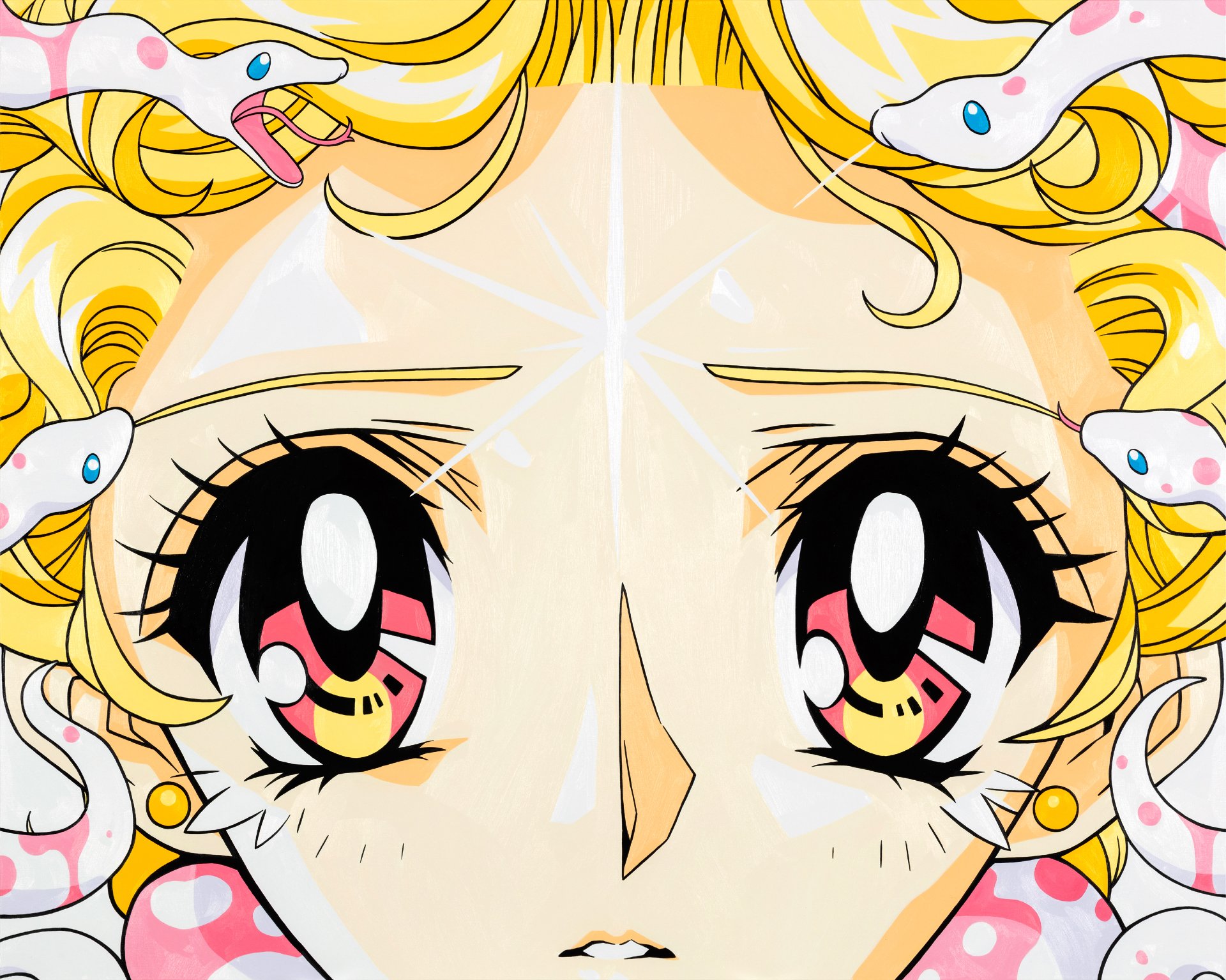
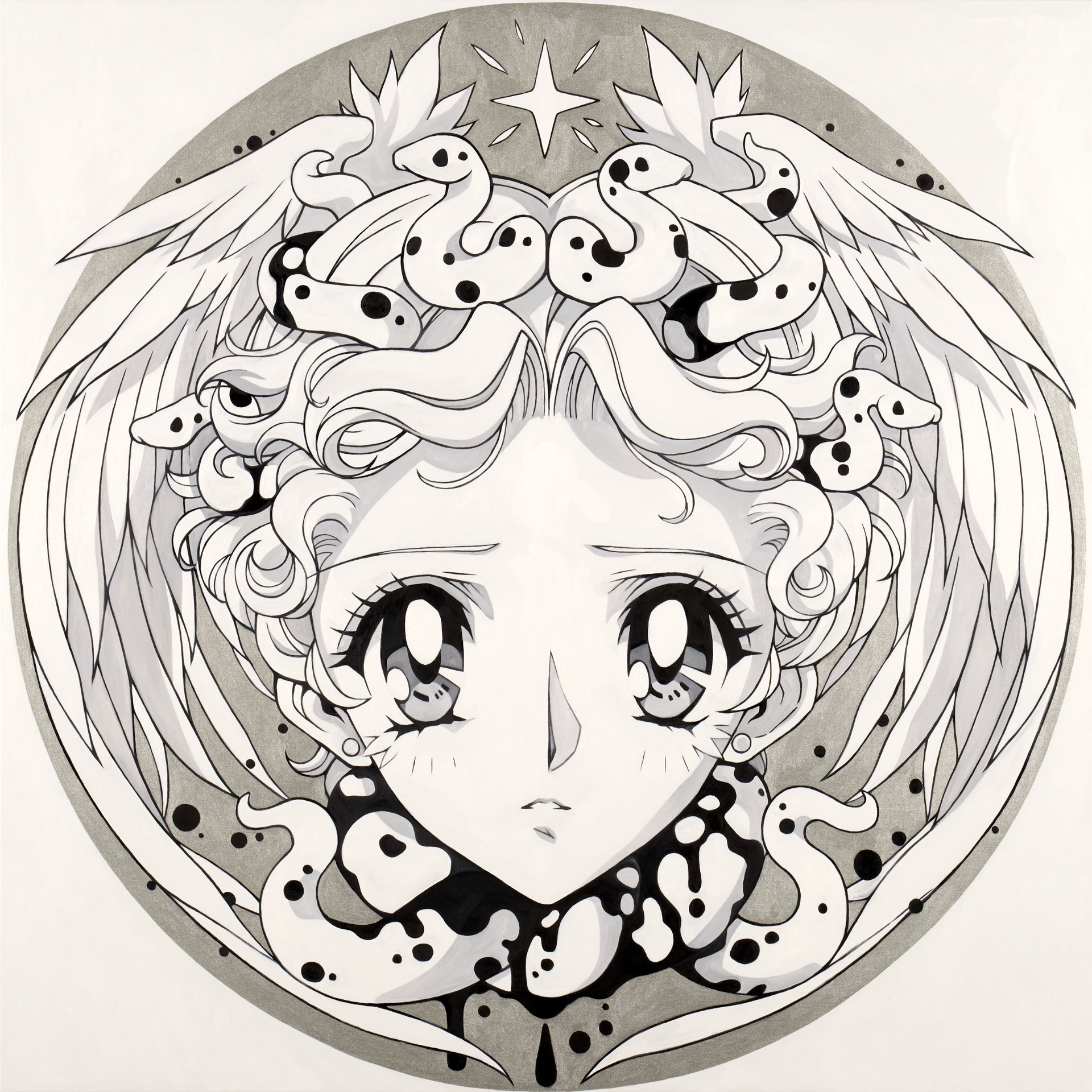
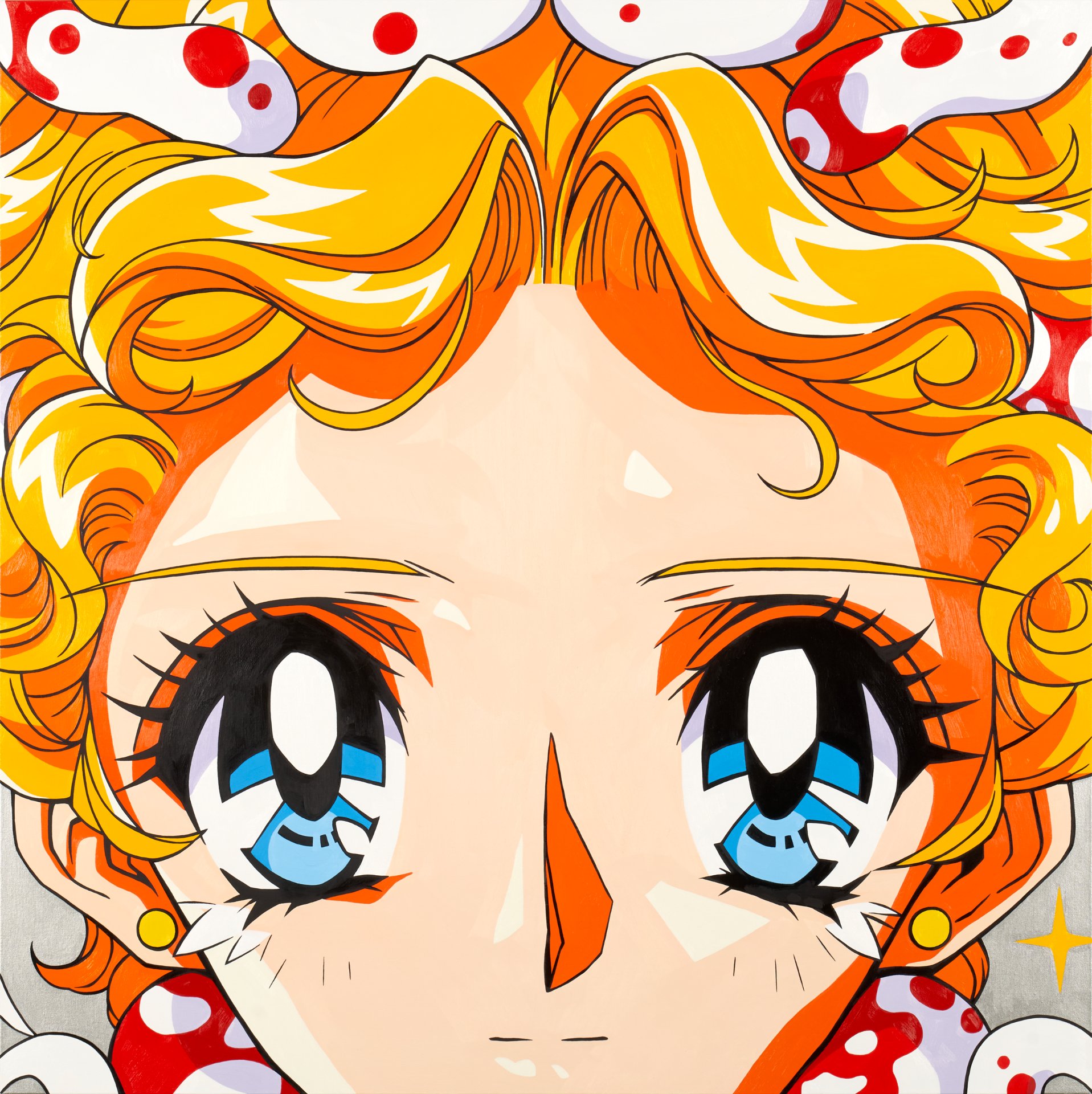
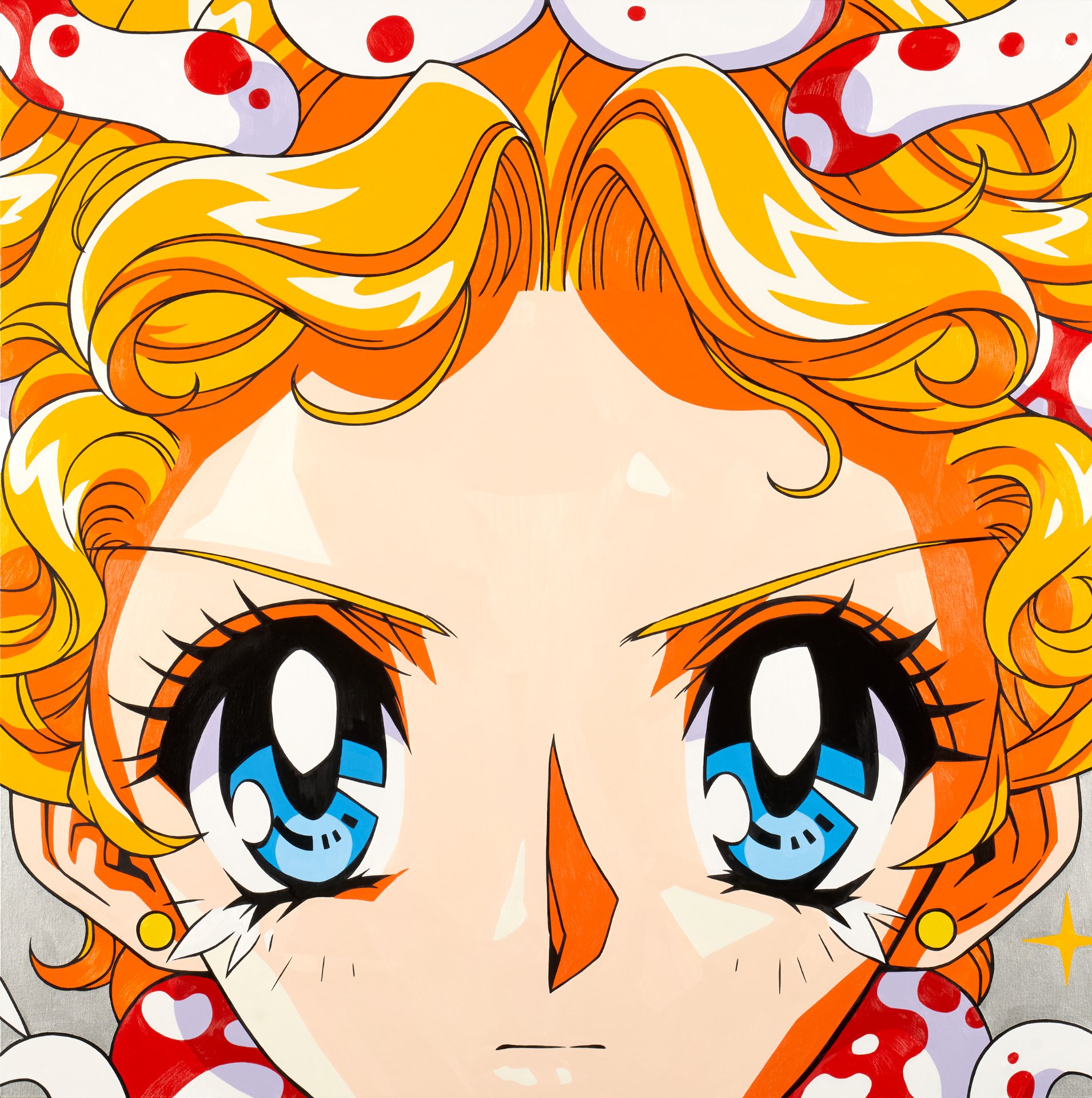
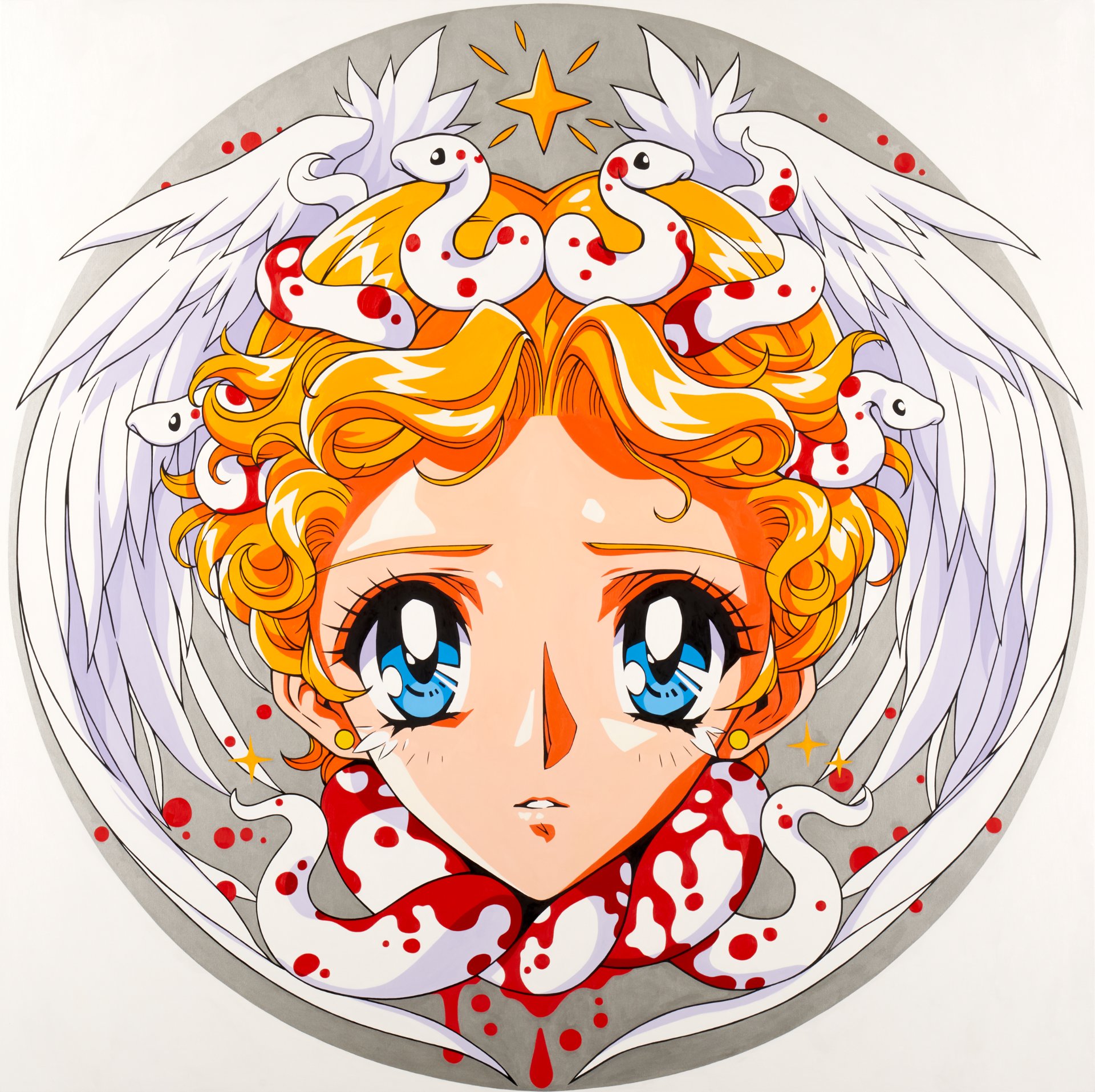
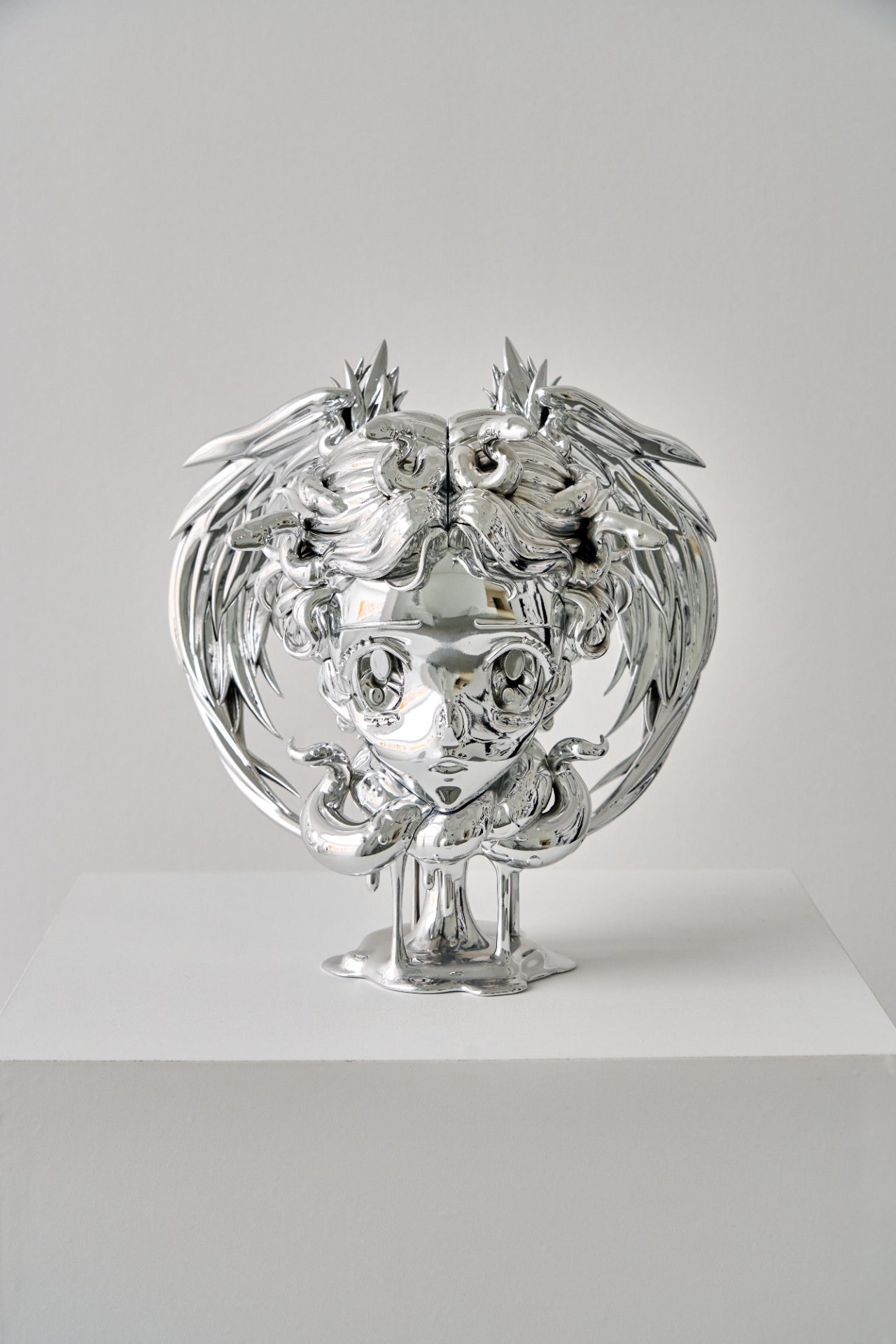
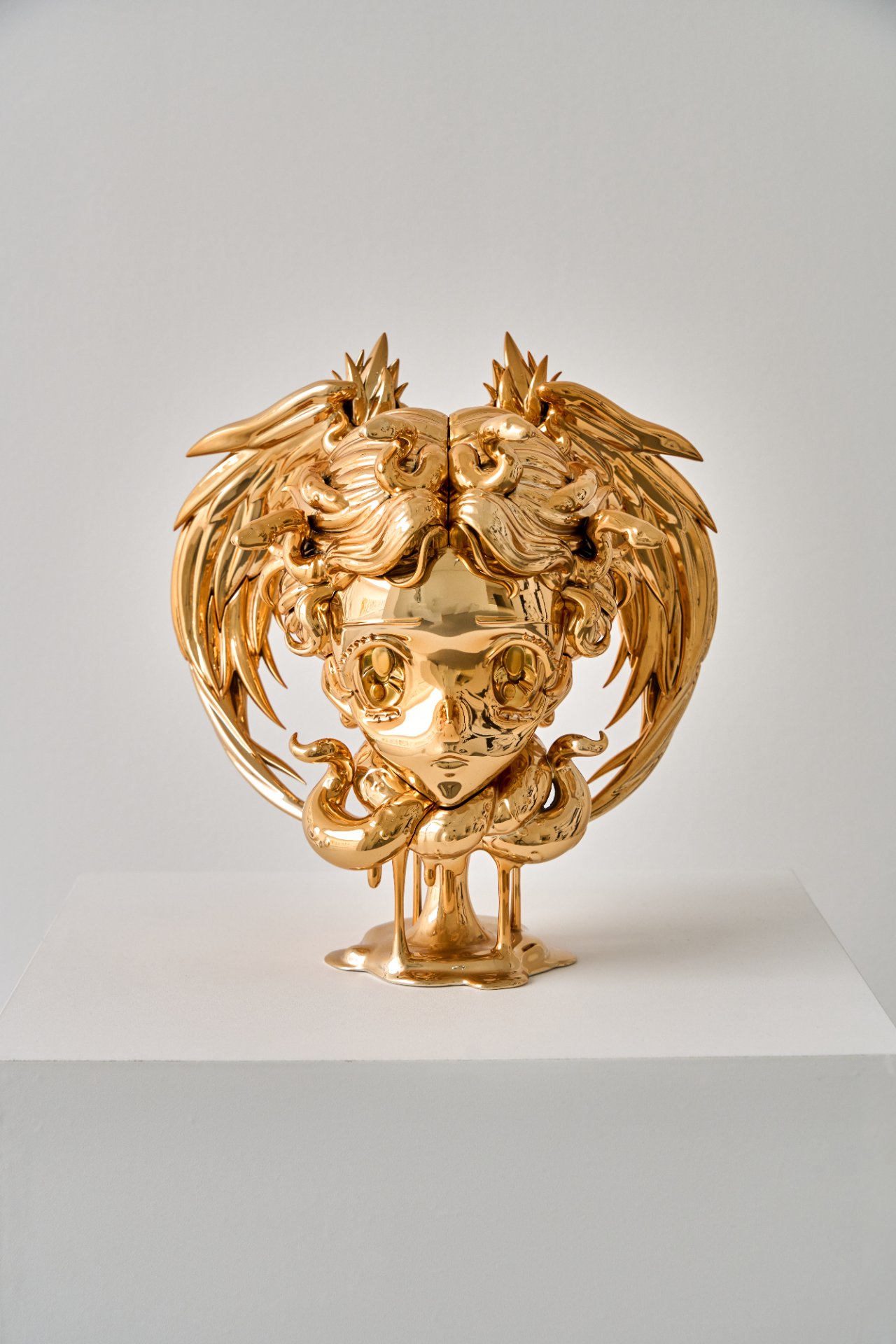
Medusa is a series that paints the Medusa of Greek myth with the face of an animation character. Like the device on a shield, the face is set inside a silver circle, surrounded by blond hair, snakes and wings. I painted the same face many times, changing its colors and expressions, and the series moved from painting into 3D sculpture.
I wanted to make a sculpted head. Searching for a subject that suited it, I arrived at the head of Medusa. Medusa is a strange being who keeps her power even when only her head remains. The severed head was fixed to Athena's shield and became a god's weapon. In ancient Greece, Medusa's face was an apotropaic image carved on shields and doors. The premise that anyone who looked at her turned to stone means that no one could ever look at that face directly; even Perseus saw it only as a reflection in his shield.
Medusa was originally a beautiful woman, and Athena's curse turned her hair into snakes. I thought she must have remained beautiful even after her hair had turned to snakes. What made her a monster was not her face but the rumors of people who judged her without ever looking. Being treated as a monster without having done anything wrong is still common today. That is why I thought this myth still had meaning in the present.
Caravaggio painted the severed head on a shield in Medusa (1597–1598); Rubens painted the head lying on the ground and the snakes being born from its blood in Head of Medusa (1617–1618); and Bernini carved in marble the anguished face at the moment her hair turns to snakes in Bust of Medusa (1644–1648). With those works in mind, I placed a silver circle inside a square canvas, like the device on a shield, and set the face within it. Blond hair, snakes arranged like ornament, and wings surround the face, and red blood flows from the severed neck. I made the blood red rather than the pink of Torso because I wanted to bring out something deep and beautiful rather than cute.
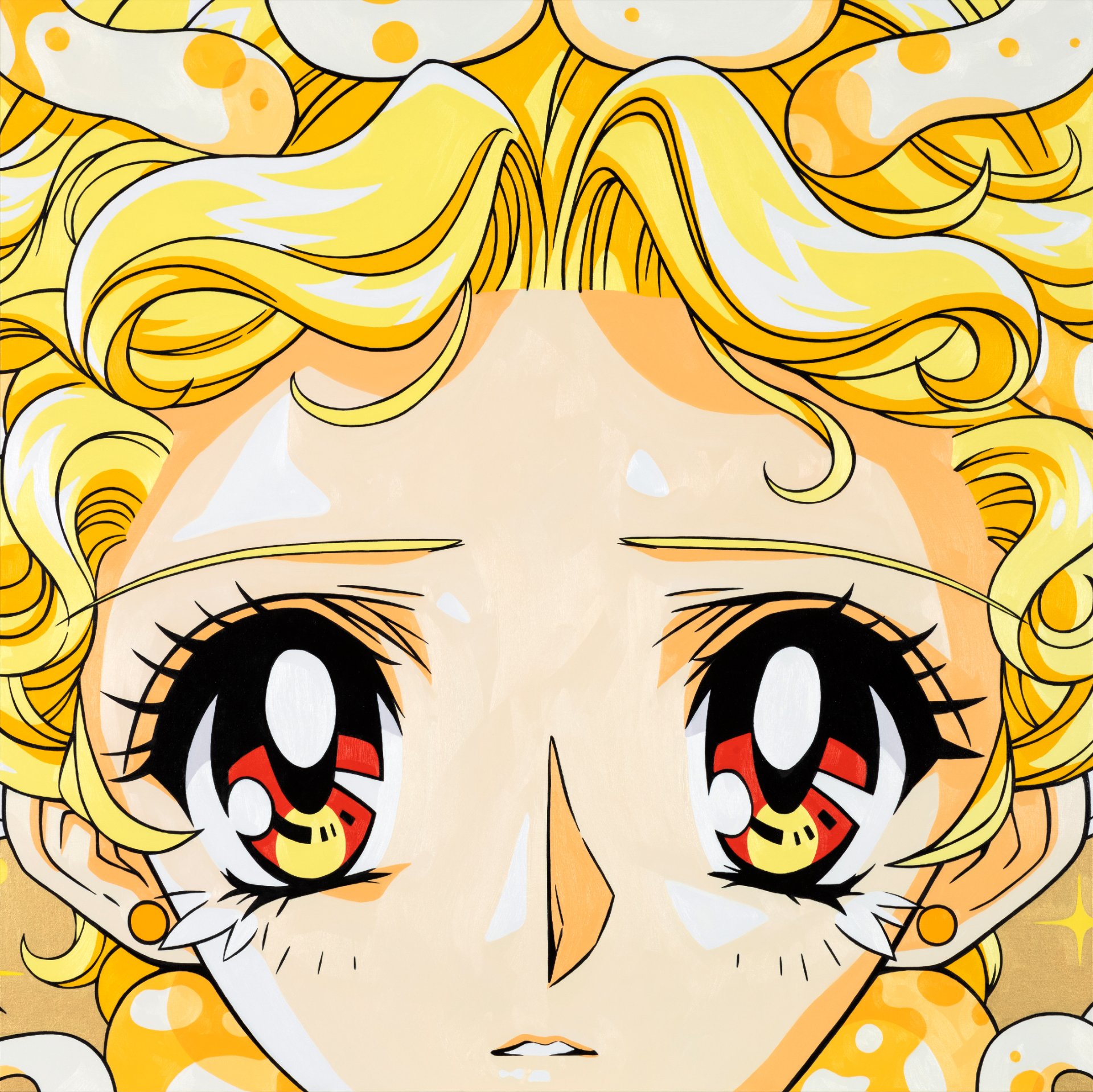
The drawing style recalls Japanese animation and game art of the 1980s and '90s. I think the mark of that period is that every strand of hair catches the light and keeps its texture. If comics and animation since the 2000s have become simpler and cuter, what came before has a relatively bolder, deeper feel. I thought that was the right fit for Medusa.
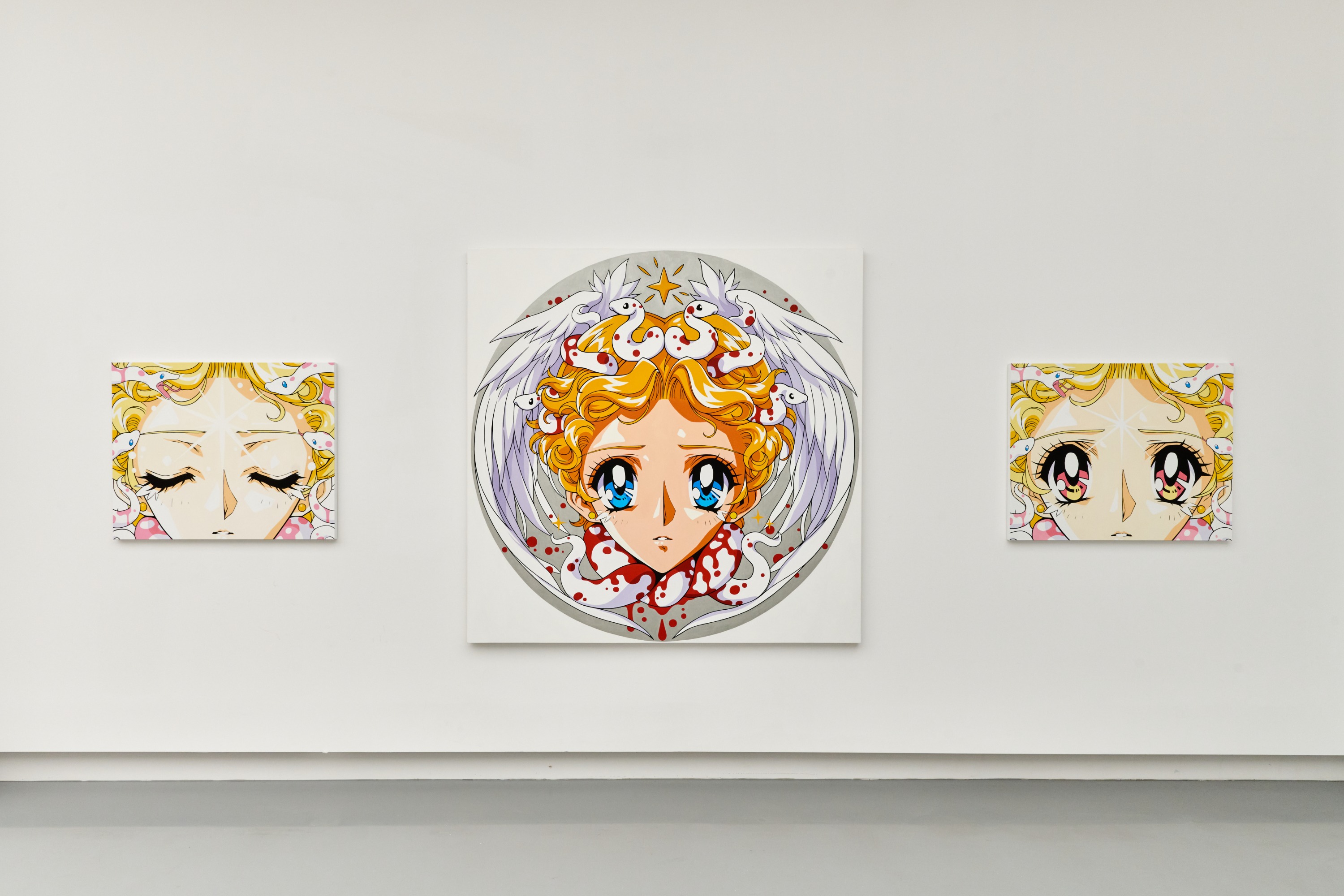
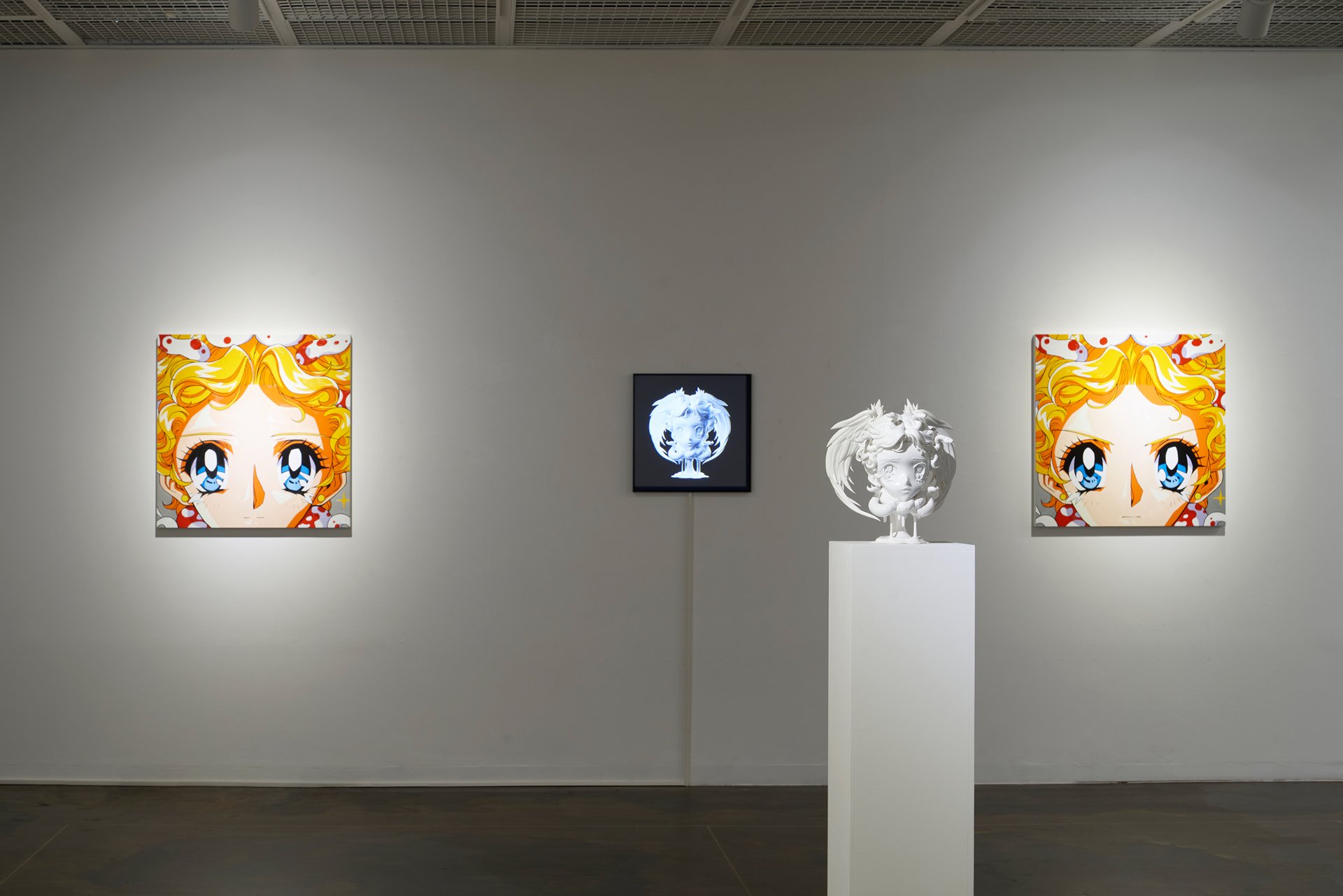
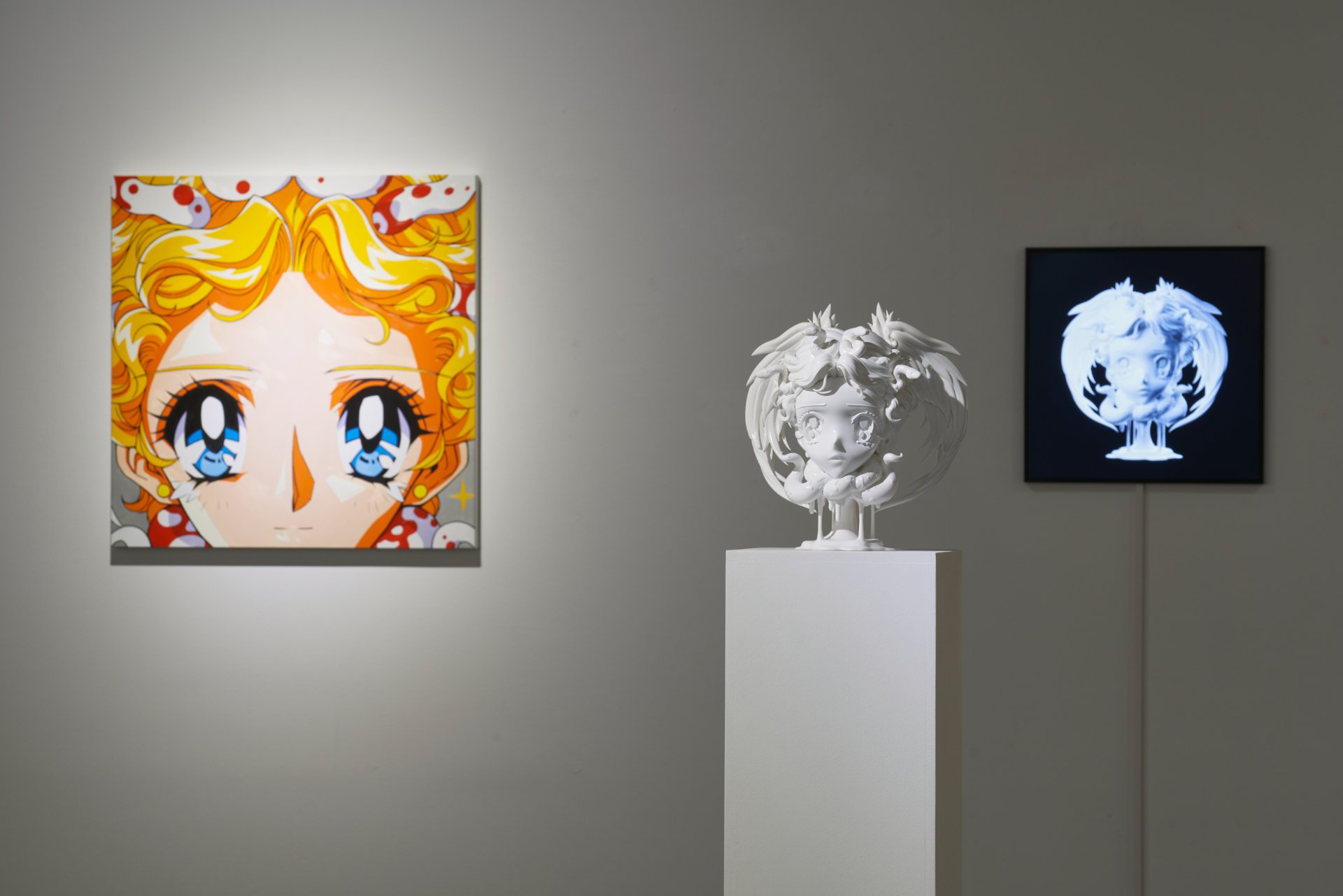
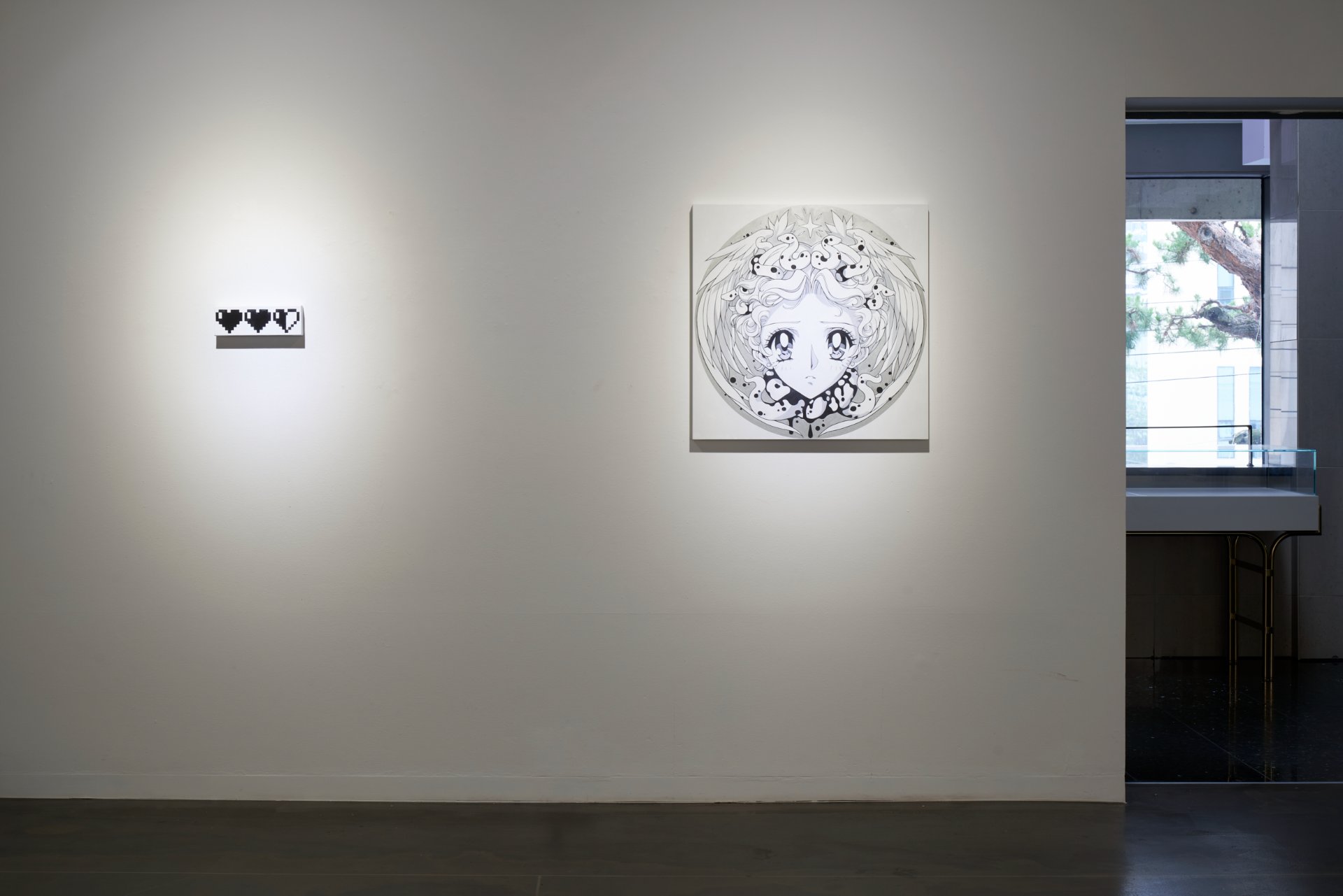
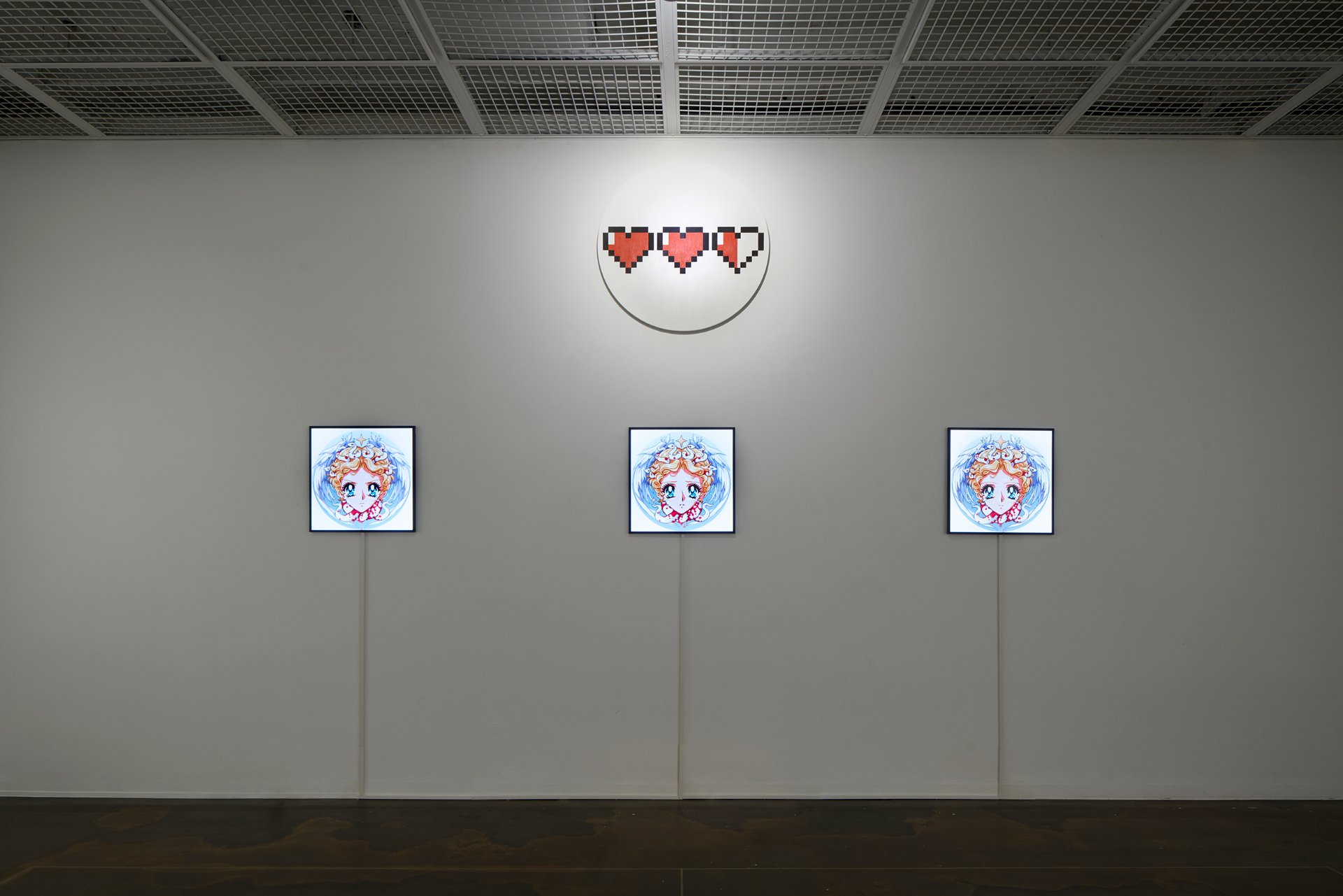
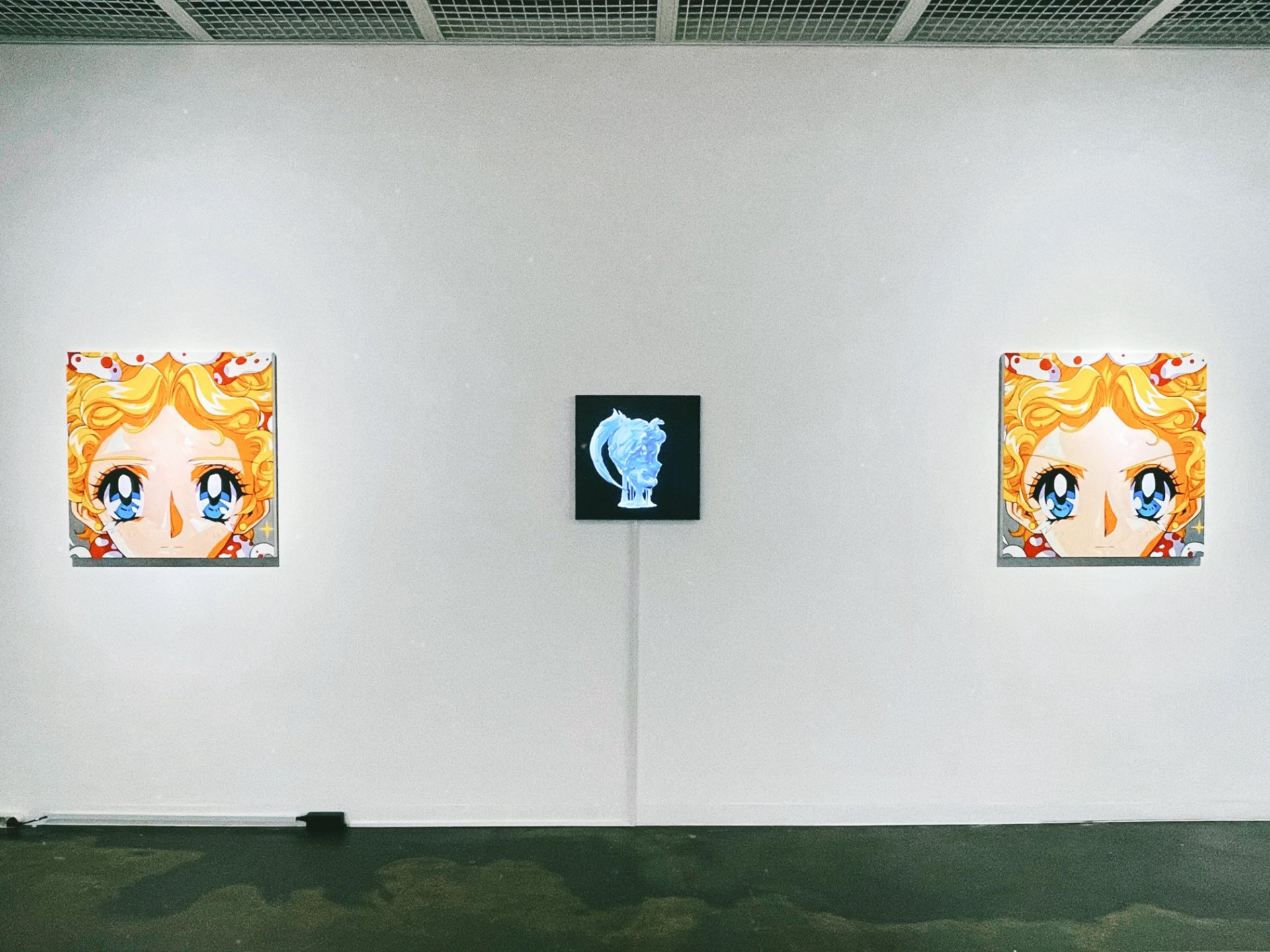
I had almost never painted the same character over and over. Medusa seemed the right subject for seeing what is gained by repeating a single image. Around Head of Medusa (2021, oil on canvas, 162 × 162 cm), I painted the same face again and again: Head of Medusa - Gold (2022, 80 × 80 cm) and Head of Medusa - Pink (2022, 73 × 91 cm); Medusa's Smile and Medusa's Wrath (2021, 80 × 80 cm each); and a black-and-white Head of Medusa (2021, 73 × 73 cm) drawn in line alone. They were first shown in Nu Collection (UARTSPACE, Seoul, 2021) and continued in Odd&Nu (Museum Wave, Seoul, 2024).
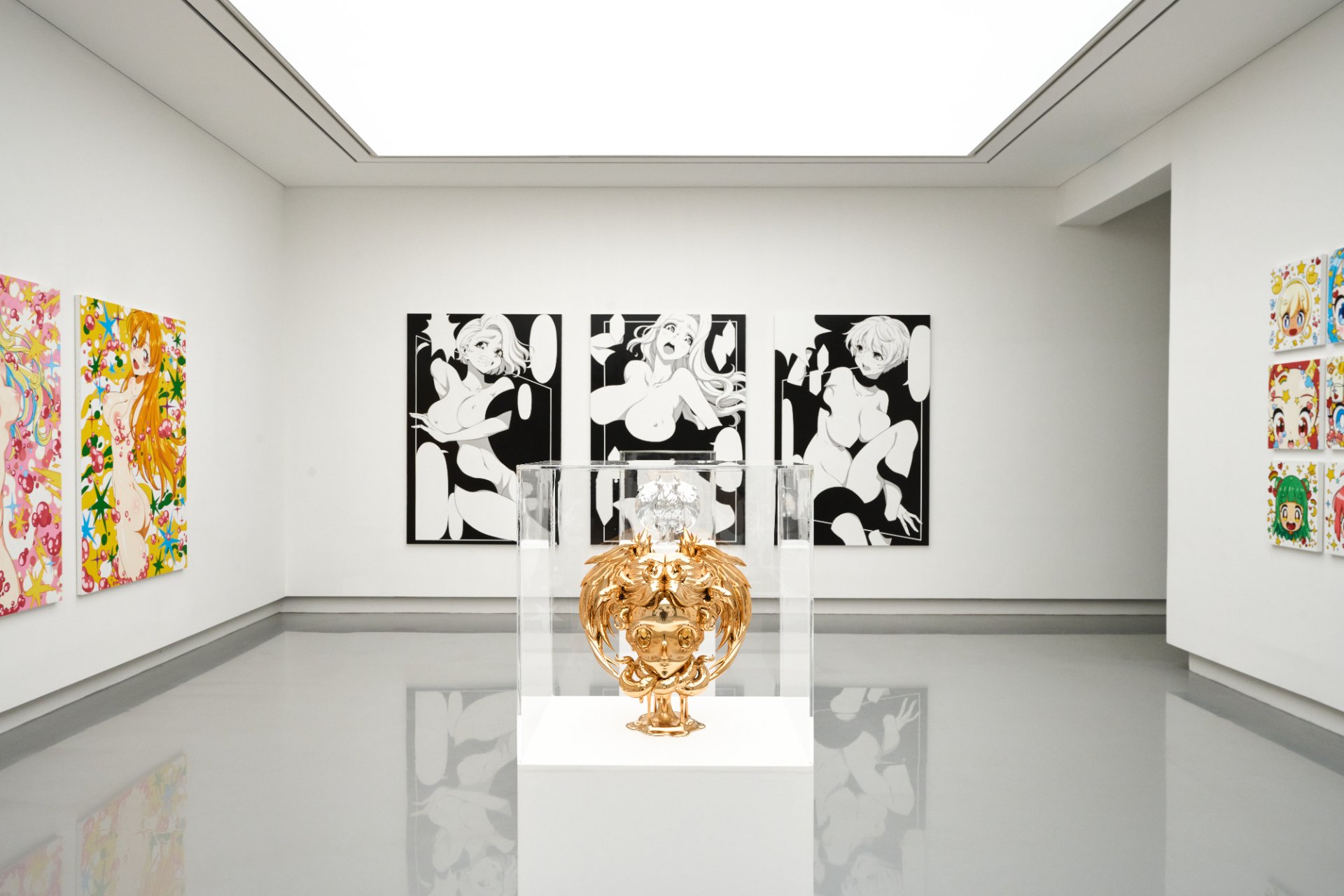
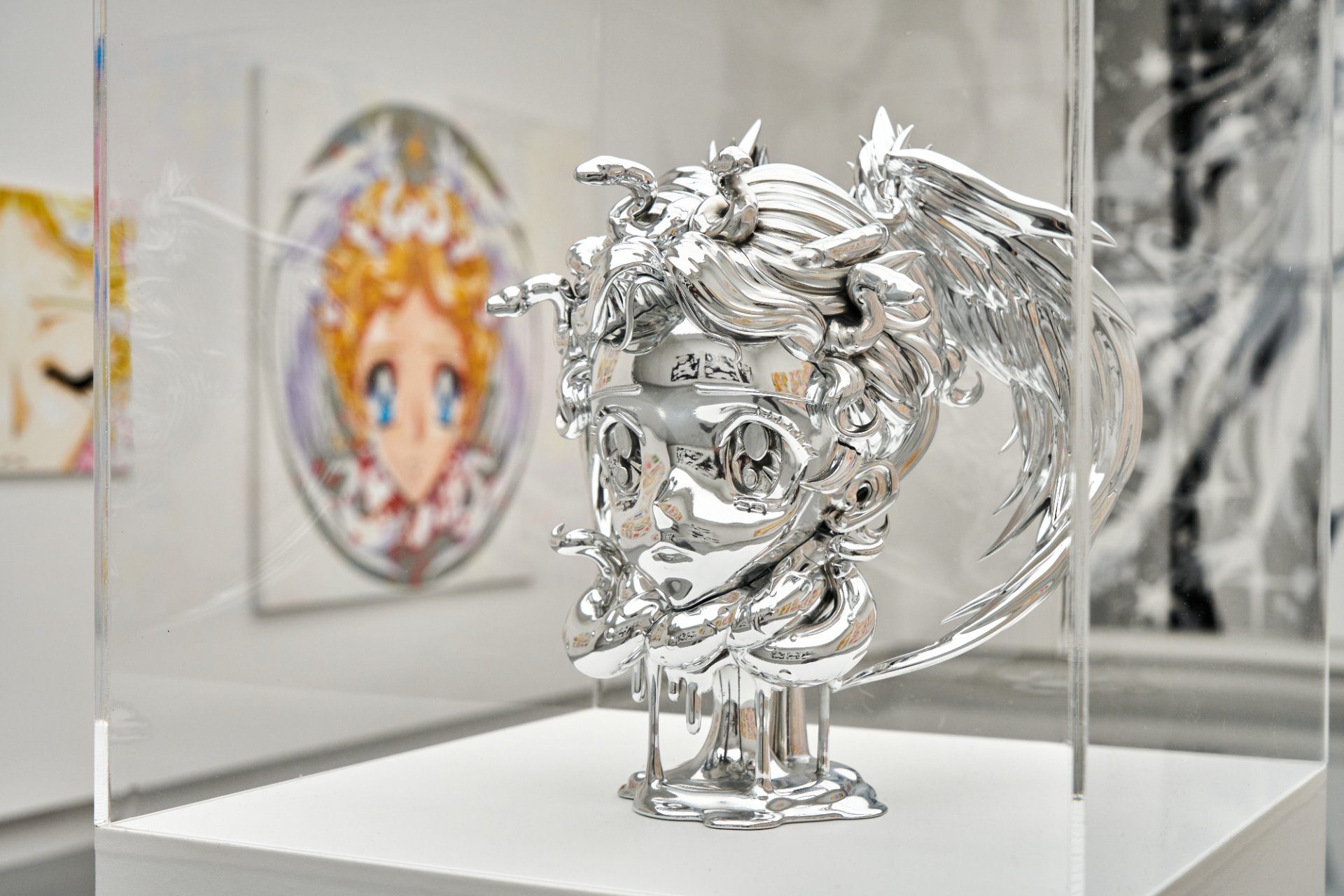
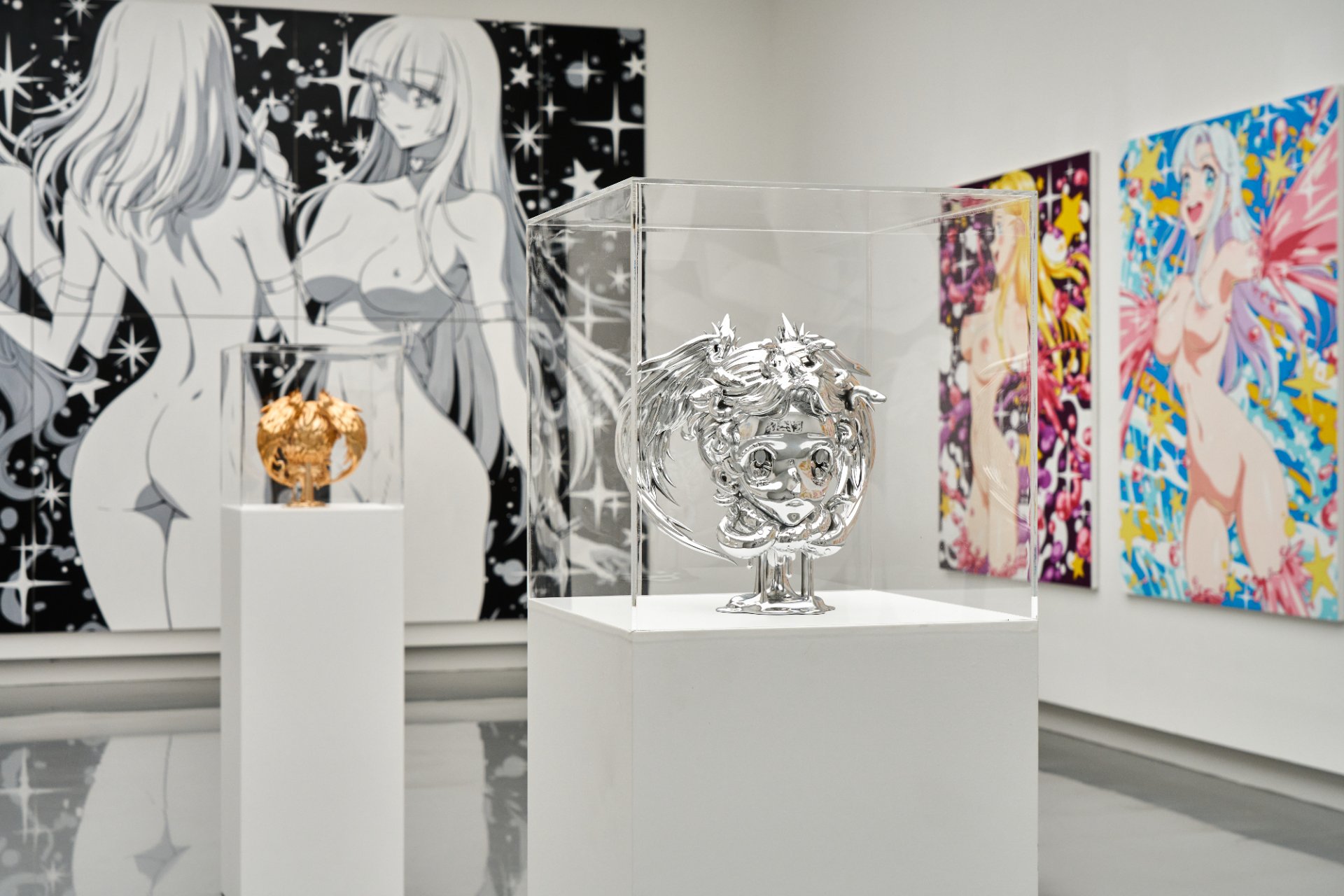
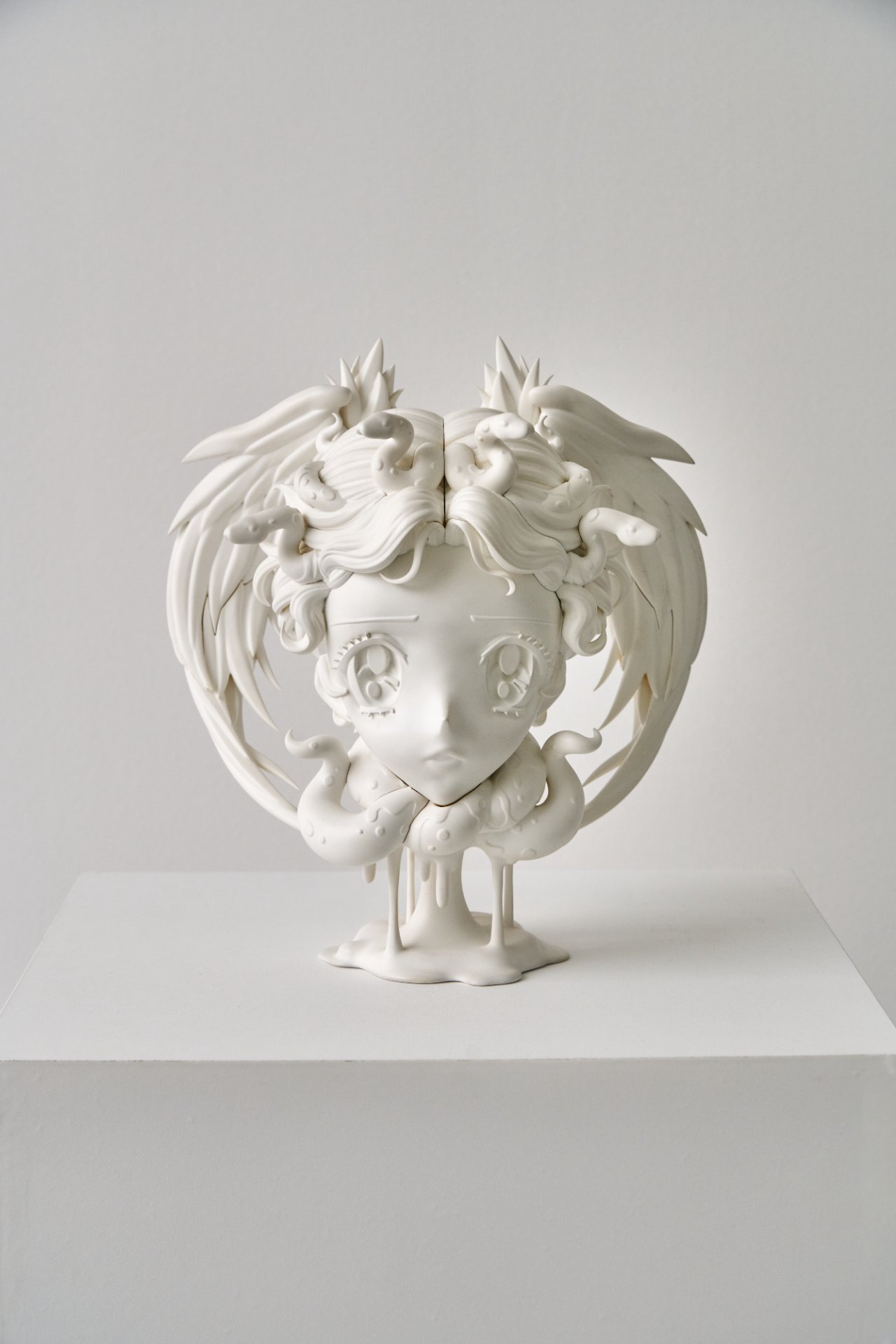
As I had first intended, I also made the sculpture: Head of Medusa (2021, resin, 24 × 24 × 30 cm), made by drawing a sketch, building a model in a 3D program, and printing it on a 3D printer. Much changed along the way, and the notion of an original grew faint. A virtual 3D image stays infinitely sharp however far it is enlarged, while the sculpture that comes out as a physical object is degraded by comparison. And yet, the moment the work was finished, I could feel that the presence of the physical object was something different.